The Rolling Stones’ greatest songs are not simply their biggest singles. Some of the band’s most important recordings were album tracks, while others became definitive through concert performances, film soundtracks, television, and decades of cultural reuse. This ranking weighs songwriting, studio invention, historical impact, performance, longevity, and the songs’ identities as Stones classics.
The result leans toward the band’s most durable recordings: songs that still explain something about the Stones whenever they appear in a concert film, music documentary, archive performance, or soundtrack.
| # | Preview | Product | Price | |
|---|---|---|---|---|
| 1 |

|
The Very Best Of The Rolling Stones 1964-1971 | $9.00 | Buy on Amazon |
| 2 |

|
Forty Licks | $38.28 | Buy on Amazon |
| 3 |
|
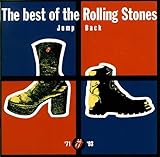
Jump Back: The Best Of The Rolling Stones (71-93 Remastered) (CD) | $29.43 | Buy on Amazon |
| 4 |

|
Hot Rocks 1964-1971 | $16.45 | Buy on Amazon |
| 5 |

|
Jump Back: The Best Of The Rolling Stones (1971 - 1993) | $5.79 | Buy on Amazon |
1. “Gimme Shelter” — Let It Bleed (1969)
“Gimme Shelter” is the most complete Rolling Stones recording: a threatening guitar figure, Charlie Watts and Bill Wyman’s tightly wound rhythm section, and an atmosphere that seems to darken with every bar. Merry Clayton’s guest vocal turns the final section into a moment of near-apocalyptic force.
The song combines blues, gospel, soul, and rock without sounding like a stylistic exercise. It also became inseparable from documentary images of late-1960s unrest, although that association needs precision: “Gimme Shelter” was written and recorded before the Altamont concert. Altamont intensified its later connection with violence and social breakdown; it did not inspire the song’s creation.
#1 Best Overall
- Shrink-wrapped
Unlike “Satisfaction” or “Paint It, Black,” it was not originally released as a 1969 single. Its status grew through the album, later live performances, film use, and its enduring place in the Stones’ catalogue. That makes its No. 1 position especially revealing: its reputation rests on the recording itself, not on a conventional single-chart history.
Why it ranks first: No other Stones song balances atmosphere, arrangement, vocal drama, and historical resonance so completely.
2. “(I Can’t Get No) Satisfaction” — Out of Our Heads (1965)
The opening guitar riff is one of rock’s defining sounds, but the song’s achievement goes beyond recognizability. Keith Richards’s riff gives Mick Jagger’s frustrated lyrics a mechanical, restless momentum, turning complaints about advertising, desire, and modern life into a universal pop refrain.
It became the Stones’ first U.S. No. 1 single and remains the clearest shorthand for the band’s public identity: swaggering, dissatisfied, and unwilling to behave. The Library of Congress added it to the National Recording Registry in 2006.
Free tools Windows power users keep installed
One-click scans. No signup required.
Richards has often recounted that the riff came to him while he slept. The song’s opening has also been discussed in relation to Martha and the Vandellas’ “Dancing in the Street,” and its lyrics have been compared with Chuck Berry’s “30 Days.” Those are documented influences or musical comparisons, not proof of plagiarism.
Why it ranks this high: It is both a historically important hit and an unusually efficient piece of songwriting.
3. “Sympathy for the Devil” — Beggars Banquet (1968)
Few rock songs take on a speaking character as boldly as “Sympathy for the Devil.” Jagger’s narrator introduces himself through wars, assassinations, religious history, and political violence, asking the listener to consider evil not as a distant monster but as a participant in human affairs.
The music keeps changing underneath him. What begins with percussion and vocal presence develops into a samba- and funk-inflected performance, with guitar, piano, and group backing vocals increasing the sense of ritual. The arrangement is theatrical without becoming detached from the band’s blues foundation.
Recommended Free Tools
Rank #2
Jagger drew partly on Mikhail Bulgakov’s The Master and Margarita. The lyric also changed during the recording period: “Who killed Kennedy?” became “Who killed the Kennedys?” after Robert F. Kennedy’s assassination.
Why it ranks third: It is the Stones at their most ambitious—historical, literary, rhythmically adventurous, and deliberately unsettling.
4. “Paint It, Black” — Aftermath (1966)
“Paint It, Black” sounds unlike almost anything else in the Stones catalogue. Brian Jones’s sitar gives the song its Eastern-tinged color, while the rhythm section drives forward with a severity that leaves little room for relief. The lyric’s images of grief and darkness match the music’s relentless movement.
The song became a No. 1 hit in both the United Kingdom and the United States, but its value is not limited to chart performance. It showed the Stones using psychedelic-era studio experimentation to deepen a song rather than decorate it. The sitar is not a novelty placed over a conventional rock track; it is central to the song’s emotional architecture.
Crashes, No Sound, or Screen Glitches?
Random freezes, missing sound and display glitches usually trace back to one bad driver. Find and replace yours safely.Free scan · under a minuteWindows Errors? Fix Them Before They Spread
Repair common Windows errors and clear accumulated junk for a smoother, more stable PC - no reinstall needed.Free scan · no reinstallWhy it ranks fourth: It is one of the band’s most distinctive recordings and their sharpest fusion of pop impact with psychedelic invention.
5. “You Can’t Always Get What You Want” — Let It Bleed (1969)
The Stones usually excelled at compression: a riff, a beat, a vocal, and no wasted space. “You Can’t Always Get What You Want” takes the opposite approach. Acoustic guitar, French horn, gospel coloring, and a choir gradually widen the song until its final passage feels larger than the band itself.
The London Bach Choir and Al Kooper contributed to the recording, helping create a performance that moves between resignation and uplift. Its famous refrain is often treated as a slogan, but the arrangement gives it more emotional complexity than a simple piece of advice. Wanting, disappointment, compromise, and persistence all coexist in the performance.
Why it ranks fifth: It is an unusually expansive Stones composition and one of the group’s most reliable emotional finales.
Do these 3 things before closing this tab:
1Repair Windows errors before they cause bigger problems2Fix the driver behind crashes, sound loss and screen glitches3Clear out junk files and repair common Windows errors6. “Street Fighting Man” — Beggars Banquet (1968)
“Street Fighting Man” turns political tension into a strange, compressed studio sound. Rather than relying on a conventional electric-guitar attack, Keith Richards created distorted guitar parts from acoustic guitar recordings. The track also uses unusual percussion and sitar or tanpura textures.
Its political meaning is more ambiguous than its reputation sometimes suggests. Jagger’s narrator observes unrest and wonders what one person can do, rather than presenting himself as a straightforward revolutionary. That uncertainty is part of the song’s strength: it captures the atmosphere of protest without pretending that rock stardom automatically equals political action.
Why it ranks sixth: It is one of the Stones’ most inventive recordings and a strong example of the band making tension audible through production.
7. “Jumpin’ Jack Flash” — single (1968)
After the psychedelic excess of Their Satanic Majesties Request, “Jumpin’ Jack Flash” sounded like a reset. The song returned to a compact blues-based structure, put Richards’s riff at the center, and gave the Stones a piece of music built almost instinctively for the stage.
It was released as a standalone single in May 1968, not as a track on a contemporary studio album. That distinction matters because the song represents a transition rather than an album chapter: the band was reclaiming its most direct strengths while retaining the heightened sound and confidence of its late-1960s work.
Why it ranks seventh: Few Stones songs announce the band’s identity so quickly or work so consistently in a live setting.
8. “Wild Horses” — Sticky Fingers (1971)
“Wild Horses” is the Stones’ essential ballad because it does not abandon the band’s roughness when it becomes vulnerable. The country-tinged arrangement leaves room for the voices, especially the contrast between Jagger’s lead and Richards’s harmony.
Richards wrote the chorus with his son Marlon in mind, while Jagger’s lyrics drew on complicated personal emotions. The song’s ache comes from its restraint: it does not resolve the tension between attachment and departure.
Quick wins for a faster PC:
Fix the driver behind crashes, sound loss and screen glitchesFind Drivers →Repair Windows errors before they cause bigger problemsFix Now →Rank #4
A detail often lost in retellings is that the Flying Burrito Brothers recorded their version before the Rolling Stones released theirs, with the Stones’ permission. The Stones performance is therefore not the first recording, but it is the version that established the song as a central part of their own catalogue.
Why it ranks eighth: It demonstrates how effectively the Stones could make tenderness sound lived-in rather than polished.
9. “Beast of Burden” — Some Girls (1978)
“Beast of Burden” makes a virtue of space. The groove is loose and intimate, the guitar parts settle around the vocal rather than overpowering it, and the performance has none of the urgency of the band’s mid-1960s singles. That relaxed feel is precisely what makes it persuasive.
It also represents the Stones’ late-1970s reinvention. On Some Girls, the group absorbed punk, disco, and contemporary pop without losing its blues-based character. “Beast of Burden” is the quieter side of that renewal: not a stadium command, but a close, conversational performance.
The Tool Desk
Outbyte Driver Updater FREEScan for outdated or missing drivers - takes under a minuteDriver Scan →Outbyte PC Repair FREERepair Windows errors before they cause bigger problemsFix Now →The Rock & Roll Hall of Fame identifies it as one of the band’s representative recordings, alongside “Satisfaction,” “Paint It, Black,” “Gimme Shelter,” and “Start Me Up.”
Why it ranks ninth: It is one of the clearest examples of the Stones sounding mature without sounding mannered.
Independent reader supportYour contribution helps us test, update, and keep practical guides available for everyone.10. “Start Me Up” — Tattoo You (1981)
“Start Me Up” is the Stones’ last truly canonical stadium-rock anthem. Richards’s riff is economical and instantly legible, while the chorus converts the track into something designed for radio, arenas, sports broadcasts, and mass singalongs.
Its simplicity is carefully controlled. The guitars remain muscular without becoming cluttered, and Jagger’s vocal performance keeps the song moving with a mixture of command and playfulness. It reached No. 7 on the U.K. Official Singles Chart after its chart debut on August 29, 1981.
What’s actually slowing this PC down?
Pick the symptom - the matching free tool is one click away.
Best Value
- ROLLING STONES THE THE BEST OF THE 71 AL 93 - JUMP BACK
Why it makes the top 10: It is not the band’s most complex song, but it may be their most effective late-period translation of the classic Stones formula.
Essential near-misses
A different weighting would produce a different list. Several songs narrowly miss this top 10:
| Song | Why it remains essential |
|---|---|
| “Brown Sugar” | Historically important and ranked No. 8 by a 2022 expert panel, but its treatment of slavery, sexual exploitation, and racial violence requires serious context. |
| “Under My Thumb” | Musically notable for Brian Jones’s marimba and ranked No. 10 by the same panel, but its misogynistic narrative complicates its status as a representative Stones song. |
| “Honky Tonk Women” | A major U.K. No. 1 single and an important transition between Brian Jones and Mick Taylor. |
| “Tumbling Dice” | A prime contender when groove and ensemble feel matter more than broad historical impact. |
| “Midnight Rambler” | Especially persuasive in a live-performance ranking, where its extended concert form became central to its identity. |
| “Miss You” | The strongest case for the Stones’ disco-era adaptability; it peaked at No. 3 in the United Kingdom. |
The central disagreement is not whether these songs matter. It is what “best” should mean. A chart-based list would favor “Satisfaction,” “Paint It, Black,” “Jumpin’ Jack Flash,” and “Start Me Up.” A concert-based list would likely elevate “Midnight Rambler” and “Honky Tonk Women.” A documentary-minded list may value songs whose recordings carry a whole historical atmosphere, which is why “Gimme Shelter” and “Street Fighting Man” are so difficult to dislodge.
FAQ
What is widely considered the best Rolling Stones song?
“Gimme Shelter” is the strongest overall choice. It combines exceptional songwriting, studio atmosphere, vocal drama, instrumental tension, and lasting cultural impact. A 2022 expert ranking by Rolling Stone en Español placed it first.
Was “Gimme Shelter” a hit single in 1969?
No. It was released as an album track on Let It Bleed, not as an original 1969 single. Its reputation grew through the album, later performances, film use, and subsequent catalogue exposure.
Was “Wild Horses” first recorded by the Rolling Stones?
No. The Flying Burrito Brothers recorded their version before the Rolling Stones released theirs, with the Stones’ permission.
Which Rolling Stones songs are best for a live-performance ranking?
“Jumpin’ Jack Flash,” “Honky Tonk Women,” and especially “Midnight Rambler” are strong choices. The last of these developed an important extended concert identity that is not fully represented by its studio recording.
The Bottom Line
“Gimme Shelter” earns the top spot because it is more than a great Stones song: it is a complete world of sound, tension, and historical unease. “Satisfaction” remains the band’s essential riff statement, “Sympathy for the Devil” their boldest character study, and “Paint It, Black” their most striking psychedelic recording. Together, the 10 songs show why the Rolling Stones’ catalogue cannot be reduced to singles or chart positions alone.
Quick Recap
Product prices and availability are accurate as of the date/time indicated and are subject to change. Any price and availability information displayed on Amazon at the time of purchase will apply.




