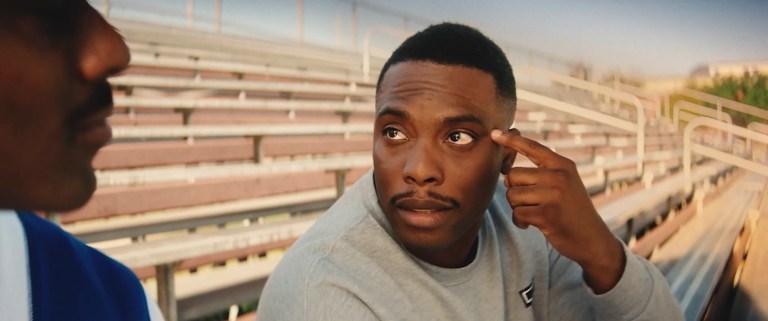
The first Street Fighter teaser doesn’t shout; it squares up. In under a minute, the October 2026 reboot signals a decisive tonal reset, trading camp and caricature for a grounded, globe-trotting intensity that feels closer to the games’ mythic martial-arts roots. Neon-drenched cityscapes flicker past bruising close-quarters combat, while the camera lingers on sweat, impact, and ritual, framing Street Fighter as a serious fight saga rather than a novelty adaptation.
Visually, the teaser leans into a modern blockbuster sheen without abandoning the franchise’s arcade soul. A disciplined color palette evokes classic stages, and the choreography emphasizes readable technique over chaotic cutting, suggesting a commitment to physicality. Brief, tantalizing glimpses of Ryu’s solitary training, Chun-Li’s kinetic precision, and a looming antagonist presence strongly implied to be M. Bison hint at a faithful roster without rushing introductions.
Most promising is how carefully the teaser calibrates expectations. Iconography is present but restrained, with a knowing wink to signature moves and philosophies rather than overt fan service. If this approach holds, the reboot isn’t just aiming to adapt Street Fighter; it’s positioning the series as a cinematic universe built on discipline, rivalry, and global stakes that modern audiences can invest in for the long haul.
Tone Check: Gritty Martial Arts Epic or Stylized Arcade Spectacle?
The teaser’s biggest question isn’t who’s fighting, but how this world wants to feel. Street Fighter has always lived in the tension between heightened arcade fantasy and surprisingly earnest martial arts philosophy, and the reboot appears determined to walk that line with intention. What’s striking is how confidently it resists extremes, neither drowning in grim realism nor leaning fully into neon-soaked absurdity.
What’s actually slowing this PC down?
Pick the symptom - the matching free tool is one click away.
#1 Best Overall

- Stunning visuals and an all new battle system depicts the world of Street Fighter with unprecedented detail.
- For the first time ever, SF6 provides an ever evolving immersive storytelling experience that gives power to the player to create their own World Warrior and truly engage in the Street Fighter Universe
- SF6 provides the gold standard fighting experience for both casual and battle-tested pros can enjoy for years to come.
- Please note that although this game is Region Free or Region Unlocked and will work on all systems, this is the international version and may differ from the local version in age rating, labeling or instructions. DLC content may not work unless using an EU Playstation account as stated this is an EU Import Region Free Version
A Grounded Core with Mythic Weight
At its heart, the footage suggests a grounded martial arts epic, one that treats combat as culture rather than chaos. Training sequences feel ritualistic, almost spiritual, while fight beats emphasize endurance, technique, and consequence. The bruises linger, the breathing is labored, and the camera often stays wide enough to let bodies tell the story.
This approach aligns closely with Street Fighter’s deeper lore, where fighters aren’t superheroes so much as warriors shaped by discipline, trauma, and ideology. It’s less about flashy domination and more about why these characters fight at all.
Stylization Without Self-Parody
That said, this is still unmistakably Street Fighter. The teaser’s visual language embraces stylization through color, staging, and rhythm rather than overt spectacle. Familiar environments feel heightened but lived-in, and subtle nods to signature moves are woven into choreography without pausing the movie to announce them.
Instead of replicating arcade exaggeration one-to-one, the reboot appears to translate it. The result is a tone that feels cinematic first, iconic second, trusting audiences to recognize the DNA without being bludgeoned by it.
Do these 3 things before closing this tab:
1Clear out junk files and repair common Windows errors2Fix the driver behind crashes, sound loss and screen glitches3Repair Windows errors before they cause bigger problemsA Deliberate Course Correction
Perhaps most telling is what the teaser avoids. There’s no winking humor, no ironic detachment, and no sense that the film is embarrassed by its source material. This Street Fighter takes itself seriously, but not dourly, positioning the franchise alongside modern action epics that value sincerity as much as spectacle.
If the full film sustains this balance, the reboot could finally crack the code Hollywood has long struggled with. Not by choosing between gritty realism and arcade flair, but by understanding that Street Fighter has always been strongest when it treats both as part of the same fight.
Visual Language & Worldbuilding: How the Teaser Reimagines the Street Fighter Universe
If the teaser’s biggest victory is confidence, its visual language is where that confidence becomes tangible. Every frame feels intentional, built around a coherent worldview rather than a collage of fan-service moments. The film isn’t just adapting characters; it’s constructing a lived-in Street Fighter universe with its own geography, texture, and rhythm.
A Global Stage That Feels Earned
Street Fighter has always been international by design, and the teaser leans hard into that identity. Rapid glimpses of temples, urban backstreets, desert outposts, and neon-lit fight pits suggest a world connected by combat culture rather than coincidence. These locations aren’t introduced as exotic spectacle, but as places fighters belong to, shaped by history, politics, and survival.
Recommended Free Tools
What’s striking is how grounded each environment feels, even when stylized. Markets are crowded and noisy, gyms are worn and improvised, and arenas look assembled through necessity rather than grandeur. It gives the impression that the World Warrior circuit exists organically, not because the plot demands it, but because this world has always needed it.
Color, Contrast, and Controlled Spectacle
Visually, the teaser favors contrast over excess. Earth tones dominate training and character moments, while fights introduce sharper colors and bolder lighting, as if the world itself reacts when combat begins. The effect mirrors the games’ shift from calm neutral spaces into heightened battle states without literal HUDs or visual effects.
Instead of leaning on CGI-heavy flourishes, the teaser uses practical staging and camera movement to sell impact. The occasional burst of energy or stylized motion reads less like a superpower and more like a cinematic translation of focus, speed, and intent. It’s Street Fighter flair, filtered through restraint.
Myth, Technology, and the Shadows Between
The worldbuilding also hints at larger forces at play without spelling them out. Background details suggest competing philosophies of strength, from traditional martial disciplines to more militarized, tech-driven approaches. Logos, uniforms, and fleeting imagery quietly point toward looming organizations rather than spelling out villains in bold letters.
This restraint works in the teaser’s favor. By treating Street Fighter’s mythos as something unfolding rather than explained, the film positions its universe as one with depth to explore, not lore to dump. It invites curiosity, trusting longtime fans to read between the frames while giving newcomers a world that feels immediately cohesive.
A Cinematic Identity Built for Longevity
Most importantly, the teaser’s visual language feels designed for more than a single film. There’s a sense of scale and intentionality that suggests future stories, rivalries, and evolutions without teasing a roadmap outright. The reboot isn’t racing to prove legitimacy; it’s laying foundations.
That patience may be the teaser’s smartest play. By reimagining Street Fighter as a grounded, globally textured universe with mythic undercurrents, the film signals its ambition to be more than a novelty adaptation. It wants to be a world audiences return to, fight after fight.
Rank #2

- IDEAL COLLECTIBLE SIZE - At approximately 3.75 inches (9.5 cm) tall, this vinyl mini figurine complements other collectable merchandise and fits perfectly in your display case or on your desk.
- PREMIUM VINYL MATERIAL - Made from durable vinyl, this collectible is built to last and withstand daily wear, ensuring long-lasting enjoyment for fans and collectors alike.
- GIFT IDEA FOR STREET FIGHTER FANS - Ideal for holidays, birthdays, or special occasions and as a present this figurine is a must-have addition to any Street Fighter merchandise collection
- EXPAND YOUR COLLECTION - Add this unique Akuma vinyl display piece to your growing assortment of Funko Pop! figures, and seek out other rare and exclusive collectible items for a complete set
- LIMITED CHASE VARIANT - A rare 1 in 6 chance to receive the Chase variant, making this Funko Pop! figure an exciting addition for collectors seeking unique items.
Character Spotting & Easter Eggs: Ryu, Chun-Li, and the Fighters We Can (and Can’t) See
If the teaser’s worldbuilding is subtle, its character reveals are even more carefully rationed. Rather than a roll call of fan favorites, the footage opts for fleeting, evocative glimpses that feel designed to spark frame-by-frame analysis. It’s less about confirmation and more about suggestion, trusting the audience to recognize silhouettes, movements, and iconography without a name card in sight.
Ryu as the Anchor Point
Ryu is unmistakably positioned as the emotional and thematic center of the reboot. We see him in isolation more than once, training in sparse environments that emphasize discipline over spectacle. His look leans classic without feeling cosplay-adjacent, grounded and practical, as if this Ryu exists before the legend fully crystallizes.
Notably, the teaser avoids an overt Hadouken moment. Instead, it hints at internalized power through breath control, stance, and a barely perceptible shift in the air around him. It’s a smart choice that frames Ryu’s strength as something earned and restrained, aligning with the film’s broader commitment to realism-inflected myth.
Chun-Li in Motion, Not Exposition
Chun-Li’s presence is equally restrained but instantly readable. She appears in motion, mid-conflict, framed through speed and precision rather than slow-motion hero shots. The emphasis on her agility and situational awareness suggests a character defined by intelligence and control as much as physical prowess.
Eagle-eyed fans will catch visual nods in costuming and color palette that echo her classic design without locking her into a single, game-accurate outfit. The reboot seems more interested in capturing Chun-Li’s role as a force within the world than reintroducing her through exposition or origin beats.
The Fighters Hiding in Plain Sight
Beyond the obvious leads, the teaser is littered with tantalizing maybes. A towering figure glimpsed in deep shadow suggests a heavyweight brawler, while a military silhouette paired with ominous insignia fuels speculation about M. Bison and Shadaloo without ever confirming them. Even a brief shot of a scarred hand tightening a glove feels intentionally loaded.
Environmental Easter eggs do a lot of the heavy lifting here. Posters, graffiti, and tournament signage reference locations and events longtime fans will recognize, quietly implying a larger roster already active in this universe. It’s a way of honoring the franchise’s breadth without overcrowding the narrative before it begins.
Who’s Missing, and Why That Matters
Just as telling are the characters we don’t see. There’s no Ken, no Guile, no immediate parade of familiar faces, and that absence feels strategic rather than accidental. By holding back marquee fighters, the teaser reinforces the idea that this reboot is building toward something, not unloading its entire hand in the first reveal.
For a franchise as ensemble-driven as Street Fighter, that restraint signals confidence. The film appears committed to letting its characters arrive with weight and context, rather than as obligatory fan service. In doing so, it reframes Street Fighter not as a checklist of fighters, but as a living world where legends emerge over time.
Quick wins for a faster PC:
Clear out junk files and repair common Windows errorsFree Scan →Fix the driver behind crashes, sound loss and screen glitchesFind Drivers →Faithful or Reinvented? How Closely the Reboot Appears to Follow the Games
The teaser makes one thing clear early: this Street Fighter isn’t chasing a one-to-one recreation of any single game. Instead, it pulls from the franchise’s long history to build a version that feels recognizable without being constrained by nostalgia. That balance suggests a creative team more interested in translating the spirit of Street Fighter than replicating its iconography beat for beat.
Visually, the film leans grounded and tactile, favoring lived-in locations over hyper-stylized arenas. It’s a shift from the exaggerated color explosions of the games, but not a rejection of them. The heightened reality fans expect is still there, just filtered through a cinematic lens that prioritizes physicality and consequence.
A World That Feels Like Street Fighter, Not a Cutscene
What stands out most is how the reboot treats its world as already in motion. Fighters aren’t being introduced as curiosities or legends; they exist as part of an ecosystem shaped by underground tournaments, criminal syndicates, and global power struggles. That approach mirrors how the games often drop players into an ongoing conflict rather than holding their hand through backstory.
The teaser’s locations reinforce that idea. Urban back alleys, neon-lit streets, and militarized compounds echo classic stages without recreating them outright. It’s a subtle nod to longtime fans, suggesting the film understands the geography of Street Fighter even as it reshapes it for narrative cohesion.
The Tool Desk
Outbyte PC Repair FREERepair Windows errors before they cause bigger problemsFix Now →Outbyte Driver Updater FREEScan for outdated or missing drivers - takes under a minuteDriver Scan →Fighting Styles Over Special Moves
One of the smartest deviations from the games is how combat is presented. There are no overt super moves or exaggerated visual effects in the teaser, but the choreography emphasizes distinct fighting philosophies. Speed, spacing, and precision feel like extensions of character, not just spectacle.
That restraint doesn’t mean iconic techniques are gone, just recontextualized. The implication is that signature moves may exist in heightened but believable forms, grounded in martial discipline rather than video game logic. It’s a choice that could make the action more accessible to general audiences without alienating fans who know what these fighters are capable of.
Rank #3

- Classic Experience Built for a Modern Era: With all core gameplay modes present, plus two brand new modes and enhanced visuals, Street Fighter 6 redefines the classic fighting game genre.
- Distinct Fighting Styles to Master: 18 diverse characters including legendary World Warriors and exciting brand new characters add their own flair to the game at launch, with more to be added post-launch.
- Brand New Game Modes: The Street Fighter franchise continues to hone its skills and redefine the fighting genre with the introduction of three new foundational modes – Fighting Ground, World Tour and Battle Hub.
- In-Game Commentating: Street Fighter’s first-ever Real-Time Commentary Feature, supported with subtitles in 13 languages, incorporates the voices of popular Fighting Game Community (FGC) commentators like Vicious and Aru directly into the game to narrate what is happening on-screen just like a real tournament.
- Two New Control Schemes: Classic Controls returns alongside two brand new options: Modern Controls allow you to perform special attacks with simple button combinations and are designed for players who want to fight without memorizing and practicing special move button combinations first. Dynamic Controls only require a press of the Auto-Attack button to perform attacks and is a great control type to use when you have friends and family over for a quick, casual game.
Canon as Inspiration, Not Instruction
Narratively, the reboot appears comfortable remixing established lore. Shadaloo’s presence is suggested rather than explained, and the power dynamics at play feel more politically charged than mythic. It aligns with modern blockbuster storytelling, where world-building unfolds gradually instead of relying on encyclopedic exposition.
For longtime players, that may initially feel like a departure. But it also opens the door for deeper characterization and thematic weight, something past adaptations struggled to achieve. If the teaser is any indication, this Street Fighter isn’t abandoning its roots so much as pruning them, shaping a version that can grow beyond the arcade and into a sustained cinematic universe.
Windows Errors? Fix Them Before They Spread
Repair common Windows errors and clear accumulated junk for a smoother, more stable PC - no reinstall needed.Free scan · no reinstallOutdated Drivers Are Slowing You Down
One free scan finds every outdated or missing driver and matches the right update for your exact hardware.Free scan · exact hardware matchAction Design & Combat Philosophy: Translating Arcade Fights Into Cinematic Realism
If the teaser makes one thing clear, it’s that this Street Fighter is prioritizing impact over excess. The action glimpses favor tight framing, physical strain, and tactical movement, selling every hit as something felt rather than flashy. It’s a marked shift from previous adaptations that mistook spectacle for authenticity.
Instead of leaning on exaggerated physics, the choreography suggests a grounded combat language rooted in real-world martial arts. Fighters circle, test range, and punish mistakes, echoing the mental chess match that defines high-level play in the games. The result feels less like an effects reel and more like a brutal conversation between opponents.
Character First, Combat Second
One of the teaser’s strongest choices is how clearly fighting styles double as character exposition. A disciplined striker moves with measured economy, while a more aggressive brawler presses forward with relentless pressure. Even in quick cuts, the film communicates personality through motion.
That philosophy mirrors what has always separated Street Fighter from other fighting franchises. Characters aren’t just skins with move lists; they’re ideologies colliding. The teaser seems intent on preserving that idea, translating it into cinematic terms where how someone fights is as important as why they fight.
Free tools Windows power users keep installed
One-click scans. No signup required.
Iconic Moves, Reimagined for the Screen
Fans looking for fireballs and spinning kicks won’t find them splashed across the teaser in neon effects, but the DNA is unmistakable. Certain stances, wind-ups, and finishing blows hint at familiar techniques without announcing them outright. It’s the cinematic equivalent of a wink, trusting the audience to connect the dots.
By holding back on overt spectacle, the film positions those moments as potential narrative payoffs rather than baseline expectations. When signature techniques finally surface, they’re likely to feel earned, grounded in emotion and circumstance instead of arcade logic. That restraint could make iconic moves land harder than ever.
Violence With Consequences
Another notable shift is how the teaser frames damage. Fighters don’t bounce back effortlessly; they stagger, bleed, and adapt mid-fight. Cuts linger just long enough to suggest exhaustion and risk, reinforcing the idea that every confrontation has stakes beyond bragging rights.
This approach aligns with the reboot’s broader tonal reset. Street Fighter here isn’t a cartoonish power fantasy, but a world where combat shapes lives and power structures. It’s a recalibration that may surprise some fans, but it also brings the franchise closer to the kind of grounded intensity modern audiences expect.
From Arcade Precision to Cinematic Flow
What ultimately stands out is how the action balances fidelity and reinvention. The rhythm of fights still reflects the games’ emphasis on timing, spacing, and momentum, but it’s adapted to camera movement and editing rather than health bars and rounds. It feels designed to be read intuitively, even by viewers unfamiliar with frame data or combo strings.
That balance may be the reboot’s biggest gamble and its greatest strength. By respecting the spirit of Street Fighter combat while reshaping it for cinematic realism, the film signals its intent to honor the franchise without being constrained by it. For a series long trapped between parody and pastiche on screen, that alone feels like a meaningful evolution.
Independent reader supportYour contribution helps us test, update, and keep practical guides available for everyone.Learning From Past Attempts: How This Reboot Positions Itself After Earlier Street Fighter Films
Hollywood’s relationship with Street Fighter has always been complicated. The 1994 Jean-Claude Van Damme-led film leaned into camp and Saturday-morning bombast, while 2009’s The Legend of Chun-Li chased gritty realism without a coherent vision. Both adaptations struggled to reconcile the games’ heightened personalities with cinematic storytelling, often mistaking excess or seriousness for authenticity.
The new teaser feels acutely aware of that history. Rather than overcorrecting in either direction, it positions the reboot as a tonal middle ground, serious without being self-important, stylized without slipping into parody. It’s a version of Street Fighter that understands the franchise’s legacy while refusing to be boxed in by it.
Quick wins for a faster PC:
Repair Windows errors before they cause bigger problemsFix Now →Scan for outdated or missing drivers - takes under a minuteDriver Scan →Clear out junk files and repair common Windows errorsFree Scan →Moving Beyond Camp Without Erasing Personality
One of the clearest signals in the teaser is how it handles character presentation. Fighters aren’t introduced with wink-heavy one-liners or exaggerated costume reveals, but they’re also not stripped down to generic action archetypes. The silhouettes, body language, and fighting styles do the character work, letting familiarity emerge organically.
Rank #4

- IDEAL COLLECTIBLE SIZE - At approximately 3.75 inches (9.5 cm) tall, this vinyl mini figurine complements other collectable merchandise and fits perfectly in your display case or on your desk.
- PREMIUM VINYL MATERIAL - Made from durable vinyl, this collectible is built to last and withstand daily wear, ensuring long-lasting enjoyment for fans and collectors alike.
- GIFT IDEA FOR STREET FIGHTER FANS - Ideal for holidays, birthdays, or special occasions and as a present this figurine is a must-have addition to any Street Fighter merchandise collection
- EXPAND YOUR COLLECTION - Add this unique Chun-Li vinyl display piece to your growing assortment of Funko Pop! figures, and seek out other rare and exclusive collectible items for a complete set
- LEADING POP CULTURE BRAND - Trust in the expertise of Funko, the premier creator of pop culture merchandise that includes vinyl figures, action toys, plush, apparel, board games, and more.
That’s a sharp contrast to earlier films, which often treated the roster as a checklist of fan service. Here, the teaser suggests a cast built around identity and motivation first, iconography second. The personalities are still there, just expressed through behavior rather than broad theatrics.
A Unified Vision Instead of Fragmented World-Building
Previous Street Fighter films suffered from tonal whiplash, bouncing between military sci-fi, globe-trotting espionage, and street-level brawls without a clear center. The reboot’s teaser, by comparison, feels remarkably focused. Every shot reinforces a consistent world defined by underground tournaments, power hierarchies, and personal stakes.
That cohesion matters. By grounding the story in a single, legible vision of how this world operates, the film avoids the scattershot mythology dumps that bogged down earlier adaptations. It suggests a Street Fighter universe that can expand over time rather than collapsing under its own lore.
What’s actually slowing this PC down?
Pick the symptom - the matching free tool is one click away.
Respecting the Games Without Recreating Them Beat for Beat
Perhaps the biggest lesson learned is that fidelity doesn’t mean imitation. The teaser avoids recreating famous moments shot-for-shot, instead translating the feeling of Street Fighter into cinematic language. The emphasis on spacing, anticipation, and consequence mirrors the games’ design philosophy without literalizing it.
That approach sets healthier expectations for fans. This isn’t a live-action arcade cabinet, but it also isn’t a generic martial arts film wearing a familiar name. By understanding what makes Street Fighter resonate and reinterpreting it for film, the reboot positions itself as an adaptation with something earlier attempts lacked: a clear sense of purpose.
What the Teaser Doesn’t Show—and What It Signals for the October 2026 Release
For all its confidence, the teaser is defined as much by restraint as revelation. It withholds major story beats, downplays overt spectacle, and resists the temptation to announce itself with explosive lore dumps. That absence feels deliberate, signaling a reboot more interested in trust-building than immediate overload.
No Plot Exposition, No Easy Villains
Notably missing is any clear articulation of the central conflict. There’s no monologue about world-ending stakes, no explicit mention of tournament rules, and no obvious positioning of a main antagonist. Even familiar villain silhouettes are kept ambiguous, suggesting the film wants character alignment to emerge through action rather than declaration.
The Tool Desk
Outbyte PC Repair FREEClear out junk files and repair common Windows errorsFree Scan →Outbyte Driver Updater FREEFix the driver behind crashes, sound loss and screen glitchesFind Drivers →That choice implies a narrative approach grounded in momentum instead of mythology. Rather than front-loading exposition, the reboot appears intent on letting rivalries, power dynamics, and ideology reveal themselves over time. For a franchise often weighed down by convoluted backstories, that’s a promising recalibration.
Power Is Present—but Intentionally Contained
Fans will also notice what isn’t fully unleashed. The teaser hints at heightened abilities and signature techniques, but it avoids full-blown superhuman spectacle. Energy effects are suggested, not indulged, and the choreography prioritizes impact and physicality over visual excess.
This restraint suggests a measured escalation plan for the full film. By grounding the action early, the reboot creates room to expand into the more operatic elements of Street Fighter without overwhelming newcomers. It’s a tonal investment in credibility first, spectacle second.
A Visual Identity Still Holding Its Final Card
While the teaser establishes a strong visual mood, it doesn’t reveal the full aesthetic range. We see grimy arenas, controlled lighting, and tactile environments, but not the globe-spanning variety Street Fighter is known for. Iconic locations and larger set pieces are conspicuously absent.
Free tools Windows power users keep installed
One-click scans. No signup required.
That omission likely reflects a marketing strategy as much as a creative one. With an October 2026 release still distant, the teaser’s job is to define tone, not exhaust surprise. Holding back on scale preserves anticipation and suggests confidence in what’s still to come.
What the Silence Says About Confidence
Perhaps the most telling signal is how little the teaser tries to explain itself. There’s no winking reassurance, no defensive signaling to fans burned by past adaptations. Instead, it assumes the audience will meet it halfway, trusting the material to speak through craft rather than commentary.
That confidence is the teaser’s strongest statement. By choosing mood over marketing noise and intention over indulgence, the reboot positions itself not as a correction of past failures, but as a fresh starting point. If the full film delivers on that promise, October 2026 may finally mark the moment Street Fighter finds its footing on the big screen—not by shouting what it is, but by showing it, one fight at a time.
Quick Recap
Product prices and availability are accurate as of the date/time indicated and are subject to change. Any price and availability information displayed on Amazon at the time of purchase will apply.
Do these 3 things before closing this tab:
1Repair Windows errors before they cause bigger problems2Fix the driver behind crashes, sound loss and screen glitches3Clear out junk files and repair common Windows errors