Crashes, No Sound, or Screen Glitches?
Random freezes, missing sound and display glitches usually trace back to one bad driver. Find and replace yours safely.Free scan · under a minutePC Slower Than It Used to Be?
A free scan shows the junk files, broken settings and background clutter dragging Windows down - then fixes them in one click.Free scan · Windows 10 & 11Stranger Things Season 5 received an enthusiastic early welcome, but the phrase “thrilling, immersive, wholly entertaining finale” originally described only the first four episodes—not the finished season. Volume 1 impressed critics with its action, horror, atmosphere, character relationships, and renewed momentum after the long wait. Once the remaining episodes and finale arrived, the critical picture became more divided over mythology, pacing, exposition, and whether the emotional closure fully justified the ending.
Short answer: the first reviews of Stranger Things Season 5 were strongly positive—but they covered only Volume 1, the first four episodes, and therefore could not establish whether the series had delivered a satisfying finale. Critics praised the opening for its scale, horror, atmosphere, emotional stakes, and renewed focus. Once all three volumes were available, the verdict became more divided: the finished season remained ambitious and emotionally committed, but its lore, pacing, exposition, and long epilogue did not work equally well for every critic.


That distinction matters. Rotten Tomatoes’ November 26, 2025 roundup presented the season as thrilling, immersive, and wholly entertaining because the first movement generated excitement for what was still to come. It was an early-review verdict, not a retrospective judgment of the complete ending.
What the first reviews actually covered
Netflix released the final season in three volumes:
The Tool Desk
Outbyte PC Repair FREEClear out junk files and repair common Windows errorsFree Scan →Outbyte Driver Updater FREEFix the driver behind crashes, sound loss and screen glitchesFind Drivers →#1 Best Overall

- Season 1 Complete Collection – Includes all episodes from the first season
- Blu-ray and DVD Combo – Multiple viewing formats for convenience
- Collector’s Edition Packaging – Retro VHS-style box designed for display
- Bonus Collectibles Included – Features poster and themed puzzle
- Great for Fans & Collectors – Perfect gift for sci-fi and TV series enthusiasts
| Release | Episodes | Date |
|---|---|---|
| Volume 1 | Four episodes | November 26, 2025 |
| Volume 2 | Three episodes | December 25, 2025 |
| Volume 3 | The series finale | December 31, 2025 |
The first critics therefore reviewed the opening four episodes after a roughly three-year wait since Season 4. They were assessing whether the show still had its personality and momentum—not whether the final mythology was coherent, whether every character received a convincing conclusion, or whether the Duffers could finish the story without overextending it.
Many of those early reviews were enthusiastic. The language surrounding Volume 1 emphasized urgent action, frightening set pieces, emotional performances, nostalgic atmosphere, and a balance between humor and darkness. But even favorable notices treated the second half as the decisive test. The season had made a promising start; it had not yet proved that it could stick the landing.
Why critics responded so positively to Volume 1
1. The long wait had not drained the show’s personality
A three-year gap creates a particular risk for a character-driven genre series. Actors and audiences age, pop-culture references lose their immediacy, and a story built around youthful discovery can feel less natural when its original adolescents are now young adults. The early reviews nevertheless found that Stranger Things retained much of its recognizable identity.
That identity includes the combination of small-town relationships, supernatural danger, comic relief, 1980s texture, and horror imagery. Critics who enjoyed Volume 1 felt that the hiatus had not stripped away the show’s momentum. The opening moved with urgency rather than behaving like a slow reunion tour.
2. The spectacle served the danger instead of replacing it
The opening episodes were described as action-packed, frightening, and epic. Their appeal was not simply the size of the effects budget. Early praise also focused on the feeling of physical danger and the way the action pushed the characters into difficult situations.
That is important for the series’ final chapter. Stranger Things had become much larger than its first-season mystery, but the strongest early response came when the large-scale horror remained connected to recognizable fear: people trying to protect one another, making desperate choices, and confronting consequences that could not be erased by another set piece.
Reviewers also noted that the spectacle did not depend entirely on computer-generated imagery. The production’s practical texture, performances, creature design, lighting, and Hawkins locations helped preserve the immersive quality that made the series distinctive in the first place.
3. The emotional stakes remained more important than the battle plan
The most consistent praise was not reserved for the supernatural conflict. Critics responded to relationships, unexpected heroes, and the emotional cost of the characters’ final campaign. The early episodes understood that viewers were not returning only to learn what happens in the Upside Down. They were returning to see whether these friendships, romances, family bonds, and rivalries still carried weight.
Rank #2

- Printed in the U.S.A. with Eco-Friendly Inks
- Stranger Things
- Fifth Sun
That character focus gave Volume 1 its strongest advantage. The action had urgency because the people involved had history. Moments of humor could relieve the pressure without making the danger feel harmless, while quieter scenes gave the horror consequences beyond survival.
4. Hawkins still felt like a place rather than a backdrop
Early reviewers continued to value the show’s atmosphere: the 1980s setting, the nostalgic visual language, the horror imagery, and the movement between earnest drama and comedy. The best notices did not treat nostalgia as an automatically positive ingredient. They responded to the way the setting created a specific emotional environment in which the characters’ final conflict could feel both enormous and intimate.
Volume 1’s immersive quality came from that mixture. It could present a frightening supernatural threat while still making room for the familiar rhythms of a group of friends in Hawkins. The result was recognizably Stranger Things without being reduced to a collection of references to its earlier seasons.
5. Some critics saw a welcome return of focus
Several early responses suggested that the opening movement was more controlled than the most sprawling parts of the preceding chapters. That does not mean the season was considered simple or small. It means that reviewers felt the central emotional and narrative drive was easier to follow.
This was a meaningful compliment after Season 4’s multiple locations, large cast, and parallel storylines. A final season needs scale, but it also needs a sense of direction. For these critics, the opening episodes restored that feeling without abandoning the series’ ambition.
The reservations were visible from the beginning
The early consensus was positive, not unanimous. Some reviewers believed the show had aged beyond its original adolescent capers. Others thought it leaned too heavily on familiar devices or nostalgia. The same elements that made the series comforting to fans could also make it seem self-referential to viewers who wanted a sharper break from the past.
There was also a structural concern: the first four episodes could promise almost anything. A gripping opening does not automatically produce a coherent explanation of the mythology or a proportionate conclusion. Critics understood that the final episodes would have to broaden the story, pay off its accumulated mysteries, and justify the scale of the franchise’s cultural influence and production.
In other words, the early praise came with a condition. The season had made viewers want the conclusion; it had not yet shown that the conclusion would satisfy them.
Do these 3 things before closing this tab:
1Fix the driver behind crashes, sound loss and screen glitches2Repair Windows errors before they cause bigger problems3Scan for outdated or missing drivers - takes under a minuteRank #3
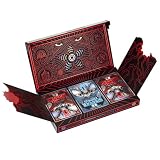
- WELCOME TO THE UPSIDE DOWN – Bring Hawkins energy to every shuffle with a Stranger Things playing card box set made for poker nights, blackjack, solitaire, magic practice, cardistry, party games, display, and gifting. A bold choice for fans who want cards with real story and atmosphere.
- THREE DECK COLLECTOR SET – This box set includes three themed playing card decks, including the blue holographic foil Upside Down Special Edition. It gives fans more than a single deck, making it stronger for display, collecting, gift baskets, game night, and fan collections.
- VHS-STYLE DISPLAY BOX – Housed in a nostalgic VHS-style box with red and holographic silver foil details and embossed accents, this set feels pulled straight from the world of Hawkins. It stands out on a shelf, desk, collector case, coffee table, or game room display.
- STRANGER THINGS ARTWORK – Featuring characters, moments, and supernatural atmosphere from the Stranger Things universe, this set brings more personality than ordinary playing cards. Great for fans of Hawkins, the Upside Down, Eleven, Demogorgon stories, and retro sci-fi horror.
- READY FOR PLAY, MAGIC & GIFTS – Use the decks for poker, rummy, blackjack, solitaire, beginner magic tricks, card flourishes, cardistry practice, family game night, travel entertainment, party games, collector shelves, birthdays, holidays, stocking stuffers, and fan gifts.
Spoilers: how the completed season changed the conversation
By August 12, 2026, all three volumes had been released, allowing the early excitement to be judged against the complete season. The resulting critical picture was more complicated than the Volume 1 response.
The completed finale still had defenders who valued its conviction, scale, and emotional directness. It treated the end of the series as a major event and gave its central relationships room to matter. But later reviews also argued that the show sometimes prioritized emotional resolution over fully integrated lore and clean narrative logic.
The Washington Post characterized the ending as a long, emotional, strongly 1980s epilogue. Its criticism centered on the balance between feeling and explanation: viewers who cared most about a tightly resolved cosmology or perfectly connected mythology could find the finale disappointing. Ars Technica offered a substantially harsher assessment, arguing that the ending did not fully stick the landing. Rotten Tomatoes’ later critic excerpts reflected the split, praising the show’s earnest conviction and operatic scale while suggesting that it may have continued for a season or two longer than necessary.
Those reactions do not erase the early reviews. They explain why the two judgments should not be merged. Volume 1 could be thrilling and immersive while the completed season remained uneven. The opening’s energy was real; so were the later objections about exposition, length, mythology, and payoff.
Emotional closure versus lore closure
The clearest example is Eleven. Netflix’s official ending explainer confirms that the finale deliberately leaves her fate ambiguous. The Duffers framed the ending around belief, memory, and the possibility that Eleven escaped before the destruction of the Upside Down, rather than providing a definitive on-screen confirmation that she survived or died.
That choice is thematically consistent with a finale interested in memory and emotional bonds. It also creates a fault line between two kinds of audience satisfaction. Viewers who primarily wanted a moving farewell may see the ambiguity as appropriate. Viewers who wanted a concrete answer after years of mythology may regard it as an evasion.
The same tension shapes the finale more broadly. Its emotional argument is that love, friendship, repair, and the possibility of a life beyond Hawkins matter more than a perfectly itemized explanation of every supernatural mechanism. That is a legitimate artistic choice, but it cannot satisfy viewers who considered the mythology itself the show’s central promise.
Recommended Free Tools
Rank #4
Where the characters end up
The finale gives most of the surviving characters conventional forward-looking resolutions:
| Character | Post-finale direction |
|---|---|
| Max and Lucas | They settle into a relationship. |
| Dustin | He attends university while maintaining his friendship with Steve. |
| Will | He finds acceptance outside Hawkins. |
| Mike | He becomes a writer. |
| Steve | He stays in Hawkins and becomes a baseball coach. |
| Robin | She attends Smith College. |
| Nancy | She works at the Boston Herald. |
| Jonathan | He studies filmmaking at New York University. |
| Joyce and Hopper | They become engaged and plan to move to Montauk. |
| Eleven | Her ultimate fate remains deliberately unresolved. |
These outcomes emphasize the finale’s preference for personal futures over one final mythology lecture. The characters are allowed to imagine lives after the crisis, and the series closes on the value of continuing rather than only on the mechanics of what happened.
So, did Stranger Things Season 5 stick the landing?
The fairest answer is: emotionally, often; narratively, not for everyone.
The first four episodes earned their enthusiastic reception. They restored momentum after the long wait, delivered large-scale horror and action, preserved the show’s atmosphere, and kept relationships at the center of the spectacle. Calling that opening thrilling, immersive, and entertaining was a reasonable description of the contemporary response.
The complete season, however, had a heavier burden. It had to conclude a story that had expanded from a contained Hawkins mystery into an enormous mythology, while also giving a large ensemble meaningful endings. Some critics thought the emotional payoffs justified the messier lore and extended epilogue. Others thought the series had become too long, too dependent on familiar material, or insufficiently precise in its final explanations.
That makes the title most accurate when read as a time-stamped piece of criticism. It captures the mood surrounding Volume 1, when anticipation was at its peak. It should not be used as proof that critics unanimously approved the finished season. The final verdict is better described as a split between admiration for the show’s heart and frustration with the way it completed its mythology.
Independent reader supportYour contribution helps us test, update, and keep practical guides available for everyone.Physical companions for fans and collectors
The franchise’s physical-product ecosystem is unusually broad, but the most natural companion to this review is the music. The Stranger Things Season 5 soundtrack vinyl is the songs soundtrack from the Netflix series, not the original score. Sony Music lists standard LP and CD editions, as well as a yellow-marble LP identified as a limited 2,500-unit collectible. That yellow-marble edition has been listed as sold out, so prospective buyers should verify the current edition and stock before ordering.
The original score is a separate release by Kyle Dixon and Michael Stein. Invada Records describes it as a 95-track collection spread across two double-vinyl volumes, with Lakeshore Records serving as the U.S. label partner for related releases. Fans choosing between the two should decide whether they want the featured songs from the series or the atmospheric instrumental music that supports its horror and suspense.
Quick wins for a faster PC:
Repair Windows errors before they cause bigger problemsFix Now →Scan for outdated or missing drivers - takes under a minuteDriver Scan →Clear out junk files and repair common Windows errorsFree Scan →For broader fandom, the official Netflix Shop’s Season 5 collection includes apparel, hoodies, posters, blankets, collectibles, mugs, notebooks, phone cases, stickers, standees, and related accessories. The selection is best understood as merchandise for commemorating the franchise rather than evidence that the season succeeded critically.
Best Value
Collectors interested in a larger display piece may also want to research the LEGO Stranger Things Creel House. Netflix identified the set as a 2,593-piece model with 13 minifigures. Its announced U.S. price was $299.99, and it was released through LEGO channels in January 2026; current pricing and availability should be checked separately.
For production history rather than display value, the official Stranger Things behind-the-scenes book, Stranger Things: The Official Story Behind the Legendary Series, covers all five seasons with interviews, photographs, scripts, concept art, storyboards, costume photography, and maps. Netflix Tudum identified the cited edition as exclusive to Target as of June 30, 2026, so it should not be assumed to be an Amazon listing.
Final assessment
Stranger Things Season 5 began with exactly the qualities early reviewers wanted from a final chapter: momentum, spectacle, atmosphere, humor, fear, and characters whose relationships still mattered. The finished season preserved much of that emotional commitment, but its conclusion exposed a longstanding tension in the series—whether its mythology or its relationships were supposed to provide the ultimate payoff.
What’s actually slowing this PC down?
Pick the symptom - the matching free tool is one click away.
If the question is whether Volume 1 was a thrilling, immersive, wholly entertaining return, the first reviews made a persuasive case. If the question is whether the completed season delivered an airtight and universally satisfying finale, the later response is plainly more divided.
Frequently Asked Questions
What did the first Stranger Things Season 5 reviews cover?
Rotten Tomatoes’ first-review roundup covered only Volume 1: the first four episodes, released on November 26, 2025. It evaluated the opening movement, not the completed season or its finale.
Did critics unanimously like Stranger Things Season 5?
No. The early response was broadly enthusiastic, but later reviews of the completed season and finale were mixed. Critics disagreed over the mythology, pacing, exposition, length, and whether the emotional ending compensated for narrative weaknesses.
Is the Stranger Things Season 5 soundtrack the same as the original score?
No. The Season 5 songs soundtrack and the original score are separate releases. Sony Music’s soundtrack contains music from the Netflix series, while Kyle Dixon and Michael Stein’s score is a separate 95-track collection released across two double-vinyl volumes.
Free tools Windows power users keep installed
One-click scans. No signup required.
The Bottom Line
Bottom line: The first four episodes deserved their enthusiastic reviews, but they were only the opening argument. The completed season offered powerful emotional closure and an ambitious farewell, while leaving some critics unconvinced by its lore, pacing, and extended ending. “Thrilling and immersive” is an accurate description of the early response—not a claim of unanimous approval for the finished finale.
Quick Recap
Product prices and availability are accurate as of the date/time indicated and are subject to change. Any price and availability information displayed on Amazon at the time of purchase will apply.