Recommended Free Tools
From the moment Stranger Things was conceived, the Duffer Brothers treated the series like a cinematic mixtape, layering Spielbergian wonder, Stephen King dread, and deep-cut ’80s genre DNA into every frame. But Season 5 isn’t just continuing that tradition — it’s weaponizing it. As the final chapter, the season is designed to look backward as much as it pushes forward, turning Easter eggs into narrative tools rather than background decoration.
Unlike earlier seasons, which often used references as playful homage, Season 5 treats them as connective tissue. Callbacks to Season 1’s mythology, visual echoes of Hawkins’ earliest traumas, and resurrected motifs from abandoned subplots are all folded directly into the story’s endgame. The show knows its audience now: viewers who have rewatched every episode, dissected every trailer, and memorized every Upside Down rule. Season 5 rewards that investment by assuming fluency and leaning hard into recognition.

There’s also a meta-awareness at play that makes this season uniquely dense with hidden meaning. With the cast aging out of childhood and the story closing the book on Hawkins, the Duffers use Easter eggs as a form of memory — reminders of who these characters were, what they’ve survived, and how long the road has been. Every reference, whether it’s a line of dialogue, a production design choice, or a needle-drop straight out of 1986, feels deliberate, as if the show itself is taking a final look back before the lights go out.
The Upside Down Origins: Deep-Cut Callbacks to Season 1’s Mythology
Season 5’s most revealing Easter eggs aren’t flashy needle-drops or obvious visual winks. They’re buried in the show’s oldest mythology, reaching all the way back to the eerie rules and unanswered questions established in Season 1. The final season treats the Upside Down less like a monster-of-the-week setting and more like a crime scene, revisiting its origins with forensic precision.
Quick wins for a faster PC:
Repair Windows errors before they cause bigger problemsFix Now →Fix the driver behind crashes, sound loss and screen glitchesFind Drivers →Clear out junk files and repair common Windows errorsFree Scan →#1 Best Overall

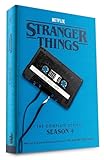
- Season 1 Complete Collection – Includes all episodes from the first season
- Blu-ray and DVD Combo – Multiple viewing formats for convenience
- Collector’s Edition Packaging – Retro VHS-style box designed for display
- Bonus Collectibles Included – Features poster and themed puzzle
- Great for Fans & Collectors – Perfect gift for sci-fi and TV series enthusiasts
The Library, Revisited — Ground Zero Comes Back Into Focus
One of the most striking callbacks is the renewed emphasis on Hawkins Public Library, the site of the original gate and the Demogorgon’s first rampage. Season 5 imagery repeatedly frames the building as a focal point again, echoing how Season 1 positioned it as the epicenter of everything that went wrong. This isn’t nostalgia for nostalgia’s sake; it suggests the origin point still matters, possibly more than ever.
In Season 1, the library was treated as a symptom rather than a cause, a place where the Upside Down bled through. Season 5 reframes it as unfinished business, implying that whatever opened the door in 1983 was never fully closed, only suppressed.
The Upside Down’s Frozen Time Loop Returns
One of Season 4’s biggest revelations was that the Upside Down appears frozen on the day Will Byers disappeared. Season 5 leans heavily into that concept, visually echoing Season 1’s Hawkins with unsettling accuracy: outdated posters, unchanged classrooms, and environments locked in decay. These details mirror how the Upside Down was first shown, before the rules were ever explained.
This callback recontextualizes Season 1’s production design as intentional mythology rather than eerie coincidence. The final season suggests the Upside Down isn’t just a parallel world, but a scar — a snapshot of trauma preserved in place, tied directly to Will’s disappearance and Eleven’s first breach.
Will Byers as the Living Map
Season 1 quietly positioned Will as the human connection between worlds, communicating through lights, sound, and instinct. Season 5 brings that idea full circle, leaning into his long-established sensitivity to the Upside Down. His now-familiar neck tingle feels less like a lingering symptom and more like a built-in compass.
What once felt like a plot device now reads as early foreshadowing. The final season treats Will not as a victim, but as a key, validating the idea that Season 1 was planting seeds about his role long before the show understood its own endgame.
Early Science, Not Later Lore, Drives the Answers
Instead of relying on the expanded mythology of Vecna and the Mind Flayer, Season 5 pulls heavily from the crude, improvised science of Season 1. Flickering lights, electromagnetic surges, radio interference, and analog tech return as narrative tools. It’s a subtle but meaningful regression to basics.
This choice underscores a major thematic callback: the idea that Hawkins’ greatest discoveries weren’t made in labs, but in garages, classrooms, and basements. By grounding the finale’s mythology in Season 1’s DIY problem-solving, the show honors its origin story while suggesting that the answers were always there, hidden in plain sight.
The Tool Desk
Outbyte PC Repair FREERepair Windows errors before they cause bigger problemsFix Now →Outbyte Driver Updater FREEScan for outdated or missing drivers - takes under a minuteDriver Scan →Vecna, Time Loops, and 1980s Horror Lore Hidden in Plain Sight
Season 5 sharpens Vecna’s presence by reframing him less as a singular villain and more as a force bound to time itself. The show quietly suggests that Vecna doesn’t just remember the past — he relives it, looping trauma until it calcifies into power. This idea threads through production design, dialogue rhythms, and even how scenes begin and end on repeated visual beats.
The result feels intentional rather than symbolic. Stranger Things isn’t merely referencing time; it’s staging time as Vecna’s preferred weapon.
The Clock Motif as a Time Loop, Not a Countdown
Grandfather clocks return throughout Season 5, but their meaning subtly shifts. In earlier seasons, the chime signaled impending death; now, clocks appear in moments of stasis, where characters seem stuck in emotional or narrative loops. Several scenes replay familiar blocking or camera angles from past seasons, reinforcing the sense that Hawkins itself is trapped in repetition.
This reframes Vecna’s obsession with time as psychological rather than apocalyptic. He isn’t racing toward an end — he’s forcing the world to relive its worst moments alongside him.
Do these 3 things before closing this tab:
1Repair Windows errors before they cause bigger problems2Fix the driver behind crashes, sound loss and screen glitches3Clear out junk files and repair common Windows errorsA Nightmare on Elm Street Runs Through Vecna’s DNA
Vecna’s methods increasingly mirror Freddy Krueger, a deliberate nod given Robert Englund’s casting as Victor Creel in Season 4. Season 5 leans harder into dream-logic horror, blurring the line between waking reality and psychic space. Characters fall into trance-like states, experience time dilation, and struggle to tell whether they’ve escaped or simply advanced to the next layer.
This is pure 1980s slasher mythology, where sleep equals vulnerability and memory becomes a battlefield. Vecna isn’t just killing bodies; he’s stalking minds in the most old-school horror way imaginable.
Hellraiser, Cronenberg, and the Horror of Transformation
Visually, Vecna’s influence spreads in ways that echo Hellraiser’s obsession with pain as transcendence and David Cronenberg’s body horror. Veins crawl across walls, environments feel alive, and characters’ injuries mirror Vecna’s own broken form. The show lingers on transformation rather than destruction, suggesting that Hawkins is being reshaped, not erased.
These references ground the cosmic stakes in tactile discomfort. Stranger Things remembers that 1980s horror thrived on making audiences feel trapped inside their own skin.
Outdated Drivers Are Slowing You Down
One free scan finds every outdated or missing driver and matches the right update for your exact hardware.Free scan · exact hardware matchPC Slower Than It Used to Be?
A free scan shows the junk files, broken settings and background clutter dragging Windows down - then fixes them in one click.Free scan · Windows 10 & 11Dungeons & Dragons Lore Comes Full Circle
Vecna’s time-bending nature also reconnects the show to its earliest Dungeons & Dragons roots. In classic lore, Vecna is a lich obsessed with forbidden knowledge and immortality, often manipulating time and secrets rather than brute force. Season 5 reflects this by emphasizing ritual, repetition, and the slow accumulation of power.
It’s a reminder that the kids named this threat correctly from the start. What once felt like a nerdy metaphor now reads as prophetic accuracy.
The Real Easter Egg: Time as Trauma
Perhaps the most unsettling reference isn’t to any single film, but to a recurring 1980s horror theme: the inability to escape the past. Like Halloween, A Nightmare on Elm Street, and even The Evil Dead, Stranger Things frames evil as something that resurfaces when wounds go unhealed. Vecna embodies that idea completely.
Season 5 hides this insight in plain sight. Time isn’t broken in Hawkins — it’s wounded, and Vecna is what happens when that wound is left to fester.
What’s actually slowing this PC down?
Pick the symptom - the matching free tool is one click away.
Hawkins Under Siege: Visual Easter Eggs That Mirror Past Seasons
As Vecna’s war on reality escalates, Season 5 turns Hawkins itself into a living archive of the show’s visual history. Streets, buildings, and even background compositions deliberately echo earlier seasons, reminding viewers that this final battle is happening on familiar ground. The town isn’t just under attack; it’s being forced to relive its own trauma.
Rank #2
These callbacks aren’t nostalgic filler. They function like visual memory triggers, reinforcing the idea that Hawkins can’t move forward without confronting what’s been buried since the Upside Down first bled through.
The Return of the Red Glow
One of the most striking visual echoes is the resurgence of the red, pulsing light that once defined the Upside Down in Seasons 1 and 2. In Season 5, that glow seeps into everyday locations like storefronts, basements, and abandoned homes, blurring the boundary between dimensions. It mirrors the early days when Christmas lights and flickering bulbs were the only warning signs of something wrong.
The difference now is scale. What was once hidden behind walls and ceilings is openly flooding Hawkins, suggesting that secrecy is no longer part of Vecna’s strategy.
Main Street as a War Zone
Several wide shots of Hawkins’ downtown deliberately mirror Season 3’s Starcourt-era framing. Familiar angles reappear, but where there were crowds and neon color, there’s now ash, broken glass, and creeping organic growth. It’s a visual before-and-after that doesn’t need exposition to land emotionally.
This isn’t just destruction for spectacle. The show is reminding us that Hawkins has always been a battleground, even when it pretended to be a normal Midwestern town.
Homes Reclaimed by the Upside Down
Season 5 repeatedly frames suburban houses the same way Season 1 framed the Byers home, with long hallway shots, slow camera pushes, and walls that feel too thin. Vines creep through familiar architecture, evoking the early horror of something invading domestic safety. It’s a direct callback to when the threat felt intimate and personal.
By spreading that imagery across multiple homes, the show suggests that what happened to Will was never an isolated incident. It was a warning Hawkins ignored.
Silhouettes, Bikes, and Circular Framing
Even small visual details carry history. Shots of characters silhouetted against foggy streets echo the kids’ bike rides from Season 1, but now the innocence is gone. The circular framing that once symbolized friendship and unity is reused to emphasize isolation, with characters often positioned alone at the center of the frame.
It’s a quiet but powerful reversal. Stranger Things uses its own iconography to show how much has been lost, and what’s at stake if Hawkins doesn’t survive this siege intact.
Character-Specific Callbacks That Signal Endgame Fates
As the scope of Season 5 widens, Stranger Things narrows its focus in a telling way: by circling back to individual character imagery, dialogue patterns, and emotional beats that first defined them. These aren’t nostalgic flourishes. They’re carefully chosen echoes that suggest where each character’s journey may ultimately end.
The Duffer Brothers have always treated character arcs like long-form myths. Season 5 leans into that philosophy, using callbacks not as comfort, but as quiet foreshadowing.
Free tools Windows power users keep installed
One-click scans. No signup required.
Eleven and the Return to Silence
Several scenes place Eleven in near-total silence, visually recalling her isolation tank sequences from Season 1. The camera lingers on her face, often framed in close-up, while the world around her fades out. It’s a deliberate contrast to the explosive displays of power she’s become known for.
The callback suggests a return to something more internal and costly. Power, once gained through isolation, may again demand separation, raising the possibility that Eleven’s endgame isn’t victory through force, but through sacrifice or withdrawal from the world she’s fought to protect.
Will Byers and the Shadow of Season 1
Will’s presence in Season 5 is frequently marked by the same visual language used during his disappearance: cold lighting, shallow focus, and lingering shots of him alone. Even his physical positioning mirrors Season 1, often standing slightly apart from the group during key moments.
These callbacks reinforce the idea that Will’s connection to the Upside Down was never fully severed. Rather than being a victim again, Season 5 frames him as a living bridge between worlds, hinting that his fate may be tied to closing the door permanently, no matter the personal cost.
Mike Wheeler’s Leadership Full Circle
Mike is repeatedly framed in wide shots where he’s physically positioned at the center of the group, echoing his role as the de facto leader in early seasons. His dialogue also mirrors Season 1 patterns, emphasizing belief, loyalty, and emotional certainty over strategy.
It’s a subtle reminder of what Mike represents: the heart that keeps the group together. By returning him to this role, the show suggests that his endgame isn’t about heroics, but about holding everyone in place when the structure threatens to collapse.
Dustin Henderson and the Weight of Loss
Season 5 quietly reintroduces Dustin’s habit of talking to absent friends, a behavior first seen after Bob’s death and deepened following Eddie’s sacrifice. These moments are brief, often played without music, and deliberately undercut his usual humor.
The callback frames Dustin as the emotional historian of the group, the one who remembers those who didn’t make it. It raises the possibility that his role in the endgame is to carry the story forward, preserving the truth of what Hawkins lost to survive.
Max Mayfield and the Echo of Running Up That Hill
Even when Kate Bush’s song is absent, Max’s arc continues to reference it through visual language: uphill movement, labored breathing, and moments where she must choose to keep going despite overwhelming odds. Her recovery scenes parallel her Season 4 escape almost beat for beat.
These callbacks suggest that Max’s survival is no longer about escape, but endurance. Her endgame may not be triumphant, but it’s defiant, a testament to choosing life even when it hurts to keep running.
Hopper Back in the Underground
Hopper’s Season 5 storyline repeatedly places him in tunnels, bunkers, and enclosed spaces, visually recalling both the Russian prison and the Hawkins Lab beneath the town. The framing emphasizes confinement rather than action.
It’s a reminder that Hopper’s arc has always been about surviving places meant to erase people. The callback hints that his final stand may happen not in the open battlefield, but underground, protecting others from ever having to descend into those spaces again.
Recommended Free Tools
Steve Harrington and the Protector’s Loop
Steve is once again framed at the edge of danger, physically placing himself between threats and the younger characters. The shots deliberately echo his Season 2 bat-wielding moments, right down to camera angles and blocking.
By repeating this imagery, the show reinforces Steve’s transformation from self-interest to self-sacrifice. It’s a callback that feels less like nostalgia and more like a warning that his protective instinct may finally push him past the point of return.
These character-specific callbacks aren’t accidental or indulgent. They’re narrative signposts, reminding viewers where each journey began and quietly suggesting where it may end as Stranger Things moves toward its final confrontation.
1980s Pop Culture References That Hint at the Final Battle
As Stranger Things approaches its endgame, the show leans harder than ever on the language of 1980s pop culture to foreshadow how its final battle might unfold. These references aren’t decorative nostalgia; they function like a shared code between the Duffer Brothers and the audience, signaling tone, scale, and outcome through familiar genre touchstones.
What’s striking is how many of these callbacks point toward collective resistance rather than individual heroics. The final season’s visual and musical vocabulary increasingly suggests a war story, not a monster-of-the-week showdown.
Red Dawn and the Idea of a Town at War
Season 5 repeatedly frames Hawkins as occupied territory, echoing the 1984 film Red Dawn. Empty streets, improvised defenses, and characters moving through familiar locations as if they’re hostile ground all reinforce the idea that the town itself has become a battlefield.
In Red Dawn, survival depends on community and sacrifice, not victory in a traditional sense. That parallel hints that Hawkins may not “win” so much as endure, preserving what matters while accepting permanent loss.
John Carpenter’s The Thing and the Fear of Contamination
The show’s renewed emphasis on paranoia, mistrust, and unseen influence mirrors John Carpenter’s The Thing, a film the Duffers have openly cited before. Season 5 imagery often lingers on who might be compromised, not just by the Upside Down, but emotionally and psychologically.
Quick wins for a faster PC:
Scan for outdated or missing drivers - takes under a minuteDriver Scan →Repair Windows errors before they cause bigger problemsFix Now →This reference suggests the final battle won’t be purely physical. The real danger may lie in who can still be trusted when the enemy wears familiar faces, raising the stakes of every alliance.
Dungeons & Dragons Endgame Modules
Stranger Things continues to structure its mythology like a late-stage Dungeons & Dragons campaign. The threats feel less like random encounters and more like a final boss scenario, complete with irreversible consequences.
Classic 1980s D&D endgame modules often required players to accept character loss to save the realm. That influence implies the final confrontation will demand sacrifices that permanently reshape the party, and the world they’re fighting for.
A Nightmare on Elm Street and the Weaponization of Trauma
Freddy Krueger’s legacy looms large in Season 5’s psychological horror. The idea that fear itself empowers the monster, a core theme of A Nightmare on Elm Street, continues to define Vecna’s methods.
The reference points toward a final battle that isn’t won with brute force, but by confronting and neutralizing trauma. Survival may depend on characters reclaiming their pain rather than outrunning it.
WarGames and the Danger of Playing to Win
Subtle nods to WarGames appear in the show’s treatment of strategy and escalation. Characters increasingly question whether total victory is even possible, or whether restraint is the only way to avoid catastrophe.
In WarGames, the lesson is that the only winning move is not to play. That idea hints that the final resolution may involve stopping the cycle of escalation between worlds, not annihilating the enemy outright.
’80s Metal, Synths, and the Sound of Apocalypse
Season 5’s soundscape leans into heavier metal riffs and darker synth textures, evoking late-’80s apocalypse cinema. This sonic shift aligns Stranger Things with films like Aliens and Terminator, where humanity is pushed to the brink.
Music has always signaled emotional truth in the series, and here it suggests inevitability. The final battle won’t feel triumphant or clean; it will sound desperate, loud, and costly.
Taken together, these 1980s references paint a clear picture of what Stranger Things is building toward. The final battle isn’t just a fight against Vecna or the Upside Down, but a genre-driven reckoning where survival, sacrifice, and memory matter more than victory.
Independent reader supportYour contribution helps us test, update, and keep practical guides available for everyone.Blink-and-You’ll-Miss-It Clues About the Upside Down’s True Nature
As the series barrels toward its endgame, Stranger Things grows quieter and more precise with its biggest mythology reveals. Season 5 doesn’t deliver exposition dumps about the Upside Down; instead, it hides answers in set design, dialogue rhythms, and fleeting visual details that reward obsessive viewers. These blink-and-you’ll-miss-it clues suggest the Upside Down isn’t just a mirror world, but something far more intentional and alive.
Rank #4

- Printed in the U.S.A.
- Model: NXST0071-40042101
- Size: Large
- Color: Black
The Frozen Moment in Time That Still Hasn’t Thawed
One of the most persistent clues resurfaces in background shots that emphasize the Upside Down’s arrested development. Clocks remain broken, calendars never turn, and objects are frozen at the exact moment Will disappeared in Season 1.
Season 5 subtly reframes this detail not as a continuity quirk, but as a rule. The Upside Down isn’t decaying because it’s old; it’s decaying because it’s stuck, a reality locked to a traumatic origin point that cannot progress on its own.
Organic Architecture That Thinks Like a Brain
Production design in Season 5 leans harder into the Upside Down’s biological symmetry. Vines branch like neural pathways, spores pulse rhythmically, and wide shots increasingly resemble MRI scans or nervous systems rather than landscapes.
This visual language quietly reinforces a theory the show has been circling for years: the Upside Down behaves less like a place and more like a mind. Whether that mind belongs to Vecna, the world itself, or something born from human trauma remains unanswered, but the implication is impossible to ignore.
Echoed Dialogue That Suggests Memory, Not Imitation
Several lines of dialogue in Season 5 are repeated verbatim from earlier seasons, often in different contexts and by different characters. These aren’t simple callbacks; they’re echoes, delivered with altered meaning or emotional weight.
Crashes, No Sound, or Screen Glitches?
Random freezes, missing sound and display glitches usually trace back to one bad driver. Find and replace yours safely.Free scan · under a minutePC Slower Than It Used to Be?
A free scan shows the junk files, broken settings and background clutter dragging Windows down - then fixes them in one click.Free scan · Windows 10 & 11The Upside Down appears to retain memory, not just imagery. It doesn’t copy Hawkins randomly; it remembers it, replaying moments that mattered most, especially moments rooted in fear, loss, or isolation.
Light Behaves Differently for a Reason
Lighting cues become increasingly precise in Season 5, especially when characters cross between worlds. The Upside Down’s glow isn’t just dimmer; it reacts, flickers, and occasionally intensifies in response to human presence.
This responsiveness suggests the environment is aware of intrusion. Light doesn’t simply reveal the Upside Down; it provokes it, hinting that observation itself may be a form of interaction or threat.
The Absence of New Life
Perhaps the most unsettling clue is what the Upside Down never shows. Despite its growth and spread, no new life is ever created there, only corrupted versions of what already existed.
Season 5 quietly emphasizes this absence through empty spaces and incomplete structures. The Upside Down can consume, distort, and remember, but it cannot create, reinforcing the idea that it is fundamentally parasitic, dependent on the real world for meaning and form.
Taken together, these micro-details point toward a final revelation that redefines the Upside Down entirely. It isn’t just a dark reflection of Hawkins or a monster’s domain, but a psychic scar made physical, shaped by memory, trauma, and time frozen at its most painful moment.
How These 12 Easter Eggs Reframe the Series’ Final Themes and Ending
Taken together, these Easter eggs don’t just reward attentive viewers; they actively reshape how the entire series reads in retrospect. Season 5 uses callbacks, mirrored imagery, and repeated motifs to suggest that Stranger Things was never simply about defeating monsters, but about confronting the emotional residue they leave behind.
The final season reframes Hawkins not as a battleground, but as an archive of memory. Every familiar hallway, song cue, and line of dialogue becomes evidence that the show’s true antagonist has always been unresolved trauma, given form through the Upside Down.
Do these 3 things before closing this tab:
1Repair Windows errors before they cause bigger problems2Fix the driver behind crashes, sound loss and screen glitches3Clear out junk files and repair common Windows errorsThe Upside Down as Emotional Stasis
One of the most striking implications of these references is that the Upside Down isn’t evolving. It’s stuck. The repeated use of frozen timelines, unchanged locations, and preserved objects from earlier seasons suggests a world locked at the moment of collective rupture.
This reframes Vecna less as a creator and more as a curator, selecting memories steeped in pain and forcing characters to relive them. The Easter eggs pointing back to Season 1 aren’t nostalgic flourishes; they underline that the story has been circling the same emotional wound from the beginning.
Childhood, Interrupted
Season 5’s callbacks to bikes, basements, D&D campaigns, and early friendships carry a heavier weight now. These symbols of childhood innocence repeatedly appear alongside violence or decay, emphasizing how abruptly these characters were forced to grow up.
The Easter eggs remind us that Stranger Things is ultimately about stolen childhoods. The final season doesn’t let viewers forget what was lost, even as the characters move toward resolution.
Free tools Windows power users keep installed
One-click scans. No signup required.
Memory as a Weapon and a Weakness
Repeated dialogue, reused music cues, and visual parallels suggest that memory itself is the battlefield. Characters survive not by forgetting the past, but by reclaiming it on their own terms.
This is where the 1980s pop culture references take on new meaning. Songs, movies, and games aren’t just era markers; they are emotional anchors. They tether the characters to who they were before the trauma, and in doing so, become tools of resistance.
The Series’ Endgame Isn’t Destruction, It’s Release
Perhaps the most important reframing is what the Easter eggs suggest about the ending itself. The absence of new life in the Upside Down, combined with its reliance on memory, implies that it cannot survive once its emotional fuel is resolved.
The final victory, then, isn’t about sealing gates or killing monsters. It’s about breaking the cycle of remembrance that keeps the Upside Down alive. Healing, not annihilation, becomes the ultimate act of defiance.
What’s actually slowing this PC down?
Pick the symptom - the matching free tool is one click away.
A Story That Always Knew Where It Was Going
By weaving these 12 Easter eggs so deliberately into the final season, Stranger Things reveals just how meticulously its long game was planned. What once felt like background details or fun callbacks now read as narrative signposts guiding the series toward its conclusion.
In the end, Season 5 doesn’t just close the door on Hawkins; it reframes everything that came before it. Stranger Things finishes not as a story about escaping the darkness, but about understanding it, naming it, and finally letting it go.
Quick Recap
Product prices and availability are accurate as of the date/time indicated and are subject to change. Any price and availability information displayed on Amazon at the time of purchase will apply.

