Windows Errors? Fix Them Before They Spread
Repair common Windows errors and clear accumulated junk for a smoother, more stable PC - no reinstall needed.Free scan · no reinstallCrashes, No Sound, or Screen Glitches?
Random freezes, missing sound and display glitches usually trace back to one bad driver. Find and replace yours safely.Free scan · under a minuteFor existing Spotify Premium users with a wired setup or a confirmed compatible network device, Lossless is worth trying. It is not a strong reason by itself to switch to Spotify or pay for Premium: the benefit is harder to realize over Bluetooth, and a lossless label does not guarantee a better-sounding master or an audible difference.
Spotify Lossless delivers eligible tracks in FLAC at up to 24-bit/44.1 kHz. Whether that matters to you depends on the track, playback chain and listening conditions—not just the number shown in the app.
What Spotify Lossless actually means
Lossless audio preserves the data in the delivered audio file rather than discarding information to make the file smaller. Spotify uses FLAC, or Free Lossless Audio Codec, for eligible playback. Its advertised ceiling is up to 24-bit/44.1 kHz; “up to” matters because not every track necessarily has a source at that specification.
Bit depth and sample rate describe a file, not the quality of its recording or master. CD-quality audio is conventionally 16-bit/44.1 kHz. Spotify’s 24-bit/44.1 kHz ceiling uses greater bit depth at the same sample rate; some rivals advertise higher sample rates, including 24-bit/96 or 192 kHz. None of those figures by itself proves that one service will sound better to a listener.
#1 Best Overall
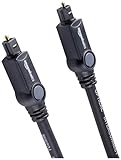
- Please REMOVE the end protective caps before using the cable.
- IN THE BOX: 6-foot digital optical audio Toslink cable.
- CLEAR AUDIO: Multi-channel, fiber-optic digital audio output; corrosion resistant gold-plated connectors and buffer tubing for optimal signal transfer.
- DURABLE: Lightweight, flexible cable with a rugged PVC exterior and removable rubber tips that protect the cable when not plugged in; remove before using.
- CONNECTS DEVICES: Quickly connects a sound bar, CD player, Blu-Ray player, game console, or other device to an audio system or TV.
Spotify says Lossless changes sound quality, not loudness, and that loudness normalization remains active. A lossless file can preserve a recording that is clipped, heavily compressed or otherwise poorly mastered just as accurately as a well-mastered one. Spotify’s explanation of lossless audio covers the format and normalization.
Is Spotify Lossless truly lossless all the way to your ears?
Spotify says eligible Premium listeners on supported hardware can receive the lossless version. That describes delivery from the service; it does not guarantee a bit-perfect signal through every device and connection. Operating-system mixing, resampling, EQ, spatial effects, loudness processing, a device’s DAC, or a wireless codec may alter the signal downstream.
Rank #2

- Buy with Confidence: With Monoprice's Lifetime Warranty on all Cables, you can rest assured we stand behind our products and our customers.
- 97 Percent pure oxygen-free copper conductor
- Double shielded with copper braiding
- 23 pF per foot capacitance
- 76 ohm impedance
Bluetooth is the most common practical caveat. Conventional Bluetooth audio generally transmits audio through a codec rather than sending the original FLAC stream unchanged. The result depends on the source, codec and receiving device, so “Bluetooth makes Lossless useless” is too broad. But Bluetooth listening is not the same as a direct wired path to a DAC, and the Lossless setting alone does not establish what reaches the headphones.
Spotify’s lossless quality guidance and Spotify Connect instructions are useful for checking supported playback paths and the in-app status.
Rank #3
- Please REMOVE the end protective caps before using the cable.
- IN THE BOX: 3.3-foot digital optical audio Toslink cable.
- CLEAR AUDIO: Multi-channel, fiber-optic digital audio output; corrosion resistant gold-plated connectors and buffer tubing for optimal signal transfer.
- DURABLE: Lightweight, flexible cable with a rugged PVC exterior and removable rubber tips that protect the cable when not plugged in; remove before using.
- CONNECTS DEVICES: Quickly connects a sound bar, CD player, Blu-Ray player, game console, or other device to an audio system or TV.
Who can use it, and does it cost extra?
Spotify introduced Lossless on September 10, 2025, initially rolling it out in more than 50 markets. It is a Premium feature, not a separate “HiFi” tier; availability depends on market, account eligibility, app, device, connection and track. Spotify lists mobile, desktop and tablet apps plus compatible Spotify Connect devices, but Connect support should not be assumed for every speaker or receiver. Check Spotify’s current Premium benefits page and your account for local availability.
Spotify’s announcement presented Lossless as part of Premium, with no separate lossless surcharge identified there. Premium plan prices and terms can change. Spotify announced a U.S. pricing update in January 2026; check the live U.S. Premium page for current plan options rather than relying on an old price.
Rank #4

- 【Extra-Long 10ft Cable for Flexible Setup】iVANKY 10ft optical audio cable provides just the right length to connect your devices comfortably - no more struggling with cables that are too short. Enjoy the same pristine, lossless audio quality while having the freedom to arrange your home theater, gaming system, or audio components exactly how you want
- 【Ultra-Clear Audio Quality with Japan Toray Original Fiber Core】iVANKY optical audio cable uses Japan Toray Original Fiber Core to deliver zero-distortion, lossless audio. This toslink cable is compatible with uncompressed PCM audio and compressed 5.1 to 7.1 surround sound systems, including Dolby Digital Plus, DTS-HD High Resolution, and LPCM. This digital optical audio cable ensures a wide dynamic range for an immersive listening experience
- 【Universal Device Compatibility】This optical cable for soundbar and home theaters connects seamlessly to a wide range of devices with standard Toslink (s/PDIF, Optical) ports, such as TVs, Soundbar, Speaker, Receiver, PS4, Xbox, Blu-Ray players, and more. It’s perfect for anyone looking to enhance their audio setup with a fiber optic cable that works flawlessly across multiple devices
- 【24K Gold-plated Connectors & Superior Durability】 Unlike conventional PVC jackets, iVANKY optical cable features a high-quality nylon braided jacket that withstands over 16,000 bends, making it highly durable and resistant to breakage. The aluminum shell and 24K gold-plated connectors prevent tarnishing and maintain conductivity over time, ensuring long-lasting performance
- 【Precision Design】The precisely designed cuboid connectors of this digital optical audio cable make installation easy and secure. The flexible and lightweight nylon material ensures hassle-free handling. Additionally, removable rubber caps protect the connectors from dust and oxidation when not in use. CL3-rated, this cable is also designed for in-wall installation, providing flexibility for your setup
How to turn on Spotify Lossless
Menu names can vary by operating system and app version. Spotify describes the mobile control as Audio Quality on iOS and Media Quality on Android. Set streaming and downloads separately; choosing Lossless for one does not necessarily change the others.
- On mobile: Open Spotify, tap your profile picture, then Settings and privacy. Open Audio Quality on iOS or Media Quality on Android. Choose Lossless for Wi-Fi, cellular and downloads as desired.
- On desktop or tablet: Open the profile menu, choose Settings or Settings and privacy, then find Audio quality or Media quality. Set streaming and download quality to Lossless where the option is available.
- With Spotify Connect: Select the connected device and open the file-quality card or related quality control, then choose Lossless if offered. Spotify says a Lossless label appears during supported playback.
Lossless files are larger than compressed streams, so streaming can use more bandwidth and downloads more storage. Spotify provides separate quality settings for Wi-Fi, cellular and downloads; actual usage varies with tracks, buffering and network conditions. If mobile data is limited, keep cellular at a lower setting and use Lossless over Wi-Fi or for downloads. Spotify’s launch announcement describes the rollout and separate quality controls.
Best Value
- Please REMOVE the end protective caps before using the cable.
- IN THE BOX: 9.8-foot digital optical audio Toslink cable.
- CLEAR AUDIO: Multi-channel, fiber-optic digital audio output; corrosion resistant gold-plated connectors and buffer tubing for optimal signal transfer.
- DURABLE: Lightweight, flexible cable with a rugged PVC exterior and removable rubber tips that protect the cable when not plugged in; remove before using.
- CONNECTS DEVICES: Quickly connects a sound bar, CD player, Blu-Ray player, game console, or other device to an audio system or TV.
How to confirm Lossless is active
- Check the setting for the connection you are actually using: Wi-Fi, cellular or downloads.
- Start playback and look for the Lossless indicator in Now Playing or the Spotify Connect interface. Treat it as evidence of Spotify’s selected playback format, not proof that every downstream component preserves the signal bit-for-bit.
- Use a listed compatible device and, for a straightforward check, test in the Spotify app over stable Wi-Fi with wired output or a confirmed compatible Connect device.
- Do not assume the setting guarantees Lossless after switching to Bluetooth, a car system or an unsupported speaker.
Spotify says playback quality can adjust to help avoid stuttering. If Lossless does not appear, check the relevant quality setting, update and restart the app, reconnect the output, try another track on stable Wi-Fi, and confirm that the device supports the feature. A track may not have the required source, or a weak connection may cause a lower quality to be selected. See Spotify’s Premium benefits help and its lossless audio quality guidance.
Independent reader supportYour contribution helps us test, update, and keep practical guides available for everyone.Will you hear a difference from Very High?
Lossless removes perceptual compression from the delivered file; Spotify’s former top consumer setting, commonly called Very High, used compressed audio. The precise specification can vary by platform and playback path, so a single bitrate comparison should not be treated as universal. Nor does changing the format necessarily mean Spotify has supplied a different or better master.
Some listeners may hear a difference in a careful comparison; others may not. The odds of noticing one improve with a quiet environment, revealing headphones or speakers, a wired or compatible network path, and a familiar recording with audible ambience or fine detail. They fall with noisy surroundings, phone speakers, casual listening, Bluetooth paths that use lossy codecs, or heavy EQ and other processing.
For a useful comparison, play the same track version through the same output, match playback levels, and repeat the comparison. A louder sample can seem more exciting or detailed, so do not mistake a volume difference for an improvement in fidelity. If the services use different masters or remasters, you are comparing more than lossless versus compressed audio. Spotify describes its format and normalization behavior in its lossless audio guidance. Without a controlled, level-matched test on your own equipment, there is no sound basis for promising a dramatic improvement for everyone.
Do these 3 things before closing this tab:
1Fix the driver behind crashes, sound loss and screen glitches2Repair Windows errors before they cause bigger problems3Scan for outdated or missing drivers - takes under a minuteHow Spotify compares with other lossless services
| Service | Published format or relevant feature | Likely fit |
|---|---|---|
| Spotify | Up to 24-bit/44.1 kHz FLAC for eligible Premium playback; availability and compatible devices vary. | Listeners who value Spotify’s discovery, playlists, social features and Connect workflow, and want lossless within that ecosystem. |
| TIDAL | HiRes FLAC up to 24-bit/192 kHz on its Max tier, according to TIDAL’s format guidance. | Listeners who prioritize an audio-focused catalog presentation and a higher published maximum resolution. |
| Apple Music | Offers lossless audio and Spatial Audio; check Apple’s current product information and device and lossless support details. | People already invested in Apple devices or interested in Spatial Audio and Apple integration. |
| Amazon Music Unlimited | Amazon’s service information and current offer details are on its Unlimited page. | Listeners in Prime or Echo households who want to compare Amazon’s catalog, interface and current plan value. |
| Qobuz | Plan and streaming offer details are on Qobuz’s U.S. offers page. | Listeners drawn to high-resolution FLAC and a more music-collector-oriented service. |
TIDAL’s higher published sample-rate ceiling does not establish audible superiority, just as Spotify’s lower ceiling does not settle which service suits you. Catalog, masters, app experience, recommendations, device support, offline behavior, spatial audio and current price may matter more. Prices and plan details change; compare the services’ live pages for your region instead of using stale figures.
Quick Recap
Who should use Spotify Lossless?
- Already have Spotify Premium and a wired or compatible network setup: Turn it on and see whether you prefer it. You retain Spotify’s familiar library and discovery tools while avoiding a separate service switch.
- Mostly listen on Bluetooth earbuds, in a car or on the move: Try it if it is available, but do not expect a guaranteed audible upgrade. Road noise and wireless processing make the format a less compelling reason to subscribe.
- Considering Spotify only for Lossless: Compare the full Premium package and other services before choosing. Lossless alone is a weak reason to switch if you prefer another service’s catalog, features or interface.
- Want files above 24-bit/44.1 kHz: Compare services that publish higher-resolution options, such as TIDAL, while remembering that a higher number does not ensure a better master or audible gain.
- Value Spotify’s recommendations, playlists and social or Connect features most: Lossless strengthens Spotify’s case as an all-purpose service, even if another provider advertises a higher resolution ceiling.
Limitations that can trip you up
- Wi-Fi, cellular and downloads are separate choices: A Lossless streaming setting does not prove that existing downloads use that quality. Check each control.
- Connect compatibility varies: Spotify Connect support by itself does not guarantee Lossless support on every speaker or receiver. Check the exact model and the in-app quality indicator.
- Cars are difficult listening environments: USB, Bluetooth, CarPlay or Android Auto may involve device processing, and road noise makes critical comparison difficult. A car connection does not automatically mean bit-perfect Lossless playback.
- Processing changes the path: EQ, spatial effects, operating-system audio mixing or resampling can affect the signal after Spotify delivers it.
- The master still matters: Lossless preserves the delivered file’s data; it cannot repair recording or mastering choices.
Product prices and availability are accurate as of the date/time indicated and are subject to change. Any price and availability information displayed on Amazon at the time of purchase will apply.