The Tool Desk
Outbyte PC Repair FREERepair Windows errors before they cause bigger problemsFix Now →Outbyte Driver Updater FREEFix the driver behind crashes, sound loss and screen glitchesFind Drivers →Electricity is the movement or presence of electric charge, and it lets devices transfer energy into light, heat, or motion. To understand how electricity works, start with charge moving through a circuit, then follow electricity from generation through the grid to a customer’s device.
What is electricity?
Electric charge is a property of particles; electrons carry negative charge. Electricity describes phenomena involving electric charge, including static shocks, lightning, and the current that flows through a wire. The U.S. Energy Information Administration (EIA) explains that electricity can involve electrons moving between atoms.
Electricity is an energy carrier, not a primary energy source. It is generated by converting primary sources, then delivered for uses such as heating, lighting, and powering motors. Keep the source of energy distinct from the electricity that carries it and the service a device provides.
How does electricity work in a circuit?
A circuit is a conducting path connected so charge can flow. For example, connect a battery, wires, and a small device (the load) to form a simple circuit. The battery provides a potential difference that drives charge around the path, transferring energy to the device.
Free tools Windows power users keep installed
One-click scans. No signup required.
#1 Best Overall
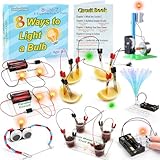
- 8 Circuit Experiments in 7 Packs ( AA batteries are required but not included. ) – Includes 8 fun and educational experiments to teach kids about circuits and electricity. Projects include Series Circuit, Parallel Circuit, Saltwater Power Generation, Fruit Battery, and more.
- Engaging Circuit Book – Comes with a detailed Circuit Book for guided learning. Suitable for ages 8+ with easy-to-follow instructions.
- Promotes Critical Thinking – Encourages problem-solving, creativity, and exploration of how electrical circuits work.
- Ideal for STEM Education – A great tool for learning about electrical engineering, conductivity, and energy. Perfect for young learners to explore science and technology.
- Perfect for Home or Classroom Use – Great for science fairs, school projects, or fun experiments at home. Ideal for teaching basic electrical concepts in an engaging way.
- Current is the flow of electric charge.
- Voltage is electrical potential difference. “Electrical pressure” is a useful analogy, not a literal description.
- Resistance is opposition to current flow.
- Power is the rate at which energy is transferred or used; energy is the amount transferred over time. Watts and watt-hours describe different things.
These are conceptual explanations, not instructions for home electrical repair. Do not open electrical panels or handle live wiring.
What is the difference between AC and DC?
Alternating current (AC) and direct current (DC) describe different patterns of current. Both are important: batteries are familiar DC sources, while power systems commonly use AC. The choice of current and transmission technology depends on the application.
Rank #2

- SO MANY TOYS IN A SNAP: Make dozens of cool electronic gadgets - all from one box! A safe and fun way to introduce children ages 8+ to the basics of electrical engineering! Build exciting projects and toys using the included colorful instruction book!.Ideal for ages:8 years and up
- PROJECTS THEY'LL LOVE: So many fun electric-powered projects you can make and play! Ages 8 to 108 will love building 100+ projects! Have fun while building practical skills and learning the basics of circuitry. Build a flying saucer in a snap and watch it take off and sound the alarm! Kit includes 29 Snap Circuits parts.
- GREAT GIFT Give the gift of learning and fun this holiday season! Snap Circuits kits will keep kids busy and having fun all year round. Combine with other Snap Circuits kits for even more projects!
- NO EXTRA TOOLS NEEDED Elenco Snap Circuits kits include everything you need to start learning immediately - and more. Unlike traditional electronics kits, no soldering or tools are required to build. The numbered and color coded pieces snap easily onto the included plastic grid. Batteries required.
- AWARD WINNING KITS! We're proud to produce high quality products loved by kids, parents,and educators. Snap Circuits kits have won a number of awards - including the Specialty Toy of the Year Award, Seriously STEM! award, Good Housekeeping's Best Toys, Purdue University's Engineering Gift Guide, National Parenting Center's Seal of Approval, Toy Insider's Top Holiday Toys, placement on the Dr. Toy list of 100 Best Children's Products and placement on the Dr. Toy list of Best Educational products, and the "Stem Approved" Trustmark from Stem.org.
| Type | Current behavior | Examples and transmission context |
|---|---|---|
| DC | Flows in one direction. | Batteries provide a familiar example. High-voltage direct current (HVDC) is also used for some long-distance bulk power transfers. |
| AC | Changes direction periodically. | Power systems commonly use AC. Transformers historically made it useful to raise or lower voltage for transmission and distribution. |
It is outdated to say that long-distance electricity must always use AC. The U.S. Department of Energy (DOE) notes that modern power electronics make HVDC applications possible. The appropriate choice depends on the route, distance, equipment, and grid context.
How does electricity reach our homes?
In the United States, the grid connects generators to customers through transmission lines, substations, and local distribution systems. Grid operators balance electricity supply and demand in real time. A simplified route is:
Rank #3
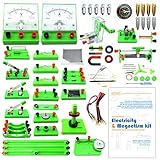
- Learn basic Electricity and Magnetism experiments through full-color manuals, understand the basic principles, and help Students learn, think and explore.
- The basic Electricity and Magnetism experiments kit includes everything that you need to get started,provides a hands-on opportunity for students in grades 9-11 to build simple electrical and magnetic models
- Includes 56 items for Electricity,21 items for Magnetism,2 pcs repair tool,Color page manual,All in the storage bag.(Notice:Batteries Not Included.Need 3 AA Batteries to work.)
- This Electricity and Magnetism Experiment STEM kit can build many projects::Series Circuits,Parallel Circuits,Fruit Battery,Measure unknown resistor with Ohm's law,Oersted Experiment,Electromagnet,Amper's Force Investigation,Electric Bell Making and Hand Crank Generator
- Please feel free to contact us if you have new ideas for EUDAX Product, we will provide Best After-sales service
- An energy source is converted into electricity by a generator.
- Transmission lines carry electricity across the network.
- A substation and transformers adjust voltage for the next stage.
- Local distribution systems deliver electricity to customers.
- A device converts electrical energy into a useful service, such as light, heat, or motion.
The grid is an interconnected system, not a single wire. DOE describes its lines, substations, distribution systems, and operating role; the U.S. Environmental Protection Agency also summarizes power-sector transmission and distribution equipment.
Independent reader supportYour contribution helps us test, update, and keep practical guides available for everyone.FAQ
Is electricity an energy source?
No. Electricity is a secondary energy source, or energy carrier: it is generated by converting primary sources and then delivered for use.
Rank #4

- 12 EXCITING POWER MISSIONS: Embark on a thrilling journey through the Electric Magic Academy! From illuminating mysterious lamps to building a functional electromagnetic crane, these 12 hands-on missions transform complex physics into an engaging "Magic Training" experience. It's not just a toy; it's an adventure that masters the invisible force of electricity
- 4 SYSTEMATIC TRAINING MODULES: Step away from disorganized experiment sets. Our kit is professionally structured into 4 progressive stages: Circuit Basics, Energy Generation (Fruit/Solar/Hand-crank), Conductivity Exploration, and Mastery of Practical Devices. This logical curriculum ensures a solid foundation in electrical engineering for young apprentices
- COMPREHENSIVE GUIDE & TROUBLESHOOTING: The "Electric Wizard Training Handbook" offers more than just instructions. It provides deep conceptual explanations, fun science trivia, and step-by-step visual guidance. Our unique "Troubleshooting" section teaches kids how to identify and fix circuit gaps, turning mistakes into confidence-building learning moments
- CULTIVATE LOGIC & PROBLEM-SOLVING: Empower your child's inner engineer! By building real-world detectors and alarms, children develop critical thinking and fine motor skills. This STEM kit encourages kids to analyze "why" and "how," fostering the persistence needed to solve complex problems while keeping them away from screens for hours
- HANDS-ON LEARNING EXPERIENCE: Children engage with real-world applications of electricity including building electromagnetic cranes, water leak detectors, and mini heat cutters while learning fundamental concepts of series and parallel circuits
Are current and voltage the same thing?
No. Current is the flow of charge; voltage is electrical potential difference. They are related circuit concepts, but they do not mean the same thing.
Does long-distance electricity always use AC?
No. AC and HVDC are both used in power systems. Transformers helped make AC useful for transmission, while modern power electronics enable HVDC applications. The best choice depends on the particular route and grid context.
PC Slower Than It Used to Be?
A free scan shows the junk files, broken settings and background clutter dragging Windows down - then fixes them in one click.Free scan · Windows 10 & 11Crashes, No Sound, or Screen Glitches?
Random freezes, missing sound and display glitches usually trace back to one bad driver. Find and replace yours safely.Free scan · under a minuteBest Value

- 120+ PROJECTS FOR KIDS - This kit is the perfect way to introduce kids to the wonders of electricity! With over 120 fun projects and activities to complete, this set will keep kids occupied for hours on end as they learn how circuits work and more.
- POWER UP THE FUN - The experiments & activities in this kit feature a wide range of electrical possibilities! Create songs with keyboard mode, make a super cool light show, fly a copter, build a sound system to amplify your voice, and much more!
- SAFE PROJECTS WITH KID-FRIENDLY VIDEO INSTRUCTIONS - The components in this science kit are designed for complete safety. The illustrated instructions are easy to follow, plus there’s a QR code to video instructions, making it fun and easy for kids!
- NO TOOLS NEEDED - The components in this kit connect easily with the included wires, so no additional tools are necessary! The wires snap securely to each electrical component, ensuring a solid connection for your projects.
- AWARD-WINNING PRODUCTS - Blue Marble, winner of the Toy Association's prestigious Toy of the Year Award, proudly develops products that foster education, imagination, and creativity, with a U.S. support team to ensure a stellar experience!
Is this a guide to repairing household wiring?
No. This article explains electricity conceptually. It does not provide repair instructions or safety procedures for working on electrical systems.
Quick Recap
Sources
- U.S. EIA: The science of electricity
- U.S. EIA: Electricity explained
- U.S. DOE: Electricity
- U.S. DOE, Office of Electricity: Electricity 101
- U.S. DOE: Electrical Science Volume 1 handbook
- U.S. EIA: Batteries, circuits, and transformers
- U.S. EPA: Electric Power Sector Basics
Product prices and availability are accurate as of the date/time indicated and are subject to change. Any price and availability information displayed on Amazon at the time of purchase will apply.