Few horror franchises have made watching order feel as infected as Resident Evil. What looks like a straightforward movie series quickly splinters into parallel timelines, soft reboots, and game-adjacent side stories that rarely align cleanly. For newcomers, the confusion usually starts with a simple question that doesn’t have a simple answer: should these movies be watched in the order they were released, or in the order events happen within the story?
The complication comes from the fact that Resident Evil on screen has never been a single unified saga. Instead, it’s a patchwork of different creative visions, each resetting the rules, characters, and timeline to suit its own goals. Some entries continue one long-running storyline, others attempt to restart the franchise closer to the games, and a separate set exists in an entirely different canon altogether.


One Name, Several Universes
The main source of confusion is that the Resident Evil name covers multiple continuities that do not connect narratively. The six live-action films released between 2002 and 2016, all produced by Paul W.S. Anderson and starring Milla Jovovich as Alice, form one continuous timeline that exists outside the video game canon. These films build their own mythology, characters, and world history, which means their internal chronology only applies to that specific run.
In contrast, the computer-animated Resident Evil films like Degeneration, Damnation, Vendetta, and Death Island are directly tied to the video games. They follow characters like Leon Kennedy and Claire Redfield and fit neatly between established game entries, even though they were released years apart. Watching them in release order works, but chronological placement makes more sense for viewers invested in the game timeline.
The Tool Desk
Outbyte Driver Updater FREEFix the driver behind crashes, sound loss and screen glitchesFind Drivers →Outbyte PC Repair FREEClear out junk files and repair common Windows errorsFree Scan →Reboots, Retellings, and Standalone Experiments
Things become even murkier with later attempts to restart the franchise. Resident Evil: Welcome to Raccoon City is a standalone reboot that ignores the Anderson films entirely and loosely adapts the first two games into a single story. It has no sequel and no narrative ties to any other movie continuity.
The now-canceled Netflix live-action series adds another wrinkle, presenting a future-set story that references game lore but operates in its own timeline. Because these projects share familiar names, locations, and monsters, it’s easy to assume they connect. They don’t, and understanding that separation is the key to choosing whether release order or in-universe chronology is the better way to watch.
The Paul W.S. Anderson Timeline: Original Resident Evil Films in Release Order (2002–2016)
For viewers trying to make sense of the Resident Evil films, this is the simplest place to start. The six live-action movies released between 2002 and 2016 form a single, continuous narrative overseen primarily by Paul W.S. Anderson. Watching them in release order is also the correct chronological order for this continuity, as each sequel directly follows the events of the previous film.
This timeline introduces an original protagonist, Alice, played by Milla Jovovich, and uses the games more as inspiration than strict source material. Iconic elements like Umbrella Corporation, Raccoon City, and familiar monsters are present, but the story evolves in its own direction almost immediately.
Do these 3 things before closing this tab:
1Fix the driver behind crashes, sound loss and screen glitches2Repair Windows errors before they cause bigger problems3Scan for outdated or missing drivers - takes under a minuteResident Evil (2002)
The first film establishes the foundation of the Anderson timeline. Alice awakens in the Hive, an underground Umbrella facility beneath Raccoon City, with no memory of who she is or how the viral outbreak began. While the movie borrows the setting and tone of the early games, it centers on action-horror spectacle and introduces Alice as a superhuman figure separate from any game character.
Chronologically, this is the beginning of everything. Umbrella’s experiments, the T-virus outbreak, and the fall of Raccoon City all originate here.
Resident Evil: Apocalypse (2004)
Apocalypse picks up almost immediately after the first film and expands the scale dramatically. The T-virus escapes into Raccoon City, prompting Umbrella to quarantine the area while testing its bio-weapons on the population. This entry brings in game characters like Jill Valentine and Nemesis, though they’re reinterpreted to fit the film’s mythology.
Alice’s powers begin to emerge more clearly here, setting the tone for the increasingly sci-fi direction of the series. Story-wise, it’s a direct continuation and must be watched second.
Resident Evil: Extinction (2007)
Extinction jumps forward in time to a post-apocalyptic world where most of humanity has already been wiped out. The setting shifts to desert wastelands, and the films lean more into Mad Max-style survival than claustrophobic horror. Umbrella remains active, experimenting in secret while Alice becomes a global threat to its control.
This is where the timeline starts to diverge sharply from anything resembling the games. Alice’s cloning, enhanced abilities, and near-mythic status become central to the overarching plot.
Resident Evil: Afterlife (2010)
Afterlife continues directly from Extinction and escalates the conflict between Alice and Umbrella. The story travels from Japan to Los Angeles, revealing Umbrella’s lingering influence and the true scale of its experimentation. Visually, this film marked a shift toward stylized action and heavy use of 3D effects.
Narratively, it deepens the idea that Alice is both Umbrella’s greatest failure and its most valuable creation. It also reintroduces familiar faces from earlier films, reinforcing the continuity.
Resident Evil: Retribution (2012)
Retribution is the most overtly experimental entry in the series. Much of the film takes place inside a massive Umbrella testing facility that recreates cities like Tokyo, New York, and Moscow as simulated combat zones. Characters from previous films return in altered or cloned forms, blurring the line between memory, identity, and manipulation.
In chronological terms, it follows Afterlife directly, though its dreamlike structure can make the timeline feel disorienting. That confusion is intentional and central to the story being told.
Resident Evil: The Final Chapter (2016)
The Final Chapter brings the Anderson timeline to a close. Returning to a ruined Raccoon City, the film attempts to tie together lingering plot threads about Umbrella’s origins, the T-virus, and Alice’s true purpose. It reframes key events from earlier movies, offering retroactive explanations for long-running mysteries.
Despite its title, the film doesn’t restart or reboot anything. It is firmly the endpoint of this specific continuity and should always be watched last within the Anderson series.
Quick wins for a faster PC:
Repair Windows errors before they cause bigger problemsFix Now →Fix the driver behind crashes, sound loss and screen glitchesFind Drivers →Clear out junk files and repair common Windows errorsFree Scan →For most viewers, especially newcomers, release order is the best and least confusing way to experience these films. Unlike other Resident Evil adaptations, this timeline was built sequentially, and skipping around will only make its already dense mythology harder to follow.
Watching the Anderson Saga Chronologically: In‑Universe Timeline Breakdown
While release order is the simplest way to experience the Anderson-directed Resident Evil saga, some viewers prefer to follow the story strictly as it unfolds within the world of the films. Fortunately, unlike many long-running franchises, the Anderson series is largely linear, with only minor shifts in perspective and a few retroactive revelations near the end.
This means the chronological, in-universe order closely mirrors the release order. Still, breaking it down film by film helps clarify how the outbreak spreads, how Umbrella evolves, and how Alice’s role changes over time.
Resident Evil (2002)
The timeline begins with the original Resident Evil, set shortly after the T-virus outbreak beneath Raccoon City. The film introduces Umbrella Corporation, the Hive, and Alice as an amnesiac security operative caught in the collapse of corporate containment.
Everything that follows is built on the events of this movie. Umbrella’s ethical failures, the virus’s mutability, and Alice’s connection to the corporation are all established here.
Resident Evil: Apocalypse (2004)
Apocalypse takes place almost immediately after the first film. The virus escapes into Raccoon City, prompting Umbrella to seal the area and ultimately sterilize it.
Chronologically, this is where the series shifts from contained horror to global catastrophe. Alice’s enhanced abilities emerge, positioning her as something more than a survivor.
Resident Evil: Extinction (2007)
Extinction jumps forward in time, depicting a world years after the fall of civilization. The planet is largely uninhabitable, Umbrella is fractured but not gone, and survivors drift across deserts searching for refuge.
In the timeline, this marks the apocalypse going fully global. Alice becomes a roaming figure of resistance, no longer tied to any single location or objective beyond stopping Umbrella.
Resident Evil: Afterlife (2010)
Afterlife follows directly from Extinction, with Alice actively hunting Umbrella leadership. The story moves from Japan to a devastated Los Angeles, revealing that Umbrella’s experiments never truly stopped.
Chronologically, it reinforces that Umbrella is adapting alongside the virus. The world may be ruined, but the corporation’s influence remains deeply embedded.
Resident Evil: Retribution (2012)
Retribution continues immediately after Afterlife but complicates the timeline through simulation and cloning. Much of what we see occurs inside Umbrella’s underwater testing facility, where recreated cities are used as experimental battlegrounds.
Recommended Free Tools
In-universe, the events are real, but filtered through artificial environments. Understanding that distinction helps the chronology make sense despite the film’s intentionally disorienting structure.
Resident Evil: The Final Chapter (2016)
The Final Chapter serves as the endpoint of the Anderson timeline. Set primarily in Raccoon City, it reveals hidden truths about Umbrella’s founding, the T-virus’s purpose, and Alice herself.
Chronologically, it reframes earlier events without replacing them. The film doesn’t alter the order of what came before, but it changes how viewers interpret the entire saga leading up to its conclusion.
For viewers committed to strict story order, watching the films exactly as listed above delivers the cleanest in-universe progression. For everyone else, this breakdown confirms an important point: in the Anderson saga, release order and chronological order are essentially the same, making it one of the more accessible long-running horror-action timelines to follow.
PC Slower Than It Used to Be?
A free scan shows the junk files, broken settings and background clutter dragging Windows down - then fixes them in one click.Free scan · Windows 10 & 11Outdated Drivers Are Slowing You Down
One free scan finds every outdated or missing driver and matches the right update for your exact hardware.Free scan · exact hardware matchResident Evil: Welcome to Raccoon City — A Full Reboot and Where It Fits
Released in 2021, Resident Evil: Welcome to Raccoon City marks a clean break from the long-running Paul W.S. Anderson saga. Rather than continuing Alice’s post-apocalyptic timeline, the film resets the franchise entirely, drawing more directly from the early Resident Evil video games.
This is not a sequel, spin-off, or side story. It exists in its own continuity, with new versions of familiar characters and a completely separate narrative framework.
A Different Timeline, Inspired by the Games
Welcome to Raccoon City primarily adapts events from Resident Evil (1996) and Resident Evil 2 (1998), condensing their storylines into a single night of escalating disaster. The film centers on the fall of Raccoon City itself, before the global apocalypse ever begins.
Chronologically, this places the movie at the very beginning of any Resident Evil outbreak timeline. Umbrella is still operating openly, the world is unaware of the T-virus, and survival horror replaces the large-scale action of the Anderson films.
What’s actually slowing this PC down?
Pick the symptom - the matching free tool is one click away.
Rank #3
Why It Does Not Fit Into the Anderson Saga
Despite sharing character names like Claire Redfield, Leon S. Kennedy, and Chris Redfield, these versions are unrelated to their Anderson-era counterparts. The film ignores Alice entirely and reimagines Umbrella, Raccoon City, and the outbreak from the ground up.
Trying to place Welcome to Raccoon City between earlier films like Apocalypse or Extinction does not work narratively. It contradicts established events, character arcs, and the very structure of that universe.
How to Watch It Without Confusion
In release order, Welcome to Raccoon City comes last, following The Final Chapter. That placement reflects its real-world production history, not its story position.
In chronological story order, it should be watched separately, either as a standalone experience or as the starting point of a potential new timeline. Viewers interested in a more game-faithful take may prefer beginning here, while fans of the Anderson films should treat it as an alternate interpretation rather than a continuation.
Free tools Windows power users keep installed
One-click scans. No signup required.
Choosing the Right Viewing Path
If your goal is to follow one continuous story, do not mix Welcome to Raccoon City into the Anderson lineup. Watch it on its own, with the understanding that it represents a rebooted vision of Resident Evil rather than the next chapter.
For newcomers, this film offers a grounded entry point with fewer moving parts and a clearer narrative scope. For longtime fans, it works best as a parallel universe experiment, illuminating how flexible the franchise remains across different cinematic eras.
Animated Canon: How the CGI Resident Evil Films Connect to the Games (And Not the Movies)
Alongside the live-action adaptations, Resident Evil has maintained a parallel film continuity through its CGI animated movies. These films are not spin-offs, reboots, or alternate takes. They are direct extensions of the video game canon, designed to bridge story gaps between major game releases.
This distinction is critical for anyone trying to watch the franchise in order. The animated films do not connect to the Anderson saga or Welcome to Raccoon City in any meaningful way. Instead, they follow the timelines, character arcs, and global status quo established in the games themselves.
The Core Rule: Games First, Movies Second
Every CGI Resident Evil film assumes the viewer understands the games, not the live-action movies. Characters like Leon S. Kennedy, Claire Redfield, Chris Redfield, Ada Wong, and Rebecca Chambers are portrayed exactly as they are in the games, with no reference to Alice, Umbrella’s cinematic downfall, or the post-apocalyptic wasteland of the Anderson universe.
Umbrella’s collapse, the spread of bioterrorism, and the political response to B.O.W. outbreaks all line up with game continuity. Events from Resident Evil 2, 4, 5, 6, and beyond are treated as fixed history, not reinterpreted or rebooted.
The CGI Films in Chronological Story Order
In-universe, the animated timeline begins with Degeneration, set in 2005 between Resident Evil 4 and Resident Evil 5. It follows Leon and Claire as the world begins grappling with bioterror attacks beyond Raccoon City.
Damnation takes place in 2011, during the global instability era seen in Resident Evil 5 and 6, focusing on Leon’s involvement in an Eastern European civil war fueled by B.O.W.s. Vendetta follows shortly after in 2014, acting as a thematic bridge into Resident Evil 7’s darker, more personal horror tone. Death Island, the most recent entry, reunites multiple protagonists and is set after Resident Evil 6, cementing itself as a celebratory crossover firmly rooted in game canon.
Release Order vs Story Order for the Animated Films
Conveniently, the CGI movies are best watched in release order because it largely matches their chronological placement. Degeneration comes first, followed by Damnation, Vendetta, and then Death Island.
There is no advantage to rearranging them unless you are deeply synchronizing them with specific game playthroughs. For most viewers, treating them as a linear animated series works perfectly.
Why the Animated Films Should Not Be Mixed with Live-Action Timelines
While it may be tempting to slot the CGI movies between live-action entries for a “complete” marathon, doing so only creates confusion. The tone, world logic, and character histories immediately clash with both the Anderson saga and Welcome to Raccoon City.
Leon’s hardened government-agent persona, Claire’s ongoing activism, and Chris Redfield’s military trajectory only make sense if you are following the games. Watching these films alongside the live-action movies without that context can feel jarringly inconsistent.
Recommended Free Tools
The Best Way to Watch the CGI Resident Evil Films
If your goal is to experience the full Resident Evil story as Capcom intended, watch the animated films alongside the games, not the live-action adaptations. They function as narrative glue, expanding character relationships and global stakes rather than reintroducing origins.
For movie-only viewers, the CGI films still work as polished action-horror features, but they reward familiarity with the games far more than casual viewing. Think of them not as optional extras, but as canon chapters that just happen to be animated.
Rank #4

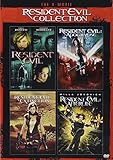
- All six Resident Evil movies, now together in one collection! Based on the popular video game series and starring Milla Jovovich, these sci-fi thrillers are must-watch genre classics!
Release Order vs. Chronological Order: Which Is the Best Way to Watch?
For newcomers staring down the Resident Evil filmography, the biggest question isn’t how many movies there are, but which order actually makes sense. Between multiple continuities, reboots, and canon-adjacent animated films, the answer depends entirely on what kind of experience you want.
The good news is that Resident Evil is far less complicated than it first appears once you separate the timelines and understand what each approach offers.
Quick wins for a faster PC:
Repair Windows errors before they cause bigger problemsFix Now →Scan for outdated or missing drivers - takes under a minuteDriver Scan →Release Order: The Cleanest Experience for First-Time Viewers
For most viewers, release order remains the best and least confusing way to watch the Resident Evil movies. Each live-action continuity was built with its own internal escalation, and watching the films as audiences originally did preserves narrative momentum, tonal shifts, and character evolution.
This is especially true for the Paul W.S. Anderson saga, where Alice’s journey, the Umbrella Corporation’s expanding threat, and the world’s collapse unfold in a deliberate cinematic rhythm. While later entries include flashbacks and retcons, they are designed to recontextualize earlier films rather than be watched out of sequence.
Chronological Order: Best for Franchise Veterans and Lore Enthusiasts
Chronological viewing appeals most to fans already familiar with Resident Evil’s characters, world rules, and recurring themes. In theory, it allows you to track the outbreak, global collapse, and aftermath in a more historically linear fashion.
In practice, the live-action films don’t benefit much from strict story-order viewing. Flashbacks in The Final Chapter, for example, are meant to reframe the saga emotionally, not function as a starting point. Watching chronologically often disrupts pacing without adding clarity.
The Tool Desk
Outbyte PC Repair FREERepair Windows errors before they cause bigger problemsFix Now →Outbyte Driver Updater FREEScan for outdated or missing drivers - takes under a minuteDriver Scan →Understanding the Separate Continuities
One critical rule makes everything simpler: do not mix continuities unless you know exactly why you’re doing it. The Anderson films, Welcome to Raccoon City, and the CGI animated movies do not share a unified timeline.
Welcome to Raccoon City is a standalone reboot that condenses the events of the first two games into a single night. It should be watched entirely on its own, either before or after the Anderson saga, but never inserted into it.
Where the Animated Films Fit Into the Decision
The CGI movies follow the video game canon, not the live-action films, and are already best experienced in release order. Chronological rearranging offers little benefit unless you are aligning them with specific games.
If your goal is to understand Resident Evil as a transmedia franchise, release order keeps each continuity intact. Chronological viewing is better reserved for fans who already know which rules apply to which universe.
Choosing the Right Viewing Path for You
If you’re a casual viewer or first-timer, stick to release order within each continuity and don’t cross the streams. You’ll get the smoothest storytelling and the clearest character arcs.
If you’re a long-time fan chasing lore connections and thematic evolution, a curated chronological approach can be rewarding, but only when each timeline is treated as its own self-contained experience.
Independent reader supportYour contribution helps us test, update, and keep practical guides available for everyone.Quick Reference Viewing Lists: Every Resident Evil Movie by Order and Continuity
Below are clean, no-nonsense viewing lists that separate each Resident Evil continuity and show you exactly where every film belongs. Whether you want the smoothest first-time experience or a lore-focused marathon, these lists remove the guesswork.
Paul W.S. Anderson Live-Action Saga – Release Order (Recommended for Most Viewers)
This is the most accessible way to experience the long-running Milla Jovovich-led storyline. Character arcs, themes, and tonal shifts are designed around this order.
1. Resident Evil (2002)
2. Resident Evil: Apocalypse (2004)
3. Resident Evil: Extinction (2007)
4. Resident Evil: Afterlife (2010)
5. Resident Evil: Retribution (2012)
6. Resident Evil: The Final Chapter (2016)
Watched this way, Alice’s journey unfolds as intended, with revelations and retcons landing at their most effective moments.
Paul W.S. Anderson Live-Action Saga – Chronological Story Order
In-universe chronology largely mirrors release order, with one major caveat. The Final Chapter contains extensive flashbacks to the origins of Umbrella and the T-virus, but those sequences are narrative reframing devices, not true entry points.
For practical viewing, the chronological order remains:
Outdated Drivers Are Slowing You Down
One free scan finds every outdated or missing driver and matches the right update for your exact hardware.Free scan · exact hardware matchWindows Errors? Fix Them Before They Spread
Repair common Windows errors and clear accumulated junk for a smoother, more stable PC - no reinstall needed.Free scan · no reinstallBest Value

- All six Resident Evil movies, now together in one collection! Based on the popular video game series and starring Milla Jovovich, these sci-fi thrillers are must-watch genre classics!
1. Resident Evil (2002)
2. Resident Evil: Apocalypse (2004)
3. Resident Evil: Extinction (2007)
4. Resident Evil: Afterlife (2010)
5. Resident Evil: Retribution (2012)
6. Resident Evil: The Final Chapter (2016)
Attempting to extract or front-load flashback material only fragments the story and weakens its emotional payoff.
Resident Evil: Welcome to Raccoon City – Standalone Reboot Continuity
This film exists entirely outside the Anderson timeline and should never be inserted into it. It reimagines the events of Resident Evil and Resident Evil 2 from the games into a single, contained narrative.
• Resident Evil: Welcome to Raccoon City (2021)
Watch it as a one-off reboot, either before or after the Anderson films, depending on your interest in game accuracy versus blockbuster spectacle.
Free tools Windows power users keep installed
One-click scans. No signup required.
CGI Animated Films – Video Game Canon (Release Order)
These films align directly with the video game timeline and feature core characters like Leon Kennedy, Claire Redfield, and Chris Redfield. Release order is the correct and intended way to watch them.
1. Resident Evil: Degeneration (2008)
2. Resident Evil: Damnation (2012)
3. Resident Evil: Vendetta (2017)
4. Resident Evil: Death Island (2023)
They function best as companion pieces to the games rather than supplements to the live-action movies, sharing continuity only with Capcom’s core canon.
Each list above is self-contained by design. Choosing one continuity and following its internal order is the key to enjoying Resident Evil on film without timeline confusion or tonal whiplash.
What’s actually slowing this PC down?
Pick the symptom - the matching free tool is one click away.
Final Recommendation: The Ideal Watch Order for Newcomers, Fans, and Completionists
With multiple continuities and tones under the Resident Evil banner, there is no single “correct” watch order. The best approach depends entirely on what you want out of the experience: narrative clarity, franchise nostalgia, or total completion. The key is understanding that these films are designed to be watched in distinct lanes, not blended into one timeline.
For Newcomers: Start With the Anderson Saga in Release Order
If you are brand new to Resident Evil on film, the six Paul W.S. Anderson movies remain the most accessible entry point. Watching them in release order provides the cleanest narrative progression and introduces the franchise’s cinematic identity without requiring game knowledge.
This approach prioritizes continuity, character arcs, and escalating spectacle, which is exactly how the films were designed to be experienced. It is the simplest, least confusing way to understand why Resident Evil became such a durable film franchise in the first place.
For Game Fans: Pair the CGI Films With the Games
If your loyalty lies with Capcom’s source material, the CGI animated films are your best match. They respect the game canon, preserve character personalities, and bridge narrative gaps between major game entries.
Do these 3 things before closing this tab:
1Scan for outdated or missing drivers - takes under a minute2Repair Windows errors before they cause bigger problems3Fix the driver behind crashes, sound loss and screen glitchesWatch these films strictly in release order and treat them as extensions of the video game universe, not companions to the live-action movies. They reward familiarity with the games but remain coherent even if you are selectively catching up.
For the Curious: Add Welcome to Raccoon City Separately
Resident Evil: Welcome to Raccoon City works best as a standalone experiment. It is neither a replacement for the Anderson films nor a true sequel to the games, but rather a compressed reinterpretation of early Resident Evil lore.
Slot it in whenever you want a game-faithful aesthetic without long-term commitment. Watching it between larger film runs can actually highlight how differently the same material can be adapted.
For Completionists: Keep Each Continuity Intact
If you plan to watch everything, resist the urge to intercut timelines. Finish one continuity at a time: Anderson saga, then the reboot, then the CGI films.
This preserves tonal consistency and prevents narrative whiplash. Resident Evil rewards structured viewing far more than franchise-hopping, even for seasoned fans.
In the end, Resident Evil on film is less a single saga than a collection of parallel interpretations. Once you stop trying to force them into one timeline and let each version stand on its own, the franchise becomes far easier to navigate—and far more enjoyable to revisit.
Quick Recap
Product prices and availability are accurate as of the date/time indicated and are subject to change. Any price and availability information displayed on Amazon at the time of purchase will apply.