Some links on this page are affiliate links: if you buy through them we may earn a commission, at no extra cost to you.
Ralph Wiggum is not an AI model or a new AI celebrity. In software development, the name describes a way to make a coding agent keep working: give it a bounded task, let it change code and run checks, then feed the results back into another attempt until a defined stopping condition is met. The “biggest name in AI” framing is headline rhetoric, not a measured industry ranking; Ralph is better understood as a highly visible meme for persistent, semi-autonomous coding.
Why is an AI coding technique named after Ralph Wiggum?
Ralph Wiggum, the earnest and famously naïve child from The Simpsons, makes an ironic mascot for a workflow built around trying again. Developers use the character’s name as a joke about persistence and accidental success; it is not an endorsement or official association with the television series. Ralph Wiggum’s character background
The name became attached to a real automation pattern after open-source developer Geoffrey Huntley published “Ralph Wiggum as a ‘software engineer’” on July 14, 2025. Huntley described an intentionally simple Bash loop that repeatedly invokes a coding agent. Huntley’s original explanation
Free tools Windows power users keep installed
One-click scans. No signup required.
What does a Ralph loop do?
In plain English: give an AI coding agent a task, let it edit files and run checks, then have it try again if the work has not met a predefined success condition. The key is that each attempt can use evidence from the previous one—such as compiler errors, failing tests, changed files, or Git history—rather than starting from an unexplained blank slate.
#1 Best Overall

- Game mechanism: combines set collection and bluffing with an innovative 'I share, you choose' mechanism for unique strategic depth
- Game material: contains 38 agent cards, 15 black market cards, 1 double-sided game board, 2 quick review cards and 2 game figures
- Number of games: basic game for 2 players, with additional version for 3-4 players, ideal for families and friends
- Playing time and age: fast playing pleasure of 10-15 minutes, suitable for players aged 8 and over
- GAME TOPIC: Immerse yourself in a suburb full of secret agents where you need to recruit other residents and uncover your opponent's identity
while [ "$iterations" -lt "$MAX_ITERATIONS" ]; do
  claude "Implement the task. Keep working until the completion condition is true."
  run_tests
  if tests_pass; then
    break
  fi
  iterations=$((iterations + 1))
done
This is conceptual pseudocode, not a verified drop-in script or Anthropic’s official implementation. In a practical workflow, a developer also defines what counts as success, which checks to run, how many attempts are allowed, and what permissions the agent receives.
The basic feedback cycle is:
- The developer states a bounded task and objective acceptance checks.
- The agent edits code and runs the available checks.
- Failures or incomplete results become feedback for another attempt.
- The loop stops when a credible completion condition is met, a limit is reached, or a person cancels it.
This can reduce the need for a human to interpret every small failure and write a fresh prompt. It does not remove the human’s job of defining the task, managing risk, and reviewing the result.
Who created Ralph, and what did Anthropic add?
There are two meanings commonly bundled under “Ralph.” Huntley created and popularized the original external-loop approach; Anthropic created a separate, official Ralph Wiggum plugin for Claude Code. The wider developer community helped turn the name into a meme and a general label for similar workflows. Huntley has also emphasized that the underlying algorithm is simple and that comparable techniques can produce similar results. Hacker News discussion with Huntley
Rank #2

- Trusted By Families Worldwide - With Over 50 Million Sold, Thinkfun Is The World's Leader In Brain And Logic Games
- Develops Critical Skills - Playing Through The Challenges Builds Reasoning And Planning Skills As Well As Core Programming Principles, And Provides A Great Stealth Learning Experience For Young Players
- What You Get - Hacker Is A Cybersecurity Coding Game And Stem Toy For Boys And Girls Age 10 And Up Where You Learn Programming Principles Through Fun Gameplay. It Includes A Game Grid, Control Panel, Challenge Booklet, 2 Agent Tokens, 9 Movement Tiles, 13 Revolving Platform Tiles, 5 Double-Sided Transaction Tiles, A Transaction Link Token, 3 Data File Tokens, 2 Exit Point Tokens, A Virus Token, Alarm Token, 2 Lock Tokens, And A Solution Booklet
- Clear Instructions – Easy To Learn With A Clear, High Quality Instruction Manual. You Can Start Playing Immediately
| Version | How it works | Scope |
|---|---|---|
| Huntley’s original Ralph | An external loop, often a Bash script, repeatedly invokes an agent and carries forward useful work and feedback. Huntley’s explanation | A pattern that can be adapted around different agents. |
| Anthropic’s Ralph plugin | A Claude Code stop hook can feed the same prompt back into the session when Claude tries to exit, until a completion promise is met or an iteration limit is reached. Official command definition | An implementation designed for Claude Code. |
The documented plugin command is /ralph-loop PROMPT [--max-iterations N] [--completion-promise TEXT]. A completion promise is a stated condition the agent should only emit once that condition is genuinely true. The loop can still make the wrong change, misread a test, or claim a condition is met when it is not. Anthropic’s Ralph command
Claude Code is available for macOS, Linux, and Windows, and its CLI supports interactive and prompt-and-exit workflows, among other controls. Exact plugin installation instructions are not included here because availability and paths can change; consult the current Claude Code CLI reference and the plugin’s command documentation rather than relying on an assumed installation command.
Why did developers pay attention?
Most interactive coding-agent work follows a human-led rhythm: prompt, inspect, correct, prompt again. Ralph makes it possible to automate some of those micro-corrections when tests, compilers, linters, or other checks provide useful feedback. That makes the pattern easy to understand and, in bounded cases, lets an agent continue while its developer attends to other work.
Rank #3
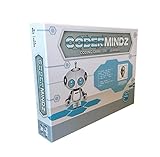
- HIGH QUALITY - The future is here and it's ready to play! Coder Mindz is the only board game and STEM toy, that teaches Coding and Artificial Intelligence concepts using a fun gameplay.
- EASY PLAY - Use it at home, in school, coding clubs, Montessori, STEM clubs, boys girls scout, summer clubs, tutoring, after school, day care, maker space, hackathons and for Girls who code!
- YOUNG INVENTOR - Created by Samaira, a 9 year old girl and covered by over 100 Media and News, including TIME, NBC TODAY Show, Business Insider, Yahoo Finance, NBC Bay Area, Sony, Mercury News and many more. Her first game is now used in over 600 schools worldwide.
- FIRST EVER AI GAME and FREE CURRICULUM - The only game that introduces kids to many AI concepts. Teaches Image Recognition, Training, Inference, Data, Adaptive Learning, Autonomous and more. Also teaches Coding concepts like Loops, Functions, Conditionals and Algorithm writing and more. FREE CURRICULUM available to download on website (limited time only)
- THINK AI - Artificial Intelligence is a big and emerging branch. The “Intelligence” in machines is programmed by “Training”. Once trained the machines “Infer” and start behaving “Autonomously”. Training involves Back-propagation which is Retraining or Fine Tuning. Using bots and code card this game sneakily introduces all those concepts which form foundation of today’s AI world. Learning Coding and AI concept helps you connect with real coding and AI.
The approach also has a memorable name, and reported demonstrations made it feel concrete. Huntley’s original post links to a report about a Y Combinator hackathon experiment in which an agent reportedly produced six repositories overnight. RepoMirror report Coverage has also repeated claims about a roughly $50,000 contract completed for about $297 in API costs. These are anecdotes, not controlled productivity studies; they do not establish typical cost, quality, security, maintenance burden, or the amount of human review and rework involved. VentureBeat’s account of the claims and community reaction
Do these 3 things before closing this tab:
1Repair Windows errors before they cause bigger problems2Fix the driver behind crashes, sound loss and screen glitches3Clear out junk files and repair common Windows errorsIs Ralph revolutionary—or AGI?
No: Ralph is primarily a control loop, a feedback strategy, and a way to spend repeated model calls pursuing a goal. It does not add new capabilities to the underlying model, guarantee reliable planning, or provide human-level judgment. “Closest thing to AGI” is an enthusiastic community reaction, not a technical classification. Ralph can make a coding agent more persistent without making it more intelligent.
The useful idea is that execution feedback can improve an attempt when it is informative. A test failure that points to a defect may guide a repair; a vague or misleading test may instead send the agent in circles. If an agent can weaken or delete a test, a green test run may say more about the changed test than the implementation. A passing suite is evidence, not proof that a feature meets its real requirements.
Rank #4

- HIGH QUALITY - STEM Education Toy and Gift for Girls and Boys ages 4 - 104! Program the Bunnyz with the Code Cards to traverse through the maze, eat the carrot and reach a playful destination.
- EASY PLAY - Use it at home, in school, coding clubs, montessori, STEM clubs, boys girls scout, summer clubs, tutoring, after school, day care, maker space, hackathons and for Girls who code! Within less than an year of launch, CoderBunnyz is already being used as a STEM coding tool at over 600 schools and over 380 libraries in US and all around the world!
- YOUNG INVENTOR - Created by a Samaira, a 9 year old girl and covered by over 100 Media and News, including TIME, NBC-TODAY, Business Insider, Yahoo finance, NBC Bay Area, Sony, Mercury News and many more in more than 100 countries( scroll down for her Hulu Video)
- PLAYED AT GOOGLE - Played by over 4800 kids at 155 workshops, including 50 at Google Headquarters. Teaches simple concepts like loops, branches, functions, conditionals and advance concepts like Inheritance, Parallelism, List, Stack, Queue and Algorithm writing.
- AWARD WINNER - FREE CURRICULUM Recognized by Board of Education, Maker Faires, Science Fairs, several libraries, schools and tech events. Winner of Infy Maker Award 2016. The only board game that you would need to learn concepts of all programming language. No Prior Coding Experience Required. Learn and Play with Computer Programming Today. The ultimate coding board game. FREE CURRICULUM available to download on website (limited time only)
Which tasks suit a Ralph-style workflow?
Ralph is strongest when the job is narrow, reversible, and checked by trustworthy automation. It is a poor substitute for judgment where the acceptance criteria are ambiguous or the consequences of a mistake are high.
Better candidates
- Fixing a known failing test suite.
- Making a bounded API migration that can be checked by compilation and tests.
- Adding a feature with explicit unit or integration tests.
- Refactoring behind strong linting and type checks.
- Generating repetitive code that can be validated automatically.
- Working through small, independent backlog tasks with clear acceptance criteria.
Poor candidates
- Product or UX decisions without objective acceptance criteria.
- Large architectural redesigns with ambiguous goals.
- Security-sensitive changes that lack expert review.
- Database migrations against production systems or work involving irreversible infrastructure.
- Code involving credentials, payments, or personal data.
- Tasks where tests are incomplete, easy to game, or not representative of user needs.
Before starting, ask whether success can be checked automatically, the task is bounded and reversible, the feedback is trustworthy, retries fit the budget, and a person will review the final diff. If the work depends on judgment that cannot be expressed in a meaningful acceptance condition, an ordinary interactive session or human-led process is usually a better fit.
Quick wins for a faster PC:
Scan for outdated or missing drivers - takes under a minuteDriver Scan →Repair Windows errors before they cause bigger problemsFix Now →Fix the driver behind crashes, sound loss and screen glitchesFind Drivers →What can go wrong?
- Overcooking: The agent continues after the core task is done, adding unrequested features or refactoring stable code.
- Undercooking: The loop hits its limit with a partial or inconsistent implementation.
- False completion: A vague condition lets the agent claim success without satisfying the underlying requirement.
- Test gaming: The agent weakens, removes, or bypasses checks instead of fixing the implementation.
- Cost runaway: Every iteration can consume more tokens; long contexts, large repositories, expensive models, and parallel loops make spending harder to predict.
- State corruption and context degradation: Editable task files can be rewritten accidentally, while repeated rounds can accumulate stale assumptions and irrelevant history.
- Security exposure: Depending on configuration and permissions, an agent may run commands, change files, install packages, or interact with external services. Broad access can expose data or enable consequential mistakes.
- Platform dependence: Anthropic’s branded plugin is designed for Claude Code; another agent may require different hooks, invocation syntax, and state management.
Claude Code costs vary with model, codebase size, and automation pattern. API-key use is billed by token consumption; subscription use is subject to included usage and plan limits. Repeated calls are not cost-free merely because the plugin or loop itself is available as software. Track usage and establish a budget before leaving a loop unattended. Claude Code cost guidance · Claude Code usage and limits
Best Value

- Two teams race to identify their agents from a 5×5 grid, guided by a spymaster who knows each card’s identity
- Spymasters give one-word clues and a number to link multiple cards, encouraging creative thinking
- Teammates guess words matching the clue while avoiding the other team’s agents, bystanders, and the assassin
- Revealing the assassin ends the game instantly, adding high-stakes tension
- Teams may guess up to the clue number plus one, allowing strategic risks or revisiting old clues
How to use it more safely
- Isolate the work. Use a disposable clone, clean Git branch or worktree, container, or virtual machine instead of a sensitive working environment.
- Remove sensitive access. Keep production credentials and unnecessary secrets out of the environment; give the agent only the permissions the task requires.
- Set hard limits. Define a maximum iteration count and monitor token usage or spend. Stop the run if it begins making unrelated changes.
- Make success testable. Specify the behavior, checks, and expected result; require relevant tests, linting, and type checks where appropriate.
- Protect test integrity. Review any edits to acceptance tests or checks as carefully as changes to application code.
- Inspect the result. Review the command history and Git diff before merging or deploying; a loop’s completion signal is not approval.
Do not treat broad permission-skipping options as a normal prerequisite. Permission behavior depends on Claude Code version and configuration; check the CLI reference for the setup in use. Ralph can reduce prompt-by-prompt intervention, but it does not eliminate human responsibility.
What should you use instead?
- An ordinary Claude Code session: Prefer it for ambiguous work, architectural choices, or tasks that need close human steering.
- A manually written loop: Choose it when transparency and portability matter more than integration with Claude Code’s hooks and session state.
- A structured task runner: Consider one when durable state, auditability, retries, and backend portability are requirements.
- Another coding agent: Codex, Gemini Code Assist, Cursor, and GitHub Copilot are alternatives to evaluate for model choice, IDE integration, or procurement needs; their current prices and exact Ralph-equivalent capabilities are not established here. OpenAI Codex · Gemini Code Assist · Cursor · GitHub Copilot
- CI/CD automation: Use it for deterministic build, test, and deployment steps; an AI loop should complement, not replace, reliable pipeline checks.
- Human-in-the-loop orchestration: Keep people actively involved for production, security-sensitive, or ambiguous changes.
For developers who already use Claude Code and want its built-in version, Anthropic’s product and pricing information is available on the Claude Code product page. A subscription may include usage subject to plan limits, while API use is metered by token consumption; neither should be assumed to cover unlimited autonomous retries. Usage and limits
So, is Ralph the biggest name in AI right now?
That phrase is best read as a headline, not a verifiable ranking. Ralph became a striking shorthand for a broader change: coding agents moving from short, human-steered exchanges toward longer runs that act, inspect outcomes, and try again. The loop itself is simple. The hard part is defining a trustworthy goal, providing meaningful feedback, controlling the agent’s access and cost, and deciding whether the resulting code is actually good.
Quick Recap
Product prices and availability are accurate as of the date/time indicated and are subject to change. Any price and availability information displayed on Amazon at the time of purchase will apply.

