What’s actually slowing this PC down?
Pick the symptom - the matching free tool is one click away.
A purported Studio Ghibli cease-and-desist letter circulated on X in March 2025 after users joined the viral wave of AI-generated images resembling the studio’s aesthetic. But the available reporting did not authenticate the document as a genuine legal notice. The incident is best understood not as proof that Studio Ghibli sued an AI artist, but as a misinformation story layered onto an unsettled copyright debate.
What happened?
On March 28, 2025, Gizmodo reported that an X user identified as “teej” had posted a document presented as a cease-and-desist notice from representatives of Studio Ghibli. The post appeared during a rapidly spreading trend in which people used OpenAI’s image-generation tools to create pictures resembling Studio Ghibli’s recognizable visual language.
Other social-media users quickly questioned the letter’s authenticity and identified it as fake or fabricated. However, the available reporting does not establish that Studio Ghibli sent the notice, hired the named lawyers, or began legal proceedings against the poster.
That distinction matters. The documented event is that a user posted a purported Studio Ghibli-related legal letter and that people challenged it. It has not been independently established that the poster received a genuine warning, that the image triggered enforcement, or that Studio Ghibli filed a lawsuit.
#1 Best Overall

- HAMMERMILL’S BEST SELLING PRINTER PAPER – You will receive one ream of paper with 500 sheets of 20lb, 92 bright, 8.5" x 14" white copy paper. Legal Size
- 99.99% JAM-FREE PRINTER PAPER - Everyone hates paper jams...You can trust Hammermill paper quality to keep your printer running smoothly. Scroll down to view the Product Description for details
- COLORLOK TECHNOLOGY INCLUDED - Colors on Hammermill copy paper are 30% brighter; blacks are up to 60% bolder and inks dry 3 times faster for less smearing.
- Hammermill copying and printing papers are 100% made in the USA, helping to support 2. 4 million sustainable forestry jobs in America, including family tree farmers. Hammermill is more than just paper
What was—and was not—verified
- Reported: an X user called “teej” posted a letter presented as a Studio Ghibli cease-and-desist.
- Reported: other users publicly challenged the document’s authenticity.
- Not established: that Studio Ghibli or its representatives sent the letter.
- Not established: that the named lawyers or firm were acting for Studio Ghibli.
- Not established: that Studio Ghibli filed a lawsuit or started a formal legal process.
- Not established: that the poster’s image led to any actual enforcement action.
The safest description is therefore “a purported cease-and-desist letter that social-media users identified as fake,” rather than “a fake letter sent by Studio Ghibli” or “a legal warning issued to an AI artist.” The latter formulations claim facts that the available evidence does not prove.
Why did people doubt the letter?
Online skepticism appears to have been based on questions about the alleged sender, the document’s presentation, and the lack of independent corroboration. Those are sensible checks, but they are not the same as a complete forensic authentication.
For a purported legal notice to be credible, readers would normally want to verify:
- the identity of the alleged law firm or representative;
- the firm’s existence in relevant business or professional records;
- the sender’s domain, email address, and telephone number through independent sources;
- whether the named lawyer is associated with the rights-holder or a legitimate practice;
- whether Studio Ghibli, an affiliated company, distributor, or counsel corroborated the notice;
- which particular work, character, image, or conduct was allegedly infringed;
- what remedy was demanded and whether it was legally plausible; and
- whether the document’s wording and jurisdictional details made sense.
A screenshot without reliable metadata or an accessible original post is incomplete evidence. Formatting can also be imitated, so an attractive letterhead or formal tone does not prove authenticity. Conversely, an unusual-looking document is not automatically fake.
Some online commentary circulated additional claims about details allegedly appearing in the letter. Those details should not be repeated as fact without direct inspection and independent verification. The available coverage supports public skepticism, not a definitive forensic finding.
Rank #2

- MULTI-PURPOSE COPY PAPER – Hammermill Fore Multi-Purpose 20lb Copy Paper is a high-quality option that runs well through electronic imaging equipment as well as conventional offset presses. 100% USA made to support millions of sustainable forestry jobs.
- 99.99% JAM-FREE GUARANTEE – We guarantee that you will not experience more than one jam in 10,000 sheets of copying paper on high-speed digital equipment or we’ll replace your Hammermill paper purchase. You can trust Hammermill paper quality, guaranteed.
- COLORLOK TECHNOLOGY – This multipurpose paper features ColorLok Technology for colors that are 30% brighter, blacks that are 60% bolder and ink that dries 3x faster. This white copy paper will provide consistently superior results.
- IDEAL FOR EVERYDAY USE – Perfect for use in all home & office printers and all imaging equipment, this Hammermill multi-purpose paper has good opacity to minimize show-through for double-sided printing. It’s also acid-free to prevent yellowing over time.
- SUSTAINABLY MADE IN THE USA – Original Hammermill copy paper is Forest Stewardship Council (FSC) certified which means it is made with renewable resources from third-party certified, sustainably managed forests.
What did the poster claim?
Gizmodo reported that the poster defended the act with the argument that “AI creators deserve protection, not punishment,” presenting AI-generated work as a form of expression and imagination.
That argument is a position, not an established legal principle. It also created a striking reversal: a person who had used AI to imitate a famous studio’s visual identity presented themselves as the victim of an allegedly oppressive legal system, while the document used to support that narrative appeared untrustworthy.
Whether the post was intended as satire, bait, performance, self-promotion, or a serious claim is not fully established by the available reporting. Whatever the intent, the episode shows how easily an AI-art dispute can acquire a second layer of apparently authoritative but unverified evidence.
Free tools Windows power users keep installed
One-click scans. No signup required.
Did Studio Ghibli actually send the letter?
No authenticated Studio Ghibli legal action was established in the reporting available for this incident. Gizmodo also reported that Studio Ghibli had not publicly addressed OpenAI’s use of material associated with its works at the time.
That silence should not be read as approval, consent, or a waiver of rights. It also does not prove that litigation was imminent or that no private communication existed. A rights-holder can object privately, send an informal warning, or choose not to comment publicly. The narrow conclusion is simply that the purported letter was not authenticated in the available coverage.
Rank #3

- FOR COLOR-INTENSIVE PRINTING – Hammermill 8.5” x 14” 24lb Premium Laser Printer Paper is designed for professional-looking, color-intensive printing. This premium copy paper is manufactured to run in all laser and color printers.
- ULTRA-SMOOTH SURFACE – This premium computer paper features a heavier weight and an ultra-smooth finish that’s specially formulated for superior color images and text. It’s white printer paper that’s capable of holding up to 2400 dpi resolution.
- 99.99% JAM-FREE GUARANTEE – We guarantee that you will not experience more than one jam in 10,000 sheets of copying paper on high-speed digital equipment or we’ll replace your Hammermill paper purchase. You can trust Hammermill paper quality, guaranteed.
- ACID-FREE PAPER – This acid-free white printer paper prevents sheets from yellowing over time to ensure long-lasting archival quality. It’s ideal copier paper for professional-looking design proposals, direct mail, brochures and full color presentations.
- SUSTAINABLY MADE IN THE USA – Original Hammermill copy paper is Forest Stewardship Council (FSC) certified contributing to “MR1 Performance” for paper and wood products under LEED (Leadership in Energy and Environmental Design).
Is making a “Ghibli-style” AI image illegal?
There is no universal answer. The legal question is not simply whether an image looks “Ghibli-like.” It is whether the particular output, its contents, its use, and its presentation copy protected expression, create confusion, or otherwise violate applicable law.
Style is not the same as a specific work
Broad artistic techniques, moods, palettes, conventions, and genre characteristics are not generally treated as privately owned in the same way as a particular copyrighted drawing. A request for a broad aesthetic resemblance is therefore not automatically equivalent to copying a specific film frame.
The Tool Desk
Outbyte Driver Updater FREEScan for outdated or missing drivers - takes under a minuteDriver Scan →Outbyte PC Repair FREERepair Windows errors before they cause bigger problemsFix Now →But an output could raise more serious questions if it reproduces identifiable characters, scenes, settings, creatures, logos, compositions, or other concrete expressive elements from a particular work. The more an image reproduces recognizable protected material rather than merely sharing general visual qualities, the more complicated the analysis becomes.
Copyright is only one issue
Even when “style” is not itself the central copyright claim, other legal theories may matter. Studio names, logos, characters, and commercial identity can raise trademark or false-endorsement concerns if an audience could believe that a work was authorized, sponsored, or created by the studio.
Commercial use can also change the risk profile. Selling images, using them in advertising, building a branded service around a recognizable studio identity, or substituting for licensed artwork may create questions that do not arise in the same way from a private experiment.
The U.S. Copyright Office’s AI reports discuss copyrightability, digital replicas, training, protectable elements, market substitution, and licensing markets. They do not establish a universal rule that imitating a studio’s style is infringement. The relevant reports are available from the Copyright Office’s AI initiative, including its reports on digital replicas, copyrightability, and generative-AI training.
Do these 3 things before closing this tab:
1Clear out junk files and repair common Windows errors2Fix the driver behind crashes, sound loss and screen glitches3Repair Windows errors before they cause bigger problemsRank #4
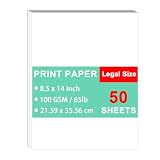
- PREMIUM QUALITY: 28lb bond/70lb text (105 gsm) bright white paper delivers exceptional print quality and professional results
- VERSATILE USE: Perfect for everyday printing, copying, and writing tasks with excellent ink absorption and minimal show-through
- STANDARD LEGAL SIZE: Measures 8.5 x 14 inches (216 x 355.6 mm), compatible with most printers and copiers worldwide
- QUANTITY: Package contains 50 sheets of high-quality white paper for your home or office needs
- PAPER WEIGHT: Professional-grade 28lb bond weight paper provides durability and prevents ink bleeding through pages
What the Copyright Office says about AI-generated images
In its January 29, 2025 summary of the copyrightability report, the U.S. Copyright Office said that a prompt alone generally does not provide enough human authorship for copyright in the resulting output. Human selection, arrangement, editing, or modification may change that analysis when those contributions contain sufficient expressive choices.
That issue concerns whether the person who made an AI image can claim copyright in it. It is separate from whether the image might infringe someone else’s rights. An output can be difficult for its user to copyright while still raising questions about copied characters, source material, trademarks, or market effects.
The Copyright Office has also discussed how outputs prompted to imitate an artist or studio may implicate protectable elements, competition, and licensing markets. Those are fact-specific questions, not a ruling on this particular image or letter. The agency’s summary is available here.
Rules also vary by country. Outside the United States, moral rights, personality rights, unfair-competition law, text-and-data-mining rules, and other doctrines may produce different results. Neither an AI tool’s behavior nor its product policy is a legal determination of whether a particular use is lawful.
PC Slower Than It Used to Be?
A free scan shows the junk files, broken settings and background clutter dragging Windows down - then fixes them in one click.Free scan · Windows 10 & 11Outdated Drivers Are Slowing You Down
One free scan finds every outdated or missing driver and matches the right update for your exact hardware.Free scan · exact hardware matchWhy the Princess Mononoke timing mattered
The controversy appeared while the U.S. theatrical revival of Princess Mononoke, including a 4K restoration and IMAX screenings, was helping put an actual Studio Ghibli work back in the public conversation. That timing made the AI-image debate especially visible.
Best Value

- 10 reams of legal-size multipurpose copy paper (5,000 sheets total)
- Works with laser/inkjet printers, copiers, and fax machines
- High-quality 20-pound weight for economical printing and resistance to paper jams
- Bright white for better contrast; 92 GE brightness
- Acid-free for long-lasting strength; measures 8.5 by 14 inches
It does not show that the theatrical release caused the alleged letter, responded to it, or prompted enforcement. It is context for the attention surrounding the story, not evidence about the document’s authenticity.
Why a fake legal letter is consequential
A fabricated or misleading legal notice is not just another piece of online exaggeration. It can impersonate lawyers or rights-holders, damage reputations, manipulate public opinion, encourage harassment, and make genuine legal warnings harder to recognize.
It also illustrates the attention economy surrounding generative AI. The image may be synthetic, the legal evidence may be synthetic, and the outrage built around both may spread before anyone verifies the underlying claims. A fake notice can make a real copyright debate less intelligible by replacing specific questions about expression and use with a dramatic story about punishment.
Quick wins for a faster PC:
Repair Windows errors before they cause bigger problemsFix Now →Scan for outdated or missing drivers - takes under a minuteDriver Scan →Clear out junk files and repair common Windows errorsFree Scan →The ethical criticism of AI-generated imitation may be serious even when a particular image does not clearly violate copyright. Conversely, an image can create legal risk even if the person who posted it presents the work as harmless experimentation. Moral judgment and legal liability overlap sometimes, but they are not interchangeable.
How to check a viral legal letter
- Identify the alleged sender. Record the rights-holder, lawyer, firm, domain, and jurisdiction named in the document.
- Verify independently. Do not use only the phone number, email address, or website supplied in the letter. Find the organization through an independent official source.
- Check professional records. Where relevant, search bar, corporate, court, or government records for the firm and named lawyer.
- Look for corroboration. Check for a statement from the rights-holder, an affiliated company, a distributor, or the alleged counsel.
- Read the legal demand carefully. A genuine notice should normally identify the conduct or work at issue with enough specificity to understand the complaint, though authenticity cannot be decided from detail alone.
- Distinguish a letter from a judgment. A cease-and-desist is a demand, not a court ruling and not proof that infringement occurred.
- Check the original source. Screenshots without an original post, metadata, or a reliable chain of publication should be treated cautiously.
- Avoid unnecessary amplification. Do not spread private contact information or repeat unverified accusations while trying to investigate.
The bottom line
The March 2025 episode did not establish that Studio Ghibli sent a legal warning to an AI artist. It established that a user posted a purported cease-and-desist, that other users challenged it, and that the document became part of a larger argument about AI-generated images and copyright.
“Ghibli-style” is not a precise legal category. A particular image may raise copyright, trademark, false-endorsement, unfair-competition, or other questions depending on what it copies, how it is presented, whether it is commercial, and where the conduct occurs. The viral letter should therefore be treated as an unverified claim—not as evidence that Studio Ghibli took legal action or that every Ghibli-like AI image is automatically illegal.
Quick Recap
Product prices and availability are accurate as of the date/time indicated and are subject to change. Any price and availability information displayed on Amazon at the time of purchase will apply.




