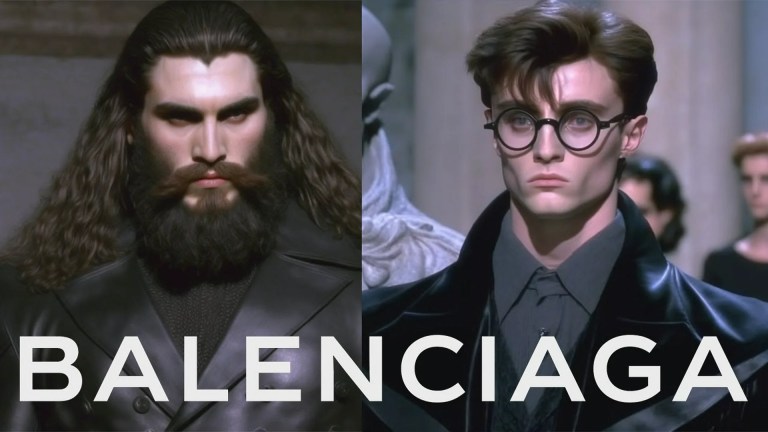
When OpenAI launched its Sora 2 video app on September 30, 2025, users quickly filled its social feed with synthetic videos of CEO Sam Altman. The clips were generated through an authorized Sora “character,” not necessarily unauthorized impersonations. The episode nevertheless exposed how easily a consent-based likeness system could produce realistic, satirical or misleading media—and how quickly that media could spread. Sora’s web and app experiences were discontinued on April 26, 2026.
What Sora was
Sora was more than a text-to-video generator. OpenAI launched Sora 2 with a discovery feed, profiles, remixing, sharing and a TikTok-like stream of generated clips. The company said the model improved physical realism, synchronized dialogue and sound effects, and user control. The initial rollout was invite-only in the United States and Canada. OpenAI’s launch announcement describes those capabilities.
Its most consequential feature was “characters.” A user could make a short video-and-audio recording to verify identity and capture a person’s appearance, then place that person into generated scenes. Character owners controlled who could use the likeness, could revoke access and could remove videos containing it, according to OpenAI.
Why Sam Altman appeared everywhere
- Altman created or authorized a Sora character based on his likeness.
- According to TechCrunch’s first-day report, the character was available for everyone to use.
- Users could insert that recognizable face into arbitrary fictional, political or comedic situations.
- Because Altman runs OpenAI, the clips naturally became jokes about AI, training data, copyright, GPUs and the company’s public image.
- The resulting feed made Sora look, at least during that early-access snapshot, like a factory for Altman videos.
TechCrunch reported examples including Altman addressing pigs in a factory-farm setting, appearing with Pokémon, working around fast-food brands and fictional characters, and allegedly stealing Nvidia GPUs from a Target before pleading with police. These were reported examples from the first day, not a measured audit of every Sora post. Read the original TechCrunch account.
#1 Best Overall

- Privacy Protection and Lens Care: Avoid private information from hacking while preventing dust-fall and scratching of the camera lens
- Multiple Compatibility: Suitable for Logitech webcam C920x, C920, C922, C930e, C922x Pro Stream HD Camera
- Artful Design: Modeled and designed exclusively to fit the above devices from Logitech and make it more stylish
- Easy Flip Mechanism: Can be turned 180 angle and easily take the cover off when flipping more than 180
- Simple Installation: Attaches securely to your Logitech webcam without leaving residue, allowing for quick and hassle-free setup
Were the videos really deepfakes?
“Deepfake” is commonly used for realistic synthetic media depicting a real person, especially when viewers could mistake it for authentic footage. Under that broad description, the Altman clips were synthetic likeness videos. But calling every one an unauthorized deepfake is less precise: the relevant character was reportedly authorized by Altman himself.
That consent answers one question—whether Altman agreed to have his likeness used inside the system—but not all the others. A video can be authorized at creation and still mislead viewers after it is downloaded, cropped, reposted without context or presented as a real statement. Satire can be obvious and still demonstrate that a recognizable person can be made to appear to say or do almost anything.
| Situation | What it means |
|---|---|
| Authorized character | The person enrolled and permitted specified use of their likeness. This describes the reported Altman setup. |
| Unauthorized impersonation | A user depicts someone who did not provide permission, potentially implicating privacy, publicity, harassment or other laws. |
| Deceptive redistribution | Even authorized material may become misleading when separated from its label, feed context or parody. |
What the early Sora experience showed
TechCrunch’s reporter tested the invite-only product and described several edge cases. An initial attempt to create a personal character was rejected; a later upload was accepted. The reporter said the system appeared sensitive to clothing and exposed shoulders. A prompt naming a sports franchise was rejected, while a more generic baseball prompt succeeded. The resulting video reproduced the reporter’s appearance and bedroom setting, although she said the generated voice did not closely match her own.
She also reported that Sora used contextual information, including IP location and ChatGPT history, to tailor an output. That is an observation from one early-access test, not evidence that every user received identical treatment. OpenAI’s privacy policy says the company may process user content, account and usage data, device information, location information and other data depending on the service and settings.
Rank #2

- Privacy Protection: CloudValley webcam cover is designed for those who prioritize privacy, security, and peace of mind when using laptops, tablets, and computers
- Fashion Design: The space aluminum alloy webcam cover features a subtle design which compliments the beautiful aesthetic of top devices
- Ultra-Thin Design: Measures only 0.023 (0.6 mm) inch thin, ensuring it does not interfere with closing your laptop or device while providing reliable camera coverage
- Broad Compatibility: Works flawlessly with most laptops (MacBook, HP, Dell, Asus, Acer, Lenovo), All-in-One PCs and leading tablets including iPad, Surface Pro, Galaxy Tab, Fire HD, and Google Pixel Tablet
- Simple to Use: Only need to align to the webcam, attach and press it firmly for 15 seconds. Does not interfere with web use or indicator light
Why realism and distribution mattered
The concern was not simply that the clips looked bizarre. Sora 2’s stated improvements in motion, faces, voices and synchronized sound reduced some of the visual clues that traditionally signal fabrication. Persistent characters also made it easier to carry the same identity from one scene to another.
- Realistic faces and voices can make fabricated statements appear credible.
- A social feed distributes synthetic media immediately rather than leaving it as a private experiment.
- Remixing makes rapid replication and alteration easy.
- Downloaded clips can circulate without the original label, watermark or surrounding parody.
- Absurd examples can normalize the idea that any public figure can be inserted into any event.
TechCrunch connected the early experience to risks involving disinformation, bullying and misuse. Those risks do not require every individual clip to be convincing; the larger issue is the low cost and speed of producing plausible-looking likeness media.
Consent helped, but it was not a complete safety solution
OpenAI said users could control character access, revoke permissions and remove videos containing a character. Those controls are meaningful inside a platform, but they cannot guarantee removal of copies that someone has already downloaded, screen-recorded, edited or reposted elsewhere. That limitation follows from how ordinary online redistribution works, rather than from a specific promise by OpenAI.
The hardest cases include a consenting person whose character is used to make a false accusation, a friend depicted without permission, a minor’s likeness, or a parody mistaken for a genuine statement. A person may authorize a likeness in one context without authorizing political advertising, sexualized material, workplace harassment or commercial endorsements.
Rank #3
- Note: Not suitable for MacBooks released after 2023 or devices with a protruding front camera; Not applicable to full-screen or notch-style tempered glass screen protectors; Do not use on the rear camera of the phone.
- 💻 Why Do You Need a Webcam Cover Slide? — Safeguard your privacy by covering your webcam with our reliable webcam cover when not in use. Don't let anyone secretly watch you. Stay protected!
- ✅ Thin & Stylish — Enhance your laptop's functionality and aesthetics with our 0.027" ultra-thin webcam covers. Seamlessly close your laptop while adding a touch of sophistication.
- ✅ Fits Most Devices — Compatible with laptops, phones, tablets, desktops! Keep your privacy intact on Ap/ple, Mac/Book, iPh/one, iP/ad, H/P, L/novo, De/ll, Ac/er, As/us, Sa/msung devices.
- ✅ 365 Days Protection — Our upgraded 3.0 adhesive ensures a strong hold that won't damage your equipment. Experience reliable, long-term privacy protection day in and day out.
Moderation’s unavoidable trade-offs
The reported clothing rejection illustrates a familiar problem. A system designed to prevent sexualized or abusive likeness manipulation can also reject benign, fully clothed users. Automated filters may struggle with satire, parody, cultural references and context.
Copyright filters create a different distinction. A rejected prompt is not proof that a request would be unlawful, and a successful generation is not proof that it is lawful. Platform moderation, copyright infringement, trademark misuse, publicity rights and fair-use defenses are separate questions.
Copyrighted characters, brands and real people
Likeness and publicity rights
Altman’s reported authorization does not grant permission to depict every other person. Whether a user may commercially exploit someone’s face or voice depends on consent, jurisdiction, the use made of the output and applicable publicity or privacy law.
Fictional characters
TechCrunch reported clips involving Pokémon, Mario, SpongeBob, Naruto and other recognizable properties. Those examples raised copyright questions; they do not establish that every generated clip infringed copyright. The analysis can depend on transformation, commercial use, jurisdiction, the prompt, the output and how it is distributed.
Crashes, No Sound, or Screen Glitches?
Random freezes, missing sound and display glitches usually trace back to one bad driver. Find and replace yours safely.Free scan · under a minuteWindows Errors? Fix Them Before They Spread
Repair common Windows errors and clear accumulated junk for a smoother, more stable PC - no reinstall needed.Free scan · no reinstallRank #4

- 【Premium Webcam Cover】This webcam privacy cover is an accessory of computer webcam. No worry about interfering with web camera lens use or indicator light; No damage to your device in any way as well. A helpful privacy protector and dust separator
- 【Privacy Protector】Slide the web camera cover over your webcam lens when not in use, and prevents web hackers from Spying on you. It is perfect to provide privacy security and peace of mind to individuals, groups, organizations, companies and governments. It also protects your camera lens from dust, and keeps it in high-definition resolution all the ways
- 【Durable Material】The web cam cover is made of high-strength plastic, which ensures that your privacy is protected for a long and lasting period of time. The back of the web camera privacy cover slide also has a strong 3M adhesive layer. It helps the privacy protector stick firmly to your device. The most convenient, super thin design, and extra mini size, make it perfectly combine with your devices
- 【Wide Compatibility】This webcam cover is compatible with most popular webcams with flat area surrounding lens or with protruding lens, such as Logitech HD Pro Webcam C920 C920x C930e and C922, Logitech C615 and C270 (NOT fit Logitech C910, B910, C310). It can be also used as a cover for the peep hole on door
- 【For Logitech Webcam Cover】 The streamcam cover kit comes with 2 pack. Please clean the lens surface before applying. Make sure the mounting surface is cleaned completely so that it sticks properly and firmly
Brands and commercial settings
Scenes involving Starbucks, McDonald’s, Target, Nvidia or similar companies can raise separate trademark, false-endorsement, defamation or advertising concerns. Merely showing a brand in a fictional scene does not automatically violate trademark law, but an apparently official endorsement would present a different risk.
Independent reader supportYour contribution helps us test, update, and keep practical guides available for everyone.What OpenAI said it built into Sora
OpenAI’s launch materials described a set of safeguards and design commitments:
- identity verification through a short video-and-audio recording;
- character-owner controls over access, revocation and removal;
- parental controls and limits for teen generation and feed use;
- human moderation and systems intended to address bullying;
- wellbeing prompts and controls over feed personalization;
- provenance and harmful-content safeguards;
- a stated emphasis on creation rather than maximizing time spent consuming content.
These are company claims and product commitments, not proof that enforcement was perfect. The early report showed why policy and real-world behavior must be evaluated separately.
What happened to Sora
Sora’s consumer web and app experiences ended on April 26, 2026. OpenAI directs former users to sora.chatgpt.com/sunset for exports and says it sends an email when an export is ready. The company says Sora data will be permanently deleted after the applicable final export period. The Sora API was scheduled for discontinuation on September 24, 2026. Details and deadlines are in OpenAI’s discontinuation notice.
Quick wins for a faster PC:
Scan for outdated or missing drivers - takes under a minuteDriver Scan →Clear out junk files and repair common Windows errorsFree Scan →Best Value
- 【Protect Privacy Security】Focusing on network security, now we can easily and effectively protect personal and family privacy security , Just gently slide the slide and close the camera, you can stop the intrusion of hackers.
- 【 Ultra Thin Design】The new ultra-thin design, with a thickness of only 0.022 inches, is made of flexible ABS material and is not fragile. Will not affect the closing of the laptops and scratch the laptops.
- 【Easy to install】 Strong adhesive makes the cover not fall, keep the screen clean and free of stains during installation, tear off the adhesive tape on the back, align it with our camera, and press hard for 10 seconds to work.
- 【Compatible with 】Compatible with camera for Laptop, tablet, computers, Echo Show and Apple Devices,as: MacBook Pro,Macbook Air,iMac ,Mac mini,iPad,MacBook Air, iPhone 6/7/8 Plus etc front camera .
- [What you get] 6 pack black webcam covers.
That means readers cannot currently sign up for the discontinued Sora app to recreate the launch-day experience. The lasting significance of the episode is therefore not a current product recommendation, but a demonstration of what happens when realistic likeness synthesis is combined with a social distribution system.
The larger lesson
The Altman flood was not simply a story about an executive appearing in ridiculous videos. It exposed three separate issues: whether a likeness was authorized, whether the resulting scene could mislead, and what happens when the file leaves the platform. Consent is essential, but it does not by itself resolve copyright, privacy, harassment, commercial endorsement, provenance or off-platform redistribution.
Frequently Asked Questions
When did Sora launch?
OpenAI announced Sora 2 on September 30, 2025, with an invite-based rollout beginning in the United States and Canada.
Could users make Sora videos of anyone?
OpenAI described identity verification and consent controls for characters. The early report also showed that moderation could be uneven, so stated policy and observed enforcement should not be treated as identical.
Do these 3 things before closing this tab:
1Repair Windows errors before they cause bigger problems2Fix the driver behind crashes, sound loss and screen glitches3Clear out junk files and repair common Windows errorsCan people still use the Sora app?
No. OpenAI discontinued the Sora web and app experiences on April 26, 2026.
Quick Recap
Product prices and availability are accurate as of the date/time indicated and are subject to change. Any price and availability information displayed on Amazon at the time of purchase will apply.