Free tools Windows power users keep installed
One-click scans. No signup required.
In “Motendo,” the third episode of X-Men ’97, Jubilee and Sunspot are pulled into Mojo’s video-game scheme—and discover that an older version of Jubilee is trapped as a perpetual beta tester. In James Whitbrook’s reading, that twist turns the episode’s nostalgia into a warning: revisiting childhood can be joyful, but staying there forever means giving up the chance to change.
How Jubilee’s game becomes a prison
“Motendo” starts with a Sega Genesis-like console and sends Jubilee and Sunspot into a game built around Mojo’s appetite for spectacle. Its levels brim with references to X-Men comics, the original animated series and video-game history. The allusions reward recognition, but Whitbrook argues that viewers do not need to catch every one to understand the story’s emotional point.



That point comes into focus with Abscissa: she is an older Jubilee, held in Mojo’s game as a permanent beta tester. The trap makes literal the danger Whitbrook sees in living through nostalgia. The familiar past can be exciting to revisit, but, as he puts it, “all this nostalgia is good and fun in the moment, but it can’t be a life.”
So the episode’s references are not the problem. The distinction is between remembering and being unable to move beyond what you remember. Jubilee’s predicament gives the distinction a character and a cost: the game keeps her repeating an earlier version of herself rather than building a future.
Why “Lifedeath, Part 1” belongs beside “Motendo”
The episode pairs Jubilee’s playful adventure with “Lifedeath, Part 1,” a story about Storm and Forge confronting losses, choices and the people they have been. The plots differ in tone, but Whitbrook reads them as parallel ways of asking what to do with the past. For Jubilee, the danger is being held in a nostalgic loop; for Storm and Forge, history bears on decisions that still have to be made.
That pairing does not suggest a revival should discard its history. Instead, the past matters when it helps characters face change, not when it freezes them in a remembered version of themselves. Familiarity can be part of the storytelling without becoming its destination.
Rank #2
![Parks and Recreation: The Complete Series [DVD]](https://m.media-amazon.com/images/I/51DaHxqj6rL._SL160_.jpg)
- Demon Slayer: Kimetsu No Yaiba - 4
- Demon Slayer: Kimetsu No Yaiba - 4
- Demon Slayer: Kimetsu No Yaiba - 4
- Demon Slayer: Kimetsu No Yaiba - 4
- Demon Slayer: Kimetsu No Yaiba - 4
When callbacks serve the story
A useful way to judge nostalgia in a revival is to ask two questions: does a callback reward recognition, and does it also move a character or theme forward? “Motendo” is reference-heavy, yet its emotional argument remains legible if a viewer misses the allusions. The recognition is an extra layer, not an entrance exam.
That balance reflects the creative aim described by Brad Winderbaum, Marvel Studios’ head of streaming, television and animation. In an interview with ComicBook.com, he said: “Part of the philosophy of making the show that we all just embraced from the beginning was that we wanted to emulate the feelings that the original show gave us as kids.” He also told TheWrap that, three decades later, reaching viewers with the same emotional force called for storytelling that was “more sophisticated and build and pay off in bigger ways.” Those statements describe the team’s intention; individual viewers may experience the result differently.
Do these 3 things before closing this tab:
1Fix the driver behind crashes, sound loss and screen glitches2Clear out junk files and repair common Windows errors3Scan for outdated or missing drivers - takes under a minuteRank #3
Playfulness, consequences and the wider season
“Motendo” also works in contrast with the season’s heavier material. The A.V. Club describes it as a palate cleanser, and its lighter adventure sits against the trauma of “Remember It” and its aftermath. That contrast can make room for comedy without making serious consequences disappear; the episode’s place in the season gives its playful surface a different weight.
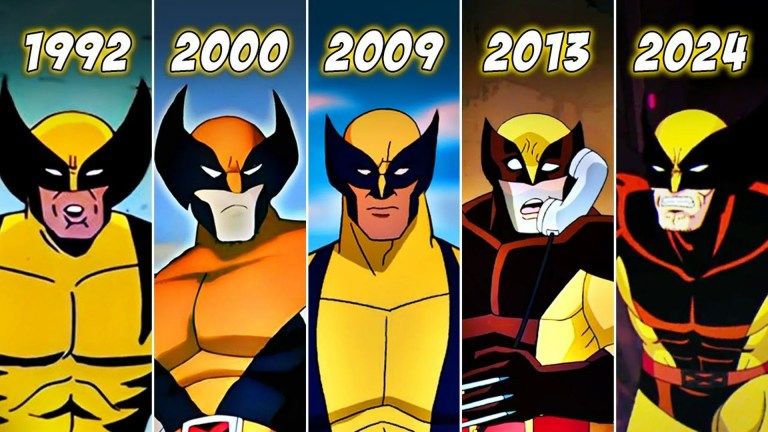
Other critics have described X-Men ’97 as a continuation that recombines or updates familiar comic-book material. That is a critical interpretation, not a guarantee that every viewer will experience the show’s changes in the same way. It does, however, point to a productive tension: a revival can draw on what audiences remember while reshaping those ingredients for stories with new stakes.
What the episode says about nostalgia
Whitbrook’s argument is not that references or affection for the original series are inherently bad. “Motendo” uses both. His concern is nostalgia treated as a permanent home: when the past becomes a loop, it can keep a person from living in the present or becoming someone new. Read alongside Storm and Forge’s story, the episode asks whether history will guide a choice—or prevent one.
That makes Jubilee’s game more than an Easter-egg machine. Its central image is a character stuck testing the same experience without reaching an ending. The allusions make the game pleasurable to recognize; Abscissa’s fate supplies the reason recognition alone cannot be enough.
What’s actually slowing this PC down?
Pick the symptom - the matching free tool is one click away.
Quick Recap
Product prices and availability are accurate as of the date/time indicated and are subject to change. Any price and availability information displayed on Amazon at the time of purchase will apply.