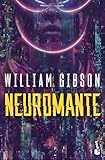
Nearly four decades after William Gibson coined the language of cyberspace, Neuromancer is arriving at a moment when its ideas feel less like prophecy and more like reportage. Artificial intelligence is no longer abstract, corporate power has become borderless, and digital identity is increasingly fragmented. Apple TV+ stepping into this terrain signals not nostalgia, but confidence that cyberpunk can once again anchor prestige television. The timing suggests a recalibration of the genre, from neon-soaked aesthetics back to the unsettling questions that made it essential in the first place.
Apple’s broader strategy helps explain why Neuromancer matters now. The streamer has quietly positioned itself as a home for ambitious, adult-facing science fiction, favoring deliberate world-building over franchise sprawl. Adapting Gibson’s seminal novel aligns with that approach, offering a chance to deliver cerebral spectacle without diluting the material’s complexity. It also reflects an industry moment where audiences are receptive to dense, idea-driven storytelling, even if it demands patience and close attention.


What remains especially compelling is how much is still unknown. Apple TV+ has confirmed the project’s existence and creative intent, but details around release timing, full casting, and the exact scope of the adaptation remain carefully managed. That uncertainty mirrors the challenge of adapting Neuromancer itself, a novel whose influence is so vast that any screen version must justify its place in a media landscape it helped create. In an era crowded with sci‑fi content, this series isn’t just another adaptation; it’s a test of whether cyberpunk can reclaim its status as serious, prestige television.
Apple TV+’s Neuromancer at a Glance: Official Announcement and Series Scope
Apple TV+ officially revealed its Neuromancer series as a straight-to-series order, signaling early confidence in both the material and the creative team tasked with adapting it. Rather than testing the waters with a limited pilot commitment, Apple positioned the project as a marquee genre play, placing William Gibson’s novel alongside the platform’s growing slate of high-concept science fiction. The announcement framed the adaptation not as a reimagining, but as a direct engagement with the source text that started it all.
Do these 3 things before closing this tab:
1Clear out junk files and repair common Windows errors2Fix the driver behind crashes, sound loss and screen glitches3Repair Windows errors before they cause bigger problems#1 Best Overall
The series is being developed by Apple Studios in collaboration with Skydance Television, reinforcing the streamer’s preference for premium, filmmaker-driven production partners. Graham Roland, best known for his work on Jack Ryan, is attached as showrunner and executive producer, bringing experience in serialized tension and morally complex protagonists. J.D. Dillard is set to direct the pilot and executive produce, adding a visual-forward sensibility that suggests Apple is prioritizing tone and atmosphere from the outset.
What Apple Has Confirmed So Far
At the time of the announcement, Apple emphasized fidelity to Gibson’s original novel, describing the series as an adaptation of Neuromancer rather than a broader expansion of the Sprawl universe. That distinction matters, as it implies a focused narrative centered on Case, Molly, and the novel’s defining artificial intelligence conflict, rather than an anthology or loose cyberpunk remix. While future seasons could theoretically explore Count Zero or Mona Lisa Overdrive, Apple has only committed to adapting the first book.
Casting announcements followed later, with Callum Turner confirmed to star as Case and Briana Middleton set to play Molly, two roles that sit at the heart of Gibson’s story. Their involvement offers early clues about the show’s intended balance between character-driven drama and high-concept science fiction. Apple has not yet revealed additional cast members, keeping key figures like Armitage and Wintermute under wraps for now.
Series Scale and Release Expectations
Apple TV+ has not announced an official release date, but industry timing points toward a 2026 debut, factoring in production schedules and the streamer’s typical post-production timelines. Filming is expected to be extensive, reflecting the demands of building a convincing near-future world that feels grounded rather than ornamental. This aligns with Apple’s broader strategy of favoring fewer, more polished genre series over rapid-fire output.
Equally important is what Apple has chosen not to define yet. Episode count, long-term season planning, and how closely the show will track the novel’s structure remain unconfirmed. That restraint suggests a deliberate rollout, allowing the work itself to shape expectations rather than overpromising before the first frame is seen.
Release Window Expectations: When Neuromancer Could Hit Apple TV+
With Apple TV+ staying characteristically quiet on firm dates, the most realistic release window for Neuromancer remains sometime in 2026. That estimate reflects both the scope of the project and Apple’s established production cadence for effects-heavy, prestige genre series. From announcement to premiere, Apple typically allows a longer runway than most streamers, prioritizing polish over speed.
Production Timelines Point to a Long Lead Time
Neuromancer is not a show designed for a compressed schedule. Building Gibson’s dense cyberpunk world requires extensive visual effects, large-scale set work, and careful post-production, especially if the series aims to avoid the overly digital aesthetic that has dated some recent sci-fi television. Even assuming principal photography moves efficiently, post-production alone could stretch close to a year.
Apple’s genre flagships offer a useful comparison. Series like Foundation and Silo both followed multi-year development arcs, with long gaps between filming and release to ensure visual consistency and tonal precision. Neuromancer, arguably more stylized and conceptually demanding, is unlikely to break that pattern.
Why a 2026 Premiere Makes Strategic Sense
A 2026 debut also aligns neatly with Apple TV+’s broader content strategy. The streamer has increasingly spaced out its tentpole releases to avoid internal competition, allowing each series to command attention rather than vanish into an overcrowded slate. Neuromancer is positioned as an event series, not a quiet library addition.
There is also a symbolic appeal to timing. Releasing Gibson’s most influential novel adaptation amid renewed mainstream interest in artificial intelligence, digital identity, and corporate power would make the show feel uncannily timely rather than retrofuturistic. Apple, acutely aware of cultural optics, is unlikely to rush that alignment.
What Could Shift the Timeline
Several variables could still move the release window. If Apple opts for an aggressive post-production workflow or splits the season across multiple production blocks, a late-2025 premiere is not impossible, though increasingly unlikely. Conversely, additional visual refinement or strategic scheduling could push the series into early 2027.
For now, Apple’s silence appears intentional. By withholding a specific date, the platform retains flexibility while letting anticipation build organically. Until Apple signals otherwise, Neuromancer should be viewed as a carefully positioned 2026 release, one designed to arrive fully formed rather than early.
PC Slower Than It Used to Be?
A free scan shows the junk files, broken settings and background clutter dragging Windows down - then fixes them in one click.Free scan · Windows 10 & 11Crashes, No Sound, or Screen Glitches?
Random freezes, missing sound and display glitches usually trace back to one bad driver. Find and replace yours safely.Free scan · under a minuteThe Creative Team Behind the Matrix: Showrunner, Directors, and Gibson’s Involvement
Adapting Neuromancer has long been considered one of science fiction’s great unsolved challenges, and Apple TV+ appears keenly aware that success hinges as much on the creative team as on the source material. Rather than chasing flashy names alone, the streamer has assembled a leadership group with deep experience in grounded genre storytelling, large-scale production, and character-first drama. The result is a creative foundation designed to respect Gibson’s legacy while translating his ideas for a modern television audience.
Graham Roland as Showrunner
At the center of the series is showrunner Graham Roland, best known for his work on Amazon’s Jack Ryan and FX’s Dark Winds. Roland’s résumé suggests a focus on tension, moral ambiguity, and procedural clarity, qualities that could prove crucial in navigating Neuromancer’s dense world-building. His background in serialized storytelling also positions him well to unpack Gibson’s novel over multiple episodes without diluting its themes.
Importantly, Roland has a track record of balancing accessibility with complexity, an essential skill when adapting a book that helped define cyberpunk but can feel opaque to newcomers. Apple’s decision to entrust him with Neuromancer signals an intent to make the series intelligible without flattening its ideas.
JD Dillard and the Directorial Vision
JD Dillard is attached to direct the pilot and serve as an executive producer, giving him outsized influence over the show’s visual language and tone. Dillard’s previous work, including Sleight and Devotion, demonstrates a knack for blending grounded human stories with heightened genre elements. That sensibility could be pivotal in avoiding the cold, overly abstract aesthetic that has hampered some cyberpunk adaptations.
What’s actually slowing this PC down?
Pick the symptom - the matching free tool is one click away.
While additional directors have not yet been publicly announced, the pilot’s direction often sets the creative template for an entire season. Dillard’s involvement suggests Neuromancer will prioritize physicality, atmosphere, and character perspective over purely digital spectacle.
William Gibson’s Role in the Adaptation
Crucially, William Gibson himself is involved as a consulting producer. While this does not mean the series will adhere rigidly to the novel, his presence provides a measure of philosophical continuity. Gibson has historically been cautious about adaptations of his work, making his participation a meaningful endorsement of Apple’s approach.
His involvement also reassures longtime fans concerned about tonal drift or excessive modernization. Rather than treating Neuromancer as a loose brand name, the production appears committed to engaging with its ideas about technology, power, and identity in a way that feels faithful, even if the execution evolves.
A Deliberately Measured Creative Strategy
What stands out most about Neuromancer’s creative team is restraint. Apple has not flooded the project with high-profile auteurs or teased an army of directors, opting instead for a tightly controlled development process. That restraint aligns with the platform’s broader prestige strategy and reinforces the sense that Neuromancer is being built carefully, not rushed to market.
The Tool Desk
Outbyte PC Repair FREEClear out junk files and repair common Windows errorsFree Scan →Outbyte Driver Updater FREEScan for outdated or missing drivers - takes under a minuteDriver Scan →For now, many specifics remain undisclosed, from episode directors to writers’ room details. But the confirmed creative leadership suggests a series more interested in coherence and longevity than quick buzz, an approach that may finally give Neuromancer the screen adaptation it has always demanded.
Cast Breakdown: Confirmed Actors, Characters, and What They Bring to the Iconic Roles
With the creative foundations in place, Apple TV+ has begun to reveal the faces who will inhabit William Gibson’s seminal characters. The casting so far suggests a careful balance between recognizability and interpretive flexibility, prioritizing actors capable of conveying interiority in a world defined by abstraction, technology, and fractured identity.
Rather than stacking the ensemble with stunt casting, Neuromancer appears to be leaning into performance-first choices. That approach feels especially important for a story where psychology, perception, and power dynamics matter as much as plot mechanics.
Callum Turner as Case
Callum Turner is confirmed to play Henry Dorsett Case, Gibson’s famously burned-out console cowboy. Turner’s recent work, particularly in The Boys in the Boat and Masters of the Air, has highlighted his ability to project intelligence and restlessness without overstatement, qualities essential to Case’s alienated, self-destructive mindset.
Case is not a traditional hero, and Turner’s casting signals that the series may resist smoothing out the character’s rough edges. His capacity for internalized tension should serve the role well, grounding Neuromancer’s high-concept ideas in something emotionally legible.
Briana Middleton as Molly
Briana Middleton has been cast as Molly, the augmented street samurai who remains one of cyberpunk’s most enduring icons. Middleton brings a compelling mix of physical presence and emotional clarity, previously demonstrated in Sharp Stick and The Tender Bar.
Crucially, her casting suggests a Molly who is more than an aesthetic symbol of violence and cool detachment. If the series leans into her perspective, Middleton has the range to explore the vulnerability and moral calculus beneath the mirrored lenses and retractable blades.
Mark Strong as Armitage
Mark Strong rounds out the confirmed cast as Armitage, the enigmatic employer who draws Case and Molly into the story’s dangerous web. Strong’s career has been defined by authoritative figures with hidden fractures, making him a natural fit for a character built on deception, control, and psychological instability.
His presence also adds immediate gravitas to the ensemble. Armitage is less a traditional antagonist than a structural force within the narrative, and Strong’s ability to command scenes while hinting at underlying collapse could be pivotal to the show’s tonal balance.
Notably Absent Names and Strategic Silence
Several major characters from the novel, including Wintermute, Neuromancer, and the Tessier-Ashpool family, have yet to be cast publicly. Apple’s silence here appears intentional, likely reflecting both spoiler sensitivity and the complexity of adapting Gibson’s non-human intelligences to screen.
That restraint reinforces the sense that Neuromancer is being rolled out deliberately. Rather than overwhelming audiences with announcements, the production seems focused on locking in performances that can sustain a long-form, psychologically dense adaptation.
As casting continues to unfold, the early choices suggest a series that values nuance over nostalgia. For a story that helped define modern science fiction, that may be the most encouraging sign yet.
Recommended Free Tools
Plot and Adaptation Strategy: How Closely the Series Will Follow William Gibson’s Novel
Adapting Neuromancer has long been considered one of science fiction’s great white whales, not because the story lacks momentum, but because its density resists simplification. Apple TV+’s approach appears rooted in respect for that complexity, positioning the series as a character-driven thriller that unfolds Gibson’s ideas gradually rather than flattening them into spectacle.
While official plot details remain tightly controlled, all signs point to a relatively faithful adaptation of the novel’s core arc. Case, a burned-out console cowboy, is pulled back into the digital underworld for a job that slowly reveals itself to be far larger, stranger, and more existential than a standard cyberpunk heist.
Staying True to the Spine of the Novel
Sources close to the production have indicated that the series will follow the novel’s primary structure rather than reimagining it wholesale. That means Case’s journey from self-destruction to reluctant participation, Molly’s role as both protector and moral counterweight, and Armitage’s manipulation as the engine driving the plot forward.
Crucially, the story’s gradual escalation appears intact. Neuromancer is not a narrative that explains itself upfront, and the series reportedly embraces that opacity, trusting viewers to piece together motivations, alliances, and power structures over time.
Quick wins for a faster PC:
Clear out junk files and repair common Windows errorsFree Scan →Scan for outdated or missing drivers - takes under a minuteDriver Scan →Artificial Intelligence as Character, Not Concept
One of the adaptation’s biggest challenges lies in bringing Wintermute and Neuromancer to screen. Rather than treating them as abstract villains or exposition machines, the creative team has suggested they will be framed as evolving presences with distinct personalities, goals, and emotional textures.
This aligns closely with Gibson’s intent in the novel, where the AIs are less antagonists than forces probing the boundaries of autonomy and consciousness. In a post–Westworld, post–Ex Machina television landscape, Apple has an opportunity to let these entities feel unsettlingly intimate rather than purely cosmic.
Modernizing Without Diluting the Cyberpunk Edge
Neuromancer was written in 1984, yet many of its predictions now feel uncomfortably close to reality. The series reportedly updates surface-level technology and visual language while preserving the novel’s central anxieties about corporate control, data commodification, and identity erosion.
Importantly, this does not appear to be a sanitized futurism. Early production descriptions emphasize grime, inequality, and overstimulation, suggesting a world that feels lived-in rather than sleek. It’s a choice that honors cyberpunk’s roots as social critique rather than aesthetic trend.
Free tools Windows power users keep installed
One-click scans. No signup required.
A Long-Form Structure That Lets the World Breathe
Unlike previous film attempts that struggled to compress Gibson’s ideas into a two-hour runtime, the Apple TV+ series benefits from a serialized format. That space allows secondary characters, side missions, and philosophical digressions to exist without feeling extraneous.
The expectation is not a beat-for-beat translation of every scene, but a season that captures the novel’s rhythm. Slow burns punctuated by sharp turns, introspection interrupted by violence, and an ever-present sense that unseen systems are shaping every choice the characters make.
In adapting Neuromancer, Apple appears less interested in rewriting history than in finally giving the story room to function as intended. For a novel that essentially invented a genre, that patience may be the adaptation’s most radical choice.
Independent reader supportYour contribution helps us test, update, and keep practical guides available for everyone.Production Details and Worldbuilding: Visual Style, Cyberpunk Aesthetics, and Filming Updates
If Neuromancer lives or dies on anything beyond casting and narrative fidelity, it’s worldbuilding. Gibson’s Sprawl is not a backdrop but a psychological environment, and Apple TV+ appears acutely aware that getting the look and texture right is non‑negotiable for long‑time fans.
Quick wins for a faster PC:
Scan for outdated or missing drivers - takes under a minuteDriver Scan →Clear out junk files and repair common Windows errorsFree Scan →A Cyberpunk Look Rooted in Texture, Not Neon Gloss
Early creative discussions and behind-the-scenes signals suggest the series is deliberately avoiding the hyper-polished cyberpunk aesthetic popularized by recent blockbusters. Rather than leaning into constant neon spectacle, Neuromancer is reportedly emphasizing shadow, density, and visual noise: crowded interiors, decaying infrastructure, and interfaces that feel invasive rather than elegant.
This aligns closely with Gibson’s original vision, where technology is omnipresent but rarely beautiful. Screens glow harshly, cities feel oppressive, and the digital world is seductive precisely because it offers escape from a physical reality that’s fraying at the edges. The goal appears to be immersion over iconography.
Filming Locations and Practical Worldbuilding
Production has been linked to a mix of soundstage work and location shooting in urban environments capable of doubling as the Sprawl’s layered megacities. While Apple has not released a full breakdown of filming locations, industry reports indicate a preference for practical sets augmented with visual effects rather than wholly virtual environments.
That approach matters for Neuromancer. Cyberpunk worlds resonate most when they feel tactile: cluttered apartments, narrow corridors, and physical spaces that reinforce social stratification. By grounding the series in real-world textures, the production can sell the contrast between meatspace and cyberspace without overreliance on digital gloss.
Rank #4
Designing Cyberspace for a Post–Matrix Audience
One of the biggest creative challenges facing the adaptation is how to visualize cyberspace for viewers who have decades of digital-realm imagery baked into their expectations. The series is said to be pursuing a more abstract, data-forward representation, less concerned with literal virtual architecture and more focused on sensation, speed, and disorientation.
This could place Neuromancer closer to its literary roots, where cyberspace is described as a consensual hallucination rather than a fully explorable environment. In practice, that means prioritizing mood, sound design, and subjective perspective over clear geography, a risky but potentially rewarding choice in serialized television.
Filming Progress and What Apple Isn’t Saying Yet
As of now, Apple TV+ has kept production updates tightly controlled, consistent with its broader strategy for prestige sci‑fi projects. Filming has either recently begun or is in late pre-production, depending on the source, with no official episode count or post-production timeline confirmed.
That silence cuts both ways. On one hand, it limits concrete speculation about release timing beyond broad expectations of a late 2026 or early 2027 debut. On the other, it suggests a production being given time rather than rushed to fill a content slot, a crucial distinction for a series attempting to translate one of science fiction’s most influential worlds into live action.
What’s actually slowing this PC down?
Pick the symptom - the matching free tool is one click away.
What’s clear is that Apple is positioning Neuromancer as a slow-build, design-forward project, one that treats cyberpunk not as retro-futurist nostalgia but as a living language still evolving. For a story that helped define how we imagine the digital future, that restraint may be the smartest production choice of all.
What We Still Don’t Know—and Why Neuromancer Could Be Apple TV+’s Most Ambitious Sci‑Fi Series Yet
For all the careful signals Apple TV+ has sent about tone and intent, major questions still surround Neuromancer. Some of that uncertainty is strategic, but some reflects just how complex this adaptation is shaping up to be. In many ways, what remains unanswered is precisely what makes the project so intriguing.
The Release Window Remains Educated Guesswork
The most immediate unknown is timing. With no official production milestones or post‑production schedule announced, a late 2026 or early 2027 release remains the most realistic projection, based on Apple’s typical prestige rollout cadence.
That long runway suggests Neuromancer is being treated less like a content pipeline entry and more like an event series. Apple has historically allowed ambitious genre projects the breathing room they need, and the lack of a firm date may be a sign of confidence rather than delay.
How Faithful Will the Story Be—and Where Will It Expand?
While the core premise of Case, Molly, and the heist that rewired science fiction is expected to remain intact, the degree of narrative expansion is still unclear. Neuromancer is dense, fast, and elliptical, qualities that don’t always map cleanly onto serialized television without augmentation.
The open question is whether the series will broaden its scope by deepening secondary characters, extending the geopolitical context, or folding in elements from Gibson’s wider Sprawl mythology. Any of those choices could enrich the adaptation, but each carries the risk of diluting the novel’s razor‑sharp momentum.
Casting, Performances, and the Weight of Iconography
Casting announcements have been minimal, and that silence matters. Neuromancer’s characters are archetypal in influence but deliberately underwritten on the page, leaving enormous interpretive weight on performance and direction.
Apple’s eventual casting choices will signal how grounded or stylized the series intends to be. Whether the production leans toward recognizable prestige actors or breakout talent will shape audience expectations long before a single frame of footage is released.
Why This May Be Apple TV+’s Boldest Sci‑Fi Bet Yet
What ultimately sets Neuromancer apart from Apple’s other genre offerings is its cultural burden. This is not just another science‑fiction property; it is the text that prefigured the internet age, corporate surveillance culture, and digital identity before those concepts had names.
Adapting it now requires threading a needle between historical significance and modern relevance. If Apple succeeds, Neuromancer could stand alongside the platform’s most defining originals, not because it updates cyberpunk for today, but because it reminds viewers where so much of today’s digital anxiety began.
In that sense, the unanswered questions are part of the appeal. Neuromancer isn’t promising easy spectacle or nostalgic comfort; it’s positioning itself as a slow, deliberate re‑interrogation of a future we’re already living in. For Apple TV+, that may be the most ambitious move of all.
Quick Recap
Product prices and availability are accurate as of the date/time indicated and are subject to change. Any price and availability information displayed on Amazon at the time of purchase will apply.