Netflix’s cheapest ad-free plan is no longer available in the United States. The current lineup starts at $8.99 per month with advertising, while the cheapest ad-free option—Standard—costs $19.99. Premium costs $26.99 and adds picture quality and capacity features, not ad removal.
Netflix’s cheapest ad-free plan is gone from the current U.S. lineup. The least expensive way to watch Netflix is now Standard with ads at $8.99 per month. The cheapest ad-free option is Standard at $19.99 per month, while Premium costs $26.99 per month.
That means the practical question for U.S. subscribers is no longer whether to choose Basic or Standard. It is whether avoiding advertising is worth an additional $11 per month—or whether Premium’s 4K HDR video, extra simultaneous streams, downloads and extra-member capacity justify another $7.
Netflix’s current U.S. plans
| Plan | Monthly price | Ads | Video quality | Simultaneous devices | Downloads | Extra members |
|---|---|---|---|---|---|---|
| Standard with ads | $8.99 | Yes | 1080p / Full HD | 2 | 2 supported devices | Eligibility varies |
| Standard | $19.99 | No commercial breaks in shows and movies | 1080p / Full HD | 2 | 2 supported devices | 1 possible extra member |
| Premium | $26.99 | No commercial breaks in shows and movies | 4K / Ultra HD + HDR | 4 | 6 supported devices | Up to 2 extra members |
Netflix notes that taxes may apply. Prices and eligibility can also differ when the service is purchased through a package, mobile carrier or other third-party provider.
Windows Errors? Fix Them Before They Spread
Repair common Windows errors and clear accumulated junk for a smoother, more stable PC - no reinstall needed.Free scan · no reinstallOutdated Drivers Are Slowing You Down
One free scan finds every outdated or missing driver and matches the right update for your exact hardware.Free scan · exact hardware match#1 Best Overall

- Ultra-speedy streaming: Roku Ultra is 30% faster than any other Roku player, delivering a lightning-fast interface and apps that launch in a snap.
- Cinematic streaming: This TV streaming device brings the movie theater to your living room with spectacular 4K, HDR10+, and Dolby Vision picture alongside immersive Dolby Atmos audio.
- The ultimate Roku remote: The rechargeable Roku Voice Remote Pro offers backlit buttons, hands-free voice controls, and a lost remote finder.
- No more fumbling in the dark: See what you’re pressing with backlit buttons.
- Say goodbye to batteries: Keep your remote powered for months on a single charge.
Basic has been discontinued—not replaced by a cheaper ad-free plan
The former Basic plan no longer appears in Netflix’s current U.S. plan table. The change happened in stages. Netflix first stopped offering the cheapest ad-free Basic plan to new customers in selected markets, then extended its removal to existing customers in the United States in 2024, according to contemporaneous reporting from July 2024.
The current result is more significant than a simple name change: the lower-priced entry point remains, but it includes advertising. The lowest-priced ad-free tier has moved up to Standard at $19.99 per month.
Netflix originally introduced Basic with Ads in the United States in November 2022 for $6.99 per month. At launch, Netflix said the plan would carry approximately four to five minutes of advertising per hour, exclude some titles because of licensing restrictions and omit downloads. The tier has since evolved into today’s Standard with ads plan, now priced at $8.99.
What the $11 monthly difference buys you
Moving from Standard with ads to Standard costs $11 more each month, or $132 more per year before taxes. The main benefit is an ad-free viewing experience, but Standard also avoids the title restrictions that can affect the ad-supported catalog.
The Tool Desk
Outbyte Driver Updater FREEFix the driver behind crashes, sound loss and screen glitchesFind Drivers →Outbyte PC Repair FREEClear out junk files and repair common Windows errorsFree Scan →Netflix says Standard with ads includes most of its movies and television shows, not the entire catalog. A title that cannot be streamed on the plan is marked with a lock icon. That makes the ad tier a less predictable choice for anyone subscribing specifically to watch a particular film or series.
The ad-supported experience also does not necessarily mean that every form of commercial material disappears when a subscriber moves to an ad-free plan. Netflix describes ad-free viewing as having no commercial breaks in shows and movies, while noting that other commercial content may still appear outside traditional advertising breaks.
Rank #2
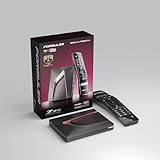
- Next-Gen Flagship Performance. Powered by a high-performance quad-core processor, 4GB DDR4 RAM, and 128GB storage, Z12 Ultra delivers ultra-fast navigation, seamless multitasking, and space for all your favorite apps and recordings.
- Dolby Vision and Dolby Atmos. Enjoy cinematic 4K playback with ultra-vivid colors, deeper contrast, and immersive 3D surround sound that places you right in the middle of the action.
- Advanced Decoding Technology. Supports 4K 60fps 10-bit playback with AV1, H.265 (HEVC), H.264, and HDR formats including HDR10+ and HLG, ensuring compatibility with the latest streaming and live broadcast standards.
- Next-Gen Connectivity. Equipped with Gigabit LAN and WiFi 6E (AX) for faster, more stable, and interference-free streaming—ideal for 4K and beyond.
- Simple and Elegant Home Screen. No ads, no clutter. Customize your home screen with your favorite apps and contents, including direct access to MYTVOnline3 for the ultimate streaming experience.
Premium is not required to remove ads
Both Standard and Premium are ad-free plans. Premium is therefore not an “ad removal” upgrade; it is a capacity and picture-quality upgrade.
For $7 more per month than Standard—or $84 more per year before taxes—Premium adds:
- 4K Ultra HD and HDR instead of 1080p Full HD;
- four simultaneous devices instead of two;
- six supported download devices instead of two;
- spatial audio; and
- up to two extra-member slots instead of one possible slot.
Premium is most defensible for a household with a compatible 4K HDR television, several people watching at the same time, frequent offline viewing or legitimate need for the additional extra-member capacity. Paying for Premium solely to avoid ads is unnecessary because Standard already provides ad-free movies and shows.
Which Netflix plan makes sense?
Choose Standard with ads if price matters most
Standard with ads is the rational choice for viewers who want to keep Netflix at the lowest monthly price and can tolerate interruptions. It retains 1080p playback and two simultaneous streams, so it is not a low-resolution mobile-only plan.
The trade-offs are the advertising, the possibility that a desired title is unavailable and the inability to assume that the entire Netflix catalog is included. Check for the lock icon before choosing this plan for a specific program.
Choose Standard if you want the cheapest ad-free option
Standard is the clearest choice for a household that dislikes advertising but does not need 4K HDR or four simultaneous streams. At $19.99 per month, it is now Netflix’s cheapest ad-free U.S. plan.
Free tools Windows power users keep installed
One-click scans. No signup required.
Rank #3

- The Google TV Streamer (4K) delivers your favorite entertainment quickly, easily, and personalized to you[1,2]
- HDMI 2.1 cable required (sold separately)
- See movies and TV shows from all your services right from your home screen[2]; and find new things to watch with tailored recommendations for everyone in your home based on their interests and viewing habits
- Watch live TV and access over 800 free channels from Pluto TV, Tubi, and more[3]; if you find an interesting show or movie on your TV, mobile app, or Google search, you can easily add it to your watchlist, so it’s ready when you are[2]
- Up to 4K HDR with Dolby Vision delivers captivating, true-to-life detail[4]; and you can connect speakers that support Dolby Atmos for more immersive 3D sound
For many households, this is the important distinction: upgrading from the ad tier to Standard removes the need to pay Premium. Standard is enough for two people watching at once on Full HD-compatible screens.
Choose Premium for 4K, capacity or downloads
Premium makes sense when the household will actually use its additional features. Four simultaneous devices can matter to families, while six download devices are useful for frequent travel or commuting. The 4K HDR benefit also requires compatible content, display hardware and a viewing setup capable of showing the difference.
If none of those features matters, the extra $7 per month is difficult to justify on the basis of ad-free viewing alone.
Cancel or rotate Netflix if you use it occasionally
Some subscribers may be better off cancelling Netflix between major releases and returning when there is enough they want to watch. Others may rotate it with other streaming services as part of a household entertainment budget.
Quick wins for a faster PC:
Repair Windows errors before they cause bigger problemsFix Now →Scan for outdated or missing drivers - takes under a minuteDriver Scan →Clear out junk files and repair common Windows errorsFree Scan →That is a budgeting decision rather than a universal verdict on Netflix’s value. A household watching Netflix every week may find Standard worthwhile; someone subscribing for one series every few months may reasonably decide that even $8.99 is not worth paying year-round.
What the change means for Netflix’s ad business
Netflix has preserved a lower-price entry point instead of abandoning it, but the company has removed the inexpensive ad-free alternative that once sat below Standard. The structure gives price-sensitive viewers a reason to accept advertising while reserving ad-free viewing for the $19.99 Standard plan or the $26.99 Premium plan.
Rank #4

- MAKE YOUR TV SMARTER - Enhance any TV with the ability to play videos, music, and photo slideshows from a USB drive or MicroSD Card! It’s so simple and intuitive - anyone can use it. The Micca 4K is amazingly compact and affordable, get one for each TV in the house!
- PLAYS 4K ULTRA-HD VIDEOS - Works with TVs old and new! Smoothly plays videos up to 4096x2304@30fps over UHD 4K/60Hz HDMI output. Sharp and clear video and audio in pure digital format, compatible with 4K and 1080p TVs, projectors, and monitor displays. Composite AV output for use with analog TVs or for sending sound to a stereo system.
- DUAL USB AND MICRO SD READER - Play media files from USB flash drives and USB hard drives up to 8TB, or microSD cards up to 1TB. Supports FAT/FAT32, exFAT and NTFS file systems. Compatible with wireless air mouse remotes for non-line-of-sight control so that the player can be hidden away!
- SIMPLE DIGITAL SIGNAGE - Automatic video playback with endless repeat and looping, and the ability to resume from the last stopping point. Configurable 90/180/270 degree video output rotation. Great for digital signage applications such as restaurant menu boards, lobby welcome videos, art and museum installations.
- MEDIA FORMAT SUPPORT - Videos: MKV, MP4/M4V, AVI, MOV, MPG, VOB, M2TS, TS files encoded with H.265/HEVC, H.264/AVC, MPEG1/2/4, VC1, up to 4096x2304, 30fps, 200mbps. Subtitles: SRT, PGS, IDX+SUB. Music: MP3, WAV, FLAC. Photos: JPG, GIF, BMP, PNG
Netflix said in a 2026 Upfront announcement that its ads plan had reached more than 250 million global monthly active viewers and that it planned to expand the ads plan into additional countries beginning in 2027. That is a global advertising-business metric, not a count of U.S. subscribers, and it does not show that every American customer prefers an ad-supported experience.
Do you need new hardware?
No. A price-plan change does not require a new television or streaming box. Netflix supports compatible smart TVs, game consoles, streaming media players, cable boxes, smartphones and tablets.
Recommended Free Tools
If your television does not have a current Netflix-compatible app, a 4K streaming media player can provide access and may be useful for a household that keeps Netflix and wants to watch on a television. Check compatibility before buying: a device cannot restore the discontinued Basic plan, remove ads from Standard with ads or reduce Netflix’s subscription price. It also does not guarantee 4K playback unless the plan, title, display, connection and device all support it.
Independent reader supportYour contribution helps us test, update, and keep practical guides available for everyone.What about Netflix gift cards?
Netflix supports electronic gift cards purchased through Amazon, and physical or electronic gift cards may be useful when giving someone a prepaid subscription. They should not be treated as a way to lock in the old Basic price, bypass future plan changes or create a cheaper ad-free membership. Availability, denominations, regional eligibility and purchasing terms can change, so confirm those details before buying.
Bottom line for U.S. subscribers
Netflix has not eliminated its low-cost plan; it has eliminated its low-cost ad-free plan. The current choices are straightforward:
- $8.99 Standard with ads: cheapest entry point, 1080p and two simultaneous devices, but with advertising and possible title restrictions.
- $19.99 Standard: cheapest ad-free option, with 1080p and two simultaneous devices.
- $26.99 Premium: ad-free 4K HDR with four simultaneous devices, more downloads, spatial audio and additional extra-member capacity.
For viewers who simply want Netflix without commercials, Standard is the plan to compare—not Premium. For viewers who want to spend as little as possible, Standard with ads saves $132 per year compared with ad-free Standard before taxes. And for occasional viewers, cancelling or rotating subscriptions may be more economical than accepting the new lineup indefinitely.
Best Value

- 4K streaming made simple:With America’s number 1 TV streaming platform,* exploring popular apps—plus tons of free movies, shows, and live TV—is as easy as it is fun. *Based on hours streamed—Hypothesis Group
- 4K picture quality: With Roku Streaming Stick Plus, watch your favorites with brilliant 4K picture and vivid HDR color.
- Compact without compromises: Our sleek design won’t block neighboring HDMI ports, and it even powers from your TV alone, plugging into the back and staying out of sight. No wall outlet, no extra cords, no clutter.
- No more juggling remotes: Power up your TV, adjust the volume, and control your Roku device with one remote. Use your voice to quickly search, play entertainment, and more.
- Shows on the go: Take your TV to-go when traveling—without needing to log into someone else’s device.
Frequently Asked Questions
Did Netflix eliminate its cheapest plan entirely?
No. Netflix still offers Standard with ads for $8.99 per month in the U.S. The discontinued plan is the cheapest ad-free Basic tier, not every low-cost plan.
Is Premium required to watch Netflix without ads?
No. Standard is ad-free at $19.99 per month. Premium is also ad-free, but its higher price pays for 4K HDR, four simultaneous streams, more downloads, spatial audio and additional extra-member capacity.
How much cheaper is Netflix with ads?
Standard with ads costs $11 less per month than Standard, saving $132 per year before taxes. However, it includes advertising and some titles may be unavailable and marked with a lock icon.
Which Netflix plan is best for most households?
It may be worthwhile if you use Netflix regularly, dislike interruptions and do not need 4K HDR or more than two simultaneous devices. Occasional viewers may prefer to cancel between releases or rotate services.
What’s actually slowing this PC down?
Pick the symptom - the matching free tool is one click away.
The Bottom Line
The cheapest ad-free Netflix plan in the U.S. is now Standard at $19.99 per month. Standard with ads costs $8.99, while Premium costs $26.99 and adds 4K HDR, more simultaneous streams, downloads and extra-member capacity—not ad removal.
Quick Recap
Product prices and availability are accurate as of the date/time indicated and are subject to change. Any price and availability information displayed on Amazon at the time of purchase will apply.