PC Slower Than It Used to Be?
A free scan shows the junk files, broken settings and background clutter dragging Windows down - then fixes them in one click.Free scan · Windows 10 & 11Crashes, No Sound, or Screen Glitches?
Random freezes, missing sound and display glitches usually trace back to one bad driver. Find and replace yours safely.Free scan · under a minuteNetflix’s Ballerina has quietly been sitting in plain sight as the kind of sleek, bruising action thriller that feels tailor-made for the John Wick moment we’re living in. As the franchise expands with its long-awaited spin-off hitting theaters this month, Lee Chung-hyun’s razor-sharp revenge film suddenly plays like essential homework. Not because it shares continuity, but because it speaks the same cinematic language of pain, precision, and personal vendetta.
At its core, Ballerina understands what modern action fans now crave in the post-Wick era: clarity of motion, emotional motivation, and violence that feels purposeful rather than noisy. Jeon Jong-seo’s ferocious lead performance mirrors the franchise’s fascination with lone warriors driven by grief, operating in a heightened underworld where style and savagery coexist. Every fight is intimate, every hit carries weight, and the film’s cool neon palette and controlled brutality feel spiritually aligned with Chad Stahelski’s world.
| # | Preview | Product | Price | |
|---|---|---|---|---|
| 1 |
|
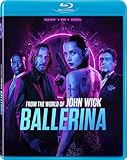
Ballerina - DVD, BLURAY, Digital | $17.99 | Buy on Amazon |
| 2 |
![Ballerina - BLURAY, Digital, 4K ULTRA HD [4K UHD]](https://m.media-amazon.com/images/I/51Zi4XNZAAL._SL160_.jpg)
|
Ballerina - BLURAY, Digital, 4K ULTRA HD [4K UHD] | $23.99 | Buy on Amazon |
Watching Ballerina now reframes expectations for the John Wick spin-off in the best way. It primes audiences for a more character-forward approach to action, one that treats vengeance as both ballet and bloodsport. In an era where Wick has redefined the grammar of Hollywood action, this Netflix thriller stands as proof that the influence has already reshaped the genre, making it required viewing before stepping back into that universe.
What ‘Ballerina’ Is About — A Revenge Narrative Built on Precision and Pain
At its simplest, Ballerina is a revenge story. At its most effective, it’s a study in discipline, restraint, and how violence becomes an extension of grief when words no longer work. Lee Chung-hyun strips the narrative down to its essentials, letting motivation and motion carry the film forward with the same clean efficiency that defines its action.
#1 Best Overall
- A young female assassin seeks revenge against the people who killed her family.
A Lone Avenger Forged by Loss
Jeon Jong-seo stars as Ok-ju, a former bodyguard pulled back into violence after the death of her closest friend, a once-promising ballerina trapped in a cycle of exploitation and abuse. The film wastes no time justifying her crusade; the emotional groundwork is laid quickly, then sharpened with purpose. Like John Wick, Ok-ju isn’t driven by abstract justice but by something far more dangerous: personal obligation.
This emotional clarity is key. Every target she hunts feels like a step deeper into her own reckoning, not a checklist of disposable villains. The film understands that revenge stories only work when the pain feels earned, and Ballerina never lets its protagonist drift into hollow coolness.
Violence as Craft, Not Chaos
Where Ballerina truly clicks for action fans is in how it stages its brutality. The fights are compact, deliberate, and intimate, favoring close-quarters combat, improvised weapons, and tactical movement over flashy excess. Each sequence feels rehearsed down to the centimeter, echoing the same precision-forward philosophy that made John Wick a genre reset.
There’s an almost ritualistic quality to the way Ok-ju moves through these encounters. Violence isn’t expressive; it’s functional. That approach makes every blow land harder, reinforcing the idea that action here is an extension of character rather than spectacle for its own sake.
Aesthetic Control and Underworld Familiarity
Visually, Ballerina operates in a neon-soaked, morally vacant underworld that will feel instantly recognizable to Wick fans. Nightclubs, shadowy corridors, and isolated interiors become arenas where style and savagery overlap. Lee’s direction keeps the camera patient and observant, allowing choreography and performance to sell the impact.
This controlled atmosphere is what makes Ballerina such a natural companion piece to the John Wick spin-off. It exists in a world where rules are implied, professionalism matters, and violence has a code. Watching it primes viewers for a spin-off that’s less about lore expansion and more about refining the emotional and physical language Wick made iconic.
Action Language: How ‘Ballerina’ Mirrors Wick-Style Combat and Kinetic Brutality
What makes Ballerina feel essential ahead of the John Wick spin-off isn’t just its revenge framework, but how fluently it speaks the same physical language. This is action storytelling built on clarity, discipline, and consequence, where every movement communicates intent. Fans primed for Wick’s hyper-specific brand of violence will immediately recognize the rhythm.
Precision Over Spectacle
Like John Wick, Ballerina rejects chaotic editing in favor of spatial awareness and readable choreography. The camera stays close but never confused, allowing viewers to track Ok-ju’s positioning, timing, and tactical decisions in real time. Each fight unfolds like a problem-solving exercise, not a blur of noise.
This precision makes the brutality feel heavier. When Ok-ju strikes, it’s because she has calculated the outcome, not because the scene demands escalation. Wick fans will appreciate how this approach respects the audience’s intelligence, trusting them to read the action rather than overwhelm them.
Improvised Weapons and Environmental Violence
Ballerina also shares Wick’s love of weapon improvisation, turning ordinary spaces into lethal toolkits. Knives, blunt objects, and confined interiors are used with ruthless efficiency, reinforcing the idea that survival depends on adaptability, not brute force. Violence feels earned through ingenuity.
That emphasis on environment-driven combat is central to the Wick identity. The action isn’t just about who hits harder, but who understands the space better. Watching Ok-ju weaponize her surroundings feels like a thematic echo of Wick’s most iconic sequences, making the film feel spiritually aligned rather than superficially similar.
Performance-Driven Physicality
Jun Jong-seo’s performance sells the action in the same way Keanu Reeves’ does: through commitment and physical credibility. You feel the effort in every movement, the fatigue between fights, and the toll each encounter takes. There’s no invincibility shield here, only relentless forward momentum.
The Tool Desk
Outbyte PC Repair FREERepair Windows errors before they cause bigger problemsFix Now →Outbyte Driver Updater FREEScan for outdated or missing drivers - takes under a minuteDriver Scan →That grounded physicality is key to why Ballerina works as pre-viewing. It conditions audiences to expect action that hurts, characters who bleed, and victories that come at a cost. These aren’t power fantasies; they’re endurance tests.
A Shared Philosophy of Brutality
Ultimately, Ballerina mirrors John Wick not by copying its iconography, but by embracing its philosophy. Violence is clean, purposeful, and deeply personal. The action exists to reveal character, not distract from it.
Going into the upcoming spin-off, that mindset matters. Ballerina sharpens your appreciation for action as language, reminding viewers that in this corner of modern action cinema, how someone fights tells you exactly who they are.
Ana de Armas–Level Commitment: Performance, Physicality, and the Lone Assassin Archetype
If there’s one reason Ballerina feels like essential viewing ahead of the John Wick spin-off, it’s how completely it embodies the kind of performance commitment audiences now associate with Ana de Armas’ approach to action. This isn’t just about choreography or screen presence; it’s about selling the psychological isolation that defines a true lone assassin. The film understands that action only resonates when it’s rooted in character.
Jun Jong-seo’s Ok-ju operates with the same internalized intensity that de Armas brings to her most physical roles. Every movement feels intentional, driven by grief and resolve rather than spectacle. That emotional grounding makes the violence hit harder, not louder.
Physicality as Character, Not Showmanship
Like the best modern action performances, Ballerina treats physicality as an extension of personality. Ok-ju doesn’t fight to impress; she fights to survive and to finish what she started. Her body language communicates experience, restraint, and a quiet confidence earned through pain.
This mirrors the philosophy that has defined John Wick and, by extension, what audiences expect from the upcoming spin-off. Ana de Armas’ assassin isn’t being positioned as a superhuman force, but as a trained killer whose effectiveness comes from precision and endurance. Ballerina conditions viewers to appreciate that kind of grounded lethality.
The Solitary Assassin as Emotional Engine
Ballerina leans hard into the loneliness of its protagonist, a hallmark of the Wick universe that often goes underappreciated. Ok-ju exists on the margins, disconnected from normal life, driven by a singular purpose that isolates her further with every act of violence. The action isn’t just cathartic; it’s alienating by design.
Quick wins for a faster PC:
Scan for outdated or missing drivers - takes under a minuteDriver Scan →Clear out junk files and repair common Windows errorsFree Scan →Fix the driver behind crashes, sound loss and screen glitchesFind Drivers →That emotional solitude is central to why this film pairs so well with the John Wick mythology. It reinforces the idea that being this good at violence comes at a cost, one paid in human connection. Going into the spin-off, audiences primed by Ballerina will be more attuned to the quiet moments between fights, where character is truly revealed.
Why This Matters Before the Spin-Off
Netflix’s Ballerina doesn’t share characters or lore with John Wick, but it speaks the same cinematic language. It values commitment over flash, physical storytelling over dialogue, and emotional clarity over convoluted plotting. Those are the exact qualities that Ana de Armas’ spin-off is poised to explore from a new perspective.
Watching Ballerina first sharpens expectations in the right way. It prepares viewers to recognize performance-driven action, to respect restraint, and to understand that in this subgenre, the most dangerous assassins are defined not by how much they fight, but by how much they’re willing to endure.
Shared DNA: Themes of Vengeance, Control, and Survival That Define the Wick Universe
What truly aligns Netflix’s Ballerina with the John Wick franchise isn’t surface-level style, but the thematic engine driving every punch, stab, and hard-earned victory. Both operate in a moral universe where vengeance isn’t optional, control is constantly contested, and survival demands absolute commitment. This shared DNA makes Ballerina feel less like a casual recommendation and more like essential conditioning for what the spin-off promises.
What’s actually slowing this PC down?
Pick the symptom - the matching free tool is one click away.
Vengeance as Purpose, Not Spectacle
In Ballerina, revenge isn’t framed as a flashy excuse for action; it’s the gravitational force pulling Ok-ju forward. Every confrontation is deliberate, weighted with consequence, and driven by a deeply personal sense of obligation rather than righteous fury. That restraint mirrors John Wick’s approach, where revenge is never clean or celebratory, just necessary.
This philosophy is critical to understanding the Wick universe’s emotional logic. Violence isn’t a power fantasy; it’s a response to loss and betrayal that cannot be undone. Watching Ballerina recalibrates expectations, reminding viewers that the most effective revenge stories are grounded in clarity of motive, not escalating spectacle.
Control in a World Designed to Strip It Away
Both Ballerina and John Wick obsess over control, specifically how quickly it can be taken and how brutally it must be reclaimed. Ok-ju is constantly navigating environments designed to overpower her, forcing her to adapt, improvise, and assert dominance through precision rather than brute force. Control becomes a skill, not a given.
That same tension defines the Wick franchise, where systems, rules, and hierarchies exist to contain violence while exploiting it. Assassins survive not by breaking those systems outright, but by mastering them. Ballerina trains viewers to recognize that dynamic, making the spin-off’s world feel immediately legible and dangerous.
Free tools Windows power users keep installed
One-click scans. No signup required.
Rank #2
- A young female assassin seeks revenge against the people who killed her family.
Survival as the Ultimate Measure of Strength
What ultimately binds these films is their understanding of survival as endurance, not invincibility. Ok-ju absorbs damage, makes mistakes, and keeps moving because stopping isn’t an option. Her resilience feels earned, echoing the way John Wick’s battles are wars of attrition rather than flawless victories.
This emphasis on survival over dominance is key to appreciating the Wick spin-off’s tone. It primes audiences to value persistence, recovery, and psychological stamina as much as choreography. Ballerina doesn’t just entertain; it prepares viewers to engage with a universe where staying alive is the hardest fight of all.
Independent reader supportYour contribution helps us test, update, and keep practical guides available for everyone.Tone and Atmosphere: Neon Grit, Stylish Violence, and the Cost of the Kill
If John Wick operates like a modern assassin myth, Ballerina lives closer to the street level, where every hit leaves a mark and every choice carries weight. Its tone is soaked in neon-lit melancholy, framing violence not as spectacle, but as a grim necessity. The film understands that atmosphere is storytelling, using color, sound, and pacing to make the viewer feel the exhaustion that follows every confrontation.
This tonal alignment makes Ballerina essential viewing before the John Wick spin-off. It conditions audiences to expect beauty and brutality in the same frame, and to read stillness and silence as carefully as gunfire. The Wick universe thrives on that tension, where style amplifies consequence rather than replacing it.
Neon as Mood, Not Decoration
Ballerina’s visual language leans heavily on cold blues, deep reds, and urban shadows, creating a world that feels isolating even when it’s crowded. Neon lights don’t glamorize the violence; they underline how artificial and hollow these environments are. Every club, alley, and apartment feels like a temporary refuge that will inevitably be violated.
This mirrors the John Wick aesthetic, where stylized locations double as emotional states. The spin-off continues that tradition, and Ballerina helps viewers read those spaces not as cool backdrops, but as extensions of characters trapped inside systems that profit from their pain.
Stylish Violence With Physical Consequences
The action in Ballerina is precise, vicious, and intentionally uncomfortable. Fights are short, explosive, and often end with Ok-ju visibly shaken, injured, or barely holding herself together. The choreography emphasizes efficiency over flourish, reinforcing that every move is about survival, not dominance.
That philosophy sits at the core of John Wick’s action grammar. Watching Ballerina sharpens appreciation for how the spin-off uses choreography to tell character, where exhaustion, damage, and desperation are as important as technique. Violence looks impressive, but it never feels free.
Recommended Free Tools
The Emotional Cost of Pulling the Trigger
Perhaps Ballerina’s most important tonal contribution is its refusal to detach emotion from killing. Each act of violence compounds Ok-ju’s isolation, pushing her further away from any version of a normal life. Revenge doesn’t restore balance; it deepens the wound.
That emotional accounting is fundamental to the Wick universe. The spin-off doesn’t work if audiences expect catharsis without consequence. Ballerina trains viewers to sit with the aftermath, to understand that in this world, every kill is a debt paid forward, never erased.
What Watching ‘Ballerina’ Primes You to Appreciate in the New John Wick Spin-Off
A World Where Violence Is a Language, Not a Spectacle
Ballerina conditions viewers to read action scenes as conversations rather than showcases. Every hit, stab, and gunshot communicates intent, fear, or inevitability, not just skill. By the time the John Wick spin-off escalates into its signature set pieces, you’re already tuned to look past the surface-level cool and into what each exchange reveals about the characters involved.
This makes the spin-off’s action feel denser and more meaningful. You’re not just watching bodies fall; you’re tracking emotional trajectories in real time. Ballerina sharpens that muscle.
Do these 3 things before closing this tab:
1Fix the driver behind crashes, sound loss and screen glitches2Clear out junk files and repair common Windows errors3Scan for outdated or missing drivers - takes under a minuteFemale-Centered Vengeance Without Romanticization
Ok-ju’s journey in Ballerina strips revenge of glamour, presenting it as a narrowing path rather than a liberating one. Her resolve is powerful, but it costs her connection, safety, and peace. That framing primes audiences to appreciate how the John Wick spin-off handles its own female perspective within a brutal system that doesn’t bend for anyone.
Instead of empowerment fantasy, both stories lean into survival realism. Strength exists, but it’s forged through loss, not triumph. Watching Ballerina sets expectations correctly and prevents misreading restraint as weakness.
Efficiency Over Excess in Action Design
Ballerina’s action scenes are ruthlessly efficient, often ending before they feel “complete” in a traditional action-movie sense. That brevity reinforces danger and unpredictability, a lesson the John Wick spin-off builds upon with more elaborate choreography. The difference isn’t philosophy, but scale.
Having Ballerina fresh in mind makes the spin-off’s larger sequences feel earned rather than indulgent. You recognize the same DNA operating under a bigger budget, where clarity and intention still drive every movement.
Recommended Free Tools
Loneliness as the Franchise’s True Constant
Perhaps most importantly, Ballerina primes viewers for the emotional isolation that defines the Wick universe. Ok-ju operates almost entirely alone, moving through transactional relationships that evaporate once they’ve served their purpose. That solitude isn’t incidental; it’s the cost of living by violence.
The John Wick spin-off extends that theme, placing its characters inside a world where connection is dangerous and trust is temporary. Watching Ballerina beforehand heightens sensitivity to that loneliness, allowing quieter moments in the spin-off to land with unexpected weight.
Understanding the Rules Without Needing Exposition
Ballerina never over-explains its underworld, trusting viewers to infer rules through behavior, consequences, and silence. That storytelling confidence mirrors how the John Wick spin-off expands its universe without stopping to define it. Power structures are felt, not diagrammed.
By acclimating to that approach, Ballerina makes the spin-off smoother and more immersive. You stop waiting for answers and start reading the world the way its characters do, instinctively, cautiously, and always a step behind danger.
Final Verdict: Why ‘Ballerina’ Is Essential Viewing for Franchise-Ready Action Fans
A Perfect Calibration of Expectations
Netflix’s Ballerina doesn’t just entertain; it calibrates. It trains viewers to appreciate precision over spectacle, atmosphere over exposition, and consequence over catharsis. That mindset is exactly what the upcoming John Wick spin-off expects from its audience.
Going in cold, some may mistake restraint for limitation. Watching Ballerina first ensures you recognize that restraint as a deliberate creative choice, one rooted in tension, character, and control.
A Shared Language of Violence and Vulnerability
What ultimately links Ballerina to the Wick universe isn’t lore or crossover, but language. Both speak fluently in physical storytelling, where bruises matter, exhaustion accumulates, and survival is never guaranteed. The action isn’t just choreography; it’s character revealed under pressure.
Ok-ju’s performance embodies that philosophy, delivering a protagonist defined less by dialogue than by movement and resolve. That same approach fuels the spin-off, making Ballerina feel less like homework and more like immersion training.
Why This Netflix Thriller Elevates the Spin-Off Experience
By the time the spin-off begins, Ballerina has already taught you how to watch it. You’re attuned to silences, alert to environmental storytelling, and prepared for emotional beats that arrive without fanfare. The result is a richer, more textured viewing experience.
Instead of reacting to the spin-off’s choices, you’re aligned with them. You understand why the world operates the way it does, and why its characters can’t simply walk away.
In the end, Ballerina is essential viewing because it sharpens your instincts as an action fan. It strips the genre down to its bones and reminds you why the John Wick franchise works in the first place. Watch it now, and the spin-off won’t just hit harder—it’ll hit deeper.
Quick Recap
Product prices and availability are accurate as of the date/time indicated and are subject to change. Any price and availability information displayed on Amazon at the time of purchase will apply.
Do these 3 things before closing this tab:
1Clear out junk files and repair common Windows errors2Fix the driver behind crashes, sound loss and screen glitches3Repair Windows errors before they cause bigger problems