My Hero Academia has prompted debate about queer representation, especially around Himiko Toga’s feelings for Izuku Midoriya and Ochaco Uraraka. The important distinction is between what the manga explicitly establishes, what an adaptation or performer says, and what readers interpret. Toga’s attachments are discussed in official anime-actor commentary, but the material cited here does not assign her a specific canon orientation label. Claims about transgender characters also need direct verification in the manga or official supplemental text before they can be stated as settled fact.
What counts as LGBTQ+ representation in My Hero Academia?
Representation claims can describe different things: a character’s stated identity, a depicted relationship or attraction, or a reader’s interpretation of behavior and subtext. Those are not interchangeable. A careful account should identify both the evidence and where it appears.


| Evidence type | What it can establish | What it cannot establish by itself |
|---|---|---|
| Main manga | What the story depicts or states in its narrative. | A named identity label that the story never gives. |
| Official supplemental material | Character information outside the main narrative, if the guide or profile wording is directly verified. | That every reader has encountered the information in the manga itself. |
| Adaptation or performer commentary | How an adaptation or performer understands or portrays a character. | Authorial confirmation of a canon identity label. |
| Fan interpretation | How readers make sense of themes, relationships, and ambiguity. | That an interpretation is confirmed canon or that a ship is an established relationship. |
This distinction is especially useful in a series whose creator, Kohei Horikoshi, has said that he created character material and backstories that did not make it into the story. In a 2024 VIZ interview, that comment concerns omitted material generally; it does not identify hidden LGBTQ+ stories or promise future queer representation. VIZ’s 10-year interview with Horikoshi also situates the manga alongside its collected editions, box set, spin-offs, and adaptations.
An official MANGA Plus interview with editors notes that readers may value different aspects of characters. That leaves room for interpretation without making every interpretation an explicit fact of the story. The MANGA Plus editors’ interview is useful context for why readers can respond differently to the same characters.
The Tool Desk
Outbyte Driver Updater FREEFix the driver behind crashes, sound loss and screen glitchesFind Drivers →Outbyte PC Repair FREEClear out junk files and repair common Windows errorsFree Scan →#1 Best Overall
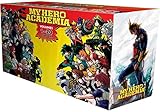
- MHA Fandom: Midoriya inherits the superpower of the world’s greatest hero, but greatness won’t come easy.
- Includes: The first 20 volumes of the bestselling My Hero Academia manga.
- Format: Softcover, 3840 pages.
What does the story establish about Himiko Toga?
Toga’s feelings for both Izuku and Ochaco are central to discussion of queer readings of My Hero Academia. The primary-source material cited here does not establish a specific orientation label for her. The careful description is that she expresses intense feelings for both characters; readers may interpret this as queer or multi-gender attraction, but “bisexual” or “pansexual” should not be presented as settled canon based on these sources.
The official Yomiuri TV anime character page identifies Toga but, in the retrieved page material, does not state an orientation label. Yomiuri TV’s Himiko Toga profile therefore should not be cited as confirmation of one.
What Toga’s voice actor has said
In a 2021 Dengeki Online interview, Toga’s voice actor Misato Fukuen discusses Toga’s attachments to Izuku and Ochaco and the character’s unusual understanding of love and desire. This is meaningful performance commentary and helps explain how Toga is portrayed, but it is not an author confirmation of a named orientation. Read the Dengeki Online interview with Misato Fukuen.
That distinction matters because a performer’s interpretation can illuminate a character without replacing what the manga or official supplemental material explicitly says. Secondary coverage has also framed the question of Toga’s sexuality, but it does not settle the label on the evidence cited here.
Free tools Windows power users keep installed
One-click scans. No signup required.
What about transgender characters such as Magne and Tiger?
Claims that Magne and Tiger are transgender characters circulate in discussion of the series, including claims about information in supplementary character material. The primary text or official guide wording needed to verify the exact details is not established by the sources cited here. It would be misleading to present the specific claims or their source location as confirmed without checking the relevant manga chapters or official guide directly.
When discussing these characters, use their affirmed names and pronouns, and distinguish what appears in the story from what a supplemental profile may say. Whether a detail appears in the main narrative or only in a guide is material: it affects how directly the series communicates that information to readers.
Rank #4
How should readers assess LGBTQ+ claims about the series?
Before calling a character’s identity or relationship canon, ask what kind of evidence supports the claim and how specifically it speaks. These checks help separate a clear story statement from an interpretation without dismissing the interpretation itself.
- Explicitness: Is there a direct self-identification or unambiguous narrative statement, or is the claim inferred from suggestive dialogue or behavior?
- Source: Does the information appear in the manga, an official profile or guide, a creator interview, an adaptation, a performer interview, or fan discussion?
- Specificity: Does the story show a feeling or relationship, or does it assign a named identity label?
- Narrative treatment: What agency and depth does the character receive, and how is queerness situated in relation to villainy, violence, or tragedy? This is a question for analysis grounded in examples, not a conclusion to assume in advance.
- Availability: Is the information in the main story, or does it depend on supplemental material that some readers may not see?
These questions support two ideas at once: fans can make thoughtful queer readings, and those readings should not be presented as author-confirmed facts unless a primary source supports them.
What might the future hold?
The future of LGBTQ+ representation in My Hero Academia is an open question, not an announced direction. Horikoshi’s general comment about omitted character backstories does not reveal what those stories contain or guarantee that future material will address LGBTQ+ identities.
Readers may hope for clearer self-identification, ongoing relationships, or more varied roles for LGBTQ+ characters. Those are reader expectations, not confirmed plans. Ambiguous closeness or fan shipping does not by itself mean a relationship will become canon.
Where can readers check the story directly?
The manga is the primary text for examining what the story depicts. VIZ’s 2024 creator interview describes the series’ collected volumes and box set, but it does not establish current stock, retailer prices, or availability in a particular country. Readers can use the VIZ interview and publisher context to identify the manga editions discussed, then check a local bookseller or publisher listing for current availability.
Quick Recap
Product prices and availability are accurate as of the date/time indicated and are subject to change. Any price and availability information displayed on Amazon at the time of purchase will apply.
What’s actually slowing this PC down?
Pick the symptom - the matching free tool is one click away.