If you mean the total solar eclipse of Wednesday, August 12, 2026, start with NASA’s official NASA+ event page. The live broadcast has ended, so check the page for an available on-demand control rather than assuming the complete stream remains online. NASA’s next total solar eclipse is August 2, 2027; the next one visible from the contiguous United States is not until August 22, 2044.
Where to watch the official 2026 eclipse recap
1. Check NASA+
NASA’s August 12, 2026 Total Solar Eclipse page is the best first stop because it is the primary event listing. NASA advertised telescope views, footage from a WB-57 high-altitude research aircraft, and expert commentary.
The page identifies the event as completed, but the available listing does not independently guarantee that the entire live broadcast remains available permanently. If you see a replay or on-demand button, use it. If you see only an event listing, do not treat that as proof of a full archived stream.
2. Use NASA’s visual recap
NASA’s Scientific Visualization Studio provides downloadable and streamable eclipse visualizations, including an animation of the Moon’s shadow crossing Earth. This is a verified visual recap, though it is not the same as a complete live-event replay.
Recommended Free Tools
#1 Best Overall
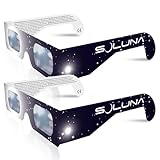
- TRUSTED BY MILLIONS - Soluna Glasses are made in the USA by NASA-approved manufacturer American Paper Optics, and are recognized as ISO-compliant by the American Astronomical Society. Join the millions of eclipse chasers that trusted Soluna Eclipse Glasses for the 2017 Total Solar Eclipse.
- CE AND ISO CERTIFIED FOR DIRECT SUN VIEWING - Our eclipse glasses have been independently tested and verified by ICS Laboratories under the most current standard ISO 12312-2:2015(E) for filters for direct observation of the sun. You can watch the total solar eclipse with absolute confidence in your eye safety.
- OPTIMIZED DESIGN - Soluna Glasses feature scratch-resistant Silver Polymer lens material with an optical density of 5 or greater. Our glasses filter 100% of harmful ultra-violet, 100% of harmful infrared, and 99.999% of intense visible light, offering both unparalleled safety and comfort for the best viewing experience.
- A COMFORTABLE FIT - These certified eclipse glasses are designed for teens and adults, featuring convenient crease lines on both sides for an easy, secure fit.
- 2023 ANNULAR AND 2024 TOTAL SOLAR ECLIPSES - On October 14th 2023, an annular eclipse (when the sun forms a ring around the moon) will cross the United States from Oregon to Texas. We will then experience a once-in-a-generation Total Solar Eclipse on April 8th 2024 - the only USA total eclipse until August 23rd, 2044. You will be amazed as the moon completely blocks the sun during Totality, which lasts but mere minutes. Soluna Glasses are what you need to safely view both of these eclipses.
3. Treat news videos carefully
News coverage can offer a shorter, more accessible summary, but verify the date and location shown in the video. Search pages and video embeds may recycle footage from the April 8, 2024 eclipse. For example, CBS News’ dedicated eclipse page contains 2024 coverage and should not be presented as evidence of 2026 reporting.
If the NASA video will not play
- Open the NASA+ event page directly instead of relying on a search-result thumbnail.
- Look specifically for a replay or on-demand control.
- Try another current browser and temporarily disable aggressive content-blocking extensions.
- Use NASA’s downloadable visualization if the live replay is unavailable.
Watching a recorded eclipse on a phone, computer, or television is safe. Screen viewing is not the same as looking directly at the Sun.
What happened on August 12, 2026?
The event was a total solar eclipse, but totality was visible only along a narrow geographic path. NASA identifies Greenland, Iceland, northern Russia, the Atlantic Ocean, Spain, and a small part of Portugal as locations in the path of totality.
Inside that path, the Moon completely covered the Sun’s bright disk and the solar corona became visible. Even near the center of the path, totality lasted less than two and a half minutes. Before and after totality, the eclipse was partial and direct viewing required proper solar protection.
Most of the contiguous United States did not see totality. NASA says the northern contiguous states saw only a small portion of the Sun covered. Therefore, a U.S. reader may have missed a partial eclipse rather than the total phase described in international coverage.
Rank #2

- Solar eclipse glasses Approved 2024,Safe Solar Observation - These certified safe shades are designed for direct solar viewing. Our approved solar eclipse glasses are perfect for observing eclipses, sunspots, and planetary transits.
- Meets Industry Standards - Our CE and ISO certified safe shades for direct sun viewing are made while adhering to stringent safety and quality regulations set by the American Astronomical Society.
- A Comfy Fit - These certified sunglasses for eclipse are suitable for teens and adults. Featuring crease lines on both sides, these optical quality safe shades may be worn over prescription glasses.
- Filters Out Harmful Light - View eclipses safely with our paper glasses. Our solar viewers use solar safe filter technology, which helps shield your eyes from IR, UV, and 99.9999% of visible light.
- Excellent Value - Each pack contains 10 non-polarized solar eclipse glasses for viewing the sun. Share them with friends and loved ones so you can all enjoy viewing solar eclipses in complete safety.
When is the next solar eclipse?
“The next eclipse” can mean different things. The next solar eclipse of any type is not the same as the next total eclipse or the next event visible from your city.
| Date | Type | Main visibility | What it means for U.S. readers |
|---|---|---|---|
| February 6, 2027 | Annular | Parts of South America and Africa, with partial visibility across broader regions | Not the next contiguous-U.S. total eclipse |
| August 2, 2027 | Total | Southern Spain, North Africa, Saudi Arabia, and Yemen | The next total eclipse worldwide after 2026; travel is required for most Americans |
NASA’s future-eclipse table lists later events, including eclipses in 2028. Check that live table for final visibility details before making plans because dates and geographic visibility should be confirmed against the current NASA listing.
The next total solar eclipse visible from the contiguous United States
The next total solar eclipse visible from the contiguous United States is August 22, 2044, according to NASA’s current eclipse overview. The August 2, 2027 eclipse is a major international viewing opportunity, but it is not a contiguous-U.S. total eclipse.
Do these 3 things before closing this tab:
1Fix the driver behind crashes, sound loss and screen glitches2Repair Windows errors before they cause bigger problems3Scan for outdated or missing drivers - takes under a minuteFor any eclipse, use your exact city or observing site. A date alone cannot tell you whether you will see totality, a partial eclipse, or nothing at all.
How to prepare for the next eclipse
Choose the viewing site first
- Confirm that your location is inside the path of totality if totality is your goal.
- Use NASA’s eclipse map and an authoritative location-specific calculator.
- Record local start, maximum, and end times; eclipse times vary by location and timezone.
- Monitor cloud cover and identify a backup site if travel is practical.
- Plan transportation, lodging, crowds, mobile connectivity, and a way to receive weather updates.
Being near the path is not enough. A site just outside it will not experience totality, and clouds can make a geometrically perfect location unusable.
Rank #3

- Solar eclipse glasses Approved 2024, Safe Solar Observation - These certified safe shades are designed for direct solar viewing. Our solar eclipse glasses are perfect for observing eclipses, sunspots, and planetary transits.
- Meets Industry Standards - Our CE and ISO certified safe shades for direct sun viewing are made while adhering to stringent safety and quality regulations set by the American Astronomical Society.
- A Comfy Fit - These certified sunglasses for eclipse are suitable for teens and adults. Featuring crease lines on both sides, these optical quality safe shades may be worn over prescription glasses.
- Filters Out Harmful Light - View eclipses safely with our paper glasses. Our solar viewers use solar safe filter technology, which helps shield your eyes from IR, UV, and 99.9999% of visible light.
- Excellent Value - Each pack contains 10 non-polarized solar eclipse glasses for viewing the sun. Share them with friends and loved ones so you can all enjoy viewing solar eclipses in complete safety.
Obtain safe solar viewers
For direct viewing, use solar viewers that comply with the ISO 12312-2 international standard. Ordinary sunglasses, even very dark ones, are not suitable. Inspect existing viewers for scratches, tears, or other damage and follow the manufacturer’s instructions.
NASA does not approve particular commercial brands. A printed ISO claim alone should not be treated as proof of authenticity without reliable manufacturer or vendor documentation.
Keep a non-optical backup
A pinhole projector is a simple alternative. Keep the Sun behind you, let sunlight pass through the pinhole, and look at the projected image—not through the pinhole itself. Tree leaves and colanders can also project crescent-shaped images during partial phases.
Use optical equipment correctly
Never place eclipse glasses in front of a camera, telescope, or binoculars as if they were camera filters. Concentrated sunlight can burn through them and cause serious eye injury. Cameras, binoculars, and telescopes require a special-purpose solar filter mounted securely over the front, Sun-facing end of the equipment.
Eclipse-viewing safety
Never look directly at the Sun during a partial or annular eclipse without specialized solar protection. During a total eclipse, unfiltered viewing is safe only during the brief interval when the Sun’s bright disk is completely covered. Put the protection back on immediately when any bright portion of the Sun reappears. See NASA’s current eclipse safety guidance for the full precautions.
Rank #4

- 2026 Total Solar Eclipse: The solar eclipse starting on August 12, 2026. This is an essential accessory for you to prepare for observation. It can produce a clear outline and image of the sun without causing any damage to the eyes. It can reduce ultraviolet, infrared and The hazards of strong light, so you can observe the upcoming total solar eclipse with confidence.
- Absolutely 100% quality assurance: Our solar eclipse glasses lenses are extremely excellent and have passed the rigorous testing conducted by the ICS laboratory of U.S. and have an ISO 12313-2 (2015) quality inspection report. Complying with international standards, it can protect your eyes during observation.
- Suitable for everyone: Our glasses are suitable for adults and children, easy to use and very safe. If you are a scientific practitioner, astronomy enthusiast, parent or person in charge of relevant institutions and organizations, these glasses are your best choice.
- Looking directly at the sun can be dangerous if proper precautions are not taken. Viewing the sun without a proper filter can cause permanent eye damage. Adequate eye protection designed specifically for viewing the sun is crucial and should be taken seriously.
- Strictly follow the instructions for use: Ensuring that there are no risks during the observation process requires our joint efforts with you. Please cooperate and watch this magnificent astronomical spectacle together, because once missed, the next one will be decades away, which is very rare.
- Annular eclipses never provide a safe unfiltered viewing period because the bright solar ring remains visible.
- Keep solar glasses on throughout all partial phases.
- Supervise children and inspect viewers before use.
- Do not stack ordinary sunglasses or substitute generic camera filters.
Quick answers
Can I watch the replay on a phone or TV?
Yes. Watching recorded footage on a screen is safe. It does not make direct solar viewing safe.
Quick wins for a faster PC:
Repair Windows errors before they cause bigger problemsFix Now →Fix the driver behind crashes, sound loss and screen glitchesFind Drivers →Clear out junk files and repair common Windows errorsFree Scan →Was the 2026 eclipse visible from the United States?
Parts of the contiguous United States saw a partial eclipse, but totality was not visible there. Totality crossed areas including Greenland, Iceland, northern Russia, Spain, and a small part of Portugal.
Is the next eclipse total or annular?
The next solar eclipse listed by NASA is annular, on February 6, 2027. The next total eclipse is August 2, 2027.
Can I use regular sunglasses?
No. Use compliant solar viewers or a safe projection method.
Can I put eclipse glasses over a camera lens?
No. Use a properly mounted, front-end solar filter designed for the camera, telescope, or binoculars.
Best Value

- TRUSTED BY MILLIONS - Soluna Glasses are made in the USA by NASA-approved manufacturer American Paper Optics, and are recognized as ISO-compliant by the American Astronomical Society. Join the millions of eclipse chasers that trusted Soluna Eclipse Glasses for the 2024 Total Solar Eclipse.
- CE AND ISO CERTIFIED FOR DIRECT SUN VIEWING - Our eclipse glasses have been independently tested and verified by ICS Laboratories under the most current standard ISO 12312-2:2015(E) for filters for direct observation of the sun. You can watch the total solar eclipse with absolute confidence in your eye safety.
- OPTIMIZED DESIGN - Soluna Glasses feature scratch-resistant Silver Polymer lens material with an optical density of 5 or greater. Our glasses filter 100% of harmful ultra-violet, 100% of harmful infrared, and 99.999% of intense visible light, offering both unparalleled safety and comfort for the best viewing experience.
- A COMFORTABLE FIT - These certified eclipse glasses are designed for teens and adults, featuring convenient crease lines on both sides for an easy, secure fit.
- 2026 EUROPEAN TOTAL SOLAR ECLIPSE - Don’t miss the once-in-a-generation European Total Solar Eclipse on August 12th, 2026. Gather your family, friends and Soluna Glasses and prepare to be amazed as the moon passes in front of the sun, completely blocking it from view during Totality, which lasts but mere minutes.
What if clouds block the next eclipse?
Monitor forecasts, choose a flexible backup location when feasible, and keep NASA’s official stream or visualization available as a fallback. Weather planning is as important as staying inside the eclipse path.
Frequently Asked Questions
What was the eclipse on August 12, 2026?
It was a total solar eclipse, but totality was limited to a narrow path crossing areas including Greenland, Iceland, northern Russia, Spain, and a small part of Portugal. Much of the contiguous United States saw only a partial eclipse.
When is the next total solar eclipse?
The next total solar eclipse after August 12, 2026, is August 2, 2027, with totality visible across parts of southern Spain, North Africa, Saudi Arabia, and Yemen.
When is the next total eclipse in the contiguous United States?
NASA’s current eclipse overview identifies August 22, 2044, as the next total solar eclipse visible from the contiguous United States.
The Tool Desk
Outbyte Driver Updater FREEScan for outdated or missing drivers - takes under a minuteDriver Scan →Outbyte PC Repair FREEClear out junk files and repair common Windows errorsFree Scan →The Bottom Line
Start with NASA’s official 2026 event page, but verify whether a full replay is actually available. For future viewing, distinguish total, annular, and partial eclipses, choose a location inside the correct path, check the weather, and use only proper solar protection.
Quick Recap
Product prices and availability are accurate as of the date/time indicated and are subject to change. Any price and availability information displayed on Amazon at the time of purchase will apply.