Linkin Park returned to public performance in 2024 with Emily Armstrong sharing lead-vocal duties with Mike Shinoda and Colin Brittain joining as drummer. This is not a one-for-one replacement for Chester Bennington: it is a new chapter built by returning members, two new collaborators and a band identity still connected to its earlier catalogue.
The fairest comparison separates documented facts from subjective reactions. The earlier era was defined by Bennington’s voice, the original six-member chemistry and albums such as Hybrid Theory, Meteora and One More Light. The reunion era begins with From Zero, a changed vocal partnership and the group’s attempt to continue after a seven-year break and a period of grief.
| # | Preview | Product | Price | |
|---|---|---|---|---|
| 1 |

|
Meteora | $10.91 | Buy on Amazon |
| 2 |
|
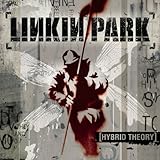
Hybrid Theory | $10.91 | Buy on Amazon |
| 3 |

|
Papercuts | $11.47 | Buy on Amazon |
| 4 |

|
Linkin Park: Rise to Stardom 3 CDs Complete Studio Albums Collection (Hybrid Theory / Meteora /... | $49.63 | Buy on Amazon |
| 5 |

|
From Zero | $21.99 | Buy on Amazon |
What happened to Linkin Park, and when did it return?
Linkin Park’s activity stopped after Chester Bennington died in 2017. The band’s official biography describes the years that followed as a period of grief and uncertainty. Mike Shinoda, Dave “Phoenix” Farrell, Brad Delson and Joe Hahn eventually began making music together again, without announcing that a new singer or a reunion was guaranteed.
That process led to Emily Armstrong and Colin Brittain joining the project. Linkin Park returned to the stage on September 5, 2024, after seven years away from live performance. Contemporary coverage by the Los Angeles Times documented the new singer, the new drummer and the first show; the band’s own biography presents the event as the start of a new chapter rather than a restoration of the old lineup.
Free tools Windows power users keep installed
One-click scans. No signup required.
#1 Best Overall
The reunion therefore has two distinct changes. Armstrong joined as a co-vocalist, while Brittain took the drummer role associated with the band’s new recordings and performances. Returning members remain central, but not every musician from the earlier lineup returned. Rob Bourdon, the founding drummer of the Bennington era, is not part of the lineup described for this chapter.
Who is Emily Armstrong in the new lineup?
Armstrong is not presented as a hidden substitute whose job is to reproduce Bennington’s recordings. The Associated Press describes Shinoda and Armstrong sharing vocal duties on the new material. That arrangement changes the balance of the band: Linkin Park’s familiar rap-and-melodic contrast now includes a second principal singer with her own tone, phrasing and stage presence.
Shinoda remains both a vocalist and a founding creative force. In the earlier catalogue, his parts often supplied rhythmic rap, harmonies, keyboards and a counterweight to Bennington’s more forceful melodic and screamed passages. In the reunion era, the same division cannot be assumed for every song, because Armstrong and Shinoda divide the vocal work according to the new material.
Shinoda told the Associated Press that, after the emotional difficulty of the band’s history, he wanted to keep the possibilities open rather than assume the next vocalist had to be a man, had to sound like Chester or had to fit a single fixed format. That reported explanation matters because it frames Armstrong’s role as a creative decision, not an audition to impersonate someone who died.
What’s actually slowing this PC down?
Pick the symptom - the matching free tool is one click away.
Rank #2
Earlier era versus reunion era: the lineup and roles
| Dimension | Earlier era | Reunion era |
|---|---|---|
| Lead-vocal structure | Chester Bennington and Mike Shinoda formed the best-known vocal partnership, with sharply contrasting melodic, screamed and rap-driven parts. | Emily Armstrong and Mike Shinoda share vocal duties on the new material, creating a different two-vocalist arrangement. |
| Drums | Founding drummer Rob Bourdon was part of the classic lineup. | Colin Brittain joined the new chapter as drummer. |
| Returning members identified by the band | Bennington, Shinoda, Farrell, Delson, Hahn and Bourdon defined the familiar six-member period. | Shinoda, Farrell, Delson and Hahn returned, joined by Armstrong and Brittain. |
| Recorded reference point | The catalogue includes Hybrid Theory, Meteora and One More Light. | From Zero, released November 15, 2024, is the first new album after the 2017 pause. |
| Public framing | Bennington’s voice and history are inseparable from the identity of the recordings. | The band presents the return as a continuation after grief, with a changed membership and a new creative phase. |
How does Emily Armstrong’s voice compare with Chester Bennington’s?
There is no objective measurement that can decide whether one singer is “better,” and vocal resemblance is not the same as vocal function. Bennington’s performances became associated with a distinctive movement between vulnerable melody, rasp, high intensity and harsh screams. That combination helped define how listeners heard Linkin Park’s early records and later stylistic changes.
Armstrong brings a different vocal identity to the same broad space. The Associated Press review characterized parts of her performance as recalling Bennington without parodying him. That is a critic’s description of a listening impression, not a technical finding or a claim that the two singers are interchangeable. Armstrong can evoke the emotional pressure listeners associate with Linkin Park while making different choices about tone, attack, breath and phrasing.
Her presence also changes the question from “Can she replace Chester?” to “What does this vocal partnership do now?” Because Shinoda shares duties with her, the new recordings are not simply older songs with another person on the microphone. The interplay, division of lines and contrast between voices are part of the reunion era’s composition.
What listeners can compare fairly
- Role: identify whether a passage is led by Armstrong, Shinoda or both, rather than judging every line against a Bennington performance.
- Delivery: compare dynamics, articulation and the use of grit or clean tone, while recognizing that different choices may be intentional.
- Context: hear Bennington within the arrangements and production of the earlier albums, and Armstrong within the writing and production of From Zero.
- Emotional effect: treat the reaction as personal. A listener may find the new performances moving, unfamiliar, nostalgic or unconvincing without any of those responses becoming a universal verdict.
What is different about the music now?
From Zero was released on November 15, 2024, as Linkin Park’s first new album in seven years. The Associated Press describes it as both a return and an evolution, and notes that its title points back to Xero, the name associated with the group’s earliest days. That reference links the present to the band’s origin without pretending the intervening decades did not happen.
Rank #3
- Papercutsis the first singles collection from innovative musical force Linkin Park. The career-spanning 20-track album compiles 18 essential anthems, plus the never-before-released track “Friendly Fire” recorded during the 2017 sessions for their seventh albumOne More Lightand fan-favorite rarity “QWERTY”.Linkin Park were inspired to thoughtfully curatePapercutsby their fans’ passionate reception of the 20th Anniversary Editions ofHybrid Theoryin 2020 andMeteoralast year. That enthusiasm led to this comprehensive retrospective of the band’s journey so far in the span of one album.
The most concrete difference is authorship by a different lineup. Armstrong and Brittain participate in the new chapter, while Shinoda, Farrell, Delson and Hahn carry forward the returning-member core. The result should be heard as new Linkin Park material, not as an archival continuation with a vocalist placed over finished plans.
The earlier catalogue offers several useful points of comparison, but album titles alone do not prove that the reunion reproduces or rejects a particular sound. Hybrid Theory and Meteora represent the era most often associated with the band’s early breakthrough; One More Light shows that the Bennington lineup had already changed its songwriting and production approach before the 2017 halt. Comparing those records with From Zero is therefore a comparison across multiple phases, not simply “old heavy Linkin Park” versus “new soft Linkin Park.”
How does the band’s legacy shape the reunion?
Bennington’s death is not a footnote to the reunion. It explains why the band stopped, why a return required time and deliberation, and why any new frontperson would face unusually intense scrutiny. The official biography describes the members making music together again after grief and uncertainty, which places the reunion in a personal and institutional context rather than treating it as a routine personnel change.
The new lineup also has to acknowledge that listeners attach memories, identities and life events to the earlier recordings. A concert or new album can honor that history without promising to recreate the exact emotional circumstances in which the old songs were first heard. Armstrong’s participation makes the continuity visible and the difference unavoidable at the same time.
Quick wins for a faster PC:
Fix the driver behind crashes, sound loss and screen glitchesFind Drivers →Clear out junk files and repair common Windows errorsFree Scan →Scan for outdated or missing drivers - takes under a minuteDriver Scan →The Guardian’s July 2025 interview discusses Armstrong, the band’s legacy and backlash around a new frontwoman. That coverage shows that the reunion generated debate, but one interview cannot establish what all fans think. Some listeners welcomed the return, some objected to the lineup or its symbolism, and others approached it as a separate artistic chapter. Those reactions can coexist.
Independent reader supportYour contribution helps us test, update, and keep practical guides available for everyone.Did the reunion succeed commercially?
The Guardian later reported that From Zero reached number one in 13 countries, including the United Kingdom, in November 2024. That is a retrospective figure reported by the newspaper; the available material does not independently verify each national chart position through the individual chart providers. It should therefore be read as the Guardian’s reported outcome, not as a broader claim about every market or every measure of success.
Commercial performance also answers a narrower question than artistic continuity. A chart result can show substantial interest in the release, but it cannot determine whether Armstrong sounds like Bennington, whether the album feels emotionally equivalent to an older record or whether a listener prefers one period.
How to listen across both periods
A useful comparison starts with the records rather than with assumptions about replacement.
Best Value
- Start with a familiar Bennington-era reference. Choose a track from Hybrid Theory, Meteora or One More Light and note the balance between Bennington’s parts, Shinoda’s contributions, the rhythm section and the production.
- Listen to From Zero as a complete new-album statement. Pay attention to where Armstrong leads, where Shinoda leads and where the arrangement depends on their contrast.
- Compare vocal jobs, not just vocal color. Ask what each singer is being asked to do in the song: carry a melody, create tension, deliver a rhythmic line, build a climax or share a refrain.
- Separate memory from evaluation. A song connected to a particular period of your life may feel more powerful than a technically similar new performance. That response is valid, but it is not evidence that the singers are identical or that one era is universally superior.
- Check the lineup before discussing a performance. The 2024 chapter includes Armstrong and Brittain and does not represent a complete return of every original member.
Is this a replacement story or a continuation?
Calling Armstrong “the replacement for Chester Bennington” suggests that the band made a single substitution and resumed exactly where it stopped. That description leaves out Shinoda’s shared vocal role, Brittain’s arrival, Bourdon’s absence, the seven-year interruption and the new material’s independent authorship.
“Continuation with a changed lineup” is more precise. Linkin Park’s name, returning members, catalogue and creative history connect the two periods. Armstrong’s voice, Brittain’s drumming, the new songs and the circumstances of the return make the reunion a distinct chapter. Listeners can prefer the earlier era without denying the present one, or welcome the new music without claiming it erases Bennington’s importance.
The clearest answer to the comparison
Linkin Park is back, but it is not back unchanged. The earlier era centered on Chester Bennington and Mike Shinoda within a lineup that produced the band’s most familiar records. The reunion era keeps four major members, adds Emily Armstrong as Shinoda’s vocal partner and Colin Brittain as drummer, and begins its recorded life with From Zero.
Whether Armstrong’s delivery affects you as strongly as Bennington’s is a matter of listening, memory and taste. The factual distinction is simpler: Armstrong is not there to become Bennington. She is helping make a new version of Linkin Park that carries the old catalogue forward while accepting that its voices, membership and circumstances have changed.
The Tool Desk
Outbyte PC Repair FREEClear out junk files and repair common Windows errorsFree Scan →Outbyte Driver Updater FREEScan for outdated or missing drivers - takes under a minuteDriver Scan →Quick Recap
Product prices and availability are accurate as of the date/time indicated and are subject to change. Any price and availability information displayed on Amazon at the time of purchase will apply.






Say something about this film