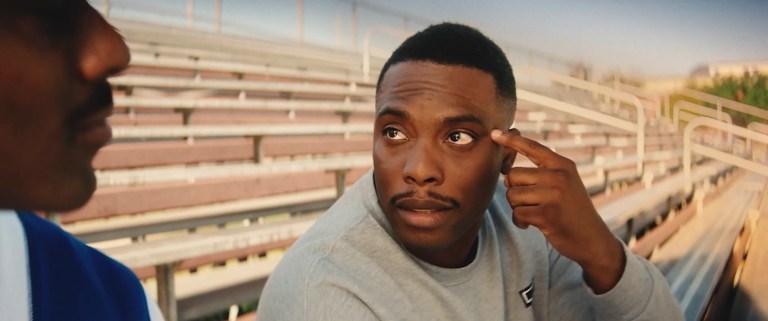
For nearly two decades, Constantine 2 has existed in that frustrating limbo reserved for cult favorites: constantly discussed, occasionally teased, but never truly moving forward. From shifting studio priorities to changing DC regimes, the sequel has repeatedly stalled despite Keanu Reeves’ vocal interest in returning to the role that became a late-blooming fan favorite. That long history of near-misses is precisely why director Francis Lawrence’s latest comments have landed differently this time.
What separates this update from years of vague optimism is specificity. Lawrence has openly confirmed that the sequel is actively being written, that Reeves is creatively involved, and that the project is being shaped outside the main DC cinematic universe. That last point matters enormously, as it places Constantine 2 within DC’s Elseworlds-style approach, freeing it from continuity obligations and allowing the darker, more adult tone that audiences now associate with both the character and Reeves’ modern screen persona.
Just as important, the creative direction being teased aligns with the current landscape of comic book filmmaking rather than fighting it. Lawrence has emphasized a desire to push the horror elements further than the 2005 film ever could, signaling a moodier, riskier sequel that fits the success of R-rated genre hybrids and Reeves’ post-John Wick career renaissance. In an era where legacy sequels often feel corporate or nostalgic by default, this update suggests Constantine 2 may finally be advancing for the right reasons, not just because the timing is convenient.
What the Director Actually Said: Separating Real Progress From Hype
A Script Is Finally Taking Shape
Lawrence’s most important clarification is also the simplest: Constantine 2 is not just an idea anymore. The screenplay is actively being worked on, with Lawrence describing the process as ongoing rather than hypothetical. That distinction matters, especially for a project that has spent years stuck at the “talking about it” phase common to stalled sequels.
#1 Best Overall
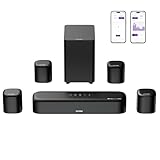
- 7.1ch Dolby Atmos Surround Sound System for TV: This 7.1ch sound bar features 3 main channels for crisp dialogue and 4 surround speakers. Power the rear right surround speaker to pair it wirelessly with sound bar. The setup delivers an immersive surround sound audio experience, making you feel fully engaged in the action. Note: Recommended for space of 108 to 270 ft².
- 4 Surround Speakers for Home Theater Sound System: The Aura A60 Pro soundbar for tv comes with 2 wired front surround speakers and 2 wired rear surround speakers, positioned to create a wide, room-filling soundstage. The rear speakers connect wirelessly with the soundbar, minimizing cable clutter and optimizing space efficiency.
- Dolby Atmos Delivers an Immersive 3D Soundscape: This 7.1ch dolby atmos soundbar enhances your listening experience with multidimensional audio that surrounds you from every direction, upgrading your home theater with powerful, dynamic sound that brings each scene to life.
- 5.25-inch Wired Subwoofer with BassMX Technology: The Aura A60 Pro sound bar comes with a 5.25" wired subwoofer powered by BassMX technology to boost low-frequency performance. An optimized magnetic structure and diaphragm produce deep, powerful bass. Enjoy enhanced low-end sound and experience the impact of every beat.
- Precision Audio Tuning Redefined: Customize your audio experience with the Ultimea App, designed for precise sound control. It provides 121 professionally tuned EQ presets across styles such as Bass, Pop, Classical, and Rock, along with 10-band control and 6 tailored EQ modes including Movie, Music, Voice, Sport, Game, and Night. Using the advanced “Customize” option, you can adjust audio details to suit your personal taste, ensuring every sound is tuned exactly how you prefer.
Equally significant is Reeves’ involvement at the development level. Lawrence has stressed that Reeves isn’t merely waiting for a finished script to sign off, but is creatively engaged in shaping the story. For a star of Reeves’ stature, that signals genuine investment rather than contractual obligation.
Outside DC Continuity, By Design
One of the clearest takeaways from Lawrence’s comments is that Constantine 2 is being developed outside the main DC cinematic timeline. This is not a loophole or a temporary workaround, but a deliberate choice. By operating in its own space, the film avoids the tonal compromises that often come with interconnected franchises.
Lawrence has framed this separation as essential to honoring the character. Constantine’s world, steeped in moral rot, demons, and existential dread, doesn’t easily coexist with broader superhero mythology. Keeping it self-contained allows the sequel to lean fully into the bleak, supernatural identity that has helped the original film age into cult status.
Pushing Darker, Not Just Bigger
Perhaps the most revealing aspect of Lawrence’s update is his emphasis on tone rather than scale. He has repeatedly suggested that the sequel should be scarier and more unsettling than the 2005 film, which itself was constrained by studio expectations of the era. This isn’t about escalating action for its own sake, but about deepening atmosphere and horror.
The Tool Desk
Outbyte PC Repair FREERepair Windows errors before they cause bigger problemsFix Now →Outbyte Driver Updater FREEFix the driver behind crashes, sound loss and screen glitchesFind Drivers →That creative intent aligns closely with Reeves’ current screen persona. After John Wick redefined him as a modern action icon with a grim edge, a darker Constantine feels less like a risk and more like a natural evolution. Lawrence’s comments suggest a sequel shaped by today’s genre sensibilities, where mature comic adaptations are no longer exceptions but proven successes.
Measured Momentum, Not a Greenlight Yet
It’s crucial to note what Lawrence did not claim. There is no announced start date, no casting beyond Reeves, and no confirmation of a studio greenlight. His language has remained careful, grounded in progress without overselling inevitability.
That restraint is precisely why this update carries weight. Instead of hype-driven promises, Lawrence is outlining tangible steps and creative intent. For a sequel that has survived nearly twenty years of false starts, that kind of specificity is the clearest sign yet that Constantine 2 is moving forward deliberately, not desperately.
How Far Along Is ‘Constantine 2’ Right Now? Script, Studio, and Timeline Breakdown
The most important takeaway from Francis Lawrence’s recent comments is that Constantine 2 has moved beyond abstract interest and into active development. That doesn’t mean cameras are about to roll, but it does place the sequel in a more concrete position than it has occupied at any point since the original film’s release. The project is no longer theoretical, even if it remains unapproved.
Lawrence’s update clarifies three critical areas fans have been questioning for years: the state of the script, the studio’s posture, and what a realistic timeline might look like if things continue to progress.
The Script Is Real, but Still Evolving
According to Lawrence, a script is actively being worked on, not merely outlined or discussed in concept meetings. This is a key distinction, as Constantine 2 has previously stalled at the idea stage despite Reeves’ long-standing interest in returning to the role. The director’s language suggests a draft exists, but it is not yet locked.
That ongoing development aligns with Lawrence’s focus on tone. If the goal is a darker, more unsettling film, the writing process likely involves careful calibration rather than rushing toward production. In today’s comic-book landscape, where mature genre entries live or die on execution, the script is arguably the single biggest hurdle to clear.
Rank #2

- Simplified 5.1ch Dolby Atmos Setup: Enjoy immersive 4D sound with real Dolby Atmos and 5.1-channel audio. Five built-in speakers, including two side-firing drivers, create wide surround without rear speakers. Precision DSP ensures <0.5 ms latency for smooth, theater-like sound. Setup takes less than 1 minute.
- Voice Clarity Enhancement: VoiceMX technology uses advanced DSP algorithms to isolate and enhance vocal frequencies in real time. Dialogue remains crisp and easy to follow by separating speech from background effects and music, even at low volumes or during intense scenes.
- 300W Output with 6-Driver System: Featuring five precision-tuned full-range drivers and a dedicated wired wooden subwoofer, the system delivers up to 300W of peak power for bold, room-filling sound. With a frequency response of 45 Hz–18 kHz and a maximum SPL of 99 dB, it reproduces everything from subtle nuances to explosive cinematic effects.
- 18 mm High-Excursion Driver: Powered by BassMX technology, the wired wooden subwoofer features a 18 mm high-excursion driver, a 5.3L tuned cabinet, and a high-density magnetic circuit. This design delivers deeper, tighter bass with greater air displacement and enhanced low-frequency performance—bringing more realism to every scene.
- HDMI eARC for True Dolby Atmos: HDMI eARC supports up to 37 Mbps of bandwidth, unlocking the full potential of lossless Dolby Atmos 5.1-channel audio. Compared to standard ARC, eARC delivers richer surround effects and greater detail. CEC integration allows the TV and soundbar to work together with unified control.
Where the Studio Stands Right Now
Constantine 2 is being developed under Warner Bros. with a clear understanding that it exists outside DC Studios’ core continuity. That positioning matters. By functioning as an Elseworlds-style project, the film avoids competing with James Gunn and Peter Safran’s rebooted DC universe while still leveraging a recognizable DC property.
Do these 3 things before closing this tab:
1Clear out junk files and repair common Windows errors2Fix the driver behind crashes, sound loss and screen glitches3Repair Windows errors before they cause bigger problemsHowever, this status also means the sequel must justify itself on creative and commercial grounds alone. There is no franchise obligation pushing it forward. The studio’s willingness to let development continue suggests interest, but not commitment. A formal greenlight will likely depend on confidence that the film can stand as a prestige, R-rated-leaning genre piece rather than a conventional superhero sequel.
A Realistic Timeline, Not a Fast One
Even under the most optimistic scenario, Constantine 2 is not a near-term release. With the script still in progress and no production date announced, the project remains at least a year or more away from filming. That places any potential release well beyond the immediate slate of DC projects currently in motion.
For Reeves, this slower timeline actually works in the film’s favor. His career is no longer defined by output volume but by carefully chosen roles that reinforce a specific screen identity. A deliberate development process suggests Constantine 2 is being shaped as an event-worthy return, not a nostalgic quick win.
The Creative Direction Being Teased: Darker Tone, R-Rating, and Faithfulness to Hellblazer
If development has been slow, it is largely because Francis Lawrence and Keanu Reeves appear aligned on a very specific creative target. Recent comments from Lawrence suggest the sequel is not interested in softening Constantine’s edges for broader appeal. Instead, the aim is to lean further into the bleakness, moral decay, and spiritual horror that defined both the original film and its comic roots.
That focus helps explain why Constantine 2 remains in careful development rather than fast-tracked production. A darker film demands precision. Tone, rating, and thematic intent all need to be locked before cameras roll, especially in a genre landscape where tonal misfires are increasingly punished.
A Hard R-Rating by Design
One of the most encouraging signals from Lawrence is his openness about pushing for an R-rating. The original Constantine flirted with darkness but was ultimately constrained by a PG-13 ceiling. This time, the director has openly acknowledged a desire to go further, embracing more disturbing imagery, harsher language, and genuine horror elements.
In the current market, that is not a liability. Films like The Batman and Joker have proven that adult-leaning comic adaptations can thrive when the tone feels intentional rather than exploitative. For Constantine 2, an R-rating would not be a gimmick, but a natural extension of a story rooted in damnation, addiction, and spiritual rot.
Closer to Hellblazer Than Ever Before
Lawrence has also teased a stronger connection to the Hellblazer comics, which longtime fans have been asking for since 2005. While Reeves’ Constantine was a radical reinterpretation at the time, the sequel appears poised to reclaim more of the character’s comic-book DNA. That includes a meaner worldview, a more cynical relationship with the supernatural, and a Constantine who survives through intellect and moral compromise rather than brute force.
This does not mean a full visual reboot or a sudden accent change. Instead, it suggests a tonal correction, bringing Reeves’ version closer to the spirit of the source material without erasing what audiences already connect to. That balance is delicate, and likely another reason the script is being handled with such caution.
Why This Direction Fits Reeves’ Career Now
The creative direction being teased also aligns neatly with where Reeves is in his career. In recent years, his most successful projects, from John Wick to Cyberpunk 2077, have leaned into heightened violence, melancholy, and mythic inevitability. A darker Constantine allows Reeves to revisit the character not as a conventional hero, but as a weary survivor shaped by consequence.
Rank #3

- Your purchase includes: 1 AV receiver, 5 speakers, 1 Sub-Woofer and Speaker wire.Waterproof : No
- Dimensions: AV Receiver – 17” W x 6” H x 12” D | Four Speakers (each) – 4” W x 6” H x 4” D | Center speaker – 10” W x 4” H x 4” D | Subwoofer – 11” W x 11” H x 13” D
- Technical specs: HDMI – 4 | Standby Power Consumption – ≤ 0.2 W | Frequency Response – 28Hz/25kHz
- Bluetooth for streaming all your favorite music and podcasts. No wireless functionality
- Easy setup with Yamaha YPAO room optimization and flexible speaker placement options, including virtual cinema front
In that sense, Constantine 2 is less about nostalgia and more about evolution. By committing to a bleaker tone and honoring Hellblazer’s themes, the sequel positions itself as a mature genre piece rather than a retro revival. That ambition raises the bar, but it also explains why this update, modest as it may seem, carries real weight for fans watching the project inch forward.
Keanu Reeves’ Return as Constantine and What This Project Means for His Late-Career Run
Keanu Reeves returning to Constantine is not a contractual obligation or a studio-mandated cameo; it is a deliberate creative choice. Director Francis Lawrence has emphasized that Reeves has been actively involved in shaping the sequel, from story discussions to tonal boundaries. That level of engagement signals that this is a project Reeves wants to make now, not one he is revisiting out of nostalgia or brand maintenance.
Free tools Windows power users keep installed
One-click scans. No signup required.
At this stage, the update suggests Constantine 2 is still in a careful development phase rather than racing toward cameras. Scripts are being refined, ideas tested, and expectations calibrated, which aligns with Reeves’ recent tendency to commit only when the material feels fully realized. For fans, that may mean patience, but it also increases the odds that the final film reflects intention rather than compromise.
A Character Reeves Has Grown Into
Reeves was in his early 40s when Constantine debuted in 2005, playing a man already worn down by supernatural trauma. Two decades later, the actor’s age and screen persona now naturally align with the character’s spiritual exhaustion. This is no longer about pretending Constantine is world-weary; Reeves now brings that weight with him.
That evolution matters because modern genre audiences are more receptive to flawed, aging protagonists. Films and series increasingly embrace heroes shaped by regret rather than destiny, and Reeves has quietly become one of the most effective faces of that archetype. A late-career Constantine allows him to lean into restraint, bitterness, and moral ambiguity rather than physical dominance.
What Constantine 2 Signals About Reeves’ Career Strategy
Reeves’ recent career choices suggest a narrowing focus rather than expansion. Instead of chasing new franchises, he has doubled down on projects that allow for tonal consistency and long-term character exploration, most notably with John Wick. Constantine 2 fits that pattern, offering another mythic figure whose story benefits from time, scars, and consequence.
Recommended Free Tools
In the broader landscape of comic book filmmaking, Reeves’ return also reinforces a growing divide between quippy spectacle and mood-driven storytelling. Constantine 2, as currently described, aims to stand with films that trust atmosphere and character over shared-universe obligations. For Reeves, that positioning strengthens his late-career identity as an actor drawn to darker worlds that take their audience seriously, even when they venture straight into hell.
Where ‘Constantine 2’ Fits in Today’s Comic Book Movie Landscape
An Elseworlds Approach in a Franchise-Heavy Era
The most telling aspect of the director’s update is not speed, but positioning. Constantine 2 is being developed as a standalone continuation, separate from DC’s newly restructured shared universe, which immediately places it in Elseworlds territory alongside projects like Joker and The Batman. In a landscape increasingly defined by interconnected obligations, that separation is a feature, not a limitation.
This approach gives the filmmakers permission to prioritize tone, theology, and character psychology without worrying about crossovers or tonal dilution. For audiences experiencing superhero fatigue, a self-contained, R-leaning supernatural noir feels more like a corrective than a risk. Constantine 2 doesn’t need to reset a universe; it needs to finish a sentence left hanging in 2005.
Why the Director’s Update Actually Matters
While the update stops short of announcing cameras rolling, its emphasis on script refinement signals meaningful forward motion. In modern studio terms, this suggests the project has cleared conceptual hurdles and is now focused on execution rather than justification. That distinction matters, especially for a sequel that spent years in limbo due to shifting studio leadership and tonal uncertainty.
What’s actually slowing this PC down?
Pick the symptom - the matching free tool is one click away.
The director’s comments also reinforce a commitment to the original film’s atmosphere rather than a modernized overhaul. That choice aligns Constantine 2 with the growing appetite for comic book adaptations that feel closer to genre cinema than brand extensions. Horror-leaning entries like The Batman and Logan demonstrated that audiences will follow darker, slower, more introspective superhero stories when the vision is clear.
Rank #4

- An all-in-one home theater package - The YHT-4970U comes with a Dolby Atmos AV Receiver (Yamaha RX300A), a 5.1 speaker package (two front channel speakers, a center channel speaker, two surround channel speakers, and a powered subwoofer), plus a subwoofer cable and speaker wire all in one box.
- Step into lifelike sonic worlds - Dolby Atmos and DTS Virtual:X for deeply dimensional, lifelike sound that draws you into every moment of your favorite entertainment, plus crystal-clear dialogue so you can hear every word.
- Stunning visual realism - Supports ultra-high definition 4K/120 and 8K/60 video, high-performance HDMI switching, advanced Dolby Vision and HDR10+ dynamic range technologies, HDMI eARC/ARC and next-gen gaming features like ALLM and VRR.
- Room Correction - Experience perfect sound in any room. An included setup microphone measures your room’s acoustics and speaker characteristics, allowing the receiver to automatically optimize sound performance.
- Easy streaming with Bluetooth Multipoint - Stream all your favorite music, podcasts and audiobooks wirelessly. Built-in Bluetooth Multipoint lets you pair two source devices and instantly switch between them.
A Timely Counterpoint to Comic Book Burnout
Constantine 2 arrives at a moment when audiences are more selective about which comic book films they invest in. The novelty of spectacle has worn thin, replaced by a desire for films that justify their existence through mood, theme, and emotional consequence. A supernatural thriller about damnation, addiction, and moral compromise feels uniquely positioned to cut through that noise.
If the director’s update holds true, Constantine 2 won’t attempt to chase trends or soften its edges for four-quadrant appeal. Instead, it stands to function as a reminder of what comic book adaptations can achieve when they trust atmosphere over acceleration. In that sense, its relevance isn’t nostalgic; it’s reactive to where the genre has overextended itself.
Why This Moment Works for Reeves and the Genre
Reeves’ return to Constantine now carries a different cultural weight than it would have five or even ten years ago. His screen presence has evolved into something more contemplative and weathered, mirroring the industry’s shift toward introspective genre storytelling. The director’s update suggests the sequel is being built around that reality, not in spite of it.
Outdated Drivers Are Slowing You Down
One free scan finds every outdated or missing driver and matches the right update for your exact hardware.Free scan · exact hardware matchWindows Errors? Fix Them Before They Spread
Repair common Windows errors and clear accumulated junk for a smoother, more stable PC - no reinstall needed.Free scan · no reinstallWithin today’s comic book ecosystem, Constantine 2 has the potential to occupy a rare middle ground: recognizable IP treated with the care of an auteur-driven genre film. That balance is increasingly difficult to achieve, which is precisely why this update resonates. It signals not just progress, but intention, and in a crowded field, intention is what separates relevance from noise.
Independent reader supportYour contribution helps us test, update, and keep practical guides available for everyone.The Key Obstacles Still Facing the Sequel — and Why They Matter
For all the creative clarity suggested by the director’s update, Constantine 2 remains a film still navigating several significant hurdles. These challenges are less about enthusiasm and more about logistics, positioning, and long-term strategy. Understanding them helps clarify why progress has felt slow, and why this update, measured as it is, carries weight.
Studio Alignment in a Post-Reset DC Landscape
The most immediate obstacle is the evolving state of DC’s film slate under its current leadership. Constantine 2 exists in a semi-detached space: technically DC, but not easily folded into the new interconnected universe being built elsewhere. That ambiguity can be both a strength and a complication when it comes to greenlighting budgets, marketing strategy, and release windows.
From the director’s comments, it’s clear the creative team is advocating for Constantine 2 to remain a standalone, R-rated-leaning project. That requires studio confidence that the film can succeed on its own terms, without synergy or crossover safety nets. In today’s franchise-driven environment, that’s a higher bar to clear, even with a star like Reeves attached.
Quick wins for a faster PC:
Scan for outdated or missing drivers - takes under a minuteDriver Scan →Clear out junk files and repair common Windows errorsFree Scan →Balancing Creative Purity With Commercial Reality
Another key challenge lies in preserving the film’s darker, slower identity without alienating broader audiences. The original Constantine found success over time, not instantly, and its reputation grew largely through home media and reevaluation. Replicating that trajectory in an era dominated by opening-weekend narratives presents a risk Warner Bros. must be willing to absorb.
The director’s update suggests an awareness of this tension, emphasizing tone and character over spectacle. That’s encouraging creatively, but it also means resisting pressure to inject larger action beats or franchise hooks that could dilute the film’s personality. How firmly the filmmakers can hold that line will define the sequel’s identity.
Timing, Availability, and Reeves’ Career Momentum
Keanu Reeves’ continued commitment is one of Constantine 2’s greatest assets, but it also introduces practical constraints. Reeves remains in high demand, balancing action franchises, voice work, and more intimate projects. Aligning schedules while allowing enough development time to get the script right is a delicate process.
The director’s update implies that Reeves is creatively invested, not just contractually attached. That matters, because this version of Constantine only works if it feels lived-in and intentional, not rushed to capitalize on his name. Delays, in this case, may be less a warning sign than a reflection of care.
Do these 3 things before closing this tab:
1Scan for outdated or missing drivers - takes under a minute2Clear out junk files and repair common Windows errors3Fix the driver behind crashes, sound loss and screen glitchesBest Value

- 5.1.2ch Surround Sound System: A 5.1.2-channel system featuring up-firing speakers, surround sound, and a powerful subwoofer creates lifelike, multidimensional audio. Feel the Sky Around You—raindrops falling from above, helicopters circling overhead, thunder rumbling in all directions. Sound isn’t just around you, it engulfs you, as if the ceiling disappeared. This is Dolby Atmos: not just heard, but felt.
- Up-Firing Drivers with Neodymium Core: The up-firing channels use neodymium internal magnets and 18-core large voice coils to enhance height precision and vertical throw. This aerospace-grade configuration ensures better high-frequency dynamics, delivering focused and elevated sound images that unlock the true potential of Dolby Atmos.
- 360° SurroundX Audio: SurroundX technology combines two rear surround speakers and dual up-firing Atmos drivers to build a true 360° sound field. Powered by intelligent spatial algorithms, the system precisely positions audio around and above you—enhancing Dolby Atmos with a more natural, three-dimensional soundstage. Note: Not compatible with DTS.
- Lossless Audio Transmission: Unlock full Dolby Atmos performance with HDMI eARC, supporting up to 37Mbps bandwidth for lossless 5.1.2-channel audio. Compared to regular ARC, eARC delivers richer detail and better surround effects with no compression. With CEC, your TV and soundbar work as one—power, volume, and input sync automatically for effortless control.
- Advanced App Control: Customize every detail of your audio experience with the Ultimea App. Fine-tune your surround sound with 13-step level adjustment (-6 to +6), optimize with a 10-band graphic EQ, and choose from 121 preset sound settings. Enjoy seamless OTA updates that unlock new features and keep your system performing at its peak.
Why These Obstacles Are Worth Navigating
What makes these challenges meaningful is that each one directly impacts the kind of film Constantine 2 can become. A compromised version might arrive faster, but it would risk becoming another indistinct entry in an overcrowded genre. The current approach, slower and more deliberate, keeps the door open for something more enduring.
The director’s update doesn’t promise smooth sailing, but it reframes the wait as purposeful. In a genre often defined by speed and scale, Constantine 2’s greatest obstacle may also be its greatest strength: insisting that this story only moves forward when it’s ready to do so on its own terms.
What Happens Next: The Most Likely Path Forward for ‘Constantine 2’
Based on the director’s update, Constantine 2 is no longer a vague “in development” idea, but it also isn’t racing toward cameras. The project appears to be in a deliberate refinement phase, where creative alignment matters more than hitting an arbitrary production window. That places it somewhere between conceptual commitment and execution, a fragile but meaningful stage.
In practical terms, the next major milestone is a locked script that satisfies both the filmmakers and Warner Bros. That script will determine everything that follows, from budget conversations to scheduling and casting. Until that piece clicks into place, forward momentum will remain intentionally measured.
Free tools Windows power users keep installed
One-click scans. No signup required.
A Script-First Strategy in a Franchise-Heavy Era
The director’s emphasis on tone and character strongly suggests a script-first strategy, which is increasingly rare in modern comic book filmmaking. Rather than reverse-engineering a movie around spectacle or shared-universe demands, Constantine 2 seems intent on building outward from its lead character’s psychology and worldview. That approach aligns closely with why the original film endured, even if it struggled initially.
This also explains why progress can feel slow from the outside. Constantine is a morally compromised, spiritually exhausted character, and writing him convincingly requires precision. Rushing that process would undermine the very qualities that make this sequel worth revisiting two decades later.
Warner Bros.’ Calculated Patience
From a studio perspective, Constantine 2 occupies a unique lane. It’s not designed to anchor a sprawling franchise, nor does it fit neatly alongside brighter, more commercial superhero properties. That gives Warner Bros. a choice: force it into a safer mold or allow it to remain a distinct, mood-driven outlier.
The director’s update implies the studio is, at least for now, allowing that distinction to exist. That patience suggests confidence in Reeves’ drawing power and an understanding that Constantine 2’s value lies in differentiation, not scale. If greenlit under those conditions, the film would likely receive a mid-range budget tailored to atmosphere rather than excess.
The Tool Desk
Outbyte Driver Updater FREEFix the driver behind crashes, sound loss and screen glitchesFind Drivers →Outbyte PC Repair FREERepair Windows errors before they cause bigger problemsFix Now →How This Fits Into Keanu Reeves’ Career Right Now
For Reeves, Constantine 2 represents something different from his recent action-heavy roles. It’s introspective, cynical, and rooted in character decay rather than physical dominance. Choosing to revisit Constantine at this stage of his career feels intentional, offering him space to explore aging, regret, and spiritual fatigue in a genre setting.
That makes the director’s update particularly meaningful. It suggests Reeves isn’t simply returning for nostalgia, but for a version of the character that reflects where both actor and audience are now. In that context, waiting for the right script becomes less a delay and more a statement of purpose.
The Most Realistic Timeline Ahead
If development continues along this path, the most likely scenario is a quiet greenlight once the script satisfies all creative stakeholders, followed by a measured production rollout. Marketing would likely lean into tone and legacy rather than hype-driven spectacle. A release date would come later than fans might hope, but with fewer compromises baked in.
That restraint could ultimately work in the film’s favor. In a genre landscape crowded with urgency and noise, Constantine 2’s slow burn approach stands out.
Quick wins for a faster PC:
Fix the driver behind crashes, sound loss and screen glitchesFind Drivers →Clear out junk files and repair common Windows errorsFree Scan →Scan for outdated or missing drivers - takes under a minuteDriver Scan →The director’s update doesn’t guarantee the sequel’s success, or even its inevitability. What it does offer is clarity. Constantine 2 is being treated as a film that needs to exist for the right reasons, not just because it can. If it finally arrives under those conditions, the wait may prove to be exactly what the character, and the genre, needed.
Quick Recap
Product prices and availability are accurate as of the date/time indicated and are subject to change. Any price and availability information displayed on Amazon at the time of purchase will apply.