Spoilers for the entire Jujutsu Kaisen manga, including Chapter 271 and the Volume 30 bonus epilogue.
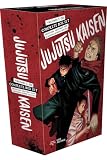
The so-called “new ending” is not a replacement for Chapter 271 and is not an officially numbered Chapter 271.5. It is a bonus epilogue printed after the final chapter in Jujutsu Kaisen Volume 30, the series’ final collected volume. The four short stories add personal closure for Yuji, Nobara, Panda, Uraume, and Sukuna, but they do not undo Sukuna’s defeat, revive Gojo, confirm every popular romance theory, or explain the complete future of jujutsu society.



Its purpose is better understood as a coda: a set of emotional afterimages showing how different characters continue, change, or remain bound to the past.
Where the epilogue fits in the ending
Jujutsu Kaisen’s main serialization ends with Chapter 271, “From Now On.” In that chapter, Yuji, Megumi, and Nobara reunite and continue working as jujutsu sorcerers after Sukuna’s defeat. The trio’s return does not restore the old world exactly as it was. Instead, it presents the younger generation carrying forward what they learned from the people who shaped them.
#1 Best Overall
The final image involving Sukuna’s finger also returns the story to its opening premise. However, it should not be read as proof that every curse has disappeared. The more defensible interpretation is that Sukuna’s particular legacy—and the sense that the old order’s violence was inevitable—has ended.
The additional material appears afterward in Volume 30. Shueisha’s official contents list Chapters 264 through 271 followed by “Epilogue,” confirming that it is post-finale material rather than a replacement ending. Contemporary release coverage describes it as a 16-page bonus divided into four character-focused segments. Some fan-maintained sources give a different page count, so “four short epilogue stories” is the safest description when the exact number is not important.
If you want to read the material itself, the relevant book is Jujutsu Kaisen Vol. 30. This article may contain affiliate links.
1. Yuji and Yuko: a possible ordinary future
The first segment returns to Yuko Ozawa, the girl who developed feelings for Yuji during their school days. It begins with a memory of the two of them discussing snow. In the postwar present, Yuko returns to Sendai to handle family matters and unexpectedly encounters Yuji, who is also in the area.
What’s actually slowing this PC down?
Pick the symptom - the matching free tool is one click away.
The meeting reveals that both of them have asked Nobara about the other. That detail is small but significant: Yuji and Yuko have remained concerned about each other even though neither has directly confessed or defined the relationship. Nobara’s reaction adds a comic suggestion that she recognizes the romantic possibility before either of them is willing to say anything plainly.
Snow is the segment’s central image. Yuji still considers it special, while Yuko privately connects its brightness with him. The repetition links their childhood conversation with their adult reunion and suggests that Yuji has retained the openness and warmth that first attracted her.
Are Yuji and Yuko officially a couple?
No—not explicitly. The epilogue confirms that Yuko still loves Yuji, that Yuji cares enough to ask about her, and that they meet again in Sendai. It does not state that they become boyfriend and girlfriend, marry, or have children.
Descriptions of them as a confirmed couple go beyond what the scene directly establishes. The ending is hopeful, but its restraint is deliberate. Yuji receives the possibility of romance and an ordinary personal life without the story forcing a dramatic declaration.
Quick wins for a faster PC:
Fix the driver behind crashes, sound loss and screen glitchesFind Drivers →Clear out junk files and repair common Windows errorsFree Scan →That possibility matters because Yuji’s life has been dominated by death, duty, and the fear that he exists primarily as a tool against cursed threats. His reunion with Yuko shows him as a person who can return to human relationships and happiness. The scene does not need to give him a conventional romantic resolution to establish that his future is no longer defined only by Sukuna.
2. Panda in 2080: survival without preservation
The Panda story makes the largest jump forward, moving to the year 2080. Two children discover Panda in storage and initially mistake him for a doll. They are startled when the object speaks and learn that he is a special cursed corpse.
The children are identified as descendants of Yuta Okkotsu. This establishes that Yuta’s family line continues far into the future, but it does not provide a complete genealogy. In particular, it does not explicitly show that Yuta and Maki married. That remains an inference some readers may draw, not a fact the epilogue directly confirms.
Panda’s condition is the segment’s painful revelation. His three cores once gave him the internal relationships that helped make him a conscious, distinct being. After the catastrophe associated with the Shibuya period, those cores can no longer observe one another in the same way. Over time, Panda gradually loses his self-awareness.
Do these 3 things before closing this tab:
1Clear out junk files and repair common Windows errors2Scan for outdated or missing drivers - takes under a minute3Repair Windows errors before they cause bigger problemsThe children still encounter a remnant capable of speaking and reacting, but the story frames this as partial survival rather than a simple happy ending. Panda has endured for decades, yet the person his friends knew cannot remain fully intact when the internal structure and relationships that sustained him have deteriorated.
What Panda represents
Panda has always embodied the connection between a created body and an individual identity. The 2080 sequence extends that idea into a question about memory: if a being survives but gradually loses the consciousness that made them themselves, is survival enough?
His fate also contrasts with the more hopeful continuation given to Yuji. Yuji moves toward renewed human contact. Panda becomes an artifact of an earlier age, preserved long enough to be discovered by people who know him only as an astonishing relic. The epilogue therefore treats continuity as morally and emotionally complicated. Living on is not automatically the same as remaining unchanged.
3. Nobara and her mother: closure without reconciliation
Nobara’s story follows up on the unresolved family issue introduced near the end of the main manga. Information connected to Gojo leads her to her estranged mother, and Nobara finally confronts the woman who abandoned her.
Windows Errors? Fix Them Before They Spread
Repair common Windows errors and clear accumulated junk for a smoother, more stable PC - no reinstall needed.Free scan · no reinstallOutdated Drivers Are Slowing You Down
One free scan finds every outdated or missing driver and matches the right update for your exact hardware.Free scan · exact hardware matchThe encounter is uncomfortable rather than sentimental. Nobara’s mother comes across as self-centered and emotionally detached, while Nobara’s grandmother appears to have been the more meaningful parental figure in Nobara’s upbringing. The story does not transform the mother into a secretly sympathetic character or suggest that one conversation repairs their relationship.
Nobara’s grandmother contributes a darkly comic edge to the scene, but her presence also reinforces a pattern running through Nobara’s history: she has been surrounded by strong, difficult women, and she has had to define herself in relation to them.
Does Nobara reconcile with her mother?
No. The resolution is not reconciliation. It is agency.
Nobara meets her mother, sees the relationship clearly, and decides what the encounter means without waiting for parental approval to validate her identity. The story gives her closure through confrontation rather than forgiveness. That distinction is important: the epilogue does not claim that every family wound can be healed by reunion. It shows that Nobara can stop being controlled by the abandonment even if the person responsible never becomes worthy of her trust.
The Tool Desk
Outbyte Driver Updater FREEScan for outdated or missing drivers - takes under a minuteDriver Scan →Outbyte PC Repair FREERepair Windows errors before they cause bigger problemsFix Now →This is a fitting conclusion for Nobara’s character. Her strength has never depended on being universally understood or accepted. The epilogue lets her address one of the most personal sources of pain in her history while preserving her independence and sharpness.
4. Uraume and Sukuna: the Heian-era beginning of a bond
The final segment is the only one that primarily moves backward in time. It depicts Uraume as a child surrounded by the frozen bodies of their parents. The deaths are connected to Uraume’s uncontrolled ice technique.
Sukuna encounters the child and immediately recognizes a practical use for that ability. Uraume can preserve food, replacing the function of Sukuna’s damaged icehouse. Uraume later displays an instinctive talent for preparing meat, leading Sukuna to ask whether they can also butcher and prepare human flesh—a detail that connects directly to Sukuna’s established cannibalistic identity.
The scene explains the foundation of their relationship without excusing either character. Sukuna does not rescue Uraume because he becomes morally compassionate, and Uraume’s loyalty does not make Sukuna’s brutality acceptable. Their bond begins through usefulness, isolation, and mutual recognition. Sukuna sees a function in a child whom others would fear, while Uraume finds someone who does not recoil from them.
Recommended Free Tools
Why don’t Uraume and Sukuna feel cold around each other?
The exchange works on both a literal and thematic level. Literally, Uraume’s ice does not affect Sukuna, and Sukuna’s presence does not frighten Uraume. Emotionally, the two characters are insulated from the fear and rejection they provoke in everyone else.
That makes their final interaction strangely intimate without making it redemptive. Chapter 271’s imagery of the afterlife is echoed by Uraume and Sukuna moving together, giving their relationship a final, ambiguous tenderness. They recognize each other, but recognition is not redemption. Sukuna remains responsible for the violence that defined his life.
The flashback is therefore less a defense of Sukuna than an explanation of how two isolated figures became attached. It shows the emotional logic of their loyalty while leaving the moral horror of their partnership intact.
Does the Volume 30 epilogue change Chapter 271?
No. It expands the ending but does not replace it.
- Sukuna is still defeated.
- Megumi remains free from Sukuna’s possession.
- Gojo remains dead.
- Yuji, Megumi, and Nobara remain on the postwar path established in Chapter 271.
- The epilogue does not revive Gojo or alter the outcome of the final battle.
- It does not establish that all curses have vanished.
What changes is the amount of emotional context around selected characters. The main chapter establishes the direction of the survivors; the epilogue shows several possible forms that continuation can take.
| Character or relationship | What the epilogue confirms | What it leaves unconfirmed |
|---|---|---|
| Yuji and Yuko | They reunite in Sendai; Yuko still loves Yuji; Yuji cares about her. | That they officially become a couple, marry, or have children. |
| Panda | He survives until 2080 and is found by descendants of Yuta. | That his original consciousness remains fully intact. |
| Nobara and her mother | Nobara confronts her estranged mother and gains personal closure. | That the relationship is repaired or becomes affectionate. |
| Yuta’s descendants | Yuta’s family line continues into the distant future. | The exact genealogy, including an explicit Yuta-Maki marriage. |
| Uraume and Sukuna | Their Heian-era connection began through isolation and practical dependence. | Any moral redemption for Sukuna. |
What the “new ending” is really about
The four stories do not form one conventional, universally happy future. They present different kinds of continuation.
Yuji continues through renewed human connection. His story opens the possibility that a person shaped by catastrophe can still return to ordinary hopes.
Nobara continues by rejecting the power of abandonment. She does not receive the mother she wanted, but she no longer needs that mother’s approval to define herself.
Panda continues as a damaged remnant. His existence carries memory forward, but it also demonstrates that time can erode the identity people are trying to preserve.
Uraume and Sukuna continue through mutual isolation. Their bond survives because each recognizes something in the other that the rest of the world fears or rejects. That recognition is emotionally legible, but it does not absolve Sukuna.
Best Value
These contrasts explain why the epilogue can feel satisfying and incomplete at the same time. It answers a few personal questions, but it does not provide a detailed map of the future political structure of jujutsu society, the final lives of every surviving character, or the complete fate of curses. It is not designed as a second finale that closes every plot thread.
Final verdict
The Volume 30 bonus epilogue makes the ending of Jujutsu Kaisen more personal rather than more definitive. Yuji is given a hopeful connection to ordinary life, Nobara takes control of a painful family history, Panda receives a bittersweet future, and Uraume and Sukuna’s bond is given an unsettling origin.
None of this changes the central result of Chapter 271. The epilogue’s “new ending” is best understood as a coda about loneliness, memory, and the uneven ways people carry on after the main conflict ends. Some characters heal, some endure, and some remain trapped in the relationship that first made them feel understood.
Frequently Asked Questions
Is the Jujutsu Kaisen epilogue a new Chapter 271.5?
No. “Chapter 271.5” is fan shorthand, not the official title of a separately numbered chapter. The material is the bonus epilogue printed after Chapter 271 in Volume 30.
Are Yuji and Yuko confirmed to be dating?
No. They reunite, Yuko still has feelings for Yuji, and Yuji clearly cares about her, but the epilogue does not explicitly confirm that they become a couple, marry, or have children.
Does the epilogue confirm that Yuta and Maki got married?
No. The Panda segment shows descendants of Yuta, confirming that his family line continues, but it does not provide a complete genealogy or explicitly confirm a marriage to Maki.
Is Gojo revived in the Jujutsu Kaisen epilogue?
No. Gojo remains dead. The bonus stories do not change his fate or the outcome of the battle with Sukuna.
Free tools Windows power users keep installed
One-click scans. No signup required.
Does the ending mean that all curses are gone?
No. Chapter 271 supports the end of Sukuna’s specific threat and the collapse of the old sense of inevitability around him. It does not explicitly establish that every curse has disappeared.
The Bottom Line
The Volume 30 epilogue does not replace Jujutsu Kaisen Chapter 271. It is a short, character-focused coda: Yuji gets the possibility of an ordinary future, Nobara finds closure without reconciliation, Panda’s survival becomes tragic and incomplete, and Uraume’s bond with Sukuna receives a bleak origin. The ending remains intentionally open, but its emotional direction is clear: the next generation can continue even when the past cannot be restored.
Quick Recap
Product prices and availability are accurate as of the date/time indicated and are subject to change. Any price and availability information displayed on Amazon at the time of purchase will apply.