Yes, a substantial release has occurred—but it is not a single “Epstein list.” The Department of Justice has published millions of pages in a broad, redacted archive containing court records, FBI material, travel and communications records, financial and administrative documents, congressional records, and records related to the investigation into Jeffrey Epstein’s death. The documents vary widely in reliability, and a person’s name appearing in one does not by itself establish criminal conduct.
What the release actually is
The Epstein files are a large, mixed collection of government, court, congressional, financial, travel, communications, and investigative records. They are not one definitive document and not an authenticated master “client list.”
The primary source is the U.S. Department of Justice Epstein Library. DOJ says the library contains materials responsive to the Epstein Files Transparency Act and may be updated if additional releasable documents are identified. The library’s listed update date is July 17, 2026.
On January 30, 2026, DOJ announced the publication of more than 3 million additional pages—its release materials describe approximately 3.5 million responsive pages—drawn from the Florida and New York cases, FBI investigations, and the Office of Inspector General investigation into Epstein’s death. The archive also includes consolidated records previously released under FOIA and records made public by the House Oversight Committee.
What’s actually slowing this PC down?
Pick the symptom - the matching free tool is one click away.
#1 Best Overall

- 【Solid & Durable】Crafted from reinforced, high-strength cold-rolled steel, this locking lateral file cabinet delivers exceptional sturdiness and long-lasting performance. The robust construction, combined with a powder-coated surface, makes this wide cabinet highly resistant to rust, scratches, and stains. It is also easy to clean, helping maintain a pristine appearance over time
- 【Large Storage Space】 H39.84" × W28.35" × D15.74". This 3-drawer lateral file cabinet features four deep and spacious drawers with adjustable hanging bars that can accommodate letter size, legal size, and A4 size hanging file folders to keep your documents organized
- 【High Security】This office file cabinet provides enhanced security with an interlock system and two keys. A single lock effectively secures all drawers, allowing you to store valuable documents with peace of mind. Additionally, the anti-tilt mechanism ensures that only one drawer can be opened at a time, preventing tipping and adding an extra layer of protection for your important files
- 【Unique Design】This Black steel file cabinet features precision ball-bearing full-extension slides, ensuring silent and smooth drawer operation. The full-extension drawer design, combined with ergonomic handles, makes this locking cabinet convenient and effortless to use
- 【Easy to assemble 】File storage cabinet requires assembly and comes paper assembly instructionsand videos to help you complete the installation faster.
A large page count does not turn every entry into verified evidence. The collection combines formal court records, raw investigative material, witness accounts, administrative records, media, and material whose context may be incomplete. The meaning of a document depends on what it is, who created it, when it was created, whether the underlying claim was corroborated, and whether surrounding pages are available.
Why “a name in the files” proves very little by itself
A person can appear in an Epstein-related record for many innocent or noncriminal reasons. They might be:
- mentioned by another person in an interview or email;
- listed in a phone book, address book, calendar, or administrative record;
- recorded as a passenger or possible passenger in travel-related material;
- photographed at a public or private event;
- interviewed as a witness, employee, victim, acquaintance, or other source;
- the subject of an unverified allegation; or
- someone investigators examined without ultimately charging.
Those possibilities are legally and factually different from criminal conduct. A responsible account should keep the following categories separate:
| Category | What it means | What it does not establish |
|---|---|---|
| Documented association | A record shows contact, travel, correspondence, attendance, employment, or another connection. | That the person knew about, participated in, or benefited from a crime. |
| Allegation | Someone made a claim recorded in a document. | That the claim was true or corroborated. |
| Investigative interest | Authorities looked into a person, event, or lead. | That investigators reached a finding or had sufficient evidence to charge. |
| Criminal charge | Prosecutors formally accused someone in court. | That the accusation was proved. |
| Adjudicated conduct | A court entered a conviction or another legally established finding. | That every related claim in the archive is true. |
The Associated Press reported that its review did not locate a definitive client list and did not substantiate a broad theory that Epstein was operating a trafficking ring for powerful men. That report concerns the records reviewed at that time; it is not a ruling that every allegation or investigative question has been resolved. Read the AP’s account of what its review found alongside the underlying documents rather than treating a search result or social-media list as proof.
The Tool Desk
Outbyte PC Repair FREEClear out junk files and repair common Windows errorsFree Scan →Outbyte Driver Updater FREEScan for outdated or missing drivers - takes under a minuteDriver Scan →Rank #2

- Fireproof and water-resistant: Fireproof lock box is made of double layered non-itchy silicone coated fiberglass which stands up the temperature up to 2000℉.It has passed the UL94 -V0/5VA flame retardant test.Fireproof file box is not only fireproof but also high water resistant in case it gets wet for any reason.Nothing is completely foolproof, but added protection is always a good idea.
- Anti-static and reflective strip design:Are you still worried about the storage box is often covered with dust? The anti-static material can prevent dust from sticking to the outside of our fireproof box, always keep it neat and tidy.The reflective strip design on the side of the box allows you to immediately find your fireproof box even at night, protecting irreplaceable documents and valuables from fire.
- Portable and secure: High quality combination lock design for added storage security, includes instruction manual for combination lock. Sturdy adjustable handle makes it easy to carry everything you need(You can adjust the carrying handle to the length you want), two zippers make it easier to open and close the box, Side pockets and label slots let you store small items and labels.The file lock box collapses down simply for easier storage when not in use.
- Dimensions: 15.55" x 12.2" x 10".The fireproof lock box fits both letter and legal size files fitting your filing system,it also can protect your important documents,books,CDs, DVDs,USBs,albums,passports, social security cards,birth certificates and other valuables.Combining our fireproof bag and fireproof safe box together is the best solution to offer your documents and valuables a complete protection in any fire accident.
- Trusted after sales service:How can we better protect our valuables from any fire? ENGPOW keep researching and developing on fireproof materials,safety technology.We only wish to present the best to customers,to protect your valuables.If there any quality problem, please feel free to let us know.We promise to arrange a REPLACEMENT or 100% REFUND immediately. Ready to respond within a 24 hour time,your suggestion has a great impact on the upgrade of our products.
What kinds of records are in the archive?
DOJ’s production is heterogeneous. Depending on the collection, readers may encounter:
- Court filings and exhibits: pleadings, motions, affidavits, exhibits, and other litigation records. A filing may contain a party’s allegation or argument rather than a judicial finding.
- FBI and other investigative records: interview reports, leads, internal correspondence, summaries, and investigative assessments. These can preserve an unverified statement or a lead that was never confirmed.
- Travel-related records: logs, manifests, scheduling records, and related communications. A travel entry can document an itinerary or recorded passenger; it does not, by itself, explain the purpose of a trip or establish conduct at a destination.
- Correspondence and communications: emails, letters, messages, notes, and contact information. A message may show a relationship or request without proving that every statement in it is accurate.
- Photographs, audio, and video: media files and related descriptions. Media can establish that an image, recording, or event exists, but context, date, editing, chain of custody, and the identity of people shown still matter.
- Financial and administrative material: records connected with payments, businesses, staffing, property, travel, or government administration. Their significance depends on the underlying transaction and surrounding documentation.
- Congressional records: material collected or released through congressional oversight. A committee exhibit or request reflects an oversight process, not a court verdict.
- Records from the Inspector General investigation: material connected with the investigation into Epstein’s death, which is a separate subject from proof of trafficking or abuse by any other person.
The DOJ disclosures page provides the department’s production information and links to released material. Researchers should preserve the collection name, document number, date, page number, and any neighboring pages when discussing a particular record.
Timeline of the release
- February 27, 2025: DOJ announced a first phase of declassified Epstein-related files. The department said additional documents would undergo review and redaction, including to protect victims’ identities. See the DOJ announcement of the first phase.
- November 19, 2025: The Epstein Files Transparency Act became Public Law 119-38. The law directed the Attorney General to release DOJ-held, unclassified documents and records relating to Epstein and related matters. The law’s status and text are available through Congress.gov.
- December 19, 2025: The statute’s release deadline passed. DOJ continued its collection, review, redaction, and production process. A later congressional record includes discussion of the production and compliance issues.
- January 30, 2026: DOJ announced the publication of more than 3 million additional pages and said the production brought the department into compliance with the Act. Its source categories included the Florida and New York cases, FBI investigations, and the Inspector General investigation into Epstein’s death. See the January 30 DOJ release.
- March 2026 onward: Congressional oversight continued. The House Committee on Oversight and Government Reform subpoenaed Attorney General Pamela Bondi concerning DOJ’s handling of the investigation and compliance with the Act. The subpoena is an oversight action, not a judicial finding. See the committee’s announcement.
- July 17, 2026: The DOJ Epstein Library listed this as its last-update date and said additional documents could be added if they were identified as releasable.
- August 2026: New Mexico officials pursued access to federal records connected with the Zorro Ranch investigation. Axios reported on the state’s lawsuit against DOJ, illustrating that disputes over access to Epstein-related material continued beyond the main DOJ publication. This proceeding also does not establish criminal liability. See Axios’ report on the New Mexico lawsuit.
Why are so many pages redacted?
Redactions are not all made for the same reason. DOJ says it removed victim names and other identifying information and used a steady tone in some audio files to protect identities. The library also warns that, given the size of the production, sensitive personal information could be disclosed inadvertently.
DOJ’s production review addressed victim-identifying information, privileged material, court-order restrictions, and other legally protected information. Earlier FOIA records may carry older redactions made under federal FOIA exemptions or Florida public-records law. Other restrictions can involve:
Crashes, No Sound, or Screen Glitches?
Random freezes, missing sound and display glitches usually trace back to one bad driver. Find and replace yours safely.Free scan · under a minuteWindows Errors? Fix Them Before They Spread
Repair common Windows errors and clear accumulated junk for a smoother, more stable PC - no reinstall needed.Free scan · no reinstallRank #3

- ORGANIZE YOUR OFFICE: 3-drawer vertical filing cabinet offers plenty of storage space for your office needs and keeps important documents, files, folders, and office supplies neatly organized (Sold as 1 Each)
- LOCKABLE SECURITY: Ensure only authorized personnel have access to sensitive documents and keep confidential information safe and secure with a built-in keyed lock
- SMOOTH GLIDE DRAWERS: No more struggling to open jammed drawers or stuck files with each drawer equipped with precision ball-bearing glides for easy opening, closing, and everyday use
- LETTER LEGAL-SIZED DOCUMENTS: Perfect for any office setting, stay organized and efficient with our versatile storage solution accommodating letter and legal sized hanging files and documents
- STYLISH MODERN DESIGN: Made from high-quality materials, our file cabinet is partially assembled and offers a natural wood finish measuring 21.3 inches D x 15.6 inches W x 24.3 inches H
- the identities and privacy of victims, including child victims;
- private information about witnesses and other uninvolved people;
- grand-jury secrecy;
- sealed court material;
- confidential sources;
- privileged communications; and
- investigative methods or information whose disclosure could affect law-enforcement interests.
A federal court’s discussion of earlier Epstein-related FOIA litigation recognized protections for minor victims and witnesses, grand-jury information, confidential sources, and investigative methods. The Clemente v. FBI decision published by DOJ is useful for understanding why some records cannot simply be released in unredacted form.
A blacked-out passage is therefore not automatically evidence of a cover-up, just as an unredacted name is not proof of wrongdoing. The proper question is what legal or privacy interest the redaction protects and what the surrounding, unredacted record actually supports.
Is the release complete?
That remains disputed. DOJ says its January 30 production satisfied the Transparency Act and that the public library can be updated if additional documents are identified as releasable. Critics, congressional investigators, and outside reporting continued to question whether the production was complete and whether withheld, delayed, removed, or insufficiently explained material remained.
The dispute is about the scope and handling of the government’s production, not a court determination that every theory circulating online is true. The House Oversight Committee examined DOJ’s compliance, while the Senate Finance Committee separately pursued Epstein-related financial records and raised questions about financial relationships and access to Treasury-held material. Those are congressional oversight activities; they should not be reported as findings of criminal liability.
Rank #4
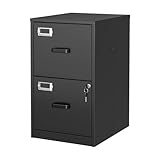
- 【HIGH CAPACITY】This filing cabinet consists of two drawers of the same size, which are large enough to accommodate A4, letters, file boxes, legal documents, etc. The drawers are also deep enough to store some office supplies.
- 【HUMANIZED DESIGN】The steel ball bearing full extension drawer slide is noiseless, will not affect the work of others, and always maintain a quiet environment. The extra-long drawer handle design of the file cabinet makes it more convenient to open the drawer
- 【UNIQUE DESIGN】This file cabinet can lock 2 drawers at the same time with one lock, and is equipped with 2 keys. Business card holders on drawers can also be labeled according to the different documents stored.
- 【HIGH QUALITY】Although this filing cabinet is lightweight, it is also very sturdy. It is suitable for home or office use, providing more convenience for your office environment. The surface of the file cabinet has a smooth coating treatment, which can be waterproof and easier to clean
- 【NEED TO ASSEMBLE】vertical file cabinets with lock need simple assembly, we will have assembly instructions to help you complete the assembly. If you have any problems with the installation, you can contact us at any time by email, and we will provide you with the best solution
The New Mexico litigation over federal records connected with Zorro Ranch is another example of an unresolved records-access question. It does not, by itself, prove what happened in any particular incident or establish misconduct by a person named in a document.
Independent reader supportYour contribution helps us test, update, and keep practical guides available for everyone.How to research the files without spreading misinformation
- Start at the official archive. Use the DOJ Epstein Library, not a screenshot, reposted spreadsheet, or anonymous social-media index.
- Identify the document type. Record whether it is a court filing, FBI record, interview summary, travel record, photograph, audio file, FOIA release, or congressional exhibit. The category tells you what kind of claim it can support.
- Read beyond the highlighted line. Search results and viral excerpts often omit qualifiers, prior or later pages, speaker identity, and whether a statement was confirmed.
- Check the metadata. Preserve the document number, date, page number, collection name, and redaction marks. If a claim cannot be traced back to a specific document, treat it as a lead rather than a verified fact.
- Separate the speaker from the evidence. “An investigator recorded that a witness said X” is not the same as “X happened.” Use attribution and state whether corroboration or a court finding is present.
- Look for independent confirmation. Compare a claimed event with court records, official statements, contemporaneous reporting, or other records. Multiple copies of the same unverified allegation are not independent corroboration.
- Do not identify survivors unnecessarily. Victims and witnesses should not be exposed merely because their names or identifying details appear in a flawed upload, an old record, or an online post.
- Be cautious with archive search. DOJ warns that portions of the collection may not be electronically searchable or may return unreliable results. Scanned pages, handwriting, redacted text, poor audio transcription, spelling variations, and OCR errors can all produce false negatives or misleading matches.
Document-search, OCR, annotation, and citation tools can make a large archive easier to organize, but no software can authenticate an allegation or replace reading the original record. When reporting a discovery, cite the document itself and explain its limitations.
Background reading versus primary evidence
Readers who want a narrative account can use secondary books or reporting to understand the chronology, but those works are not substitutes for the official archive. For example, the publisher’s page for Filthy Rich by James Patterson, written with John Connolly and Tim Malloy, describes the book as an account of Epstein’s crimes and notes updated editions with a new author’s note and afterword. It is background reading, not a source for treating every claim in the released files as established fact.
Disclosure: If DocumentaryTube monetizes a qualifying book link, that relationship should be disclosed clearly to readers. A book recommendation should not be presented as an endorsement of an unverified claim or as a replacement for the DOJ archive and current reporting.
Free tools Windows power users keep installed
One-click scans. No signup required.
The practical takeaway
The release makes more primary-source material available, but it does not provide a shortcut to the truth. The archive documents contacts, allegations, investigative activity, legal proceedings, and government decision-making in different ways. A person’s appearance in it is not, standing alone, proof of a crime; a redaction is not, standing alone, proof of concealment; and a viral “list” is not an official finding.
Best Value
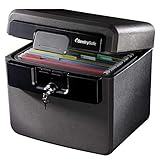
- FIRE AND FLOOD PROTECTION FOR ESSENTIAL PAPERS: UL Classified to withstand high temperatures for up to thirty minutes and ETL Verified to protect contents during water exposure, helping safeguard critical paperwork during common home emergencies
- DESIGNED FOR IMPORTANT DOCUMENT STORAGE: Spacious interior fits hanging file folders and is ideal for organizing passports, birth certificates, insurance records, and legal paperwork
- KEY LOCK SECURITY YOU CONTROL: Durable key lock helps prevent unauthorized access and keeps the lid securely closed during fire events. Two keys are included for backup access
- HOME FRIENDLY SIZE WITH PORTABLE DESIGN: Compact footprint fits easily in closets, offices, or under desks while remaining portable enough to relocate when needed
- BUILT FOR EVERYDAY PEACE OF MIND: Black exterior offers a clean, neutral look that blends into home or office spaces while providing dependable document protection year round
The most reliable approach is document-level verification: identify the record, read its context, distinguish allegation from finding, protect victims’ privacy, and acknowledge what remains unknown.
Frequently Asked Questions
Is there an official Epstein client list?
No. The public collection is a large set of court, investigative, travel, communications, financial, congressional, and other records. The AP reported that its review did not locate a definitive client list. A name in one of the records can reflect an association, witness account, contact entry, travel record, photograph, or allegation and does not by itself prove criminal conduct.
Are all of the Epstein files now public?
No. DOJ says its January 30, 2026 production brought it into compliance with the Epstein Files Transparency Act, but the completeness and handling of the release remained disputed. DOJ’s library also says it may be updated if additional releasable documents are identified.
Recommended Free Tools
Does appearing in an Epstein file mean someone committed a crime?
No. A document may record an allegation, investigative lead, or person of interest without establishing that the underlying claim was true. Criminal charges and court findings are separate categories and should not be inferred from a name appearing in the archive.
Why are parts of the records redacted?
DOJ says redactions protect victim and witness identities, privileged material, court-order restrictions, grand-jury information, confidential sources, investigative methods, and other legally protected information. Earlier FOIA releases may also contain pre-existing redactions under federal and Florida law.
How should I verify a claim from the archive?
Use the official DOJ Epstein Library, identify the record type, read the surrounding pages, and preserve the document number, date, and page reference. Searchable text, OCR, screenshots, and social-media indexes can be incomplete or misleading, so they should be treated as leads rather than proof.
The Bottom Line
Bottom line: DOJ released millions of additional Epstein-related pages, but the archive is a changing, redacted collection—not a verified client list. Treat every name and excerpt according to the document’s source and evidentiary status, and verify claims against the original record.
Quick Recap
Product prices and availability are accurate as of the date/time indicated and are subject to change. Any price and availability information displayed on Amazon at the time of purchase will apply.