The Tool Desk
Outbyte PC Repair FREERepair Windows errors before they cause bigger problemsFix Now →Outbyte Driver Updater FREEScan for outdated or missing drivers - takes under a minuteDriver Scan →For more than a decade, Arrow wasn’t just another superhero show tucked into Netflix’s endless scroll. It was the series that helped redefine what television could do with comic book mythology, grounding DC’s vigilantes in grit, moral ambiguity, and long-form character growth. As Netflix prepares to say goodbye to Arrow, fans are feeling the weight of more than a licensing expiration; it’s the closing of a chapter that shaped an entire era of superhero television.
When Arrow debuted in 2012, it arrived at a moment when superhero storytelling was still finding its footing on the small screen. What began as a darker, grounded reinvention of Green Arrow quickly became the foundation of the Arrowverse, launching interconnected series like The Flash, Supergirl, and Legends of Tomorrow. Netflix’s global reach turned Oliver Queen’s five-year hell into a worldwide phenomenon, introducing millions to a version of DC that felt serialized, emotionally invested, and unapologetically long-form.
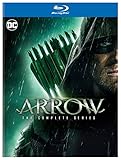
![Arrow: Complete First Season [Blu-ray]](https://m.media-amazon.com/images/I/01RmK+J4pJL.gif._SL160_.jpg)
Its removal from Netflix isn’t a reflection of fading relevance, but of a shifting industry landscape. As Warner Bros. Discovery continues consolidating DC content under its own streaming strategy, Arrow’s exit underscores how licensing deals are giving way to platform exclusivity. For fans, it means adjusting viewing habits and following the series to its next streaming home, while also acknowledging that the show’s legacy, much like Oliver Queen’s journey, was always destined to leave a lasting mark long after the final arrow was fired.
How Arrow Changed Superhero Television and Launched the Arrowverse
When Arrow premiered on The CW in 2012, it didn’t just introduce a new version of Green Arrow; it recalibrated expectations for what superhero television could look like. Drawing more inspiration from crime dramas and prestige cable than traditional comic book fare, the series leaned into grounded action, serialized trauma, and moral compromise. Oliver Queen wasn’t a quippy icon or a power fantasy; he was a damaged survivor whose heroism came at a personal cost.
#1 Best Overall
That tonal shift mattered. At a time when superhero films were dominating theaters but TV adaptations often felt episodic and disposable, Arrow proved audiences would commit to long-form storytelling rooted in consequence. Every season built on the last, allowing relationships, betrayals, and scars to accumulate in ways that mirrored prestige dramas more than Saturday-morning cartoons.
A Blueprint for Serialized Superhero Storytelling
Arrow’s greatest innovation was its patience. The show trusted viewers to follow complex arcs that unfolded over years, not episodes, using flashbacks, evolving alliances, and shifting identities to deepen its world. This approach normalized season-long villains, morally gray heroes, and a narrative structure that rewarded loyalty and attention.
That model quickly became the Arrowverse’s creative backbone. Without Arrow proving the viability of that format, it’s hard to imagine The Flash embracing emotional continuity, or Legends of Tomorrow daring to reinvent itself season after season. Arrow made it clear that superhero television could be expansive without losing its emotional throughline.
The Birth of a Shared DC Television Universe
The launch of The Flash in 2014 wasn’t just a successful spin-off; it was the moment DC television went fully interconnected. Crossovers became annual events, characters flowed between series, and the Arrowverse evolved into one of the most ambitious shared universes ever attempted on television. At its peak, it rivaled the MCU in scope, if not scale.
PC Slower Than It Used to Be?
A free scan shows the junk files, broken settings and background clutter dragging Windows down - then fixes them in one click.Free scan · Windows 10 & 11Outdated Drivers Are Slowing You Down
One free scan finds every outdated or missing driver and matches the right update for your exact hardware.Free scan · exact hardware matchNetflix played a crucial role in amplifying that reach. By hosting Arrow and its sister series internationally, the platform transformed a CW hit into a global franchise, allowing viewers outside the U.S. to experience DC’s television universe as a cohesive whole. For many fans, Netflix wasn’t just a place to rewatch Arrow; it was how they discovered the Arrowverse in the first place.
Redefining Green Arrow for a New Generation
Perhaps Arrow’s most lasting impact was its reinvention of Oliver Queen himself. The series moved beyond the character’s lighter comic-book roots, shaping a version of Green Arrow defined by sacrifice, accountability, and earned redemption. Stephen Amell’s performance anchored the show, grounding its operatic stakes in a physical, often painful humanity.
That interpretation reshaped how DC audiences understood the character across media. Even as newer DC projects pursue different tones and continuities, Arrow’s influence lingers in how television approaches vigilantes, legacy heroes, and the idea that saving a city often means losing pieces of yourself along the way.
From Gritty Vigilante to Multiverse Architect: The Evolution of Oliver Queen
When Arrow premiered, Oliver Queen was deliberately stripped down to his most brutal essentials. This was a hero forged in isolation and violence, more Punisher than traditional Green Arrow, operating in a city that felt closer to Gotham than Star City’s comic-book roots. The show’s early years embraced grounded stakes, moral compromise, and the idea that heroism came with a body count and lasting scars.
That gritty foundation wasn’t a limitation; it was a narrative launchpad. As Arrow expanded, so did Oliver’s understanding of what it meant to be a hero, moving beyond survival toward responsibility. The vigilante who once saw the world in terms of lists and targets slowly became a leader, a symbol, and eventually a protector not just of a city, but of an entire reality.
From Lone Wolf to Reluctant Leader
One of Arrow’s smartest evolutions was allowing Oliver to grow into leadership without ever fully embracing it. Team Arrow was never just a sidekick ensemble; it was a reflection of Oliver’s internal conflict between control and trust. Each season forced him to confront the cost of bearing everything alone, even as his instincts pushed him back toward isolation.
This tension gave the character emotional weight that many superhero series struggle to sustain. Oliver’s failures mattered, his victories were conditional, and his leadership was always earned through loss. By the time the Arrowverse fully coalesced, Oliver Queen had become its moral constant, even when he resisted that role.
The Arrowverse’s Moral Center
As crossovers grew more ambitious, Oliver emerged as the connective tissue holding the universe together. He wasn’t the most powerful hero, nor the most optimistic, but he was the one most willing to make the hard choice. That positioning was intentional, turning Oliver into the Arrowverse’s emotional anchor amid increasingly cosmic storytelling.
Quick wins for a faster PC:
Repair Windows errors before they cause bigger problemsFix Now →Fix the driver behind crashes, sound loss and screen glitchesFind Drivers →Clear out junk files and repair common Windows errorsFree Scan →Rank #2
![Stranger Things: The Complete Series [Deluxe Edition] [Blu-ray]](https://m.media-amazon.com/images/I/51vN8PZKSJL._SL160_.jpg)
- In 1980s Indiana a group of friends witness supernatural forces and government exploits. In searching for answers, they unravel a series of mysteries.
This arc culminated in Crisis on Infinite Earths, where Oliver’s journey reached its mythic endpoint. His transformation into the Spectre reframed the entire series in retrospect, revealing Arrow not just as a vigilante story, but as a long-form origin for the man who would help save the multiverse. It was a rare example of superhero television planning an ending that honored character, theme, and scale simultaneously.
A Farewell That Redefined the Series’ Legacy
Oliver Queen’s final chapters elevated Arrow from genre success to franchise cornerstone. By tying his sacrifice directly to the survival of the multiverse, the series retroactively positioned him as the Arrowverse’s architect, the hero whose journey enabled every other story to exist. Few television protagonists have been granted such narrative significance.
That legacy is why Arrow’s departure from Netflix resonates so deeply. For many fans, the platform was where Oliver’s full evolution could be experienced uninterrupted, from hooded vigilante to cosmic guardian. As the series transitions to other homes like Max in the U.S. and regional platforms internationally, its absence from Netflix marks more than a licensing shift; it feels like the closing of a chapter in how an entire generation experienced DC television.
Cultural Impact and Legacy: Why Arrow Is Still Considered One of TV’s Greatest Superhero Series
Arrow didn’t just arrive as another comic book adaptation; it quietly rewired expectations for what superhero television could be. Premiering in a post-Dark Knight landscape, the series embraced consequence-driven storytelling at a time when network TV heroes were still largely episodic and static. Its success proved that serialized, emotionally dense superhero drama could thrive outside premium cable.
Do these 3 things before closing this tab:
1Clear out junk files and repair common Windows errors2Scan for outdated or missing drivers - takes under a minute3Repair Windows errors before they cause bigger problemsWhat makes Arrow endure is how deliberately it treated heroism as a process rather than a destination. Oliver Queen was never allowed to be a finished product, and the show resisted the temptation to soften his edges for mass appeal. That commitment to moral complexity gave Arrow a weight that continues to distinguish it from many of its successors.
The Series That Rebuilt Superhero TV for the Modern Era
Before Arrow, superhero television was often defined by longevity over evolution. Arrow flipped that model, treating each season as a chapter in a finite character arc rather than an endless loop of villains and resets. The scars Oliver carried, both physical and emotional, became part of the show’s visual language.
That structure influenced not just DC adaptations, but genre television more broadly. Serialized stakes, season-long thematic focus, and character-driven action soon became the standard rather than the exception. Arrow helped normalize the idea that superhero TV could aspire to long-form prestige storytelling.
The Foundation of a Franchise, Not Just a Spinoff Machine
While the Arrowverse eventually grew vast and unwieldy, Arrow’s role as its foundation remains unquestionable. The series didn’t just launch The Flash, Legends of Tomorrow, and beyond; it established the tonal grammar those shows would either follow or deliberately contrast. Every crossover event, no matter how cosmic, traced its emotional logic back to Oliver’s world.
Even as later series leaned into lighter or more fantastical territory, Arrow anchored the franchise in consequence. That grounding allowed the Arrowverse to stretch without fully losing credibility, a balance few shared universes manage to maintain over nearly a decade.
A Streaming-Era Staple That Shaped Fan Engagement
For many viewers, Arrow wasn’t just a weekly broadcast memory; it was a binge-era companion on Netflix. The platform allowed audiences to experience Oliver’s evolution without interruption, reinforcing the show’s novel-like structure. That accessibility helped Arrow find new life with younger viewers who discovered the series long after its CW debut.
Netflix’s role in Arrow’s longevity cannot be overstated, which is why its removal feels so personal to fans. The shift reflects broader industry consolidation, with Warner Bros. Discovery reclaiming DC content for platforms like Max in the U.S., while international viewers navigate regional licensing changes. It’s a business decision, but one that underscores how deeply Arrow became intertwined with the streaming era itself.
Why Arrow Still Matters in a Crowded Superhero Landscape
In an age of multiverses, reboots, and algorithm-driven franchises, Arrow stands out for knowing exactly what story it wanted to tell and when to end it. Its legacy isn’t defined by spectacle alone, but by discipline, restraint, and emotional follow-through. Few superhero series can claim that their ending recontextualized everything that came before it.
Free tools Windows power users keep installed
One-click scans. No signup required.
Rank #3
![Arrow (Complete Seasons 1-3) - 12-Disc Box Set ( Arrow - Seasons One, Two & Three ) [ Blu-Ray, Reg.A/B/C Import - Belgium ]](https://m.media-amazon.com/images/I/51Ve2JBC3OL._SL160_.jpg)
- Arrow (Complete Seasons 1-3) - 12-Disc Box Set ( Arrow - Seasons One, Two & Three )
- Arrow (Complete Seasons 1-3) - 12-Disc Box Set
- Arrow - Seasons One, Two & Three
That’s why Arrow’s departure from Netflix feels like more than a catalog update. It marks the fading of a particular moment in superhero television, one where ambition, character, and accessibility briefly aligned. For DC fans, Arrow remains a reminder that greatness doesn’t require perfection, only purpose.
The Business Behind the Exit: Licensing Shifts, Warner Bros. Discovery, and Netflix’s Changing DC Strategy
Arrow leaving Netflix isn’t a sudden breakup so much as the final phase of a long, pre-negotiated relationship. Like many CW-era shows, Arrow arrived on Netflix through licensing deals that predated the modern streaming wars. Those agreements were always finite, even if their expiration felt abstract while the series remained just a click away.
As those contracts lapse, the industry logic that once prioritized wide distribution has given way to corporate consolidation. For fans, that translates into a painful truth: beloved shows now move based less on cultural impact and more on balance sheets.
Warner Bros. Discovery and the Pull Toward Max
The creation of Warner Bros. Discovery accelerated a strategic pivot that had been building for years. DC content is no longer treated as third-party licensing material but as a cornerstone of Max’s identity. Bringing Arrow back under the company’s own streaming roof reinforces DC’s value as an in-house brand rather than a shared asset.
In the U.S., that means Arrow is now positioned alongside other Arrowverse series on Max, creating a centralized DC television library. Internationally, the picture is messier, with regional rights dictating availability and forcing fans to navigate a patchwork of platforms depending on geography.
Why Netflix Let Arrow Go
From Netflix’s perspective, Arrow represents an earlier era of its strategy, one built around acquiring long-running network hits to fuel binge culture. Today, Netflix is far more focused on ownership, global originals, and franchises it can fully control from development to distribution. Licensed superhero series, especially ones tied to competing studios, no longer fit that model.
That shift doesn’t diminish Arrow’s value; it reframes it. The show helped define Netflix’s dominance during the 2010s, but it now belongs to a phase the platform has largely moved beyond.
What the Exit Signals for DC Television
Arrow’s departure also reflects the broader winding down of the Arrowverse itself. With most of its companion series concluded, the franchise has transitioned from living universe to legacy library. Warner Bros. Discovery’s approach suggests a future where DC television is more curated, more brand-controlled, and less experimental than the CW era allowed.
What’s actually slowing this PC down?
Pick the symptom - the matching free tool is one click away.
For fans, the message is clear. Arrow isn’t disappearing, but it is changing homes, shifting from an omnipresent streaming staple to a preserved chapter in DC history. Where it lives now says as much about the future of superhero television as the story it once told.
What Arrow’s Departure Means for the Arrowverse and DC Television as a Whole
Arrow leaving Netflix is more than a licensing shuffle; it’s a symbolic closing chapter for an entire generation of superhero television. For many viewers, Netflix was where the Arrowverse lived, evolved, and was rediscovered long after weekly broadcasts ended. Its removal signals that this era is no longer part of the active streaming conversation, but a finished body of work being archived rather than expanded.
The Arrowverse Officially Enters Its Legacy Phase
With Arrow gone from Netflix, the Arrowverse fully transitions from an ongoing pop culture force to a historical one. This was the franchise that normalized multi-series crossovers, annual event television, and long-form superhero storytelling on a broadcast network scale. Its influence is still felt, but its moment has passed.
Max becoming the primary home for Arrow and its sister shows reframes the Arrowverse as a completed saga rather than an evolving universe. It now sits alongside other concluded DC projects, positioned for preservation and rediscovery rather than weekly anticipation.
Recommended Free Tools
A Changing Creative Philosophy at DC Television
Arrow’s exit also highlights how dramatically DC’s television strategy has changed. The CW-era model thrived on volume, accessibility, and experimentation, producing shows that could take tonal risks over 22-episode seasons. That environment no longer exists.
Modern DC television is more selective, shorter in episode count, and tightly aligned with corporate branding. The days of multiple interconnected DC shows running simultaneously across a network schedule appear to be over, replaced by fewer projects with higher internal oversight.
Why Arrow Still Matters in This New Landscape
Even as DC pivots forward, Arrow remains foundational. It proved that a grounded, serialized superhero drama could sustain years of storytelling and audience investment. Without it, there is no Flash, no Supergirl crossover culture, and no blueprint for shared TV universes outside of Marvel.
Its continued availability on Max ensures that its influence isn’t erased, only relocated. New viewers can still trace the DNA of modern superhero television back to Oliver Queen’s opening monologue and the tone it established.
What Fans Should Take Away From the Shift
For fans, Arrow’s departure from Netflix is a reminder that streaming permanence is an illusion. Platforms change priorities, strategies evolve, and even iconic series can be repositioned overnight. Knowing where a show lives now is as important as remembering where it once thrived.
Arrow’s move doesn’t diminish its legacy; it crystallizes it. The series now exists as a complete, influential chapter in DC history, preserved under the studio that created it, no longer chasing relevance but firmly cemented in it.
Independent reader supportYour contribution helps us test, update, and keep practical guides available for everyone.Where to Watch Arrow Now: Streaming Options and What’s Next for Fans
With Arrow officially departing Netflix, the question for longtime viewers and newcomers alike is straightforward: where does the series live now? The answer reflects the broader consolidation happening across the streaming industry, particularly for legacy DC content. Arrow’s future is less about disappearance and more about relocation.
Arrow’s New Streaming Home on Max
Arrow is now firmly housed on Max, Warner Bros. Discovery’s streaming platform and the central archive for DC television and film. This move places the series alongside fellow Arrowverse titles like The Flash, Supergirl, and Legends of Tomorrow, effectively reuniting the shared universe under one roof.
For fans, this offers a more cohesive viewing experience, especially for those revisiting crossover-heavy seasons. Max’s stewardship also signals long-term availability, as Warner-owned properties are increasingly prioritized for in-house platforms rather than licensed out indefinitely.
Alternative Ways to Own the Series
Beyond streaming, Arrow remains widely available through digital storefronts such as Amazon Prime Video, Apple TV, and Vudu, where full seasons can be purchased individually. Physical media collectors can also still find complete series box sets on Blu-ray and DVD, an option that appeals to fans wary of shifting streaming libraries.
In an era where titles can vanish with little notice, ownership has regained value. For a show as historically significant as Arrow, having a permanent copy offers peace of mind and a tangible connection to a defining era of superhero television.
What This Means for the Arrowverse Moving Forward
Arrow’s migration to Max underscores that the Arrowverse is no longer an active franchise but a curated legacy. There are no indications of revivals, continuations, or reboots tied directly to this continuity, and that appears intentional. DC’s current focus lies elsewhere, with new universes being built from the ground up rather than extended from past successes.
Best Value
![Stranger Things: The Complete Series [Blu-ray]](https://m.media-amazon.com/images/I/31Ph4iUbmSL._SL160_.jpg)
- In 1980s Indiana a group of friends witness supernatural forces and government exploits. In searching for answers, they unravel a series of mysteries.
For fans, that reality reframes how Arrow is watched. It’s no longer about keeping up; it’s about looking back. The series now functions as a complete narrative, best appreciated in full, with the benefit of hindsight and historical context.
A Different Kind of Afterlife for a Defining Series
Arrow’s life after Netflix may be quieter, but it’s arguably more secure. Positioned within DC’s official library, it stands as a reference point rather than a competitor to newer projects. Its impact isn’t diluted by constant comparison; instead, it’s preserved as the foundation that made everything else possible.
For viewers pressing play today, whether for the first time or the tenth, Arrow remains exactly what it always was: a grounded, character-driven superhero story that changed television. The platform may have changed, but the legacy hasn’t.
End of an Era, Not the End of the Story: How Arrow’s Influence Will Live On
When Arrow leaves Netflix, it feels less like a routine licensing shift and more like the closing of a chapter. For many viewers, Netflix was where Oliver Queen’s journey was discovered, rewatched, and recontextualized over time. Its departure marks the moment Arrow fully transitions from a current favorite into a historical landmark.
Yet history is exactly where Arrow belongs. Its legacy is no longer defined by availability on a single platform, but by how deeply it reshaped the superhero television landscape that followed.
The Blueprint for Modern Superhero Television
Before Arrow, superhero TV often leaned episodic, campy, or disconnected from long-term consequences. Arrow normalized serialized storytelling, season-long arcs, and morally complex protagonists in a genre once hesitant to embrace darkness. The show proved audiences would invest deeply if the stakes felt personal and the characters were allowed to evolve.
That formula became industry standard. From The Flash to Daredevil, and even beyond DC, Arrow’s DNA is visible in how superhero stories are structured, paced, and emotionally grounded on television.
The Arrowverse as a Proof of Concept
Arrow didn’t just launch a successful series; it launched an interconnected universe at a time when shared TV universes were largely theoretical. The Arrowverse demonstrated that crossover storytelling could work on a broadcast schedule, with rotating leads, tonal shifts, and long-form continuity.
Free tools Windows power users keep installed
One-click scans. No signup required.
Even as the franchise has sunset, its influence persists. Networks and streamers now approach genre storytelling with an understanding that audiences can and will follow expansive, interwoven narratives if the foundation is strong enough.
Why Arrow Still Matters in DC’s New Era
DC’s current strategy emphasizes reinvention, but Arrow remains a reference point rather than a relic. It represents a moment when DC television found its voice, distinct from its film output, and proved it could thrive independently. That achievement continues to inform how DC evaluates tone, character focus, and long-term planning.
For newer fans discovering DC stories today, Arrow serves as a case study in how grounded storytelling can elevate even the most heightened mythology. Its success wasn’t accidental; it was carefully built, season by season.
A Legacy That Outlives Platforms
Streaming libraries change, contracts expire, and algorithms move on, but cultural impact doesn’t disappear so easily. Arrow’s influence lives on in the shows it inspired, the careers it launched, and the expectations it set for what superhero television could be.
Crashes, No Sound, or Screen Glitches?
Random freezes, missing sound and display glitches usually trace back to one bad driver. Find and replace yours safely.Free scan · under a minutePC Slower Than It Used to Be?
A free scan shows the junk files, broken settings and background clutter dragging Windows down - then fixes them in one click.Free scan · Windows 10 & 11Netflix saying goodbye doesn’t diminish Arrow’s importance. If anything, it confirms it. Arrow has graduated from being just another title in a catalog to something rarer: a defining work that helped shape an entire era of television, and one whose story will continue to be told, revisited, and learned from long after the final arrow was loosed.
Quick Recap
Product prices and availability are accurate as of the date/time indicated and are subject to change. Any price and availability information displayed on Amazon at the time of purchase will apply.

