Recommended Free Tools
Some links on this page are affiliate links: if you buy through them we may earn a commission, at no extra cost to you.
IBM’s Watson beat Ken Jennings and Brad Rutter in a two-game Jeopardy! special broadcast February 14–16, 2011, finishing with $77,147 in game winnings. The contest was a landmark demonstration of machine question-answering—but not a test of humanlike intelligence. Watson could parse clues, weigh evidence and choose when to buzz in; it could also mistake Toronto for Chicago.
A special match, not a normal season finale
The event was called the IBM Challenge. Watson faced two of the strongest players in the show’s history: Ken Jennings, known for his 74-game winning streak, and Brad Rutter, one of its most successful tournament competitors. The challenge consisted of two games shown across three consecutive episodes. Its result was determined by the contestants’ cumulative scores, not by a single final clue.

At the end of the match, Watson had $77,147, Jennings $24,000 and Rutter $21,600. Those figures were the on-screen game totals, not the contestants’ prize payouts. Watson’s victory earned the $1 million grand prize, which IBM directed to charity. Jennings received $300,000 for second place and Rutter $200,000 for third; both also pledged charitable contributions. CBS’s announcement of the result and the charity announcement describe the event and its format.
Why put a computer on the Jeopardy! stage?
IBM researcher David Ferrucci proposed the challenge as a demanding test of natural-language question answering. The show’s clues are not simple prompts to retrieve a fact: they can hinge on puns, indirect descriptions, multiple meanings, cultural references and subtle relationships. A contestant has to infer what a clue is getting at, produce the expected response and do it quickly enough to compete.
#1 Best Overall
Watson was built specifically for that task. It was not a robot or a live web-search interface, but a large computer system combining software, algorithms, hardware and a prepared knowledge corpus. IBM described it as a DeepQA question-answering system. During play, it worked from stored material rather than querying the live internet. IBM’s history of Watson outlines the project and its approach.
How Watson turned clues into answers
For each clue, Watson’s software explored possible interpretations and generated candidate answers from its information. Many algorithms ran in parallel, assessing language, entities, relationships, context and supporting evidence. The system then ranked the candidates and estimated how likely its leading answer was to be correct. IBM said this process could take roughly three seconds.
That confidence estimate mattered because Watson did not need to buzz in on every clue. It had to decide whether its best candidate cleared a threshold worth risking a wrong response. Even an answer the system ranked highly was no use if it did not buzz in time—and an aggressive buzz on a weak guess could cost money. Daily Double and Final Jeopardy wagers added another layer: Watson had to make decisions about risk as well as answer clues.
Free tools Windows power users keep installed
One-click scans. No signup required.
Rank #2

- OFFICIAL HISTORY CHANNEL TRIVIA GAME: Created in partnership with The HISTORY Channel, the trusted destination for historical storytelling. Test your knowledge and challenge friends and family with questions inspired by history, culture, science, and more
- OVER 2,000 TRIVIA QUESTIONS: Packed with thousands of questions spanning human history and the pursuit of trivial knowledge—from ancient civilizations and famous figures to science, sports, geography, and modern events.
- FIVE DIVERSE TRIVIA CATEGORIES - Includes questions across Arts & Culture, Sports & Recreation, Science & Technology, Geography & Landmarks, and People & Events so every player has a chance to shine.
- PERFECT FOR FAMILY GAME NIGHT: Fun for adults, teens, and families who love learning and friendly competition. Great for game nights, gatherings, dinner parties, and social trivia challenges.
- GREAT GIFT FOR DADS & TRIVIA LOVERS - A thoughtful and unique gift for dads, history buffs, trivia fans, and lifelong learners. Perfect for Father’s Day, birthdays, holidays, and family celebrations.
The physical buzzer race was therefore part of the challenge. Watson had to signal at the right time, after the clue was read and the contestants were eligible to respond. The match tested not only stored knowledge and language processing but also confidence calibration, timing and game strategy. Its hardware was an IBM POWER7-based server system designed to support the workload of evaluating many possibilities rapidly, rather than a single mysterious “brain.” CBS’s pre-match description provides details of the system.
The first game’s memorable miss: Toronto
The first game ended with Watson and Rutter tied for the lead. In Final Jeopardy, the category was U.S. Cities. The clue described a city whose largest airport was named for a World War II hero and whose second-largest airport was named for a World War II battle. The correct response was Chicago. Watson responded “Toronto.”
The mistake was conspicuous, but it was also revealing. Watson was not simply looking up a fact and returning a guaranteed answer. It had to interpret the clue, find evidence and assess confidence; those processes could still lead to an incorrect response. The error is a useful counterweight to the idea that the machine “had all the answers.” It showed a system that could perform impressively while remaining vulnerable to ambiguity and imperfect interpretation.
Rank #3
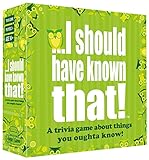
- Package Quantity :1
- In contrast to traditional trivia formats, you don't receive points for answering questions correctly. Instead, points are subtracted for every incorrect answer!
- Contains 110 cards with more than 400 questions about things that you should know
- An addictively entertaining trivia game where it will only be a matter of time before you hear yourself say ahhh!... I should have known that!
The second game and the final clue
Watson entered the concluding game with a strong position and widened its advantage. It hit both Daily Doubles in that game, a significant boost because a Daily Double lets a player wager based on the standing and circumstances of the board. By the end, Watson’s lead was large enough that the overall result depended on the cumulative match, not just the last response.
What’s actually slowing this PC down?
Pick the symptom - the matching free tool is one click away.
The final Final Jeopardy clue referred to the author whose best-known novel was inspired by William Wilkinson’s An Account of the Principalities of Wallachia and Moldavia. The answer was Bram Stoker, whose novel Dracula became a defining work of Gothic fiction. Watson answered correctly. Contemporary coverage reported that all three contestants got the final clue right; the decisive difference was the ground Watson had gained earlier. The Los Angeles Times’ report recounts the finish.
Independent reader supportYour contribution helps us test, update, and keep practical guides available for everyone.What the victory demonstrated
Watson showed that a computer system could process natural-language clues, generate and rank answers from a large prepared corpus, combine multiple kinds of evidence and act under a tight deadline. It also showed how parallel computation and confidence estimates could be used in a structured, competitive task. The show made those capabilities visible to a broad audience: viewers could watch the system make decisions, answer correctly and occasionally fail.
Rank #4
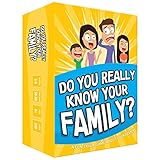
- Get ready for the best family game night as you laugh and learn new things about each other with this fun card game.
- See who really knows the family best as you answer fun questions about each other while sparking interesting conversations.
- Create hilarious family memories as you compete and perform silly challenges together.
- Super easy to learn and play - a perfect game for families with kids 8 and up, teens and adults.
That was a meaningful AI achievement, but the boundaries matter. Watson’s performance was specialized for a clearly defined game and supported by information prepared for the competition. It did not establish consciousness, emotion, human common sense, broad understanding or reliable answers to arbitrary questions. Nor did it prove that the system learned autonomously during the televised match or that it could replace knowledge workers across the board.
It is also misleading to call Watson merely a search engine. Searching or retrieving information was only part of its approach; it also analyzed clues, generated alternatives, weighed evidence and made a confidence-based decision. But those capabilities should not be confused with the open-ended conversation and generative behavior associated with today’s AI chatbots. Watson was a different system, built to answer a different question: could a machine compete at this particular game, under its rules, against elite players?
A milestone—and a carefully bounded one
IBM presented Watson as a platform whose methods might be adapted for fields such as healthcare and business. The televised match established that the system could perform strongly at Jeopardy!; it did not, by itself, prove that every proposed application would work. The event’s lasting significance is more precise: it gave the public a vivid demonstration of machine question-answering, while making clear that impressive performance in a bounded domain is not the same as general intelligence.
Watson won the match decisively. The Toronto answer remains just as important to the story as the final score: the system’s achievement lay in combining many imperfect processes well enough to compete, not in being infallible.
Quick Recap
Product prices and availability are accurate as of the date/time indicated and are subject to change. Any price and availability information displayed on Amazon at the time of purchase will apply.

