Do these 3 things before closing this tab:
1Clear out junk files and repair common Windows errors2Scan for outdated or missing drivers - takes under a minute3Repair Windows errors before they cause bigger problemsJosef Wirsching was a German cinematographer who came to India in 1925 to work on Franz Osten’s The Light of Asia and went on to photograph films across a long career. His family-maintained archive offers another way to see that history: through images of sets, performers, crews, production and publicity, especially from his years at Bombay Talkies.
Who was Josef Wirsching?
Wirsching came to India in 1925 to work on Franz Osten’s The Light of Asia, according to the National Centre for the Performing Arts (NCPA). His work in India extended well beyond that early production. The NCPA also names Pakeezah among his later career landmarks, while the surviving archive spans material dated 1925–1967, as described in a curatorial note for an exhibition by the JNAF Foundation.


Those dates describe different things: 1925 is the year of his arrival in India; 1925–1967 is the span covered by the exhibition archive. Within that longer history, Bombay Talkies was a particularly important chapter.
What was Bombay Talkies?
Bombay Talkies was a film studio and a creative community whose films brought together Indian and European collaborators. The International Center of Photography’s book listing identifies Wirsching alongside Franz Osten, Devika Rani, Niranjan Pal and Ashok Kumar among figures associated with the studio’s films.
#1 Best Overall
Between 1934 and 1939, Wirsching shot about 17 Hindi-Urdu feature films for Bombay Talkies, according to the JNAF curatorial note. That figure applies to this studio period, not to his entire career.
Which films did Josef Wirsching shoot?
A few titles help trace the range of his work. The available credits and accounts provide specific anchors, rather than a complete filmography.
Rank #2
- The Light of Asia: The NCPA says Wirsching came to India in 1925 to work on Franz Osten’s film.
- Achhut Kanya (1936): The Library of Congress film guide credits Josef Wirsching with photography.
- Mahal (1949): METROMOD discusses the film’s shadow-heavy visual approach in connection with Wirsching’s cinematography. That is an interpretive description of the film’s look, rather than a technical credit claim.
- Pakeezah: The NCPA includes the film among his later work. METROMOD reports that Wirsching died while it was in production and that R.D. Mathur completed it; the released film should not be attributed to Wirsching alone.
What do the Wirsching Archive photos show?
The JNAF curatorial note describes behind-the-scenes photographs of cast and crew, production stills and publicity images. Taken together, these offer more than portraits of stars: they preserve glimpses of the working environment and visual decisions behind early films. They can show who was present, how a production was staged and how films were presented to the public.
The archive’s own account says Wirsching’s son Wolfgang Peter maintained the collection for decades after his father’s death, and that grandsons Josef and Georg began archiving it in 2009. The archive describes its holdings as images from films shot by Wirsching as well as his personal photographic collection.
Quick wins for a faster PC:
Clear out junk files and repair common Windows errorsFree Scan →Fix the driver behind crashes, sound loss and screen glitchesFind Drivers →Rank #3

- Used Book in Good Condition
Where can I see Josef Wirsching’s photographs?
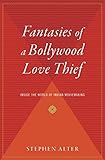
Selected photographs from the archive were shown publicly for the first time in 2017, according to Serendipity Arts. A more extensive route into the images and their context is the illustrated book Bombay Talkies: An Unseen History of Indian Cinema, edited by Debashree Mukherjee.
The publisher lists the hardback at 196 pages, with 25 color and 140 black-and-white illustrations, ISBN 9789385360787. The book pairs photographs with essays, offering historical context alongside the images. Availability and regional pricing can change; consult the publisher’s current listing for details.
Rank #4
For collection information and its history, visit the Wirsching Archive about page. Further institutional and publication sources include the JNAF curatorial note, Serendipity Arts’ account of the 2017 showing, and the publisher’s book datasheet.
Quick Recap
Sources and further reading
- NCPA, April 2023 — Wirsching’s arrival in India and career landmarks.
- Library of Congress film guide — photography credit for Achhut Kanya.
- METROMOD archive entry — context on Mahal and Pakeezah.
- International Center of Photography book listing — collaborators associated with Bombay Talkies films.
Product prices and availability are accurate as of the date/time indicated and are subject to change. Any price and availability information displayed on Amazon at the time of purchase will apply.