Free tools Windows power users keep installed
One-click scans. No signup required.
A successful hybrid event is designed for two audiences: the people in the room and the people joining remotely. Before choosing a venue, platform, or camera setup, decide what each audience should see, hear, ask, and access before, during, and after the event. Then build the schedule, production plan, staffing, and technical setup around those needs.
What is a hybrid event?
A hybrid event combines an in-person experience with an online one. Depending on its purpose, it may include live sessions in a venue, live online participation, prerecorded segments, on-demand recordings, or connections between multiple physical sites. IEEE Events’ “Hybrid Event Information and Resources: Going Hybrid” describes hybrid formats as combinations of physical and virtual offerings that need intentional design for presenters and participants.
It is not enough to point a camera at a stage. A remote attendee needs intelligible audio, useful context, a way to participate, and timely access to the content and resources promised for the event. The room audience also needs to understand how online participation fits into the program.
Start with the two audience journeys
Decide what happens live and what can be asynchronous
For each session, decide whether it will be live in the room, streamed live, prerecorded, available on demand, or offered across several of those formats. Consider whether the event has multiple physical sites that need to connect. Match the format to the event’s purpose and audience rather than assuming every segment must be live.
The Tool Desk
Outbyte Driver Updater FREEScan for outdated or missing drivers - takes under a minuteDriver Scan →Outbyte PC Repair FREEClear out junk files and repair common Windows errorsFree Scan →#1 Best Overall
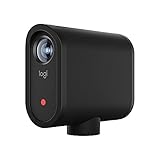
- STUNNING HD VIDEO QUALITY — Live stream and record in stunning 1080p HD resolution with crisp, detailed imaging, right out of the box.
- STREAM ANYWHERE — Go where the story takes you. Stream live from anywhere in the world using Wi-Fi, Ethernet or even your smartphone’s LTE network.
- INTELLIGENT APP CONTROL — Wirelessly control your Mevo and create compelling content with features like Auto-Director, all from your smartphone.
- MULTICAM MADE EASY — Connect up the three Mevo Start cameras to easily create broadcast-quality streams with multiple angles.
- ADVANCED ONBOARD AUDIO — Capture clean, clear audio using the built-in microphone or connect external audio sources for advanced setups.
Plan participation, not just viewing
Specify how people in the room and online will ask questions, join discussions, network, and interact with sponsors or exhibitors. Decide who will collect remote questions, how the moderator will bring them into the room, and how onsite questions will be made audible to remote attendees. If an onstage demonstration or reference depends on something visible only in the venue, provide the online audience with a camera view or explanation that supplies the missing context.
Make the schedule work across locations and time zones
Plan session times with remote attendees’ time zones in mind. Coordinate live sessions with non-live activities, and decide what virtual participants can do during onsite breaks. IEEE recommends coordinating live and non-live activities and offering interaction across in-person and virtual channels. After the event, provide the recordings or resources you promised and plan how to gather feedback and continue engagement.
Choose a production level and platform
Choose a platform and production approach only after you know the event’s scale, interaction needs, recording plans, access controls, existing AV setup, staffing capacity, and licensing constraints. Consider whether you need chat, Q&A, polling, analytics, or an online portal for recordings. AVIXA’s “Hybrid Event Production: A Comprehensive Guide for AV/IT Professionals,” published August 12, 2025, identifies cameras, microphones, switchers, streaming platforms, chat, Q&A, analytics, and reliable connectivity as production considerations. These are general planning points, not a venue-specific technical design or an endorsement of a particular platform.
Rank #2

- Unmatched 4K Streaming Quality - The EMEET S600 streaming camera boasts a high-definition 4K sony 1/2.55'' sensor, delivering crisp, clear images far exceeding typical webcam quality. With versatile resolution options, enjoy stunning 4K at 30FPS or smooth 1080P at 60FPS. Ideal for aspiring streamers, game streaming, and content creation, this 4K webcam ensures exceptional experience for you and your audience. Note: Video resolution depends on built-in camera software or apps like PotPlayer/OBS.
- Advanced PDAF Autofocus & Light Balance – 4K webcam S600's PDAF(Phase Detection Autofocus) tech offers significant advantages over common autofocus such as faster speed, higher precision, and more stable performance in various scenes features. Its auto light adjustment capability balances shadows and highlights even in low-light environments, keeping every detail sharp and clear on screen, making it ideal for content creators and live streamers who demand top-tier performance and visual quality.
- Enhanced Audio Clarity & Customizable FOV - The EMEET S600 4K streaming webcam is equipped with premium microphones that use a proprietary algorithm to filter out background noise and capture your voice with exceptional clarity. Noise-canceling feature is enabled by default but can be turned off through the EMEETLINK software. At 1080P, the FOV adjusts 40°-73°, allowing you to focus on you and surroundings, while at 4K, it’s fixed at 73° for better image quality and less distortion.
- Integrated Privacy Cover & Rugged Design - The 4K webcam for streaming boasts a built-in privacy cover right on the lens, ensuring it won't accidentally open or get touched. Crafted with meticulous engineering, every component of the S600, from the clips to the joints, is designed for durability and stability. Unlike traditional 4K streaming cameras, S600 webcam for PC offers flexible rotation and wide-angle tilting while staying securely in place, making it easier to find your ideal angle.
- Effortless Setup with Customization Option - S600 2.0&3.0 USB webcam offers a seamless plug-and-play experience, compatible with nearly all popular operating systems and software, no extra software required for use. Just plug it in, and you’re ready to go, making it an easy addition to your workflow. For those looking to fine-tune image parameters or enhance sound quality, EMEETLINK software is available for advanced customization. Both simplicity and advanced needs can be met effortlessly.
Microsoft’s Teams guidance describes both lightweight production using Teams and production with an external hardware or software encoder for an existing professional setup. However, Microsoft says Teams live events retired on June 30, 2026, and points users to Teams town halls as the newer experience. Verify the current events experience, features, licensing, and eligibility for your organization directly before building an event around a named platform feature; those details can change.
Survey the venue and map the signal path
Walk the venue and document how audio, video, and network signals will travel from their sources to the room systems and online platform. Check the room’s capacity and layout, camera positions, lighting, microphones, speakers, displays, connections, internet access, and available technical support. IEEE identifies internet, AV, capacity, room layout, and technical support as planning considerations. Microsoft recommends a site survey, equipment verification, and documented audio, video, and network signal flow.
Test the room and online audio separately
People in the room and people joining online hear sound through different paths. Test each path separately: verify that presenters can be heard in the room, that the platform receives a clear mix, and that remote questions and audience contributions reach both audiences. Avoid sending several competing audio feeds into the meeting platform. Microsoft’s guidance emphasizes audio quality and recommends feeding one dominant audio source to the platform. As Microsoft Support puts it in “Tips for producing large meetings and events in Microsoft Teams,” “Don’t overlook audio quality, it’s the most important part of a great event.” This is Microsoft’s vendor-authored recommendation, not an independent comparative study.
Rank #3

- Compatible with Nintendo Switch 2’s new GameChat mode
- Auto-Light Balance: RightLight boosts brightness by up to 50%, reducing shadows so you look your best—compared to previous-generation Logitech webcams (1)
- Privacy with a Slide: The integrated webcam cover makes it easy to get total, reliable privacy when you're not on a video call
- Built-In Mic: The built-in microphone lets others hear you clearly during video calls
- Easy Plug-And-Play: The Brio 101 works with most video calling platforms, including Microsoft Teams, Zoom and Google Meet—no hassle; it just works
Provide suitable wearable or handheld microphones for presenters and plan for panelists and roaming audience questions. Microsoft recommends spare microphones. The right choices depend on the room acoustics and AV design.
Check video, connections, and internet under real conditions
Confirm that camera shots, lighting, presentation media, displays, and any switching between sources work as intended. Where practical, AVIXA recommends a dedicated wired internet connection. Test the actual venue connection and the online output rather than relying on assumptions about what the venue can provide.
Windows Errors? Fix Them Before They Spread
Repair common Windows errors and clear accumulated junk for a smoother, more stable PC - no reinstall needed.Free scan · no reinstallCrashes, No Sound, or Screen Glitches?
Random freezes, missing sound and display glitches usually trace back to one bad driver. Find and replace yours safely.Free scan · under a minuteThere is no universal bandwidth figure established by the guidance cited here: requirements depend on the platform, stream quality, venue, and number of outputs. Plan a primary connection and test a secondary path, such as a mobile hotspot, under realistic conditions. IEEE and AVIXA discuss internet planning, while Microsoft recommends testing a secondary connection.
Rank #4

- 🎥 【4K Digital Camera for Vlogging-Made for Beginners & First-Time Content Creators】Shoot stunning 4K video and capture 75MP photos for clear, shareable content. Create eye-catching videos without complicated settings. This easy-to-use camera is perfect for YouTube, TikTok, travel vlogs, and daily recording. Fast autofocus and a wide-angle lens ensure sharp and stable footage
- 🌍【 Portable Pocket Camera for Travel & Daily Use】Compact and lightweight, this portable camera easily fits in your pocket—perfect for travel, vacations, outdoor trips, hiking, and everyday life recording. Capture high-quality moments anytime, anywhere
- 🎬【Perfect for Solo Vlogging】Film yourself with confidence using the unique 330° rotating lens. Create travel vlogs, daily videos and outdoor content with natural-looking framing and less camera adjustment. Also supports time-lapse, slow motion and interval shooting for more creative storytelling.
- 📱【WiFi Digital Camera for Content Creators】Built-in WiFi lets you wirelessly transfer photos and videos to your smartphone for quick editing and sharing. Perfect for YouTube, TikTok and social media content.
- 📦 【 Vlogging Camera Kit with Accessories & Warranty】Comes with essential accessories so you can start filming immediately—no extra setup needed. Includes a camera, 16GB TF card, mini tripod, charging cable, wrist strap, and travel carrying bag. A perfect beginner camera kit, backed by 24/7 support and a 1-year warranty
Choose equipment to match the signal path
| Production need | Equipment or approach to consider | What to check |
|---|---|---|
| Clear speech from presenters and audience members | Appropriate wearable or handheld microphones and a properly managed audio feed | Room acoustics, separate room and online audio tests, one dominant platform audio source, and spare microphones. Microsoft emphasizes these audio checks; select equipment for the venue’s AV design. |
| Presenter or room video for the online audience | One or more cameras, lighting, and a switcher if you need multiple shots | Camera positions and whether the online audience can see the relevant speaker, presentation, demonstration, or audience interaction. AVIXA identifies cameras, lighting, and switchers as production elements; the configuration depends on venue and production scale. |
| An HDMI camera or AV output must enter a computer | A USB HDMI capture card or another compatible capture device | Confirm that the device works with the computer, software, and source signal. Microsoft documents using an HDMI capture device to bring an HDMI source into a computer running Teams. A capture card is only needed for workflows that require this connection. |
| An existing professional setup feeds a streaming platform | An external hardware or software encoder where the platform supports it | Confirm the platform’s current input requirements and that the encoder and signal path are compatible. Microsoft documents external-encoder production for an existing setup supporting RTMP streaming. |
| Venue internet is uncertain | A wired primary connection and a tested secondary connection | Test the backup path under the conditions in which it would be used. IEEE, AVIXA, and Microsoft discuss connectivity planning; Microsoft specifically recommends testing a secondary connection such as a mobile hotspot. |
Assign roles, rehearse, and prepare contingencies
Give production and audience support clear owners
Assign a producer to control the stream, an operator to monitor the room and online feeds, and a moderator to manage remote questions. Name a backup producer who can take over, decide who has authority to change the run of show, and establish how technical problems will be escalated. Make sure the people operating the room and the stream know who handles each handoff.
Rehearse the end-to-end experience
Run a rehearsal in the actual environment. Test speaker handoffs, camera shots, presentation media, audio levels, online access, remote questions, recording, and transitions between live and prerecorded content. Check captions and any other accessibility features the event will use. AVIXA recommends testing equipment and platform compatibility and rehearsing presenters and AV staff; Microsoft recommends practicing transitions and checking audio and video before the event.
Prepare practical backups
Plan for equipment or connectivity failures before attendees arrive. Microsoft recommends a second producer, a spare laptop and equipment, a tested secondary internet path, and prerecorded critical presentations. Check that whoever takes over can access what they need, and decide how the event will proceed if a camera, microphone, connection, or platform feature fails.
Quick wins for a faster PC:
Scan for outdated or missing drivers - takes under a minuteDriver Scan →Repair Windows errors before they cause bigger problemsFix Now →Best Value

- Compatible with Nintendo Switch 2’s new GameChat mode
- HD lighting adjustment and autofocus: The Logitech webcam automatically fine-tunes the lighting, producing bright, razor-sharp images even in low-light settings. This makes it a great webcam for streaming and an ideal web camera for laptop use
- Advanced capture software: Easily create and share video content with this Logitech camera that is suitable for use as a desktop computer camera or a monitor webcam
- Stereo audio with dual mics: Capture natural sound during calls and recorded videos with this 1080p webcam, great as a video conference camera or a computer webcam
- Full HD 1080p video calling and recording at 30 fps. You'll make a strong impression with this PC webcam that features crisp, clearly detailed, and vibrantly colored video
Run the event for both audiences, then follow up
During the event, monitor sound, video, connectivity, audience chat, and the room. Keep online attendees informed about what is happening, make audience questions audible to them, and explain or show onstage demonstrations they might otherwise miss. Plan breaks for people onsite; when useful, provide an activity or content for online attendees during the same period.
After the event, provide promised recordings and other resources, gather feedback, and continue engagement. IEEE’s planning guidance includes post-event communication, continued engagement, reuse of intellectual property, and audience surveys. AVIXA also recommends recorded access through an online portal as one way to extend access after a live session.
A separate use case: continuous prerecorded YouTube programming
A hybrid event built around live speakers and two-way participation needs event production, moderation, and interaction; an always-on loop of uploaded video does not replace those functions. If you also want a separate continuous YouTube channel playing prerecorded programming, StreamNeo is a cloud service for that specific use: upload a recording or build a playlist, add your YouTube stream key, and go live. It loops uploaded videos to YouTube; it is not a camera-based live production service.
StreamNeo runs in the cloud, so your computer and home connection do not need to stay on. Each slot streams uploads as made, up to 4K 60fps, at one flat price per slot, with no re-encode or quality tiers. It can automatically recover if YouTube drops the stream. The first day is free with no card, one free day per account. Monthly access is $9.99 per month. See StreamNeo, or start the free day.
Quick Recap
Product prices and availability are accurate as of the date/time indicated and are subject to change. Any price and availability information displayed on Amazon at the time of purchase will apply.