The Tool Desk
Outbyte Driver Updater FREEScan for outdated or missing drivers - takes under a minuteDriver Scan →Outbyte PC Repair FREEClear out junk files and repair common Windows errorsFree Scan →The northern lights are easiest to see when three conditions overlap: active aurora, a dark sky, and clear weather. The best strategy is to travel during the local dark season, choose a location beneath or near the auroral oval, get away from artificial light, check both the cloud forecast and space-weather nowcasts, and give yourself several nights. No forecast, tour operator, or destination can guarantee a display at a particular time.
The northern lights are easiest to see when three conditions overlap: active aurora, a dark sky, and clear weather. The best strategy is to travel during the local dark season, choose a location beneath or near the auroral oval, get away from artificial light, check both the cloud forecast and space-weather nowcasts, and give yourself several nights. No forecast, tour operator, or destination can guarantee a display at a particular time.
What the northern lights are
The northern lights, or aurora borealis, are the northern manifestation of auroral activity around Earth’s geomagnetic pole. Earth is surrounded by a zone called the auroral oval: an elongated ring where auroras occur most often. During strong geomagnetic disturbances, that oval can expand toward lower latitudes.
Solar activity sends energized particles into Earth’s magnetic environment. The magnetic field guides some of those particles toward the upper atmosphere, where collisions with atmospheric gases produce light. Different gases and altitudes contribute to different colors, including green, red, pink, purple, and blue.
#1 Best Overall
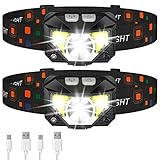
- Long Press Function and Motion Sensor: Unlike the old version, LHKNL headlamp has added a long press function. Just hold the key mode button for 3 seconds to turn off from any lighting mode—no need to cycle through all modes. It also added motion sensor mode, you can easily turn the lights ON or OFF by waving your hand, which is more convenient and avoids soiling the headlamp when your hands are dirty
- Super Bright and Rechargeable: The headlamp flashlight camping essentials uses class-leading LED chips that will provide 2X brighter high lumens, easily light up an entire tent and road. It has powerful rated 1500mAh built-in rechargeable battery, which can be able to charge and turn on the lights at the same time. No need to wait for full charge or replace the battery. And the battery indicator will help you master battery usage. Last for 4-10 hours when fully charged
- Ultra-light and Adjustable: The hand-free headlamp is only weight 1.87 OZ, comfortable and lightweight. The lamp head can be rotated 60° and tightly fixed to avoid shaking and sliding when running. The head flashlight uses comfortable elastic headband, which can easily adjust the length to perfectly fit your head size, perfect for adults and kids
- Waterproof and 8 Modes: The headlight has IPX4 waterproof rate. The high-quality shell is more sealed and leak-proof, which is suitable for rain or snow, indoors or outdoors. The led headlamp has 8 lighting modes to meet your various needs. In key light mode, you can switch the main strong beam, main weak beam, side strong beam, side weak beam, red beam, SOS red strobe. In motion sensor mode, you can switch the main strong beam and side strong beam
- Perfect Gift Choice: Are you still struggling with gift? LHKNL headlamp is your answer. Packaged in sets of two headlamps. This headlamp will be the perfect gift for your father, mother, husband, son, boyfriend on Christmas, Father's Day, Valentine's Day, Easter, Halloween, and Thanksgiving
Color is not a reliable measure of how impressive a display will look to your eyes. A camera may record vivid green or red light when the unaided eye sees only a faint gray or whitish arc. In marginal conditions, a smartphone’s night mode can reveal aurora that is difficult to distinguish visually; NASA’s aurora guidance notes that cameras can be more sensitive than human vision.
Where will the northern lights be visible?
The most dependable broad approach is to go toward the auroral oval, then find a dark, open, safe location. High-latitude destinations offer more frequent opportunities, but they still require clear skies and darkness.
High-latitude viewing destinations
- Fairbanks, Alaska: At approximately 65 degrees north, Fairbanks and the surrounding region are positioned beneath the auroral oval for much of the year. Travel Alaska describes a practical viewing season of roughly mid-August through mid-April, with especially long nights during winter.
- Northern Norway: Northern Norway has a broad dark-season window, generally from late September through late March. Coastal and inland locations offer different weather and landscape conditions, so flexibility can be valuable. Visit Norway identifies autumn and spring as statistically favorable periods while emphasizing that displays also occur during winter.
- Northern Canada: Northern communities and dark-sky parks provide strong opportunities. Wood Buffalo National Park and Jasper are useful examples of places where low light pollution can be combined with an outdoor or stargazing trip. Check current park access, road conditions, and safety notices before going.
Can you see the aurora farther south?
Yes. During a strong geomagnetic storm, the auroral oval can expand toward lower latitudes. A display may then be visible from parts of the northern United States, southern Canada, the United Kingdom, or other locations farther from the Arctic.
These lower-latitude sightings are less predictable and often appear low on the northern horizon. Dark skies matter even more because a faint arc can be washed out by city glow. A forecast showing aurora activity over a broad region does not mean every city in that region will see it.
Free tools Windows power users keep installed
One-click scans. No signup required.
What “visible” really means
A forecast can indicate that auroral activity is likely over a region, but it cannot account perfectly for every local factor. Your actual view depends on:
- cloud cover, fog, precipitation, and haze;
- how dark the sky is, including twilight and moonlight;
- light pollution from towns, roads, buildings, and nearby vehicles;
- trees, hills, buildings, and other horizon obstructions;
- your eyes’ adaptation to darkness; and
- the aurora’s brightness, position, movement, and duration.
A faint display may look like a pale, colorless smear to the eye but appear green in a photograph. That does not mean the photograph is dishonest; cameras can gather light over several seconds, while human vision must interpret the scene in real time.
When is the best time to watch?
Choose darkness, not just an aurora season
Auroras can occur throughout the year, but you cannot see one against a bright summer sky. At high latitudes, daylight and twilight may last for much of the night in summer.
Practical seasonal windows vary by destination:
- Fairbanks: approximately mid-August to mid-April.
- Northern Norway: broadly late September to late March.
- Equinox periods: late March and the autumn equinox are often considered statistically favorable for geomagnetic activity, but this is a tendency rather than a promise.
For any destination, use local sunset, twilight, and sunrise times—not a generic “aurora season”—to determine how many genuinely dark hours are available.
What time of night?
Start watching around 9 or 10 p.m. and continue into the early morning if conditions are good. Midnight is a useful starting point, not a fixed appointment. Displays can begin earlier, fade temporarily, or strengthen after midnight. Strong solar activity can produce aurora at different times between sunset and sunrise.
Rank #2

- DanForce Bold-S USB rechargeable LED headlamp provides bright hands-free lighting for camping, work, outdoor use, and hard hat lighting needs.
- Built-in rechargeable power design supports convenient USB charging while keeping the product positioned as a complete headlamp for everyday use.
- Adjustable headband and lightweight fit help keep the headlamp comfortable during long outdoor, work, and travel use.
- Multiple light modes, red light function, and zoomable beam allow practical lighting control for different environments.
- Aluminum construction and water-resistant design make the headlamp suitable for camping, work, travel, and general low-light conditions.
Plan to wait. The lights do not operate on a fixed schedule, and a quiet first hour does not prove that the rest of the night will be inactive.
Moonlight and clouds
A new moon can make a faint aurora easier to see, especially alongside a dark-sky landscape. Bright moonlight does not prevent a strong display, however. Cloud cover is usually the more immediate problem: an active aurora above an overcast sky is invisible from the ground.
Before leaving, compare the hourly cloud forecast for several nearby locations. In some regions, driving a short distance can put you beneath a clear patch; in others, icy roads or poor visibility make moving a bad idea. Never chase a forecast at the expense of safe travel.
Do these 3 things before closing this tab:
1Clear out junk files and repair common Windows errors2Scan for outdated or missing drivers - takes under a minute3Repair Windows errors before they cause bigger problemsHow to check the aurora forecast
Use a layered forecast rather than relying on a single app or a colorful map.
- Check local weather first. Reject locations covered by widespread cloud, fog, precipitation, or dangerous travel conditions.
- Use NOAA’s short-range nowcast. The NOAA Aurora 30-Minute Forecast uses the OVATION model to estimate aurora location and intensity approximately 30 to 90 minutes ahead. It is useful for deciding whether to go outside now, not for guaranteeing what will happen on a trip next month.
- Match the forecast to your latitude. A strong aurora forecast near the Arctic does not automatically mean the same display will be visible from a lower-latitude city.
- Look at the sky yourself. Forecast models do not perfectly represent a local cloud bank, haze, tree line, mountain, or light source.
- Keep watching. Activity can brighten, fade, move overhead, or shift toward the horizon during the same night.
How much attention should you pay to Kp?
Kp is a broad index of geomagnetic activity. Higher values generally mean a greater chance of aurora and a greater possibility that the auroral oval will expand toward lower latitudes. It is useful for understanding the overall level of activity, but it is not a universal visibility threshold.
The Kp level needed for a reasonable chance varies with latitude, local darkness, the direction and structure of the event, horizon conditions, and the strength of the actual display overhead. “Kp 5 means everyone will see the lights” is an oversimplification. Treat Kp as one piece of the picture, then prioritize local clouds, darkness, and the short-range nowcast.
How to choose a viewing location
The best site is not necessarily the most remote site. It is a place that is dark enough, open enough, legally accessible, and safe enough to use after sunset.
What’s actually slowing this PC down?
Pick the symptom - the matching free tool is one click away.
Look for:
- minimal artificial light and a clear view of the sky;
- a wide, unobstructed horizon—especially toward the north when viewing from farther south;
- legal access after dark and reliable parking;
- a safe route away from roads, cliffs, thin ice, deep snow, fast water, and wildlife hazards;
- a shelter, heated building, or vehicle nearby if you need to warm up; and
- enough space to set up a camera without blocking other observers.
Artificial sky glow can erase faint stars and weak aurora. DarkSky International’s Dark Sky Places program is a useful starting point for finding locations with protected nighttime environments. Certification is not a substitute for checking current opening hours, access rules, road conditions, weather, and local regulations.
National parks can be excellent viewing locations, but darkness does not remove outdoor risks. Jasper and Wood Buffalo guidance emphasizes warm clothing and practical night-sky equipment. Confirm whether roads, campgrounds, trails, or facilities are open before setting out.
Rank #3
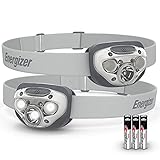
- [Headlamp LED Light]: Two (2) Energizer Vision HD + LED Headlamps offer a hands-free, bright LED light with a long runtime for extended use
- [Indoor and Outdoor Light]: Use this LED battery headlamp as an emergency light, outdoor light or as a work light for both indoor and outdoor activities
- [Bright LED Light]: 260 lumen Energizer headlamp LED light has up to an 80-meter beam distance and is 4x brighter than the standard LED technology
- [Dimming Controls]: This battery powered headlamp uses advanced dimming control technology to let you adjust the intensity from 10% to 100%
- [Three Modes]: Choose from three modes with this flashlight headlamp - high, spot and wide - to accommodate all your work and personal needs
What to bring for an aurora watch
Essential equipment
- Warm, layered clothing suited to the actual forecast—not merely the average temperature.
- Insulated, weather-resistant footwear and gloves or mittens.
- A red-light flashlight for aurora viewing. Red light helps preserve dark adaptation and is less disruptive to nearby observers than a bright white beam, but use it carefully near roads, ice, water, and uneven ground.
- A charged phone, backup battery, and a way to contact help where coverage is limited.
- Water and a warm drink where permitted.
- A chair or insulated seat so that waiting is comfortable.
Useful photography equipment
- A camera or smartphone with night mode or manual controls.
- A tripod for northern-lights photography if you want sharper long-exposure images.
- Spare batteries; cold temperatures reduce battery life.
- A lens cloth for frost, snow, and condensation.
- A wide-angle lens for dedicated cameras, particularly when the aurora is spread across much of the sky.
Binoculars and a small telescope are optional additions for the surrounding stargazing, but they are not necessary for the aurora itself. The lights can cover a large area of sky and are usually best appreciated with the unaided eye.
How to photograph the northern lights
There is no single camera recipe that works for every aurora. Exposure depends on the camera, lens, ambient light, brightness and speed of the display, and whether you want sharp stars or a brighter foreground.
- Stabilize the camera. Put it on a tripod or another firm support. Do not rely on handholding for multi-second exposures.
- Use a wide field of view. This helps include both the aurora and the landscape, especially when the display is large.
- Focus carefully in darkness. Autofocus may hunt or lock onto the wrong subject. Focus on a distant light or bright star when possible, then review the result.
- Begin with the camera’s night mode or a moderate exposure. If the aurora is moving quickly, a shorter exposure may preserve its structure; a faint, slow display may need more light.
- Review and adjust. Check sharpness, highlights, horizon level, and whether the aurora is blurred by movement. The first image is a test, not a final setting.
Modern phones can perform surprisingly well. Computational night modes may combine several seconds of captured light and reveal a faint aurora more clearly than your eyes can. Keep the phone steady, avoid covering its lens, and remember that a bright screen or flashlight can spoil your own night vision and distract others.
Avoid using a bright white flash or powerful white headlamp around other observers. A dim red light is a more considerate choice, while safety should always take priority over preserving darkness.
Independent reader supportYour contribution helps us test, update, and keep practical guides available for everyone.Destination examples: where to build a realistic trip
Fairbanks, Alaska
Fairbanks is one of the clearest North American case studies because it combines a favorable latitude, a long dark season, established visitor infrastructure, remote viewing sites, and aurora-focused accommodations. The wider region offers guided tours and locations away from city light. Official tourism guidance recommends using forecasts, moving away from urban glow, and considering multiple nights rather than relying on one attempt.
A guided northern-lights tour in Fairbanks can be useful when you do not know the roads, want access to a remote viewing site, or prefer warming facilities and someone else to monitor changing conditions. It still cannot manufacture clear skies or geomagnetic activity, so compare cancellation, rescheduling, transportation, and weather policies before booking.
PC Slower Than It Used to Be?
A free scan shows the junk files, broken settings and background clutter dragging Windows down - then fixes them in one click.Free scan · Windows 10 & 11Outdated Drivers Are Slowing You Down
One free scan finds every outdated or missing driver and matches the right update for your exact hardware.Free scan · exact hardware matchNorthern Norway
Northern Norway offers a long dark season, varied coastal and inland landscapes, and well-established visitor services. Tromsø and other northern communities are popular bases, but a nearby town is not automatically a dark viewing site. Consider cloud patterns, light pollution, accessible roads, and the direction of the horizon.
Autumn and spring can be statistically favorable for activity, while winter supplies many dark hours. The practical choice depends on your tolerance for cold, travel conditions, daylight, and the number of nights you can stay.
Jasper, Wood Buffalo, and other northern Canadian dark-sky areas
Dark-sky parks show that aurora travel can be part of a broader night-sky experience rather than a single-purpose chase. Jasper and Wood Buffalo offer unusually dark environments, but a dark park is not a promise of aurora. Plan around current park conditions, warm shelter, safe access, and the possibility of clouds or quiet space weather.
Rank #4

- [Headlamp LED Light]: Two (2) Energizer Vision HD + LED Headlamps offer a hands-free, bright LED light with a long runtime for extended use
- [Indoor and Outdoor Light]: Use this LED battery headlamp as an emergency light, outdoor light or as a work light for both indoor and outdoor activities
- [Bright LED Light]: 260 lumen Energizer headlamp LED light has up to an 80-meter beam distance and is 4x brighter than the standard LED technology
- [Dimming Controls]: This battery powered headlamp uses advanced dimming control technology to let you adjust the intensity from 10% to 100%
- [Three Modes]: Choose from three modes with this flashlight headlamp - high, spot and wide - to accommodate all your work and personal needs
Choosing a lodge or cabin
An aurora-viewing lodge, cabin, or resort can make a multi-night attempt more comfortable, especially when it offers a dark location, heated indoor viewing areas, overnight access, and transportation that does not require driving icy roads after midnight. Verify current availability, pricing, cancellation terms, road access, and whether the property is genuinely away from significant light pollution. A heated room improves the experience; it does not improve the aurora forecast.
How to improve your odds
- Stay several nights. One night exposes you to one narrow combination of cloud and space weather. Multiple nights give conditions time to align.
- Choose the dark season. Favor a period with genuinely dark hours at your latitude.
- Stay flexible. If weather differs across the region, a safe move to a clearer nearby location may help.
- Get away from city light. Even a modest reduction in sky glow can make a faint display easier to detect.
- Protect your ability to wait. Warm layers, a seat, food, and a nearby shelter can be more valuable than expensive camera gear.
- Monitor both forecasts. Clouds determine whether you can see the sky; space-weather data estimates whether there may be anything to see.
- Accept uncertainty. A carefully planned trip can still end with clouds or quiet geomagnetic conditions.
A simple night-of-viewing checklist
- Check the hourly cloud forecast for your exact site.
- Check sunset, twilight, moonrise, and moonset.
- Review NOAA’s short-range aurora nowcast.
- Confirm that the site is legally open and safe after dark.
- Tell someone where you are going if traveling outside a town.
- Charge your phone and camera batteries.
- Pack warm layers, a red light, water, and a seat.
- Arrive early enough to set up without rushing.
- Allow your eyes 20 to 30 minutes to adapt to darkness, avoiding unnecessary white light.
- Keep watching, but leave if weather or travel conditions become unsafe.
The honest answer: can anyone guarantee the northern lights?
No. The best destination, the highest reported activity, and an expensive tour cannot guarantee a visible display at your chosen address and time. Forecasts have different time horizons and uncertainties, and local clouds can defeat an otherwise excellent space-weather prediction.
The realistic promise is not “see the northern lights on demand.” It is to stack the odds in your favor: travel during a dark season, select a dark and safe site, check local weather and NOAA space-weather data, stay for multiple nights, dress for long waits, and remain flexible. When the three essentials—activity, darkness, and clear skies—finally align, patience is often what turns a possibility into a sighting.
Further official guidance: NOAA’s Aurora 30-Minute Forecast, NASA’s aurora overview, Travel Alaska’s northern-lights guidance, Visit Norway’s northern-lights information, DarkSky International’s Dark Sky Places program, and Parks Canada’s dark-sky resources.
Frequently Asked Questions
What is the best time of night and year to see the northern lights?
The best general time is during the destination’s dark season, often from late evening through the early morning. Fairbanks is commonly suitable from about mid-August through mid-April, while Northern Norway’s broad season is roughly late September through late March. Around midnight is a useful starting point, but displays can occur at any time between sunset and sunrise.
Quick wins for a faster PC:
Repair Windows errors before they cause bigger problemsFix Now →Scan for outdated or missing drivers - takes under a minuteDriver Scan →Where is the best place to see the northern lights?
Fairbanks, Northern Norway, and northern Canadian communities or dark-sky parks are dependable broad choices because they are near or beneath the auroral oval and offer long dark seasons. No destination guarantees a display; clouds, darkness, and space-weather activity must still align.
Can the northern lights be seen outside the Arctic?
Yes, but usually only during stronger geomagnetic disturbances. Lower-latitude sightings are less predictable and may appear low on the northern horizon, so escaping city light is especially important.
What Kp number is needed to see the aurora?
Kp is a broad geomagnetic-activity index. Higher Kp generally increases the likelihood and geographic reach of aurora, but there is no universal Kp number that guarantees visibility. Latitude, clouds, darkness, horizon conditions, and the event’s structure all matter.
What camera settings should I use for northern-lights photography?
A tripod, wide field of view, careful focus, and a camera or phone with night mode or manual controls are useful. Settings vary with the camera and the brightness and movement of the aurora, so review each exposure and adjust rather than following one universal recipe.
Recommended Free Tools
The Bottom Line
To maximize your chances, watch during the local dark season from a dark, safe location; check hourly clouds alongside NOAA’s short-range aurora forecast; stay several nights; and prepare to wait. The aurora can never be guaranteed.
Quick Recap
Product prices and availability are accurate as of the date/time indicated and are subject to change. Any price and availability information displayed on Amazon at the time of purchase will apply.