What’s actually slowing this PC down?
Pick the symptom - the matching free tool is one click away.
The easiest way to view photos on a TV depends on where the photos are stored and which devices you own. Use AirPlay with an iPhone or iPad and an AirPlay-compatible TV; use Google Photos casting with an Android phone and a Chromecast or Google TV; use Smart View with a Samsung Galaxy phone and a compatible Samsung TV. If wireless sharing is unavailable or unreliable, connect a computer or compatible phone with HDMI, or copy local photos to a USB flash drive.
- iPhone or iPad: Photos → Share → AirPlay.
- Android with Chromecast or Google TV: Google Photos → More → Cast.
- Samsung Galaxy with Samsung TV: Quick Settings → Smart View.
- Photos already in iCloud: Use the Photos app on Apple TV 4K.
- Photos already in Google Photos: Cast them or select albums for Google TV Ambient mode.
- No dependable Wi-Fi: Use HDMI or USB.
These methods are not interchangeable. A TV being described as smart does not mean it supports AirPlay, Google Cast, Smart View, every photo format, or every cloud-photo service. Compatibility can depend on the exact TV model, operating system, region, software version, phone, app, and account settings.
Choose the right method in 30 seconds
| Your situation | Best first choice | Why it is a good fit | Main limitation |
|---|---|---|---|
| iPhone or iPad with a modern compatible TV | AirPlay | Built into Apple devices and quick for a single photo or album | The TV must support AirPlay, and both devices generally need the same Wi-Fi network |
| Android phone with Chromecast or Google TV | Google Photos Cast | Select photos or albums on the phone while the TV displays them | The destination and app must support Google Cast |
| Samsung Galaxy phone and Samsung TV | Smart View | Available in Galaxy Quick Settings and useful for mirroring Gallery or Google Photos | Support varies by phone and TV model |
| Photos in iCloud and an Apple TV 4K | Apple TV Photos app | The TV accesses the library directly instead of mirroring a phone | The same Apple Account is required; iCloud Photos is tied to the default Apple TV profile |
| Photos in Google Photos and a compatible Google TV | Google Photos Ambient mode | Selected albums can become a slideshow or screensaver | Features and advanced tools vary by country, language, device, and account |
| Photos on a USB flash drive or local disk | TV Media Player | Works offline and does not require a phone or cloud account | File-system, capacity, and image-format support varies by TV |
| Photos on a laptop | HDMI | Usually the most predictable option | Requires a cable or adapter and leaves the computer involved |
| Poor or unavailable Wi-Fi | HDMI or USB | Does not depend on wireless device discovery | Less convenient than wireless sharing |
Before you start: where are the photos?
The source of the pictures determines the best workflow:
- Only on a phone: Cast or mirror the phone, or use a wired display adapter.
- Synced to iCloud Photos: AirPlay them from an iPhone or use the Photos app on Apple TV 4K.
- Stored in Google Photos: Cast from the app or choose albums for Google TV Ambient mode.
- Stored in Samsung Gallery: Use Smart View or, on compatible Samsung TVs, the TV’s Gallery app.
- On a computer: Use HDMI, AirPlay from a Mac, Miracast from Windows, or Chrome casting.
- On an SD card or USB drive: Use the TV’s media player if the TV accepts the card, adapter, drive, and photo format.
Also decide whether you want to show one picture, browse an album, run a slideshow, or leave the TV operating as a recurring digital frame. The fastest method for one picture is not necessarily the best method for a slideshow.
Recommended Free Tools
Casting, mirroring, and a native TV app are different
Understanding this distinction prevents many surprises.
#1 Best Overall

- Superior Display, Swift Connectivity: Elevate your viewing experience to unparalleled clarity with 8K@60Hz, and enjoy smoother visuals and reduced lag with support for 4K@120Hz and 4K@60Hz.
- Quick and Seamless Video Transfer: With the latest HDMI technology, stream or transfer videos without interruptions, and witness the power of up to 48 Gbps in bandwidth, ensuring consistently clear content.
- Lasts Longer, Performs Stronger: This cable is designed to withstand up to 1,000 bends throughout its lifespan, meaning fewer replacements and continuous peace of mind.
- One Cable, Many Solutions: Whether you're connecting tablets, laptops, HDMI devices, projectors, or desktop screens, this cable effortlessly connects them all.
- What You Get: HDMI Cable (6 ft, 8K), welcome guide, 18-month warranty, and our friendly customer service.
- Casting from an app sends supported content to the TV or streaming device. The phone normally acts as a remote control rather than appearing on the TV. Google describes this as sending content from a Cast-enabled app to a compatible TV or display.
- Screen mirroring reproduces the phone or computer screen. Menus, notifications, orientation changes, incoming messages, and unrelated activity can become visible.
- A native TV app or feature runs on the television or streaming device. The phone does not need to remain on-screen, and in some cases does not need to remain connected at all.
Apple also distinguishes streaming content from mirroring an entire iPhone or iPad screen in its AirPlay instructions. For a family viewing session, casting a selected album or using a native TV photo feature is usually tidier and more private than mirroring everything on the phone.
Method 1: Display iPhone or iPad photos with AirPlay
AirPlay is the best first choice when you have an iPhone or iPad and an AirPlay-compatible smart TV or Apple TV. For ordinary home use, the Apple device and TV should be connected to the same Wi-Fi network.
Show one photo or an album
- Open Photos on the iPhone or iPad.
- Open the photo, or select an album.
- Tap Share.
- Scroll if necessary and tap AirPlay.
- Choose the Apple TV or AirPlay-compatible television.
- Enter the AirPlay code if one appears on the TV.
Use the AirPlay control again and choose the iPhone or iPad to stop. Apple’s wireless photo-sharing instructions cover the basic process.
Do these 3 things before closing this tab:
1Fix the driver behind crashes, sound loss and screen glitches2Clear out junk files and repair common Windows errors3Scan for outdated or missing drivers - takes under a minuteMirror the entire iPhone or iPad screen
- Open Control Center.
- Tap Screen Mirroring.
- Select the TV or Apple TV.
- Enter the displayed code if requested.
Screen mirroring is useful when the Photos app does not offer the control you need, but it can reveal notifications and everything else on the phone. To stop, open Control Center, tap Screen Mirroring, and choose Stop Mirroring.
If the TV does not appear
- Confirm that the TV and iPhone or iPad are on the same Wi-Fi network, not merely using the same internet account.
- Make sure the TV is powered on and AirPlay receiving is enabled.
- Move the devices closer together temporarily.
- Install available software updates.
- Restart both devices.
- Check restrictions in the Apple Home app if the TV is part of a Home.
- Temporarily disconnect a VPN or check whether the router isolates wireless clients.
- Use HDMI if the TV never appears.
Apple lists these and other checks in its AirPlay troubleshooting guide.
Method 2: Cast Google Photos to Chromecast or Google TV
Google Photos casting is usually the simplest Android workflow when the destination is a Chromecast, Google TV Streamer, or television with built-in Google Cast. The phone, tablet, or computer and the destination should normally be on the same Wi-Fi network. The app and destination must support Google Cast; not every photo app does.
From an Android phone or tablet
- Open Google Photos.
- Select a photo or album.
- Tap More.
- Tap Cast.
- Choose the Chromecast, Google TV Streamer, or compatible TV.
- Open a photo and swipe between photos as needed.
- To finish, tap Cast and choose Stop casting.
Google’s dedicated Photos page describes this workflow, while its current general Cast requirements describe the broader device and app requirements. The minimum Android version shown on an older Google Photos help page should not be treated as a guarantee that every current version of the app will run on every old phone.
Outdated Drivers Are Slowing You Down
One free scan finds every outdated or missing driver and matches the right update for your exact hardware.Free scan · exact hardware matchWindows Errors? Fix Them Before They Spread
Repair common Windows errors and clear accumulated junk for a smoother, more stable PC - no reinstall needed.Free scan · no reinstallFrom an iPhone or iPad
If the current Google Photos app displays a Cast button and the destination is Google Cast-compatible, use it. If the button is absent, do not assume the TV is defective. The app may not expose Cast on that device, local-network permission may be disabled, or the destination may not support Google Cast. Use AirPlay, a computer, or a wired connection instead.
From a computer using Chrome
- Open Chrome and visit
photos.google.com. - Connect the computer and Chromecast or Google TV to the same Wi-Fi network.
- In Chrome, select More → Cast.
- Choose the Chromecast or TV.
- When finished, select More → Cast → Stop casting.
Google documents this computer workflow in its Google Photos Chromecast instructions.
Method 3: Use Google Photos directly on Google TV
When your photos already live in Google Photos, a compatible Google TV can be more convenient than repeatedly casting from a phone. Google TV can use Google Photos as an Ambient mode source for screensavers, slideshows, and selected albums.
Rank #2
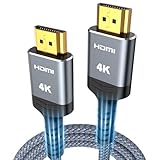
- 4K HDMI UHD Transmission, Stunning Audio & Visual for Home Theater & Gaming: Enhanced with gold-plated connectors for high-speed, interference-free signal transmission. Supports 4K*2K UHD resolution (3840×2160), delivering crystal-clear imagery and full HD stereo sound—perfect for immersive home theater movie nights, gaming marathons and big-screen TV viewing
- High-Speed Bandwidth, Instant Transmission for Real-Time Playback: Fully compliant with High-Speed HDMI cable 2.0 standard for max-speed data transfer. Blazing-fast transmission of audio, video and image files with zero buffering, ideal for 4K streaming, real-time gaming and seamless laptop-to-projector presentations. Plug-and-play design, no driver installation needed for effortless one-step connection
- HDMI 2.0 Standard Compliant, Universal Compatibility for All A/V Devices: Built to fully comply with official HDMI 2.0 standards after rigorous professional quality testing. Featuring broad backward compatibility with HDMI 1.4/1.3/1.2 generations, this cable effortlessly pairs with smart TVs, game consoles, Blu-ray players, projectors, laptops and set-top boxes. Enjoy stable plug-and-play connectivity across every piece of your home audio-visual gear.
- Premium Crafted Material, Ultra Durable for Daily Home Use & Frequent Use: Exclusive SR joint design at both ends to prevent joint cracking at the source. Rigorously lab-tested to withstand over 15,000 bends without performance loss, built to endure daily plug-and-unplug, messy entertainment area setups and regular home use—ensuring long-lasting durability against daily wear and tear hdmi cable
- 100% Component Inspected, Uncompromising Quality for Long-Term A/V Enjoyment: Every single component of the cable undergoes multiple rigorous lab tests for performance and sturdiness. Only flawlessly tested parts are selected for assembly, guaranteeing top-tier product performance and extended service life with strict quality control—reliable for years of home theater, gaming and everyday big-screen use hdmi
- From the Google TV home screen, open Settings.
- Select System.
- Select Ambient mode.
- Select Settings.
- Select Source.
- Choose Google Photos.
- Verify the Google Account.
- Select the albums to display and confirm.
Do not assume every Google TV has every Google Photos feature. Google’s current Photos on TV documentation says that photo search and Remix have additional eligibility requirements, including a Gemini-enabled device, United States availability, English language, an account holder aged 18 or older, a Google Photos account, and Personal results enabled. Broader country and language availability is expected to roll out later, so advanced features should be treated as region-dependent rather than universal.
For a shared television, use the narrowest album selection that accomplishes the task. Avoid linking an entire private library simply to display a family slideshow.
Method 4: Connect a Samsung Galaxy phone with Smart View
Smart View is Samsung’s built-in screen-sharing feature. It is found in the Galaxy Quick Settings panel rather than normally being installed as a separate app. It is a good choice for showing Samsung Gallery or Google Photos when the phone and TV are compatible.
- Put the Galaxy phone and TV on the same Wi-Fi network.
- Swipe down to open Quick Settings.
- Tap Smart View.
- Select the TV.
- Tap Start now.
- Approve the connection or enter a PIN if the TV requests one.
- Open Gallery or Google Photos on the phone.
To stop, open Smart View and disconnect. Exact support varies by Galaxy model and TV, including when the TV is not a Samsung model. Samsung’s Smart View support page is the right place to check model-specific behavior.
Method 5: Use Samsung’s Gallery app on a compatible TV
Some compatible Samsung TVs, including compatible 2019-and-newer models according to Samsung’s support documentation, can display photos and videos synchronized with a Samsung Account through the TV’s Gallery app. This is a native TV workflow, not phone mirroring.
Free tools Windows power users keep installed
One-click scans. No signup required.
- Press Home on the remote.
- Open Apps.
- Select Gallery.
- Sign in to the Samsung Account if prompted.
- Browse categories or albums.
- Use Gallery settings or a PIN to restrict access if those controls are available.
Because Samsung’s feature set varies by model, region, and software, verify your exact TV before relying on it for a permanent photo display. See Samsung’s Gallery app instructions.
Method 6: Browse iCloud Photos on Apple TV 4K
If the pictures are already synchronized to iCloud Photos and you own an Apple TV 4K, the TV’s Photos app can be easier than AirPlay. It can show the library, Memories, shared albums, slideshows, and photos as a screensaver.
- On Apple TV 4K, open Settings.
- Select Profiles and Accounts.
- Select the default profile.
- Select Photos.
- Turn on iCloud Photos.
- Confirm on another Apple device if prompted.
- Open the Photos app and browse the Photos category.
Apple says iCloud Photos can be viewed in full-resolution quality on Apple TV, but there is an important limitation: only the default Apple TV profile can sync and view photos in the Photos app. Edits must be made on an iPhone, iPad, or Mac. The Apple TV iCloud Photos guide provides the account details.
Method 7: Create a slideshow with Roku Photo Streams
Roku Photo Streams is useful when you want to upload a collection once and display it from a Roku device. Roku says a stream can contain up to 1,000 photos; its slideshows show each photo for 10 seconds in random order.
Quick wins for a faster PC:
Fix the driver behind crashes, sound loss and screen glitchesFind Drivers →Clear out junk files and repair common Windows errorsFree Scan →Rank #3

- 【Crystal-Clear Visuals: Experience Unmatched 8K Clarity】 Elevate your home entertainment with our 8K HDMI cable 15ft . Supporting 48Gbps High Speed, indulge in seamless transitions between 8K@60Hz and 4K@120Hz resolutions for crystal-clear visuals. Experience the vibrancy of Dynamic HDR, immersive 3D visuals, and HDCP2.2 & 2.3 compliance for an unparalleled viewing experience
- 【Gaming Excellence: Elevate Your Gaming with Next-Level Performance】 Our enhanced 8K long HDMI cable amplifies gaming experiences. Featuring an advanced audio return channel (eARC), enjoy superior high-definition audio compared to standard 4K cables. Bid farewell to picture freezes and tears with Variable Refresh Rate (VRR) support, ensuring smoother gameplay. This 15 ft HDMI cable is your ultimate choice for exceptional gaming performance across all compatible devices
- 【Seamless Compatibility: Versatile Connections Across Devices】 Backward compatible from HDMI versions 2.1 to 1.1, our 8K HDMI 2.1 cable 15 ft seamlessly connects laptops, Blu-ray players, HDTVs, monitors, Series X/S, CX C9 B9, AMD, Nvidia RTX 3080/3090, and various HDMI output devices. Immerse yourself in the latest high-bitrate audio formats including DTS Master, DTS:X, Atoms, and enhanced Audio Return Channel (eARC) across various setups, from 4K/8K UHD TVs to projectors and A/V Receivers
- 【Durable Performance: Sleek & Durable Copper Build for Longevity】 Crafted with advanced copper wire technology, our HDMI 15ft cable ensures greater bandwidth and durability. Experience minimal signal attenuation, superior interference resistance, and increased carrying capacity compared to traditional wires. It's the ideal choice for pre-built HDMI 2.1 cables, ensuring long-term performance without future cable replacement costs during home upgrades
- 【Lifetime Support & Precision: Quality Assurance and Bidirectional Transmission】 At Highwings, quality and customer support are top priorities. Enjoy lifetime support with our 8K long HDMI cable 15 ft. Our customer service team is available within 13 hours to assist with any cable-related issues. Remember, our cables support bidirectional transmission and are designed for optimal performance, ensuring the perfect picture on your chosen display device
- Visit
photostreams.roku.comin a browser or use the Roku mobile app. - Sign in to the Roku account.
- Create a stream and upload photos.
- On the Roku device, open the Photo Streams channel.
- Select the stream and choose Slideshow.
- To make it the screensaver, go to Settings → Themes → Screensavers → Photo Streams.
Roku’s Photo Streams instructions cover sharing, slideshow, and screensaver controls. This method requires uploading the pictures to Roku’s service, so review the account and sharing implications before using it on a communal TV.
Method 8: Show local photos from a USB drive
USB is the best offline choice when the photos are on a computer, camera card, or external drive and you do not want to depend on Wi-Fi or a cloud account. It is not, however, a universal plug-and-play solution. The TV must recognize the drive’s file system, capacity, power requirements, and photo format.
Basic USB workflow
- Copy the photos to a USB flash drive.
- Use a file system supported by the specific TV.
- Insert the drive directly into the TV’s USB port.
- Open the TV’s Media Player, Photo List, USB input, or equivalent menu.
- Select an image or start a slideshow.
- Use the TV’s safe-eject command before removing the drive if one is provided.
LG’s current guidance identifies FAT32 or NTFS in its general USB instructions and gives example size recommendations of a USB memory device of 32GB or less or an external device of 2TB or less. Those figures are not universal TV requirements; check the manual for your exact model. File extensions and codecs also vary. LG’s USB viewing guide lists the kind of model-specific limitations to expect.
A camera’s SD card may work if the TV has an SD slot, but many TVs do not. In that case, copy the card’s photos to a compatible USB drive or use a computer. A USB charging cable connected to a phone also does not necessarily turn the phone into a drive the TV can browse; phone file access and TV support vary, and some phones do not expose their photo storage in the way the TV expects.
If the TV does not recognize the drive
- Try another USB port.
- Test a smaller flash drive.
- Remove any USB hub or extension cable.
- Use only a file system listed in the TV’s manual.
- Try a known-good JPG image.
- Check whether the external drive needs more power than the TV’s USB port supplies.
- Check the TV’s supported image extensions and maximum file sizes.
LG specifically identifies unsupported file systems, insufficient power, extension cables, hubs, and incompatible drives as possible causes in its USB troubleshooting guide. Other manufacturers may impose different limits.
Method 9: Connect a computer with HDMI
HDMI is usually the most dependable option for an event, family presentation, hotel-room workaround, or poor home network. The computer does the photo browsing while the TV acts as a large external display.
Mac
- Connect the Mac to the TV with HDMI, or use the appropriate USB-C or Thunderbolt display adapter.
- Select the matching HDMI input on the TV.
- Open Photos.
- Use full-screen view or start a slideshow.
- Adjust the display arrangement or resolution under System Settings → Displays.
Apple says compatible Macs generally detect a connected display automatically. Its external-display guide covers connection and display settings.
Windows 11
- Connect the PC to the TV with HDMI.
- Press Windows key + P.
- Choose Duplicate to show the same screen, or Second screen only to use the TV as the display.
- Open Microsoft Photos or the folder containing the pictures.
- Open the images full-screen or start a slideshow.
With a compatible wireless display, turn on the TV’s wireless-display feature, press Windows key + K, select the TV, and follow the prompts. Microsoft documents both Windows key + K for connecting to a wireless display and Windows key + P for choosing display modes in its wireless-display instructions. HDMI remains the better fallback when wireless discovery fails.
The Tool Desk
Outbyte Driver Updater FREEFix the driver behind crashes, sound loss and screen glitchesFind Drivers →Outbyte PC Repair FREERepair Windows errors before they cause bigger problemsFix Now →Method 10: Connect a phone by cable
A wired phone connection can bypass Wi-Fi, but the connector alone does not guarantee video output.
Rank #4

- 【HDMI 2.1 Certification】Only 1% of HDMI cables on the market have passed HDMI 2.1 certification. Scan with the QR code Scanner app for verification
- 【120Hz/144Hz Gaming Excellence】Elevate your gaming experience with smooth 4K@120Hz gameplay for PS5 and Xbox, and ultra-responsive 4K@144Hz for PC. Whether you’re pushing your console or PC to the limit, enjoy unparalleled performance across all platforms(Requires game to support 4K@120Hz)
- 【Exclusive "E-Braid" Technology】Experience unprecedented durability with our unique double-layer fishnet winding and nylon braiding techniques. Copper cores and ferrite magnetic beads ensure uninterrupted signals, eliminating black screens and flickering
- 【HDMI 2.1-48Gbps Bandwidth】Unleash the full potential of your devices with lightning-fast data transfer rates, ensuring seamless connectivity for all your high-definition needs
- 【Next-Level Resolution Support】Dive into the future with support for mind-blowing resolutions, including 10K 8K@60Hz, 12-bit; 5K@120Hz/90Hz, 12-bit; 4K@144Hz/120Hz, 12-bit; and 2K@240Hz/165Hz
iPhone
Use the appropriate Lightning Digital AV Adapter or USB-C display adapter for the iPhone, connect an HDMI cable, select the corresponding TV input, and open Photos. The correct adapter depends on the iPhone’s connector. Apple notes that VGA does not carry audio in its adapter documentation.
Google Pixel
Google documents wired display mirroring for Pixel 8 and later using a cable that supports DisplayPort or HDMI to USB-C:
- Connect the display cable to the TV.
- Connect the USB-C end to the Pixel.
- Select Mirror display when prompted.
- Open Google Photos or another photo app.
See Google’s Pixel external-display instructions. Do not generalize this support to every Android phone.
Samsung Galaxy
Some Galaxy devices support a USB-C-to-HDMI adapter or DeX cable, but not every USB-C Galaxy phone supports video output. Check the device-specific list in Samsung’s DeX documentation before buying an adapter.
Independent reader supportYour contribution helps us test, update, and keep practical guides available for everyone.Photo quality: what will appear on the big screen?
The TV will scale the image to its own resolution and aspect ratio. A very high-resolution phone photo does not guarantee that every casting path, app, television, and cable will display every pixel unchanged.
For the best result:
- Use the original photo rather than a low-quality copy sent through messaging.
- Check whether the TV and app support the image format.
- Expect possible differences with HEIF or HEIC, RAW, HDR, wide-gamut color, portrait orientation, and Live Photos.
- Use a direct wired connection for an important presentation when practical.
- Use the TV’s native resolution or an appropriate display mode.
- Prepare landscape-cropped copies if portrait photos are being displayed awkwardly.
Apple documents that qualifying 4K HDR content from Photos can stream in full 4K HDR to Apple TV 4K when the source and destination support it. That should not be read as a promise that every TV or app preserves full resolution, HDR, or original color. TV manufacturers also warn that supported extensions and codecs vary by model; LG’s USB format guidance is one example.
Why are the pictures cropped, stretched, or surrounded by bars?
Phone photos, TV screens, and playback apps often use different aspect ratios. Check:
- The TV’s picture-size or aspect-ratio setting.
- Whether the source photo is portrait or landscape.
- Whether you are mirroring the entire phone screen instead of sending the photo itself.
- Whether the player offers Fit, Fill, Zoom, or Original.
Zoom may remove black bars, but it can also crop people or scenery. Fit or Original usually preserves the whole image.
Turn the TV into a recurring digital photo frame
For a slideshow or screensaver, use a changing collection rather than leaving one picture permanently on-screen:
- Apple TV 4K: The Photos app supports slideshows and using photos as a screensaver. See Apple’s Photos app guide.
- Google TV: Google Photos albums can be selected as an Ambient mode source, subject to device and account availability.
- Roku: Photo Streams can run slideshows and serve as a screensaver.
- Samsung: Compatible models may offer Gallery or other ambient-photo features; menus vary by model.
- USB media player: Many TVs can run a slideshow from a local drive if the drive and image formats are supported.
OLED owners should take particular care. Sony warns that photos and other static images displayed continuously or repeatedly can cause image retention. LG similarly identifies prolonged static images as a cause of image retention or burn-in and recommends keeping automatic screensavers and panel-care features enabled. Prefer a rotating slideshow, avoid one bright high-contrast image for many hours every day, and follow the manufacturer’s instructions. A screensaver reduces risk but does not make static display risk-free. See Sony’s OLED image-retention guidance and LG’s burn-in guidance.
Troubleshooting: when the TV will not show the photos
The TV does not appear in AirPlay, Cast, or Smart View
- Confirm that the TV is on the correct input and powered on.
- Confirm that both devices are on the same Wi-Fi network and network segment.
- Verify that the TV actually supports the standard you are using: AirPlay, Google Cast, or Smart View.
- Enable AirPlay, casting, or wireless display receiving in the TV settings if necessary.
- Give the app local-network permission where the phone requests it.
- Update the phone, app, and TV software.
- Temporarily disable a VPN or router feature that isolates wireless clients.
- Restart the phone and TV, then restart the router if necessary.
- Try the TV’s native photo feature.
- Use HDMI if the wireless path remains unreliable.
Guest networks, mesh-network segmentation, VPNs, and router client isolation can prevent discovery even when both devices have internet access. Google identifies isolated networks and some adaptive-connectivity behavior as possible causes in its Cast requirements and troubleshooting information; Apple recommends updates, same-network checks, restarts, and permission checks in its AirPlay troubleshooting guide.
Best Value

- IN THE BOX: HDMI cable (A Male to A Male) for connecting 2 HDMI-enabled devices; 3 feet long in Black
- DEVICE COMPATIBLE: Connects Blu-ray players, Fire TV, Apple TV, PS4, PS3, Xbox One, Xbox 360, and computers to TVs, displays, A/V receivers, and more
- SUPPORTS 4K VIDEO: Supports 4K video at 60 Hz, 2160p, 48-bit/px color depth, as well as bandwidth up to 18Gbps, Ethernet, 3D, and Audio Return Channel (ARC)
- EASY CONNECTION: Share an Internet connection among multiple devices (no need for a separate Ethernet cable)
- BACKWARDS COMPATIBLE: Works with earlier versions to allow for use with a wide range of HDMI-enabled devices
The Cast button is missing
The app may not be Cast-enabled, may be out of date, or may not have local-network access. The destination may also be a smart TV that does not actually include Google Cast. Google says the Cast button can appear in different places depending on the app and requires a current Cast-enabled app. Try another supported app, Google Photos, AirPlay, HDMI, or USB.
Cloud photos are missing
- Wait for the phone to finish syncing or backing up.
- Confirm that the TV is signed in to the same Google Account or Apple Account.
- Check that the intended album is selected for the TV screensaver.
- Review Memories, privacy, and Personal results settings.
- Confirm that the feature is supported on that TV and in your region.
Google notes that more Memories may appear after photos and videos are backed up. Apple requires the same Apple Account with iCloud Photos enabled for the Apple TV Photos workflow. See Google’s Photos on TV guide and Apple’s iCloud Photos guide.
A USB drive is not recognized
Try a different port, a smaller flash drive, a supported file system, and a known-good JPG. Remove hubs and extension cables, check whether the drive needs separate power, and verify the TV’s supported image formats. Do not reformat a drive containing the only copy of the photos without making a backup first.
A static image is faintly visible on an OLED
Stop displaying the static image and return to normal varied content. Follow the TV maker’s model-specific panel-care procedure. Do not repeatedly run a pixel-refresh or panel-cleaning cycle unless the manufacturer specifically recommends it for the condition; those controls are model-specific. Sony and LG both document image retention and panel-care procedures. LG’s relevant guidance is available through its OLED pixel-cleaning support page.
Free tools Windows power users keep installed
One-click scans. No signup required.
Privacy checklist for a shared TV
Displaying personal photos on a family-room, hotel, rental, workplace, or friend’s TV can expose more than intended.
- Use a selected album instead of granting access to the entire library.
- Review shared albums and Memories before starting a slideshow.
- Use Google TV Guest mode where available; Google says it can hide potentially sensitive photos and videos from Memories.
- Avoid full-screen mirroring when private notifications might appear.
- Use a separate TV profile where available.
- Disconnect Google Photos or sign out of iCloud when finished with a temporary or shared TV.
- Do not assume stopping a slideshow disconnects an account that was added to the TV.
Google explains privacy modes, Guest mode, and disconnecting a smart TV from Google Photos in its Photos on TV documentation. Apple’s iCloud Photos setup is associated with the Apple TV account profile, so remove or disable it when the TV is not yours.
Which method should you use?
- Fastest way to show a few iPhone photos: AirPlay the selected photos.
- Fastest way to show Android photos: Use Google Photos Cast if the TV or Chromecast supports Google Cast.
- Best Samsung combination: Use Smart View from a Galaxy phone to a compatible Samsung TV.
- Best for a cloud library: Use Apple TV’s Photos app for iCloud Photos or Google TV Ambient mode for selected Google Photos albums.
- Best offline method: Copy photos to a compatible USB drive.
- Best for poor Wi-Fi or an important presentation: Use HDMI from a computer or a phone with a confirmed video-output adapter.
- Best permanent slideshow: Use a TV screensaver or rotating slideshow, keep panel-protection features enabled, and avoid displaying one static image continuously.
Start with the wireless method that matches your phone and TV. If the destination does not appear after the same-network, permission, update, and restart checks, stop troubleshooting the wrong standard: HDMI is usually the fastest reliable fallback, while USB is the simplest offline choice for local files.
Frequently Asked Questions
Can I show photos on my TV without Wi-Fi?
Yes. Connect a computer to the TV with HDMI, or connect a compatible phone with the correct wired display adapter. You can also copy local photos to a USB drive if the TV supports that drive’s file system and image formats. USB-C alone does not guarantee video output from an Android phone.
The Tool Desk
Outbyte Driver Updater FREEScan for outdated or missing drivers - takes under a minuteDriver Scan →Outbyte PC Repair FREEClear out junk files and repair common Windows errorsFree Scan →What is the difference between casting and screen mirroring?
Casting from a supported app sends the selected photo or album to the TV while the phone usually remains a controller. Screen mirroring reproduces the entire phone or computer screen, so notifications, menus, and other activity may be visible.
Why can’t I find my TV when I tap Cast or AirPlay?
Check that the phone and TV are on the same Wi-Fi network and network segment, that the TV supports the standard you selected, and that the relevant feature and app permissions are enabled. Update and restart both devices. VPNs, guest networks, router client isolation, and mesh-network segmentation can block discovery.
Can I leave photos on my TV all day?
A changing slideshow or screensaver is safer than one static image, especially on an OLED TV. Manufacturers warn that prolonged static images can cause image retention or burn-in. Keep automatic screensavers and panel-care features enabled and follow the instructions for your exact TV.
The Bottom Line
Use AirPlay for an iPhone, Google Photos Cast for Android, Smart View for a Samsung Galaxy and compatible Samsung TV, native cloud-photo features for libraries already stored online, USB for offline local files, and HDMI when reliability matters most. Check the exact TV model before assuming compatibility, and use a rotating slideshow rather than one static image if the TV will serve as a photo frame.
Recommended Free Tools
Quick Recap
Product prices and availability are accurate as of the date/time indicated and are subject to change. Any price and availability information displayed on Amazon at the time of purchase will apply.