Recommended Free Tools
You can use a Kinect as a MIDI controller, but the sensor does not turn movement into music by itself. A tracking and mapping program reads body positions or gestures, converts them into MIDI messages, and sends those messages to a DAW, software instrument, or MIDI hardware. The documented examples are custom projects and installations, not one standardized plug-and-play instrument.
How does a Kinect movement-based MIDI instrument work?
The system has five stages: sensing, interpreting, mapping, routing, and sound generation. The Kinect supplies depth and body-joint data; software decides what those measurements mean musically.

- Sense: The camera captures depth information and estimates body-joint positions.
- Interpret: Tracking software reads coordinates, detects gestures, or divides the play area into zones. Filtering can reduce unwanted movement in the data.
- Map: The application assigns movement to MIDI messages. A discrete gesture might trigger a note; a changing position might control a continuous value such as a control change or pitch bend. Other documented mappings include velocity, tempo, and program actions.
- Route: MIDI goes to a destination such as Ableton Live, Logic, MaxMSP, Gestrument, a virtual instrument, or external MIDI hardware.
- Render and respond: The destination produces or processes sound. Visual indicators or audio feedback help the performer understand which gestures and controls are active.
MIDI is the link between the movement software and the music-making destination; the same tracking data can be mapped differently for a DAW, synthesizer, or other MIDI-enabled device.
What documented Kinect music systems demonstrate
These projects show several possible design choices. Their features belong to the named implementations and should not be treated as standard capabilities of every Kinect instrument.
What’s actually slowing this PC down?
Pick the symptom - the matching free tool is one click away.
#1 Best Overall
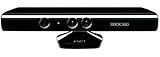
- Does not come with the power cable needed for the original Xbox 360
| Project | Movement or tracking approach | Musical destination or behavior | What it illustrates |
|---|---|---|---|
| 01X, Rochester Institute of Technology (2016) | Real-time skeletal tracking; performer position and movement become cues. | Ableton Live, with up to four tracks in this implementation. | Movement cues can control multiple tracks; the four-track figure is specific to 01X. |
| Kinect MIDI controller, Universidad Politécnica de Madrid (2013) | Processing interface uses hand movement and other body points; the thesis separates the graphical controller from MIDI information management. | Ableton Live 8.2.2; body-point positions are converted to MIDI control information. | A concrete camera–Processing–DAW prototype, rather than a universal controller product. |
| Human-motion MIDI controller thesis | Microsoft Kinect for Windows; hand positions are mapped to MIDI control values, with calibration and filtering methods and a virtual foot controller. | MIDI-enabled instruments or DAWs. | Calibration and filtering are part of making movement control usable. |
| Sculpting the Air, IRCAM analysis | GestrumentKinectConverter transforms Kinect data into MIDI values. | Gestrument interprets the MIDI; the performance setup also includes Ableton Live and MaxMSP. | A separate converter can translate tracking output for another musical system. |
| MOTIV | Movement influences note velocity and tempo; multitrack MIDI sequences can be loaded. | Multitrack MIDI sequence performance. | Movement can shape sequence playback as well as trigger or control sounds. |
| KinectTheremin | Hand elevation controls tone; a two-person setup uses MIDI channels. | Software synthesizers. | Spatial position can act as a continuous musical control, and channels can separate performers. |
| Play Space | An overhead Kinect identifies participants and assigns separate MIDI channels. | Movement controls virtual instruments in Logic. | Overhead placement was chosen to reduce occlusion between participants. |
| dance.music | Kinect depth and position data are processed in Processing; spatial zones activate tracks and body movement manipulates sound. | MIDI sent to Ableton Live. | A zone-based design can make movement-to-sound relationships legible. |
Microsoft Research’s 2011 demonstration recognized 22 gestures and eight actions, but that figure describes its gesture-controlled media-player demonstration—not the capabilities of Kinect MIDI systems generally.
What do you need to build one?
At minimum, plan for a Kinect sensor with the required power and connection hardware, a computer and compatible tracking software, a movement-to-MIDI mapping layer, and a MIDI destination such as a DAW or instrument. If you want to play an external hardware instrument, you may also need a USB MIDI interface. The required Kinect model, adapter, drivers, and operating-system support depend on the particular setup; the documented projects do not establish one current, universally compatible combination.
Rank #2

- Easily hook up with friends with Video Kinect, no headset required.
- Sign into your profile by just stepping in front of the sensor
- Kinect games give you the freedom to jump, duck, and spin your way through a unique adventure.
- Kinect uses cutting-edge technology to provide a whole new way to play
- Kinect Adventures game
- Sensor and support: Confirm the exact Kinect generation, power supply, adapter, driver, and operating-system compatibility before choosing the software path.
- Tracking layer: Use software that can expose skeletal coordinates or other movement data to the mapping application.
- Mapping layer: Decide how positions or gestures become MIDI notes, control changes, pitch, velocity, tempo, or program actions.
- Destination: Choose a DAW, software synthesizer, or hardware instrument that can receive the MIDI messages you intend to send.
- Feedback: Make active zones, triggered notes, or changing control values visible or audible so the performer can tell what the system is reading.
How to plan the movement-to-MIDI mapping
Start with a small, understandable movement vocabulary. A simple spatial zone can trigger a track or note; a continuous hand position can control an evolving value. More elaborate mappings can offer richer expression, but they also require the performer to learn what each gesture does.
- For discrete events: Define a gesture or zone as a note or other event, and decide how the system distinguishes a new trigger from a performer who remains in that position.
- For continuous control: Choose a body point and the musical value it controls, such as a MIDI control change or pitch. Decide how movement range corresponds to the available control range.
- For multiple performers: Determine how tracking assigns each person and how MIDI channels keep their parts separate. Camera placement matters because one performer can obscure another.
- For live performance: Add calibration, smoothing, gesture thresholds, and feedback. Calibration helps align the performer’s working area with the mapping; smoothing can reduce jitter, while excessive smoothing may make response feel less immediate. Set and test these choices in the actual setup.
How to assemble and test a basic setup
- Check the hardware and computer first. Identify the Kinect model and confirm its power, adapter, driver, and operating-system support for the tracking software you plan to use.
- Verify body tracking. Install or configure a tracking layer that exposes skeletal coordinates, then confirm that it can follow one performer in the intended space.
- Choose one movement and one MIDI result. For example, begin with a hand position controlling one continuous value or a defined zone triggering one event. Avoid building a large gesture vocabulary before the basic signal path works.
- Connect the mapping layer to the destination. Configure the application to send MIDI to the chosen DAW, instrument, or external MIDI route, and confirm that the destination receives the intended message.
- Calibrate and tune response. Test the playable area, filtering, and gesture thresholds. Watch for unstable tracking, accidental repeat triggers, or control values that do not reach the intended range.
- Add feedback and expand gradually. Show active zones, notes, or values. Add further gestures, tracks, or performers only after the single-performer mapping behaves predictably.
What can make a Kinect MIDI instrument difficult to use?
- Unstable movement data: Raw position changes may feel erratic. Filtering and smoothing can help, but their response should be judged by playing rather than assumed from a setting alone.
- Unclear gesture thresholds: If a movement boundary is too sensitive, a performer may trigger an event unintentionally; if it is too strict, the gesture may fail to register. Calibration and a compact gesture vocabulary make these boundaries easier to manage.
- Occlusion: A camera may lose track of a body point when performers block one another. Play Space used overhead placement to reduce this problem and separated participants with MIDI channels.
- Hardware and software mismatch: Kinect generations, adapters, drivers, and operating-system support vary. Verify the exact combination rather than assuming that instructions for one Kinect model apply to another.
- Latency uncertainty: The documented sources do not establish a reliable general latency benchmark. Response depends on the full tracking, mapping, routing, and sound-generation setup, so evaluate it in the intended configuration.
Is there a ready-made Kinect MIDI instrument?
The documented examples are research prototypes, theses, and installations built from combinations of cameras, tracking software, MIDI mapping, and music applications. They demonstrate that the approach works, but do not establish a standardized, currently supported plug-and-play product or a universal current price. In practice, expect to assemble a compatible system and configure its mapping rather than connect any Kinect and receive a finished instrument.
Quick Recap
Best Value
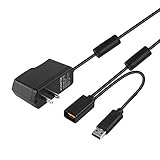
- Play anytime anywhere with this power supply adapter providing power and connectivity to your Kinect
- Plug and play, Used your Xbox 360 Kinect anywhere Don't worry about it being to far from your power supply.
- Input: 100-240V/0.3A,47-63Hz,Output: 12V/1.08A; USB cable connection both Kinect and Xbox 360.
- Black, 6ft Long shielded cable.
- Power adapter works with any U.S. wall outlet and Microsoft 360 Kinect unit.
Rank #4
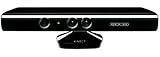
- Does not come with the power cable needed for the original Xbox 360
Rank #3
Product prices and availability are accurate as of the date/time indicated and are subject to change. Any price and availability information displayed on Amazon at the time of purchase will apply.