The Tool Desk
Outbyte PC Repair FREERepair Windows errors before they cause bigger problemsFix Now →Outbyte Driver Updater FREEScan for outdated or missing drivers - takes under a minuteDriver Scan →Some links on this page are affiliate links: if you buy through them we may earn a commission, at no extra cost to you.
The most useful ways to help Florida panthers are practical and local: report sightings and tracks to the Florida Fish and Wildlife Conservation Commission (FWC), remove food and hiding-place attractants around homes, slow down in marked crossing areas, protect habitat if you own land, and support reputable restoration and education work. These actions complement one another; no single household measure can replace connected habitat, safe roads and coordinated management.
Why community action matters for Florida panthers
Florida panthers are federally endangered, and FWC says harming or harassing one is illegal. The animals now occupy a much smaller range than they once did, so information from residents, safer roads and habitat decisions on private property all influence recovery.
FWC gives an approximate range of 120 to 230 adult panthers. The agency does not present that figure as a live census, and the year is not stated on the program page, so it should be read as an approximate agency estimate rather than a precise current count. Historical context shows how severe the decline was: a 2017 U.S. Fish and Wildlife Service (USFWS) release reported that only about 20 to 30 panthers were estimated to remain in Florida during the 1970s and 1980s. That release described a later estimate based primarily on annual counts on public lands and extrapolation across the breeding range; it was not a count of every animal.
Recovery therefore depends on a landscape shared by wildlife, residents, ranchers, roads and growing communities. USFWS has described conservation corridors, easements and wildlife crossings as tools for keeping habitat connected. FWC leads panther research and management, while transportation agencies, local governments, landowners and nonprofit groups contribute pieces of the solution.
Popular on Amazon

- Solar Powered & Energy Saving: Solar spot lights use solar energy to charge, which can automatically sense light, automatically turn on at night, and automatically charge during the day, saving electricity and reducing energy consumption. No wires are required, which not only saves energy, but also saves you a lot of money on your electricity bill
- 3 Lighting Modes & Motion Sensor: Solar spotlights have a built-in sensitive PIR motion sensor, which can easily capture motion. There are 3 modes:1.[Sensor light mode]: full brightness when the motion is detected,close when no motion 2.[Dim light sensor mode]:low brightness no motion,full brightness when the motion is detected 3.[ Constant light mode]: auto power on at night, auto power off during the day
- IP65 Waterproof & Durable: Solar Landscape lights use high-quality LED cores with bright and soft light and long lifespan. They can continue to glow for a long time and adopt a waterproof design to better meet outdoor use needs
- Multiple Applications: The outdoor solar landscape spotlight will illuminate your garden, yard, driveway, porch, patio, sidewalk, swimming pool, lawn, garden, etc. It adds vitality to your trees and plants and provides a satisfying night light show for you to enjoy
- Easy to Install & 2-in-1: The solar spotlights support both ground insertion and wall mounting installation. The installation is simple and convenient, with no need for wiring or power support. The product not only features various design styles such as minimalist and modern, but also offers two installation methods to better meet the different needs of consumers
“This latest Florida panther population estimate is good news, an indication that conservation efforts are on track in helping recover this endangered animal,” FWC Deputy Director Kipp Frohlich said in the 2017 USFWS release.
The same release quoted USFWS Florida State Supervisor of Ecological Services Larry Williams calling for “a long-term concerted effort by many partners” to find common-sense solutions that conserve lands supporting native wildlife and Florida’s ranching heritage. Community support is that partnership at street level.
Choose an action that fits your situation
| Action | Who can take it | Conservation contribution | Where it matters most | Commitment |
|---|---|---|---|---|
| Report a sighting or track | Anyone who observes evidence | Improves scientific records and management response | Statewide, especially in or near panther range | One-time report; repeat when new evidence appears |
| Secure pets, livestock and attractants | Residents, small farms and animal owners | Reduces opportunities for conflict | Panther habitat and nearby rural or suburban areas | Ongoing household practice |
| Drive cautiously in crossing areas | All drivers | Reduces collision risk, a major source of mortality | Signed panther crossing zones and roads through habitat | Every trip, especially after dark |
| Maintain or improve habitat | Private landowners and land managers | Protects food, cover and movement corridors | Priority habitat identified by FWC and partners | Long-term management; some programs are competitive |
| Donate, volunteer or teach | Residents, schools, civic groups and visitors | Funds research, restoration and public understanding | Where participating organizations operate | One-time or recurring, depending on the activity |
What should I do if I see a panther?
A neighborhood sighting by itself is not automatically an emergency. Give the animal space, keep people and pets away, and document what you can without changing its behavior.
Do these 3 things before closing this tab:
1Scan for outdated or missing drivers - takes under a minute2Repair Windows errors before they cause bigger problems3Fix the driver behind crashes, sound loss and screen glitches- Stay back. Do not approach, follow, corner, call to or attempt to touch the panther. Never bait it for a photograph.
- Move people and animals indoors. Bring pets inside and secure livestock in a sturdy enclosure if it can be done without moving toward the animal.
- Observe from a safe location. Note the date, approximate time, road or landmark, direction of travel and any identifying features. A distant photograph or video is useful only if taken without approaching.
- Report the observation to FWC. The agency is interested in panther sightings and tracks, including reports from neighborhoods. Use FWC’s Florida Panther Program sighting-reporting route and include your location, time, description and photographs when available.
- Call emergency services only for an immediate human-safety emergency. Examples include an animal trapped in a building, a collision scene creating an active traffic hazard, or an immediate threat that cannot be managed by simply retreating. Do not treat a routine sighting as a reason to chase the animal away.
Harassing or disturbing a federally endangered panther can be illegal. Reporting helps biologists without turning a sighting into a confrontation.
How to report panther sightings and tracks
FWC biologists use public reports to supplement field work and identify where panthers are moving. A clear, careful report is more valuable than a dramatic story with no location or time.
Record the essentials
- Location: provide the nearest address, road, trail, intersection, land parcel or recognizable landmark. If you use a phone map, save coordinates only from a safe place.
- Time and date: record when you saw the animal or found the track, including whether it was daylight or night.
- Description: note approximate size, coat color, tail shape, behavior and direction of travel. State whether you saw the animal itself, tracks, scat or another sign.
- Images: submit original photographs if available. Do not return to a site, use bait or disturb tracks merely to obtain a better image.
- Context: mention nearby roads, livestock, pets, carcasses, fences or unusual behavior that could help biologists assess risk.
Make a track report safely
Photograph tracks from a standing position without stepping on them. Place an ordinary object for scale only if you can do so without approaching wildlife or damaging the sign; otherwise describe the size and surrounding surface. Leave the area if you see a panther, fresh carcass or any situation that makes you uneasy.
Also popular on Amazon

- 【Remote Control & 3 Lighting Modes】:Each solar motion sensor light is equipped with wireless remote control.You can choose the most suitable mode faster and more portable: ①Strong light sensor mode ② Dim light sensor mode ③Strong long light mode. Different lighting way for your daily requirement.
- 【Super Bright Solar Motion Sensor Lights】:The solar outdoor lights equipped with 210 super bright LED beads, produce up to 2500 lm 6500 K high brightness output and good heat dissipation. Perfectly illuminate your courtyard, garage, swimming pool.
- 【Wide Angle Illumination & PIR Motion Inductor】:3 adjustable heads design can horizontally. With innovative wide-angle and intelligent induction control, solar flood light detects up to 270 ° wide lighting angle and 26 feet sensing distance,which can provide extra brightness and more visible area.
- 【Long Working Time】:This solar powered flood light has a built-in 1800mAh rechargeable battery with the high-efficiency solar panel to ensure that it can be charged at less light day. Please set the solar light button on OFF state on cloudy and rainy days ensure the solarpanel is charged facing the sun for 2-3 days and turn on the light again.
- 【IP65 Waterproof & Wireless Design】:This solar lights are made of durable material, IP65 waterproof ensures the outdoor light fixture can function well even in heavy rain, snowstorms.It wireless design are easy to install, no needed with annoying wires or adapters, and no need to buy batteries. Only need to use the included screws to fix on the exterior wall.
What a report does—and does not do
A report adds evidence to FWC’s monitoring and management work; it does not guarantee that an officer will visit, confirm the identification or remove an animal. Misidentifications are common, so describe what you actually observed rather than labeling an animal from a blurry image. A report is still useful when the identification is uncertain if the location, time and image are supplied.
How can I make my yard safer for pets in panther habitat?
FWC’s recommendations are risk-reduction measures, not guarantees. Individual circumstances vary with habitat, prey availability, fencing and the type of animals kept.
Remove food that attracts prey
Do not feed wildlife. Deliberately supplied food can concentrate prey animals near a home, which may in turn attract a panther. Secure garbage, pet food and other edible material so they do not become an unintended feeding station.
Use secure enclosures
Keep cats and dogs indoors or in a secure pen, particularly from dusk through dawn when visibility is reduced. Place poultry, goats, sheep and other vulnerable livestock in sturdy, closed enclosures at night. Inspect gates, roof panels and gaps regularly; a pen is only protective if animals cannot slip out and predators cannot slip in.
Improve visibility without assuming deterrence
Motion-activated lighting can help you see activity around a pen, driveway or doorway. FWC cautions that a light left on continuously may improve visibility for residents but will not deter a panther. Aim lights to illuminate the area you need without creating glare for drivers or neighbors, and combine lighting with secure housing rather than relying on it alone.
Recommended Free Tools
Reduce concealed approaches
Clear or mow vegetation that gives a panther cover close to animal pens, play areas and frequently used paths. Maintain a visible buffer where practical, while following local rules for vegetation removal and drainage. Do not enter dense cover to search for a panther; manage the yard when no animal is present.
Also popular on Amazon
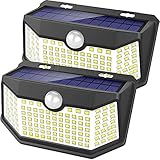
- 1.Enhanced PIR Motion Inductor: Hmcity Solar Lights Outdoor offer three versatile lighting modes to suit your needs. Mode 1 activates the motion sensor outdoor lights, turning the light on when it detects movement. Mode 2 keeps the light permanently on all night, providing consistent illumination. Mode 3 features smart brightness control, where the light stays on at a lower brightness all night and becomes brighter when motion is detected. These modes make these solar lights outdoor waterproof perfect for gardens, pathways, and yards.
- 2.High-Efficiency Solar Panel: These solar lights outdoor are equipped with monocrystalline silicon solar cells, achieving an impressive conversion rate of up to 20.5%. This allows them to generate 15% more electricity compared to other solar lights under the same conditions. The lamp body is made from high-impact ABS material, which is resistant to high temperatures, corrosion, and waterproof, ensuring durability and a longer lifespan. This makes them ideal solar lights outdoor waterproof for all weather conditions.
- 3.Wider Lighting Angle & Larger Coverage: With 120 upgraded high-power LEDs and a 270° wide lighting angle, these motion sensor outdoor lights provide exceptional brightness and cover a larger area. They can effectively illuminate a yard of up to 30㎡, making them ideal for outdoor pendant lights that require wide and even lighting. Whether you need solar lights outdoor for security or ambiance, these lights deliver outstanding performance.
- 4.Durable IP65 Waterproof Design: Built with IP65 waterproof technology, these solar lights outdoor waterproof are designed to withstand harsh weather conditions. The weather-resistant and heatproof plastic construction ensures they remain functional and durable, whether it’s rain, snow, or extreme heat. This makes them reliable motion sensor outdoor lights for year-round use.
- 5.Wireless and Easy to Setup: Say goodbye to the hassle of electric wires. Hmcity wireless solar lights outdoor are easy to install using the included expansion pillar-hinges and screws. Alternatively, you can use mounting tape, thin wire, or other creative methods for installation. Their wireless design makes them convenient and adaptable to various outdoor settings, ensuring your motion sensor outdoor lights are up and running in no time.
Respond to a recurring concern
If sightings continue near a pen or a panther repeatedly shows unusual behavior, keep people and animals inside and contact FWC for situation-specific guidance. Do not trap, poison, shoot, chase or attempt to relocate the animal yourself. Those actions can injure people, pets and wildlife and may violate state or federal law.
How can drivers help prevent panther road deaths?
Vehicle collisions are a significant conservation concern. FWC reports that before 2000, annual panther roadkills were four or fewer; since 2000, annual totals have ranged from six to 34. The agency’s chart covers 1981 through 2025, so the range describes recorded annual variation, not a prediction for any particular year.
Use crossing-zone signs as a speed instruction
Follow the speed limit and warning signs on the road you are using. Friends of the Florida Panther Refuge urges drivers to observe posted nighttime limits of 45 mph in panther crossing zones, but that figure should not be applied to every road: signs, road conditions and local limits control. Slow further when rain, fog, glare or heavy traffic reduces visibility.
Increase attention after dark
- Scan both shoulders and the lane ahead, especially where pavement crosses forest, wetlands or open ranchland.
- Dim dashboard distractions and keep the windshield clean so headlights reveal movement sooner.
- Use high beams only when legal and when they will not blind another driver.
- Expect an animal to move unpredictably; do not swerve into oncoming traffic if a collision becomes unavoidable.
Understand the road-design measures
FWC describes measures used on critical highway segments, including lower nighttime speed limits, wider shoulders that improve visibility, public information campaigns and rumble strips. These measures work at the road-system level, but drivers still need to obey signs and remain alert. Proposed or planned crossings can change, so rely on current signs and transportation-agency notices rather than an old map or social-media post.
If a collision occurs
Pull over safely, activate hazard lights and call the appropriate road or emergency authority. Do not approach an injured panther or attempt to move it. Tell responders the exact location, direction of travel and whether the animal is in a live lane. Reporting the incident quickly can protect other motorists and help wildlife officials document mortality.
How can landowners support habitat and connectivity?
Panthers need large, connected landscapes rather than isolated pockets of cover. Public lands, working ranches, private forests, conservation corridors, easements and wildlife crossings can all contribute to the range they use.
Also popular on Amazon

- 【156 High-Efficiency LEDs & 2500LM Ultra-Bright Illumination】 Experience unmatched brightness with 156 upgraded LEDs—engineered to deliver 2500LM while consuming less power than bulkier 200+ LED designs. Flood your driveway, backyard, or patio with powerful 6500K daylight-white light. Whether for home security or as Commercial Street & Area Lights, Daphino delivers the brightest, most saturated light to illuminate every dark corner of your property.
- 【3 Lighting Modes via One-Button Control — Simple, Reliable, No Remote Needed】 Easily cycle through 3 modes using the back-panel button (protected by a waterproof cover): Mode 1 (Motion-Activated): Light stays off, then 100% bright when motion detected—ideal for security. Mode 2 (Dim All Night): Stays at 30% brightness from dusk to dawn—perfect for ambient lighting. Mode 3 (Smart Security): Stays at 10% dim, then boosts to 100% when motion detected—energy-saving and secure. Simple, reliable operation—no remote, no hassle, just dependable outdoor solar lights.
- 【270° Wide-Angle Coverage & 40ft Motion Detection — Perfect for Street & Area Lighting】 Customize your lighting zone with 3 independently adjustable heads and a 90° adjustable solar panel. The advanced PIR motion sensor detects movement up to 40ft away within a 130° arc—that's over 50% more range than typical 40ft sensors. This expansive coverage makes Daphino perfect for Commercial Street & Area Lights applications, as well as residential driveways, fences, and pathways.
- 【All-Weather Ready with IP65 Waterproof Design & Dusk to Dawn Performance】 Crafted from durable ABS+PC material and rated IP65 waterproof, these solar lights outdoor are built to withstand rain, snow, frost, and extreme heat. Unlike lights that require manual shutdown to recharge after cloudy days, Daphino's smart system keeps working automatically from dusk to dawn—rain or shine. The mode button features a waterproof silicone cover for years of reliable performance.
- 【Up to 12-Hour Runtime with High-Capacity 3.7V Battery】 Powered by a high-capacity 3.7V rechargeable lithium-ion battery—not just high mAh, but the right voltage for consistent brightness. The light stays on for up to 12 hours in Dim Mode after a full 7-8 hour charge. Enjoy all-night security and ambiance, even on cloudy days. Zero electricity costs, zero hassle—the smart choice among solar lights outdoor waterproof.
Start with a habitat conversation
Contact FWC to learn whether your property overlaps priority panther habitat and which management practices fit its soils, water, vegetation and existing agricultural use. Keep records of mowing, prescribed fire, grazing, invasive-plant control and water management so you can discuss outcomes with a biologist or land manager.
PC Slower Than It Used to Be?
A free scan shows the junk files, broken settings and background clutter dragging Windows down - then fixes them in one click.Free scan · Windows 10 & 11Crashes, No Sound, or Screen Glitches?
Random freezes, missing sound and display glitches usually trace back to one bad driver. Find and replace yours safely.Free scan · under a minuteInvestigate the Payment for Ecosystem Services pilot
FWC’s Payment for Ecosystem Services page describes a voluntary, competitive pilot that rewards eligible owners for maintaining or improving priority panther habitat. Selection depends on property location, the amount and quality of habitat, and available funding; participation is not automatic.
The page reports that 69 applications were received, 15 landowners selected, and 40,385 acres enrolled across six counties, with more than $500,000 in annual habitat payments and more than $11,000 in camera-detection bonuses. Those are page-reported program figures, not a guaranteed current total. Check the live FWC page for an open enrollment period, eligible counties, payment terms and current amounts before making a land-use decision.
Keep development decisions connected
USFWS has described conservation easements and habitat-conservation planning as ways to cluster development away from important habitat and corridors while preserving natural buffers. A landowner considering subdivision, road construction or a major change in agricultural use can ask county planners, FWC and USFWS about corridor impacts before plans are finalized. Early coordination can reveal alternatives that are harder to achieve after clearing or paving begins.
Do not promise more than the land can deliver
Habitat work should be based on a site assessment, not a generic planting list. A single landscaped parcel cannot substitute for a connected landscape, and poorly timed clearing can remove cover or disturb wildlife. Seek professional guidance on prescribed fire, mechanical clearing, water features, fencing and seasonal restrictions.
Free tools Windows power users keep installed
One-click scans. No signup required.
Where can I volunteer to help Florida panther conservation?
Volunteer and education work turns conservation rules into community habits. Friends of the Florida Panther Refuge lists opportunities that include habitat restoration, community outreach and education. Openings, training, locations and schedules change, so confirm current terms directly with the organization.
Also popular on Amazon

- ENERGY SAVING: LED units output 32 W, 3500 Lumen, 5000 K brightness (day light white), equivalent to 150 W halogen light. Also save your electricity bill by up to 88%
- MOTION ACTIVATE: The wide sensing angle of 180 degrees detects motion up to 0 ft-69 ft away, detecting motion more accurately with its sensitive motion sensor. The adjustable timer can be set for tests, 1, 3 or 10 minutes
- 4 LIGHTING MODES: Test Mode, Security Mode, Dusk to Dawn Mode and Manual Override Mode. Manual override mode allows light to operate constantly for selected period of time (Flip the wall switch OFF-ON-OFF-ON within 3 seconds). More choices can meet different demand for each customer
- METAL AND ROTATABLE DESIGN: Adjustable heads provide a customizable coverage area. Aluminum material, IP65 waterproof. Product size: 9.21in x 6.5in ( 154mm x 234mm). Works better with a 4.13" junction box
- HIGH-QUALITY SERVICE: We provide 7*24 h after-sales service. Contact us if any issue arises
Habitat restoration
Restoration may involve removing invasive plants, maintaining native vegetation or assisting with organized workdays. Follow the project leader’s safety instructions, stay within designated areas and never conduct independent wildlife searches as part of a volunteer shift.
Community outreach and education
Residents can share FWC’s coexistence guidance with neighborhood groups, schools, youth programs and driver-safety meetings. Useful messages are specific: do not feed wildlife, secure pets and livestock, report sightings, and obey crossing-zone signs. Avoid circulating unverified photos, locations or claims that encourage crowds to seek out a panther.
Animal-enclosure assistance
Friends of the Florida Panther Refuge says Defenders of Wildlife may assist eligible participants with enclosure construction, trained volunteers and possible financial assistance. Eligibility and funding are not universal; contact the organizations to confirm whether a current program serves your property and animal type before purchasing materials or assuming reimbursement.
Quick wins for a faster PC:
Fix the driver behind crashes, sound loss and screen glitchesFind Drivers →Repair Windows errors before they cause bigger problemsFix Now →Support the FWC panther license plate
FWC says donations generated by the Florida panther specialty license plate support panther research and management. This is a simple funding action for Florida vehicle owners who want a recurring contribution tied to registration. Verify current purchase, renewal and fee details through the state’s official vehicle-registration system.
How to organize a responsible community effort
- Identify the local need. A neighborhood near habitat may prioritize pet security and reporting; a community beside a crossing zone may focus on nighttime driving.
- Use one authoritative handout. Base messages on FWC and USFWS guidance, with the reporting route and emergency contacts clearly separated.
- Choose a measurable activity. Examples include a driver-safety briefing, a scheduled invasive-plant workday, or a workshop on secure livestock pens. Do not claim a project prevents all conflicts or road deaths.
- Protect privacy and wildlife. Do not publish precise den or resting locations, encourage visitors to follow an animal, or share a resident’s address without permission.
- Review results with partners. Ask FWC, a land manager or the volunteer coordinator what changed, what remains uncertain and what follow-up is appropriate.
Common mistakes to avoid
- Trying to photograph a panther at close range: approaching, following or baiting creates risk and can constitute harassment.
- Assuming lights solve the problem: continuous lighting improves visibility but is not a proven deterrent according to FWC.
- Generalizing one speed limit: use the posted limit for the road and crossing zone; do not assume every highway has the same nighttime rule.
- Feeding “prey” to lure a panther away: feeding wildlife can attract more prey and increase the very conflict you want to avoid.
- Treating an old project announcement as current: USFWS descriptions of proposed crossings and schedules from 2022 are historical; verify present status with the responsible agency.
- Expecting universal financial help: enclosure assistance and habitat incentives have eligibility, funding and geographic limits.
- Confusing an estimate with a census: population figures have dates, methods and uncertainty; quote them with their attribution and limitations.
A practical 30-day checklist
This week
- Save FWC’s Florida Panther Program reporting route in your phone.
- Check that pet food, garbage and other attractants are secured.
- Inspect gates, roofs and gaps on livestock or poultry pens.
- Review nighttime routes and identify signed panther crossing zones.
This month
- Trim or mow concealment vegetation around animal areas where it is safe and lawful.
- Attend a local conservation, transportation or extension meeting and ask about habitat connectivity.
- Contact FWC about habitat incentives if you own or manage land in a priority area.
- Choose one verified volunteer, education or license-plate-support action.
Whenever you observe evidence
- Keep your distance, record time and location, take only safe photographs and report the sighting or track to FWC.
- If you encounter a road-injured panther, stay out of the roadway and call responders rather than approaching the animal.
The bottom line for Florida panther conservation
Helping panthers is a pattern of reliable decisions: report evidence instead of pursuing an animal, prevent attractants instead of feeding wildlife, secure pets and livestock, drive slowly and attentively where panthers cross, and keep habitat connected through informed land management and conservation support. FWC, USFWS, transportation agencies, landowners and volunteers each control different parts of the problem. Coordinated, sustained action gives the species a better chance than any single backyard fix or one-time campaign.






Say something about this film