The Tool Desk
Outbyte PC Repair FREEClear out junk files and repair common Windows errorsFree Scan →Outbyte Driver Updater FREEFix the driver behind crashes, sound loss and screen glitchesFind Drivers →A mental-health diagnosis does not, by itself, decide whether you can box safely. Safety depends on your current symptoms, treatment and medication, age, medical history, and what you mean by boxing: non-contact fitness drills, bag work, partner exercises, sparring, or competition. Those activities expose you to very different levels of head impact. Discuss the exact plan with a healthcare professional who knows your care, and choose a qualified coach who will follow the medical advice.
Start by defining what “boxing” means
“Boxing” can describe a coached workout with no person-to-person contact, striking a heavy bag, technical partner drills, controlled sparring, or a sanctioned bout. Treating those as one activity hides the most important safety difference: exposure to blows to the head.
| Activity | Head-contact exposure | What to clarify before participating | Important limitation |
|---|---|---|---|
| Non-contact fitness drills | No intentional contact with another participant | Whether the class can be adapted to your symptoms, treatment and energy level | “Non-contact” does not automatically mean suitable for every person or condition. |
| Bag or pad work | No opponent striking you, but falls, accidental impacts or uncontrolled drills remain possible | Equipment, supervision, intensity and what happens if symptoms appear | It removes opponent contact, not every physical risk. |
| Partner drills | Contact depends on the drill and coaching rules | Whether any strikes are allowed near the head and how partners are selected | Ask for a clearly non-contact version if that is the medical plan. |
| Sparring | Deliberate exchanges can include head blows | Clinical advice, gym rules, protective equipment and a firm stop policy | Protective equipment cannot guarantee prevention of concussion or other brain injury. |
| Competition | Full-contact exposure under governing-body rules | Medical examinations, eligibility rules, age requirements and concussion history | Competition fitness rules are not universal medical clearance for recreational exercise. |
Describe the planned activity in those terms when speaking with a clinician. “I want to box” is too vague for a useful risk discussion; “I want two weekly non-contact classes and bag work, with no sparring” gives the clinician something specific to assess.
Ask the gym to explain what happens in a normal session, including warm-ups, partner rotations, drills that can become contact, and whether sparring is expected at a particular level. A class advertised as fitness boxing may still include optional partner work. Agree in advance which parts you will skip or modify.
#1 Best Overall

- COMFORT & PROTECTION: The Venum Challenger Mouthguard provides excellent protection, custom comfort and unparalleled value for athletes in combat sports and contact sports, including football, lacrosse, boxing, MMA and more.
- HIGH-PERFORMANCE: Designed to protect teeth, gums, and jaw during intense training or competition in boxing, MMA, hockey, football, lacrosse, rugby and other contact sports.
- DURABLE, SHOCK-ABSORBING MATERIAL: Made with high-quality EVA materials that effectively absorb and distribute impact forces to reduce injury risk.
- EASY BOIL-AND-BITE CUSTOM FITTING: The mouthguard softens in hot water and molds precisely to your teeth for a personalized fit that stays securely in place.
- IMPROVED AIRFLOW AND SPEECH: Features vents that enhance breathing and make communication easier while wearing, without compromising protection.
Why a diagnosis alone cannot answer the safety question
The available medical and sports guidance does not provide a diagnosis-by-diagnosis clearance list for recreational boxing. Two people with the same diagnosis may have different symptoms, medication effects, treatment plans and responses to intense exercise. Conversely, a person without a psychiatric diagnosis can still have a medical reason to avoid head impacts.
A healthcare professional familiar with your care should consider:
- your current symptoms and whether they are stable;
- recent changes in treatment or medication;
- any effects of prescribed, over-the-counter or natural-remedy products that could matter after an impact;
- previous concussion, seizure activity or other neurological history;
- your age and the rules that apply where you train; and
- the exact activity level, from non-contact drills through competition.
Do not start, stop or change medication to make boxing possible. Instead, give the healthcare professional a complete, current list when discussing participation or when being assessed after an impact. The Centers for Disease Control and Prevention (CDC) specifically advises sharing medication information during concussion care.
If symptoms, treatment or medication have changed since your last appointment, ask whether the plan needs to be reconsidered. A previous conversation about non-contact exercise is not automatically permission for sparring or a bout. Keep the clinician’s advice tied to the activity you actually intend to do.
Understand the head-injury risk before choosing contact
The World Medical Association (WMA) describes boxing as dangerous because its basic purpose includes targeting the head. Its 2017 statement says: Boxing is a dangerous sport. Unlike other sports, its basic intent is to produce bodily harm by specifically targeting the head.
The statement was adopted by the 35th World Medical Assembly in 1983 and revised by the 68th General Assembly in 2017. That is a description of the sport’s inherent risk, not a claim that every boxing session causes injury or that every participant must stop.
Headgear, gloves and a mouthguard may be part of a gym’s safety requirements, but they do not make sparring or competition risk-free. The WMA says medical recommendations should inform choices about protective equipment; it does not say equipment prevents concussion or eliminates neurological harm. A mouthguard is protective equipment, not a medical clearance and not a guarantee against brain injury.
Rank #2

- COMFORT & PROTECTION: The Venum Challenger Mouthguard provides excellent protection, custom comfort and unparalleled value for athletes in combat sports and contact sports, including football, lacrosse, boxing, MMA and more.
- HIGH-PERFORMANCE: Designed to protect teeth, gums, and jaw during intense training or competition in boxing, MMA, hockey, football, lacrosse, rugby and other contact sports.
- DURABLE, SHOCK-ABSORBING MATERIAL: Made with high-quality EVA materials that effectively absorb and distribute impact forces to reduce injury risk.
- EASY BOIL-AND-BITE CUSTOM FITTING: The mouthguard softens in hot water and molds precisely to your teeth for a personalized fit that stays securely in place.
- IMPROVED AIRFLOW AND SPEECH: Features vents that enhance breathing and make communication easier while wearing, without compromising protection.
The WMA’s policy handbook also states that A physician serving at a boxing match has a professional responsibility to protect the health and safety of the contestants.
That responsibility belongs to the event medical team; it does not transfer to a boxer, coach or piece of equipment. Ask who has authority to stop a contact session and whether the gym will follow that decision.
If your goal is exercise, ask whether supervised non-contact training can provide the conditioning and skill work you want without deliberate head contact. That option still needs to be judged against your personal health situation; “non-contact” is a description of exposure, not a promise of universal safety.
What’s actually slowing this PC down?
Pick the symptom - the matching free tool is one click away.
Use a two-person safety check before your first session
1. Have a specific medical conversation
Tell the treating healthcare professional exactly what you plan to do, how often, whether anyone will hit you, and whether the goal is recreation or competition. Mention current symptoms, treatment changes, all medicines and supplements, prior concussion and any seizure history. Ask what symptoms should end a session immediately and who should make decisions if symptoms change.
2. Find a coach who can follow restrictions
Explain the agreed limits before class, not after a drill starts. A qualified coach should be able to offer non-contact alternatives, control partner work, identify who is supervising, and stop an activity when you say you are unwell. The coach should not overrule a clinician, pressure you to spar, or treat a return-to-training rule as a test of toughness.
3. Put the limits in plain language
Write down whether you may do conditioning, shadowboxing, bag work, pad work, partner drills, sparring or competition. Include who must be contacted if you are hurt and how you will leave the session safely. Clear limits prevent a gradual, unplanned move from a fitness class into head-contact work.
4. Agree on a stop signal and a no-pressure rule
Decide in advance that you can stop without debate if you feel unwell, confused, unusually distressed or physically unsafe. The CDC says return-to-sport decisions after a possible concussion are medical decisions. A coach, teammate or competition schedule should never force a return against medical advice.
Windows Errors? Fix Them Before They Spread
Repair common Windows errors and clear accumulated junk for a smoother, more stable PC - no reinstall needed.Free scan · no reinstallOutdated Drivers Are Slowing You Down
One free scan finds every outdated or missing driver and matches the right update for your exact hardware.Free scan · exact hardware matchRank #3

- ENHANCED PROTECTION AND COMFORT: Safety is essential when it comes to contact sports. That’s why our innovative mouth guard was designed to protect your mouth, absorb the shock, and perfectly adapt to your teeth, ensuring maximum protection and a perfect fit!
- DUAL-LAYER TECHNOLOGY: What makes our mouthguard distinctive is the 2-layer technology comprised of an inner gel layer that flawlessly moulds onto your teeth for a perfect fit and an outer pre-contoured layer that can withstand high levels of impact. The bite-lock technology keeps the mouth guard in place while supporting normal inhalation and exhalation.
- HIGH-QUALITY MATERIALS: The mouthpiece is made with the highest quality materials that are BPA-free and 100% safe! The adult & kids gum shield has a strong and durable construction that can support intensive use, powerful impact, wear and slip. Our mouldable gum shield comes in a convenient set with instructions and a practical storage case that helps protect the shield and ensures safe storage and transportation.
- MULTI-USE: Thanks to its mouldable properties, this football mouth guard can be used by both adults and youth also for boxing, kickboxing, muay thai, karate, martial arts, MMA, hockey, judo, and other contact sports. Please note our Mouth Guards are not compatible for use with braces.
- BRITISH BRAND: Titan Armour is a family run business based in the UK. We pride ourselves on our customer service and providing the customer with the best quality products. You can be reassured that we are here and happy to help!
5. Plan the practical details
Know where you will rest, how you will get home if you stop, and who can accompany you if you need assessment. Tell a trusted person what activity you are doing and which restrictions apply, especially if you are new to the gym or may find it difficult to advocate for yourself under stress. These arrangements do not replace medical advice; they make it easier to follow it.
During training: keep contact and intensity within the plan
- Begin only at the level your clinician and coach have discussed; do not add sparring because a class happens to offer it.
- Tell the coach promptly about a new symptom, a medication change or a change in how you are coping that could affect safe participation.
- Do not accept “light” head contact as harmless. Even an apparently minor blow can require assessment.
- Stop if an impact occurs and you feel different afterward. Do not rely on protective equipment or on another participant’s opinion that you look fine.
- Do not conceal a diagnosis or relevant treatment information from the healthcare professional assessing an injury. The diagnosis itself is not a reason for a coach to exclude you, but the clinician needs accurate information to make an individualized decision.
- Stay within the agreed intensity and rest periods. Do not let fatigue, competition for a partner or encouragement from the group turn a non-contact plan into contact work.
These steps are risk-management practices, not a substitute for clinical clearance. The reviewed guidance does not establish a mental-health-specific boxing prescription or prove that exercise treats any particular condition.
What to do after a blow or possible concussion
Stop participation
After a blow or other impact, stop boxing if a possible concussion is suspected or if you feel unwell. Do not continue a round to “see whether it passes,” and do not let a coach or teammate make the medical decision for you.
Seek medical assessment
Contact an appropriate healthcare service for assessment. Tell the clinician what happened, when it happened, what symptoms followed, and provide the full list of prescribed, over-the-counter and natural-remedy medicines. Medication information can affect how the clinician evaluates and manages the situation.
Do these 3 things before closing this tab:
1Fix the driver behind crashes, sound loss and screen glitches2Repair Windows errors before they cause bigger problems3Scan for outdated or missing drivers - takes under a minuteReturn only through individualized medical advice
The CDC states that return to sport after a possible concussion is a medical decision. Feeling better is not, by itself, permission to spar or compete. Do not copy another boxer’s timeline, use a calendar found online, or return because a team needs you.
If you are uncertain whether an impact counts as a possible concussion, treat the uncertainty as a reason to stop and ask for medical guidance rather than asking a coach to diagnose you. Keep a record of the time, activity, impact and changes you noticed so the clinician can make an informed decision.
Rank #4
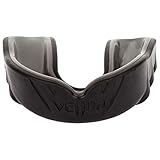
- Nextfit Gel Frame for a better adjustment and comfort
- Advanced design for an optimal breathing
- High Density Rubber Frame for a better shock management, and optimal protection.
- Delivered with its protective case for greater hygiene.
- CE Certification / Norm: SATRA M33:2011.
How a return-to-boxing pathway can work
England Boxing’s adult concussion protocol illustrates a graduated approach: activity moves from light aerobic exercise to boxing-specific work and then non-contact skills before doctor review and a return to full-contact training. It is a governing-body protocol for its setting, not a universal prescription or a substitute for your own clinician’s advice.
| Stage in the example pathway | What it means | Decision point |
|---|---|---|
| Light aerobic exercise | Low-complexity activity used while monitoring recovery | Progress only when medically appropriate and symptoms do not worsen. |
| Boxing-specific exercise | Technical or conditioning work that is specific to boxing but does not involve head contact | Continue under the protocol rather than adding sparring informally. |
| Non-contact boxing skills | Skills practice without an opponent striking the participant | Doctor review is required before full-contact training under the cited adult rules. |
| Full-contact training | Training in which head impacts may occur | Requires the prescribed medical progression and approval; it is not an automatic next step. |
| Competition | Sanctioned bout under the relevant governing body | England Boxing’s 2026 adult rules specify no competition before day 35 after the injury. Other bodies, ages and jurisdictions may use different rules. |
The day-35 rule is therefore a jurisdiction- and rule-specific competition requirement, not a safe countdown for everyone. Your healthcare professional may advise a longer or different process. Confirm which version of the rules applies to your event; adult rules should not be assumed to cover youth boxing or another country’s federation.
Quick wins for a faster PC:
Repair Windows errors before they cause bigger problemsFix Now →Fix the driver behind crashes, sound loss and screen glitchesFind Drivers →Clear out junk files and repair common Windows errorsFree Scan →Recreation and competition are not the same medical question
The European Boxing Medical Handbook describes circumstances in which a boxer may be declared unfit to compete, including significant psychiatric disturbances, unresolved post-concussion symptoms and recent seizure activity. Those are competition-fitness rules in a particular sports context. They should not be presented as a blanket ban on recreational exercise, nor as a diagnosis-specific clinical standard for every person.
If you are considering a bout, ask the governing body and event medical staff which examinations, documentation and waiting periods apply. Competition rules can be stricter than the requirements for a supervised, non-contact workout. Ask for the rule in writing if the answer affects travel, registration or training commitments, and tell your treating clinician what the event requires.
Independent reader supportYour contribution helps us test, update, and keep practical guides available for everyone.Additional safeguards for children and teenagers
Children and adolescents need age-appropriate medical oversight. The American Academy of Pediatrics highlights concussion concerns for young participants and describes medical care and examinations for those who participate. A parent or guardian should share the full activity plan with the child’s healthcare professional and ask how the rules for age, contact and return after injury apply.
Do not use an adult clearance, an adult training schedule or an adult competition rule for a young boxer. The relevant governing body, age category and clinician determine what applies. A youth athlete should have an adult who can communicate restrictions to the coach and arrange assessment after an impact.
Best Value

- Ultra Comfortable - Our SoftGel liner material feels, looks and performs great on game day.
- Protective - The Hardened Shell of the boxing mouth guard is designed to absorb and disperse forces of impact.
- One Size Fits Most - The mouth guard for sports fits both adult and youth athletes thanks to its unique shape.
- Breathable - The low profile fit of our boxing mouthpiece facilitates airflow and breathability.
- Easy To Clean - Simply scrub the mouth guard for boxing with a tooth brush and warm water for optimal longevity.
A practical decision checklist
Questions for your healthcare professional
- Is the specific activity I want to do non-contact, bag work, partner work, sparring or competition?
- How should current symptoms, treatment changes and medication effects influence participation?
- What must make me stop immediately, and whom should I contact?
- If I take a blow, where should I be assessed and what information should I bring?
- Who makes the return-to-training and return-to-competition decision?
- Does my age, prior concussion or seizure history change the advice?
Questions for the gym or coach
- Can you guarantee a non-contact session or bag-only plan?
- How are partners selected, and can a drill be stopped instantly?
- What is the gym’s concussion procedure?
- Who supervises contact sessions and what protective equipment is required?
- Will the coach respect a clinician’s restriction even if a class normally includes sparring?
- What happens if I need to leave suddenly, and who will help me get home?
Reasons to pause the plan and seek advice
- Your symptoms or treatment have recently changed.
- You are unsure whether the session includes head contact.
- A coach is pressuring you to spar or return before medical review.
- You sustained an impact and feel different afterward.
- You are being asked to rely on headgear, gloves or a mouthguard as proof that contact is safe.
- The gym cannot explain who supervises contact or what happens after an injury.
What the evidence does—and does not—say
Official sources support qualitative risk guidance, medical oversight and graduated return-to-boxing rules. They do not establish a statistic for how often people with a particular mental-health condition are injured while boxing. A general boxing-injury number would not answer that narrower question and should not be presented as if it did.
They also do not establish that boxing treats a specific mental-health condition, that every non-contact class is suitable, or that every person with a diagnosis must avoid the sport. The defensible conclusion is narrower: match the activity’s contact level to an individualized medical assessment, use a coach who follows that plan, and treat any possible concussion as a medical issue rather than a test of determination.
Frequently asked questions
Frequently Asked Questions
Can someone with a mental-health diagnosis box?
A diagnosis alone does not answer the question. Discuss your current symptoms, treatment, medication, medical history and exact activity—non-contact drills, bag work, sparring or competition—with a healthcare professional who knows your care.
Is non-contact boxing automatically safe?
No. It avoids intentional opponent contact but does not remove every physical risk, and suitability still depends on the individual. Ask for a supervised plan that matches clinical advice.
Free tools Windows power users keep installed
One-click scans. No signup required.
Do headgear, gloves or a mouthguard prevent concussion?
No equipment guarantees prevention of concussion or other brain injury. The World Medical Association says medical recommendations should inform equipment choices, not that equipment eliminates neurological risk.
What should I do after a blow to the head?
Stop participating if you feel unwell or a concussion is possible, seek medical assessment, and share all prescribed, over-the-counter and natural-remedy medicines. Return-to-sport decisions are medical decisions.
Can I follow England Boxing’s 35-day rule after a concussion?
The no-competition-before-day-35 rule is part of England Boxing’s 2026 adult rules. It is not a universal countdown. Your clinician and the governing body for your age, location and event may require a different process.
Do competition rules mean I cannot do recreational boxing?
Not necessarily. Rules describing a boxer as unfit to compete, including rules concerning significant psychiatric disturbance, unresolved post-concussion symptoms or recent seizure activity, apply to a particular competition context. They are not a blanket ban on supervised recreational exercise.
The Bottom Line
Boxing safety is about the person and the level of contact, not a diagnosis label. Get individualized medical advice, tell the coach exactly what is allowed, favor supervised non-contact work when appropriate, and stop for medical assessment after any possible concussion. Protective equipment and a coach’s reassurance cannot replace clinical decisions.
Quick Recap
Product prices and availability are accurate as of the date/time indicated and are subject to change. Any price and availability information displayed on Amazon at the time of purchase will apply.






Say something about this film