The Tool Desk
Outbyte Driver Updater FREEScan for outdated or missing drivers - takes under a minuteDriver Scan →Outbyte PC Repair FREERepair Windows errors before they cause bigger problemsFix Now →Use several alert paths before the storm: enable Wireless Emergency Alerts (WEA) on your phone, identify your local emergency-management and utility sources, and keep a battery-powered or hand-crank NOAA Weather Radio ready. During an outage, listen to NOAA Weather Radio or local AM/FM radio, check phone alerts if cellular service still works, conserve battery power, and follow local officials. No single channel is guaranteed: household electricity, internet access, cell service, and broadcast transmitters can fail independently or at the same time.
Start by separating the failures
“The power is out” does not automatically mean the internet or cellular network is out. A modem may stop because it has no electricity while a nearby cell tower continues operating. Conversely, your phone may show signal while a damaged tower, a congested network, or a carrier outage prevents alerts from arriving. A local radio transmitter can remain on even when your home has no power, but a radio still needs batteries or another working source of energy.
Plan for four separate questions:
- Can the device turn on? You need charged batteries, a charged phone, or another power source.
- Is the delivery network operating? WEA depends on cellular service; websites and apps generally depend on internet access.
- Is an official transmitter broadcasting? NOAA Weather Radio and local AM/FM updates depend on a functioning transmitter and reception at your location.
- Can you understand and act on the message? Keep instructions, contacts, maps, medications, and evacuation information available offline.
NOAA’s severe-weather guidance says, “It is important to have more than one source of weather information.” Treat that as a design requirement for your plan, not as a suggestion to collect duplicate apps that all depend on the same network.
How the main information channels compare
| Channel | Can work without household electricity? | Can work without internet? | Main dependency or limitation |
|---|---|---|---|
| Battery-powered NOAA Weather Radio | Yes, with batteries or another working power source | Yes | Requires a compatible receiver and a usable local transmitter signal; SAME and alert features vary by receiver and location. |
| Battery-powered AM/FM radio | Yes | Yes | Must receive a local station that is broadcasting useful emergency information. Emergency radios can carry Emergency Alert System broadcasts through AM/FM. |
| Wireless Emergency Alerts on a mobile phone | The phone can run on its battery | Yes; internet is not the delivery path | Relies on cell towers and cellular service. Oregon’s emergency-management office cautions that WEA will not be delivered if cell service is out. A radio does not receive WEA. |
| Local-government or utility texts, websites, and apps | A phone or other device needs power | Websites and apps normally require live internet; SMS normally requires cellular service | Availability depends on the participating agency and its network. Use these as supplements to broadcast alerts. |
| Local television | Usually no, unless you have backup power for the television or reception equipment | Often yes for over-the-air broadcast reception | Requires household or backup electricity and a functioning broadcast signal. It is less useful during a total home-power outage without backup power. |
These channels are not interchangeable. A power bank can keep a phone running, but it cannot restore a failed internet or cellular network. A hand-crank radio can supply energy for its receiver, but it does not guarantee reception or unlimited runtime.
Free tools Windows power users keep installed
One-click scans. No signup required.
#1 Best Overall

- [7400mWh (2000mAh) POWER BANK WILL KEEP DEVICES POWERED] The FosPower FOSPWB-2376 emergency radio incorporates a 7400mWh (2000mAh) power bank capable of providing emergency power to any small tablet or phone.
- [3 POWER SOURCES POWER WHEN YOU NEED IT] Use the emergency weather radio's 3 power sources when you need a boost of power or need to recharge the radio. The radio's crank lever and solar panel are both capable of regenerating enough power to keep the radio, lights, and SOS alarm ready to go when you need it most. AAA Batteries ensure you have power when not able to regenerate power.
- [2 LIGHT SOURCES ALWAYS POWERED] The emergency crank radio can also provide light. The 4 LED reading light and 1W flashlight provides enough output to keep you and your loved ones out of the dark in an emergency situation.
- [NOAA EMERGENCY WEATHER BROADCAST ACCESS] The radio will dependably receive up to the second emergency weather forecasts and emergency news broadcasts from NOAA and AM/FM stations.
- [LIMITED LIFETIME WARRANTY] Includes a Limited Lifetime Warranty. Please visit FosPower's website for more information.
Build your information plan before severe weather
1. Enable Wireless Emergency Alerts and local notifications
Open your phone’s emergency-alert controls (the labels vary by operating system; they are commonly under notification or safety settings) and make sure government emergency alerts are enabled. Check the setting before storm season and after major phone software updates. WEA is a phone-based path for authorized emergency messages, not a replacement for a radio.
Then visit your state, county, city, tribal, or local emergency-management website and look for its alert-signup page. Add utility outage notifications where available. Record the names of the agencies and services you would check so you are not trying to remember them in darkness or under stress. Local programs differ by jurisdiction, and some require a separate registration even when WEA is enabled.
2. Locate and test a NOAA Weather Radio signal
Buy or borrow a receiver described specifically as a NOAA Weather Radio or NOAA Weather Radio All Hazards receiver. NOAA Weather Radio signals require a compatible receiver or scanner; an ordinary AM/FM-only radio will not receive the NOAA weather frequencies.
Find the transmitter and frequency serving your location using information from your local National Weather Service forecast office. Test the receiver in the room where you intend to keep it, not only beside a window or outside. Buildings, terrain, distance, and local transmitter conditions affect reception. If the signal is weak, try the manufacturer’s recommended antenna position and another location before the storm arrives.
Rank #2
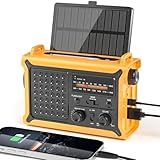
- 【Reliable 𝗡𝗢𝗔𝗔/𝗔𝗠/𝗙𝗠 Reception with Clear Sound】With a high-sensitivity signal chip, noise-reduction circuitry, and an extended antenna, the radio ensures 𝗳𝗮𝘀𝘁, 𝘀𝘁𝗮𝗯𝗹𝗲 𝗿𝗲𝗰𝗲𝗽𝘁𝗶𝗼𝗻 across NOAA FM AM bands. Whether you're sheltering during a storm or camping off the grid, you'll hear every update loud and clear.
- 【𝗛𝗶𝗴𝗵-𝗘𝗳𝗳𝗶𝗰𝗶𝗲𝗻𝗰𝘆 𝗦𝗼𝗹𝗮𝗿 𝗖𝗵𝗮𝗿𝗴𝗶𝗻𝗴 with Extra-Large Panel】The solar radio features a massive 8500mm² high-efficiency monocrystalline solar panel—over 4× larger than typical 2000mm² decorative polysilicon panels on the market. The expansive panel captures significantly more sunlight, delivering faster charging even in low-light conditions. Perfect for camping, power outages, and off-grid emergencies.
- 【𝗛𝗶𝗴𝗵-𝗧𝗼𝗿𝗾𝘂𝗲 𝗖𝗿𝗮𝗻𝗸 𝗣𝗼𝘄𝗲𝗿 for Fast Effortless Charging】With an upgraded internal generator—featuring a larger copper coil and reinforced magnet, the hand crank emergency radio delivers nearly 2× the charging efficiency of standard models. The extended crank arm offers smooth, low-effort rotation, letting you power up the radio or your phone in just 3 minutes when other sources fail. A must-have for your bug-out bag, survival kit, or emergency backpack.
- 【𝗧𝗿𝘂𝗲 𝟭𝟮𝟬𝟬𝟬𝗺𝗔𝗵 Power Capacity That Lasts】 Unlike inflated claims, the emergency crank radio is powered by a real 12000mAh lithium battery that keeps your gear running when you need it most. Whether you’re keeping the radio and lights on for days, you’ll have dependable energy throughout storms, blackouts, or outdoor adventures.
- 【Versatile Emergency Flashlight & Soft Reading Light】The noaa am fm radio includes a powerful flashlight that casts a focused beam up to 260 feet, perfect for dark trails, tents, or emergency navigation. Flip up the frosted reading lamp to enjoy a soft, warm glow that’s easy on the eyes. Both LED lights offer two brightness levels to match your needs—whether for safety or comfort.
3. Program county-specific alerts when the receiver supports SAME
Specific Area Message Encoding (SAME) lets a compatible receiver be programmed for selected counties. Follow the receiver manual and the local NWS office’s instructions to enter the relevant county or counties. Receivers without SAME may alert across a broader transmitter coverage area, so you could hear warnings for places outside your immediate community. Alert tones, selectable counties, and other behavior differ by model; confirm them with the manual rather than assuming every receiver works the same way.
4. Prepare power for every device
- Charge your phone, power bank, rechargeable radio, and other essential devices while the grid is operating.
- Keep spare batteries with the radio, in a dry place that every household member can find. Check their condition periodically.
- If your radio has a hand-crank feature, learn how to operate it and understand that cranking provides a limited power source, not guaranteed continuous operation.
- Keep charging cables and the correct adapters together. A power bank extends phone runtime but does not provide network access when the network itself is down.
5. Put critical information on paper or on the device
Write down emergency contacts, your local emergency-management office, utility outage numbers, evacuation routes, shelter information, and the call signs or frequencies of useful local radio stations. Save essential maps and instructions for offline use where your phone supports it. FEMA’s Staying Connected in Crisis guidance emphasizes communication planning and local radio sources; a written copy remains usable when a phone battery or screen fails.
6. Agree on a household communication plan
Choose one out-of-area contact, a meeting place, and a check-in method. Decide who will monitor the radio, who will care for children or animals, and which documents or medications must leave with you. Include neighbors or relatives who may not receive alerts because of disability, language, age, or limited connectivity. A plan should state who has authority to make an evacuation decision while still requiring everyone to follow official instructions.
What to look for in an emergency radio
NOAA capability is the non-negotiable specification
Look for explicit support for NOAA Weather Radio frequencies, not simply “emergency radio” or “AM/FM.” Oregon’s emergency-management guidance notes that battery-powered or hand-crank emergency radios can receive Emergency Alert System broadcasts through AM/FM or NOAA Weather Radio frequencies, including when cell towers and the internet are down. That benefit exists only when a functioning transmitter is within usable range and the receiver is appropriate for the signal.
Rank #3

- Massive 10000mAh Battery for Extended Emergency Power – Unlike standard models, this Emergency Weather Radio features a built-in 10000mAh rechargeable battery that provides backup power for your smartphone and essential devices during outages. The USB Output (5V/1A) supports emergency phone charging when grid power is unavailable. Ideal for hurricanes, winter storms, camping, RV travel, home emergencies, emergency kits, survival gear, and disaster supplies. Realistic Charging Expectations: The 10000mAh rating refers to the internal battery cell; actual output varies due to conversion loss and device efficiency. Expect approximately 1–1.5 charges for an iPhone 14.
- PX6 Waterproof & Compact Design – Ready for Outdoor Use – Rated IPX6 water resistant, this emergency radio is protected against water spray and splashing, making it suitable for camping, fishing, hiking, hurricane preparedness, and outdoor use. It is designed for splash resistance only and is not intended for heavy rain, immersion, or underwater use. Measuring approximately 6.3"L x 3.5"W x 3.1"H and weighing about 1.1 lbs (500g), this compact weather radio easily fits backpacks, go-bags, vehicles, RVs, and emergency storage areas without adding bulk. Includes a built-in compass for outdoor navigation support.
- 3-Mode Flashlight & Reading Lamp – Emergency Lighting Solution – This portable Emergency Radio includes a high-efficiency LED flashlight with three modes: High, Low, and SOS signaling for blackouts, nighttime emergencies, camping, and outdoor use. The built-in 1.3W reading lamp provides soft, wide-angle lighting for reading maps, checking emergency supplies, or navigating in the dark. Designed for camping gear, survival kits, hurricane preparedness, car emergency kits, and family emergency supplies, this weather radio provides dependable backup lighting when electricity is unavailable.
- NOAA Weather Radio & AM/FM – Manual Tuning, No Automatic Alert – Stay informed with NOAA weather broadcasts and AM/FM reception: AM 520–1710kHz, FM 87–108MHz, NOAA 162.400–162.550MHz. Manual Tuning Required: extend the antenna, select NOAA mode, then slowly rotate the tuning knob until the clearest local NOAA station is received. This NOAA Weather Radio does NOT support SAME technology, automatic NOAA alerts, or location-based alerts; users must manually tune to and listen to NOAA broadcasts. Large controls make tuning easier for families and seniors.
- 3 Charging Modes: Solar, Hand Crank & USB-C Input – Stay powered with USB-C Input, built-in solar panel, or hand crank generator when electricity is unavailable. About 1 minute of steady hand cranking provides 15–20 minutes of radio listening; actual runtime varies by use and cranking speed. The radio can be used while charging via USB-C, but charging may take longer. This Solar Radio and Hand Crank Radio supports hurricane supplies, camping essentials, outdoor adventures, RV trips, survival kits, and 72-hour emergency preparedness. Multiple charging methods keep your emergency radio ready for blackouts, storms, remote travel, and off-grid situations.
Useful alert features
Alert-tone support can draw attention when a warning is issued. SAME capability can limit alerts to specified counties. Neither feature removes the need to listen to the message and follow local officials. Verify the exact counties, tone behavior, frequency coverage, power options, and controls in the receiver’s specifications and manual. Do not assume a model’s advertised range or battery life applies to your building or terrain.
AM/FM reception adds a second broadcast path
An AM/FM band allows you to hear local stations that may carry emergency instructions, news, or EAS messages. This is useful when the NOAA signal is difficult to receive or when officials provide information through a local station. It does not turn the receiver into a WEA device, and it cannot help if no local station is transmitting or if you are outside its service area.
What to do when the power or internet fails
- Check your phone first. Keep it charged and look for WEA messages, texts, or calls while cellular service is available. Do not repeatedly refresh websites or apps if the internet is down; that wastes battery without improving the connection.
- Turn on the compatible radio. Listen to NOAA Weather Radio for watches, warnings, forecasts, and hazard information. Check a local AM/FM station for community instructions and EAS broadcasts.
- Confirm the affected area and hazard. Note the county, expiration time, hazard type, protective action, and any instruction to evacuate, shelter, boil water, avoid roads, or move to higher ground. A tone alone is not an instruction.
- Follow local officials. NOAA stresses that conditions can change quickly and that local officials provide current local information. If an evacuation or shelter directive conflicts with an unverified social-media post, follow the official directive and continue monitoring for updates.
- Conserve power deliberately. Dim the phone screen, close unnecessary apps, disable radios or connections you are not using, and keep the phone in a cool, dry place. Use the radio intermittently when continuous monitoring is not needed, while ensuring that someone is assigned to check it often enough for your situation.
- Share verified information. Tell household members and nearby people the exact message, issuing authority, area, and time. Avoid forwarding cropped screenshots or rumors that omit the warning’s expiration or geographic scope.
DOE outage guidance recommends listening to officials and energy suppliers through battery-operated radios and mobile devices. In a prolonged outage, continue rotating batteries and charging devices whenever a safe, approved power source becomes available.
If one channel stops working
The phone has no alert or shows “no service”
WEA depends on cell towers. If cellular service is unavailable, a WEA message will not arrive, regardless of how full the phone battery is. Move to your NOAA Weather Radio or local AM/FM radio, and follow information from officials at a staffed shelter, emergency vehicle, or other official location. Do not interpret a silent phone as evidence that no hazard exists.
What’s actually slowing this PC down?
Pick the symptom - the matching free tool is one click away.
Rank #4

- NOAA Weather Scan & Alert - This emergency weather alert radio features S.A.M.E localized programming and alert you to over 60 kinds of weather hazards and emergencies. NOAA Weather Scan will automatically alert you of events.
- S.A.M.E Localized Programming - The Specific Area Message Encoding (S.A.M.E.) allows the user to enter a code that is specific to your country, state, county and in some cases partial county.
- Notification Settings - Program your radio to receive weather alerts from up to 25 different counties and be alerted only when those specific counties are threatened. Color-coded alert indicators show the alert type and its severity.
- Additional Features - SAME localized programming, continuous backlighting option which keeps the LCD on, 25 programmable counties, color-coded alert indicators, alert override automatically switches to warn of impending danger.
- Experience a comprehensive range of radios from Midland, designed to keep you connected and informed. Our radios offer an array of features, including reliable real-time weather alerts, and robust two-way communication capabilities.
The NOAA receiver is silent
- Confirm that the device actually supports NOAA Weather Radio; an AM/FM-only receiver cannot receive the NOAA signal.
- Check the selected frequency, volume, alert switch, and battery installation.
- Move the receiver and extend or reposition its antenna according to the manual.
- Try the local NWS-recommended transmitter or frequency for your county. Reception can vary by room, terrain, and transmitter.
- If the NOAA signal remains unavailable, switch to a local AM/FM station and any still-functioning official phone channel.
The radio gives alerts for the wrong county
This can happen with a receiver that lacks SAME or with a transmitter whose coverage includes several counties. Recheck the SAME programming and county codes in the manual. Keep listening: a broader-area alert may still contain information relevant to your route or destination.
The internet works but official information conflicts
Prefer messages from the responsible emergency-management office, NWS forecast office, utility, or other clearly identified authority. Check the time stamp, geographic area, and expiration. Use social media as a way to find an official account, not as proof that an unverified post is accurate.
The batteries are nearly dead
Switch to the most essential device first, keep spare batteries dry, and use a charged power bank for the phone when cellular service is operating. If you have a hand-crank radio, operate it according to its instructions and prioritize listening for current warnings rather than leaving it running continuously. Never use a generator, camp stove, or vehicle in an enclosed space to charge equipment because of carbon-monoxide risk.
Independent reader supportYour contribution helps us test, update, and keep practical guides available for everyone.Using alerts safely during evacuation or sheltering
An alert is a prompt to obtain current instructions, not permission to delay action. Read or listen to the complete message, then identify what officials require, where it applies, and when it takes effect. Keep shoes, identification, medications, water, and the radio together if evacuation is possible. If roads are threatened by flooding, downed lines, debris, or fire, do not drive through a closure to seek a better signal.
Recommended Free Tools
Best Value
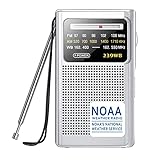
- Life Saver with NOAA Weather Radio:With crystal clear sound and our upgraded DSP chip, this weather radio can professionally receive the best weather broadcasts from seven NOAA radio stations, let you get notified first for every severe weather warning in your area, such as tornadoes, hurricanes and strongly storms.At any critical moment,let you be fully prepared in advance and use this AM FM radio to protect you and your family.Put this portable radio in your home and you always feel safe
- Best Reception with Easy To Use:With high sensitivity and selectivity, this weather radio has a thirteen-inch telescopic antenna that can capture excellent AM FM WB signal reception.Simple to use dial and switch knob allow you to easily listen to AM FM radio stations with one hand, so you won't be distracted from the beautiful scenery. Also this noaa radio is sturdy, compact and durable, you will get the authentic pleasure from this portable radio by taking it for a long trip or camping
- Super Long Lasting Time:This NOAA weather radio is powered by two AA batteries (not included) for two weeks of use and is easy to find in the supermarket or at home. Even if there is a hurricane outage, this weather radio will continue to receive the latest weather information for you to ensure the safety of you and your family. Therefore, just click the "Add to Cart" button to take this cost-effective AM FM radio home and be prepared for the storm
- Enjoy Personal Time:This weather radio has built-in small but high-performance speakers, you can feel the fun of the radio with beautiful sound fills your room. In addition, put this battery operated radio in your pocket, plug in headphones and see the scenery along the way, allowing you to enjoy your personal time in your busy life. And equipped with an intimate wristband, you can easily carry the emergency radio out for running or traveling. Small portable pocket size,carry it anywhere
- Ideal Gift and Worry Free:With its compact appearance and simple operation,our transistor radio is popular in many countries. If you are worrying about what to buy for your parents, grandparents or friends, this fm radio is your best choice. This weather radio is a carefully selected gift to prepare for the arrival of severe weather and protect their safety! And we guarantee a twelve-month manufacturer and 24/7 customer service to make it no risk for you to purchase this noaa radio
At a shelter or temporary location, ask staff which radio frequency, briefing location, or official bulletin they are using. Register your household if the site provides a system for doing so. Continue monitoring after the first warning because watches, warnings, evacuation zones, and shelter availability can change.
Accessibility and household-specific planning
People who are deaf or hard of hearing should not rely on an audible radio tone alone; pair visual phone alerts, text-based local notifications, and a written plan with whatever broadcast access is available. People who are blind or have low vision should confirm that phone and radio controls can be operated by touch or with accessibility features enabled. Keep backup glasses, hearing-aid batteries, mobility-device charging equipment, and essential medical information with the communication kit.
For children, visitors, and people who do not speak the dominant local language, prepare plain-language instructions and identify a trusted person who can interpret official messages. Include pets and service animals in evacuation planning, since a shelter’s rules and capacity may affect which route or destination is practical.
A short readiness checklist
- WEA and relevant phone safety alerts are enabled.
- Local emergency-management, municipal, and utility alert options are identified.
- A compatible NOAA Weather Radio has been tested in its intended location.
- The local NWS transmitter or frequency is known.
- SAME is programmed for the correct county or counties when supported.
- AM/FM stations that carry local information are written down.
- Phone, power bank, radio, and rechargeable devices are charged.
- Spare batteries, cables, and adapters are together and protected from moisture.
- Contacts, evacuation instructions, maps, and key medical information are available offline or on paper.
- The household knows who monitors alerts, where to meet, and how to check in.
The practical bottom line
For a storm that knocks out both electricity and internet, the most resilient setup is a layered one: WEA for the periods when cellular service works, a compatible battery-powered NOAA Weather Radio for official broadcasts without internet, and local AM/FM radio for community updates and EAS messages. Test every layer before severe weather, keep its power source ready, and treat reception and network availability as local conditions rather than guarantees. When an official warning arrives, act on the instructions from local authorities and keep monitoring as conditions evolve.
Quick Recap
Product prices and availability are accurate as of the date/time indicated and are subject to change. Any price and availability information displayed on Amazon at the time of purchase will apply.






Say something about this film