Do these 3 things before closing this tab:
1Repair Windows errors before they cause bigger problems2Scan for outdated or missing drivers - takes under a minute3Clear out junk files and repair common Windows errorsStart with a local material route, not a pile of equipment. Bring residents, waste pickers or reclaimers, businesses, municipal waste staff and a likely buyer, processor or reuse outlet together; choose a narrow pilot; confirm the site and municipal rules in writing; then build the collection, safety, payment and record-keeping systems around what that route can actually handle.
South African requirements differ by municipality, material and activity. A small project may still need site permission, specified receptacles, registration or reporting, and in some cases a waste-management licence or environmental authorisation. Funding and producer-responsibility support can help, but no national programme should be treated as an automatic grant.
What a workable project looks like
A community recycling or reuse project is a locally managed system that moves a defined material from a known source to a safe destination where it will be reused, repaired, composted, recycled or sold. The destination might be a repair workshop, redistribution network, compost user, buy-back centre, material recovery facility or other verified processor. The project is viable only when the route, people, permissions and finances work together.
Begin by answering four practical questions:
- What material is generated locally, in what approximate quantity and with what contamination?
- Who will collect, sort, store and transport it, and how will existing waste pickers be involved?
- Who will accept it, at what quality, and who will pay for or use the output?
- What does the municipality require for the exact site and activity?
Recycling is not the only option. A reuse project may repair appliances, redistribute furniture, run an exchange scheme or channel usable building materials to people who need them. A composting project can work where clean organic feedstock and a dependable use for finished compost are available. The draft National Waste Management Strategy 2026, published on 19 December 2025, mentions community-level and home composting; it is a draft and should not be presented as adopted law.
Free tools Windows power users keep installed
One-click scans. No signup required.
#1 Best Overall

- Large-Capacity & Complete 4-Piece Set for Effortless Sorting:This recycling bin set includes four separate 12-gallon (45-liter) bags, each designed with ample space to sort and contain cans, paper, plastic, and glass. Unlike flimsy or undersized alternatives, these bins reduce frequent emptying and streamline waste management in your home, office, garage, or kitchen. The set comes ready to use with clearly labeled compartments, making it easy to adopt an organized and eco-friendly routine. Whether for household recycling or office sustainability efforts, this comprehensive set meets daily needs while encouraging consistent and correct waste separation.
- Sturdy, Waterproof & Reusable Construction for Long-Term Use:Crafted from high-quality polypropylene and reinforced plastic, these recycling bins are built to last. The waterproof material prevents leaks and resists stains, while the sturdy design ensures the bins won’t tear, break, or deform even with regular use. Easy to clean and fade-resistant, they offer a reliable and sanitary solution for sorting recyclables. Their reusable design supports sustainable living by replacing disposable bags, making them both an economically smart and environmentally responsible choice for any modern space.
- Intuitive Color-Coded System & Secure Hook-and-Loop Organization:Each of the four bins features a bright, distinct color—orange, green, blue, and yellow—allowing for instant visual identification and reducing sorting errors. The bins can be neatly connected side-by-side using the convenient hook-and-loop adhesive borders, keeping your floor space tidy and your recycling system compact. This design not only enhances kitchen or office aesthetics but also promotes consistent recycling habits through clear, color-coordinated organization for cans, paper, plastic, and glass.
- Versatile, Practical & Thoughtful Gift for Sustainable Living:Ideal for homes, offices, dorms, and garages, this set combines functionality with an eco-conscious message. It serves as a practical and meaningful gift for family, friends, or colleagues who value organization and sustainability. By simplifying waste separation with a durable, well-designed system, it encourages long-term recycling habits and supports a greener lifestyle. Help others contribute to a cleaner environment while enhancing their space with this affordable, reusable, and user-friendly recycling solution.
- Service Guarantee:We always ensure 100% customer's satisfaction, if you have any questions, please feel free to send me a message, we will surely help you solve the problem within 24 hours.
How do I start a community recycling project?
- Convene the people already connected to the material. Invite residents, local waste pickers or reclaimers, shops, schools, faith groups, businesses, municipal waste officials and potential buyers or processors. Map who currently collects the material, what routes already function and where a new project could add value without removing someone’s livelihood.
- Select one narrow pilot. Choose a material that has a confirmed outlet, manageable storage and transport needs, tolerable contamination and an acceptable safety profile. A single stream such as clean cardboard, certain plastics, metals, glass, textiles, repairable goods or food scraps is easier to measure than mixed waste.
- Confirm the destination before buying equipment. Obtain the buyer’s or processor’s accepted-material specifications, minimum quantities, packaging requirements, collection frequency and payment terms. For reuse, identify the recipient or repair pathway. For compost, identify the site and use for the finished product.
- Co-design roles and payment. Agree who owns collected material, who sorts it, who transports it, how workers are paid, how safety incidents are handled and how decisions are made. Put the arrangement in writing, even if the pilot begins informally.
- Ask the municipality about the actual site and activity. Take a short written description, a site plan and the proposed material route to the municipal waste-management officer. Request the applicable by-laws, planning or land-use conditions, receptacle specifications, notification or registration requirements, reporting duties, transport rules and advice on any licence or environmental authorisation.
- Choose an organisation form that fits the risk. An informal initiative may suit a small trial; a cooperative, voluntary association, nonprofit company, trust or other entity may be better when the project will hold assets, employ people, sign contracts or receive grants.
- Set up basic controls. Keep minutes, partner agreements, permission letters, income and expenses, quantities collected, contamination, destinations, payments and incidents from the first collection day.
- Run, measure and revise the pilot. Compare actual volumes, costs, worker earnings, contamination, missed collections and community participation with the original plan. Expand only when the route is safe, lawful and financially understandable.
How can a community involve waste pickers?
Involve waste pickers and reclaimers before the project chooses a collection point or buys a container. Ask which materials they already recover, which routes and buyers they use, what barriers they face and what form of cooperation they consider fair. The objective is to strengthen an existing livelihood system, not to create a parallel service that captures its materials.
The national Waste Picker Integration Guideline for South Africa (August 2020) defines integration as:
“Waste picker integration is the creation of a formally planned recycling system that values and improves the present role of waste pickers, builds on the strengths of their existing system for collecting and revaluing materials, and includes waste pickers as key partners in its design, implementation, evaluation and revision.”
The same guideline says there cannot be a one-size-fits-all approach because municipalities, industries and waste pickers differ. Its participatory sequence is to prepare, partner, analyse, plan, institutionalise, implement and revise. A project can apply that sequence by recording the current system, agreeing the change with the people affected and checking whether working conditions, security and income improve.
Practical partnership questions
- Will the project pay per kilogram, per collection, per shift or through another agreed method?
- Who provides carts, protective equipment, storage access and transport?
- Can waste pickers retain ownership of materials they already collect?
- How will disputes over collection zones, prices or rejected loads be resolved?
- Which representatives participate in decisions and receive project records?
A 2023 World Bank report recorded 994 waste pickers in a registration pilot across Johannesburg, Cape Town, Buffalo City and Mangaung. That is a historical pilot count, not a current national registration total, but it illustrates why local mapping is essential: a project should identify the people already working in its proposed area rather than assume they are absent.
How do I choose between recycling, reuse and composting?
Use the material route as the decision framework. Compare options against verified demand, distance, site requirements, effects on existing livelihoods, cost, contamination, worker safety and measurable community benefit.
Recycling collection
Choose recycling when a processor or buy-back centre confirms it will accept the material at the quality and volume the community can supply. Separate at source where possible, because contamination can erase the value of a load. Plan for a dry, secure storage area and a transport arrangement that does not cost more than the material is worth.
Reuse, repair or redistribution
Choose reuse when items remain functional or can be repaired at a realistic cost. The project may need inspection, cleaning, minor repairs, inventory control and a fair method for allocating goods. Reuse often avoids the sorting and baling requirements of recycling, but it needs a reliable recipient network and a plan for items that cannot be reused.
Rank #2

- The Perfect Solution: Looking for a way of creating a functional and effective recycling system in your home or office? Tired of always using poor quality waste bags or improvisations in order to sort your waste? The ANUANT garbage cans for kitchen are an excellent choice for any modern living space!
- Sturdy and Durable Construction: Our recycle bins are made employing premium grade, highly durable materials, a combination of waterproof polypropylene and hook & loop securing system, designed to last for many years of use.
- Large Capacity: Unlike similar products on the market, this recycling trash can features a 10 gallon/38 liter holding capacity, ideal for your household’s needs. An excellent choice also for your office or garage, these recycling bins save up on time and energy, requiring fewer emptying trips!
- Efficient Sorting: The ANUANT waste bin comes in sets of 4, with each bin being properly labeled for a smooth and easy organization of your everyday waste. Efficiently sort can, paper, glass and plastic with these durable, reusable recycling bags!
- Double Stitch Handle Straps: This waterproof storage bin features an upgraded design with double handles for an ergonomic and reliable grip, ensuring no unpleasant spills or messy accidents. The bins are easily interconnected on the sides with a hook and loop band, for better organization of your space.
Community or home composting
Choose composting where households, markets or institutions can provide clean organic feedstock and a defined use exists for the finished compost. Keep plastics, glass, treated wood, chemicals and other contaminants out of the feedstock. Confirm the site’s land-use and health requirements with the municipality before accepting material.
Mixed-stream collection
A mixed stream is usually the hardest starting point. It requires more sorting space, more labour, stronger contamination controls and a clearer outlet for every fraction. A narrow pilot normally produces better evidence and fewer rejected loads.
How do I get permission to run a recycling project?
There is no single national permission that covers every community project. Requirements depend on the municipality, site, material and activity. Contact the municipal waste-management officer before collecting, sorting, storing, transporting or processing waste.
Ask for these points in writing
- Whether the site is approved for the proposed use under municipal planning or land-use controls.
- Whether the project must notify, register, obtain accreditation or submit reports.
- Which receptacles, labels, collection points and storage standards are permitted.
- Whether the municipality or an appointed service provider must collect or transport particular materials.
- Whether the activity reaches a listed threshold requiring a national waste-management licence or environmental authorisation.
- Who is responsible for fire safety, nuisance control, access, security and cleaning.
Do not assume that a small or volunteer-run project is automatically exempt. Licensing thresholds depend on the listed activity and the rules in force at the time. A Western Cape municipal by-law example requires designated municipal or service-provider receptacles for recyclables; another municipality may use different containers, collection arrangements or approval steps. Do not purchase generic bins until the responsible municipal official confirms what is allowed.
What’s actually slowing this PC down?
Pick the symptom - the matching free tool is one click away.
Do I need to register an NPO?
No single organisational form is mandatory for every project. The appropriate choice depends on who owns equipment, whether the project will employ people, how contracts will be signed, what liability the group can carry and whether funders require a registered entity.
- Informal initiative: useful for testing an idea with limited assets and no major contracts, but responsibilities and liability can be unclear.
- Cooperative: can suit a member-owned collection, buy-back or processing operation, particularly where workers share ownership and income.
- Voluntary association: may fit a community group governed by a constitution.
- Nonprofit company or trust: may suit a project that needs formal governance, contracts, employees or grant administration.
- Registered nonprofit organisation: can improve credibility, banking and funding access when the project meets the legal requirements.
The South African Government service page for NPO registration says registration is free and estimates approximately two months for processing. An NPO may be a trust, company or association, and the page lists NGO, community-based organisation and faith-based organisation applicants. Founding documents must comply with sections 12(A–O) of the Nonprofit Organisations Act. Registered NPOs must submit narrative and financial annual reports within nine months after the end of the financial year.
Prepare a constitution or other suitable founding document, identify office bearers, agree decision-making and financial controls, and submit the application to a provincial Social Development office. Registration does not replace municipal site permission, waste rules or any required environmental approval.
What should the operating plan contain?
Collection and storage
Define collection days, accepted materials, preparation instructions, maximum storage time and what happens when a load is contaminated. Keep material off the ground where appropriate, protect it from rain and fire, maintain clear access routes and prevent unauthorised dumping. Separate usable goods from material destined for recycling or disposal.
Rank #3
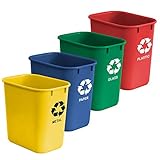
- Efficient Recycling Solution: The Acrimet Wastebasket Bin for Recycling comes in a set of 4, each designated for a specific recyclable material: Metal (Yellow), Paper (Blue), Glass (Green), and Plastic (Red), making it a highly efficient recycling solution for offices, schools and home (printed on both sides with the Universal Recycling Symbol)
- Durable Plastic Construction: Crafted from high-quality plastic, thick walls, no sharp edges and a Universal Recycling Symbol in each one matching the color and product that will be recycled; These wastebaskets are built to last, ensuring long-term use and durability
- Stackable Design: When not in use, these wastebaskets can be conveniently stacked to save space, making them perfect for small living spaces, offices, or any area with limited storage
- Easy to Clean: Cleaning is a breeze with these wastebaskets; The smooth, easy-to-wipe surfaces ensure that maintaining them is hassle-free, helping to keep your recycling area tidy and hygienic
- Product Dimensions: 14 1/4" X 10 3/8" X 15 1/8” , approximate 6.75 Gallon/ 27 Quart/ 24 Liter ; This set of recycling bins simplifies the recycling process and contributes to a greener environment by promoting responsible waste disposal
Transport
Specify who loads and drives, how often trips occur, where vehicles may stop and how weight or volume is recorded. Check whether the municipality imposes particular transport or documentation requirements. A distant buyer can make a high-value material uneconomic once fuel, labour and vehicle wear are included.
Worker safety
Provide task-appropriate gloves, closed footwear, high-visibility clothing, hand-washing facilities and training on sharp objects, medical waste, chemicals, lifting and traffic. Establish a procedure for rejecting dangerous or contaminated material. Record injuries, near misses and corrective actions; safety cannot be delegated to volunteers without supervision.
Data and money
Use a simple log for date, collection point, material, weight or volume, contamination, destination, price, transport cost, worker payment and remaining balance. Keep receipts and bank records. These figures show whether the pilot diverts material, pays fairly and covers its operating costs.
How much does it cost?
No reliable general startup budget applies across South Africa. Costs vary with the material, site, distance, labour arrangement, storage, equipment and municipal conditions. Build a local budget from quotations rather than copying a national figure.
- Site access, lease or permission-related costs.
- Covered storage, lighting, security and fire-prevention measures.
- Containers or receptacles approved for the site.
- Collection vehicles, fuel, maintenance and loading equipment.
- Worker pay, supervision, training and protective equipment.
- Sorting tables, scales, baling or repair tools where the outlet requires them.
- Utilities, insurance, bookkeeping, communication and permits.
- Contingency for rejected loads, breakdowns and seasonal changes.
Separate one-time setup costs from recurring costs. Calculate the cost per kilogram, item or household served and compare it with confirmed revenue, service payments, grants or community contributions. Never assume that a sale price quoted for one material, grade or location applies to every load.
Independent reader supportYour contribution helps us test, update, and keep practical guides available for everyone.Where can a community recycling project get funding?
Investigate several routes, but verify current calls, eligibility and conditions directly. The available material does not establish a live national grant deadline or guarantee an award.
| Potential route | What the public material describes | What to verify before relying on it |
|---|---|---|
| Municipality and Working on Waste | Municipal infrastructure support can include buy-back or recycling centres; a community group may be formed as a cooperative to operate and legally own a completed centre. | Whether the municipality is participating, the current application process, site responsibilities, co-funding and operating obligations. |
| Recycling Enterprise Support Programme | A 2022 Department of Forestry, Fisheries and the Environment parliamentary response described developmental start-up grants for waste enterprises, including buy-back centres and material recovery facilities. | Whether a current call exists, eligible entities, matching requirements, reporting and the closing date. |
| Green Fund | The Department lists sustainable waste management and recycling among focus areas and describes eligible organisations. | The current application window, eligible project stage, municipal-support conditions for private applicants and required documentation. |
| Extended Producer Responsibility and producer responsibility organisations | The Department’s EPR registration framework covers relevant producers and producer responsibility organisations for identified product streams. A government speech dated 6 May 2026 mentions Fibre Circle working with municipalities and stakeholders. | Whether the project’s material, location and collection model fit a current programme, and whether any service payment or equipment support is actually offered. |
| Waste Economy Enterprises Repository of South Africa | In June 2026 the Department announced that compliant small waste-sector businesses could register on WEERSA. | Current registration instructions and whether listing provides anything beyond visibility; it is not evidence of a grant. |
Prepare a short project profile before approaching any funder: the problem, participants, material route, site permission, waste-picker arrangements, budget, measurable diversion, worker benefits, governance and risk controls. A funder will still apply its own rules.
How should the project measure results?
Measure outcomes that matter to the community and the material route:
Recommended Free Tools
Rank #4

- MULTI-PURPOSE: Please insert black plastic stripes under the handles. Those actually keep bags in shape and you have to insert them before use.It is not only recycle bin, but also laundry basket. The color of the indoor recycle bag is composed of pink, gray and light green. It is very natural and coordinated. Spacious 3 compartments allow you to neatly organize all recycling waste,great for kitchen, home, office, garages. Their easy care makes them a great choice for garden clean up or waste bins
- DURABLE AND 100% WATERPROOF: Indoor recycling bins for kitchen made of a light and durable woven Polypropylene fabric which makes the household recycling bin reusable, waterproof and easy to clean. And the high-quality laminating processing makes the color of the bag very natural, bright and fashionable
- PRACTICAL & EASY TO USE: Detachable and practical use with Velcro. It can be easily folded and stored when not in service. Convenience when moving by increasing the length of the handle. You can easily set up your own recycling center with pack of 3 bins which are perfect for sorting recyclable Paper, Can, Bottle, Glass, Plastic (PET) and clothes
- MULTI-FUNCTION DESIGN IN STYLE: The recycle bag clean look, efficiently to handle your waste and recyclables, perfect refuse solution, for sorting recyclables, compost, and other garbage. This product is designed to enhance aesthetic appearance of your home kitchen and office. Easy to recognize colors make it easy for adults and children to sort correctly and neatly other garbage
- DIMENSIONS: 11.8L x 11.8W x 23.6H(inch), 30L x 30W x 60H(cm). Set of 3 Bins (Total 42 Gallons). Classic colors and durable materials for use in offices, kitchens, bedrooms, storage rooms and more, and to keep these areas clean. They are deep enough to take a week's worth of recyclables for you. It is perfect for large families or offices
- kilograms or units collected by material and collection point;
- percentage rejected for contamination or safety reasons;
- quantity reused, repaired, composted, recycled or sent to disposal;
- worker numbers, payments, hours and safety incidents;
- households, schools or businesses participating;
- transport distance, fuel and other operating costs;
- income from sales or service payments; and
- complaints, missed collections and corrective actions.
Review the figures with waste pickers, residents, buyers and municipal partners. If the buyer rejects loads, the collection method is too costly or workers earn less than before, change the design before expanding.
Common failure points and fixes
Buying equipment before finding an outlet
Fix: obtain written acceptance criteria and a realistic route to the destination first.
Collecting too many materials
Fix: begin with one or a few streams that the local team can store, sort and transport safely.
Leaving waste pickers out of the design
Fix: map existing collectors, protect agreed livelihoods, and co-decide payment, access and governance.
Quick wins for a faster PC:
Scan for outdated or missing drivers - takes under a minuteDriver Scan →Clear out junk files and repair common Windows errorsFree Scan →Fix the driver behind crashes, sound loss and screen glitchesFind Drivers →Assuming national guidance overrides municipal rules
Fix: request site-specific municipal guidance and retain the written response.
Promising grant or EPR money
Fix: treat every programme as an opportunity to investigate until a current award or contract is confirmed.
Ignoring rejected or dangerous material
Fix: publish acceptance rules, train collectors, isolate unsafe loads and record the final destination.
A practical decision checklist
- Have residents and existing waste pickers agreed that the project fills a real gap?
- Is every accepted material linked to a verified reuse outlet, buyer, processor or compost user?
- Are ownership, payment, collection zones and decision-making documented?
- Has the municipality confirmed site, receptacle, transport, reporting and approval requirements?
- Does the chosen organisation form match contracts, assets, liability and funding plans?
- Are storage, fire, traffic, lifting, sharp-object and contamination risks controlled?
- Can the project record quantities, costs, payments, destinations and incidents from day one?
- Is expansion conditional on evidence from the pilot rather than enthusiasm alone?
A community project becomes durable when its material route is dependable, its workers are partners, its permissions are clear and its records show what actually happened. Build those foundations before adding equipment or widening the collection list.
Quick Recap
Product prices and availability are accurate as of the date/time indicated and are subject to change. Any price and availability information displayed on Amazon at the time of purchase will apply.






Say something about this film