You can use a Raspberry Pi as a headless YouTube encoder: configure a live stream in YouTube Studio, connect a camera or other supported video input, and send the feed from the Pi using YouTube’s stream URL and secret stream key. A Raspberry Pi 4 has dedicated H.264 encoding hardware; a Raspberry Pi 5 encodes H.264 in software, so test the exact resolution, frame rate, audio, and input you plan to use before leaving either board unattended.
What “without a PC” means
The Pi takes the encoder role normally handled by a desktop computer: it captures an input, encodes audio and video, and sends the live feed to YouTube. You still need another device temporarily to set up the YouTube stream and configure the Pi, but the Pi can run headless afterward. This is a camera-feed workflow, not a way to broadcast uploaded videos as live content.
“Continuous” describes the intended operation, not guaranteed uninterrupted uptime. Power, network, camera, software, heat, and YouTube can all interrupt a stream. A restart-on-failure service can help restart a local process, but it does not by itself guarantee reconnection or continuous transmission.
Check YouTube access and stream requirements first
- Your YouTube channel must be verified and must not have had a live-streaming restriction in the preceding 90 days. YouTube’s live streaming tips cover eligibility and preparation.
- Use Live Control Room to create or select an encoder stream, then copy its current stream URL and stream key. The URL tells the encoder where to send data; the key identifies the stream. YouTube describes stream keys as password-like, so keep yours private and do not put it in public scripts or screenshots. See Create a YouTube live stream with an encoder.
- Use RTMPS when the encoder path supports it; it encrypts the connection. YouTube explains the option in Encrypt your stream using RTMPS.
- YouTube recommends H.264 video, constant bitrate (CBR), and a 2-second keyframe interval; do not exceed 4 seconds. It lists AAC or MP3 for audio. Consult YouTube’s encoder settings, bitrates, and resolutions for the current settings guidance.
Choose the Pi for the encoding workload
| Board | H.264 encoding path | What to consider |
|---|---|---|
| Raspberry Pi 4 and earlier | Dedicated H.264 hardware; the Picamera2 manual documents the hardware path up to 1080p30. | Consider it when the dedicated encoder fits the target resolution and frame rate. Confirm the capture path and full pipeline on the actual board. |
| Raspberry Pi 5 | H.264 software encoding through FFmpeg libraries. | Raspberry Pi’s manual describes performance as similar or better and image quality as better, but that is not a guarantee for every camera, frame rate, overlay, or audio setup. Test CPU headroom under the intended load. |
Raspberry Pi documents the processor distinction at Processors; its Picamera2 manual explains camera-library and encoding support. There is no universal winner for every continuous-stream workload: input compatibility, resolution, frame rate, audio, overlays, bandwidth, and archive needs all matter.
Quick wins for a faster PC:
Scan for outdated or missing drivers - takes under a minuteDriver Scan →Clear out junk files and repair common Windows errorsFree Scan →Fix the driver behind crashes, sound loss and screen glitchesFind Drivers →#1 Best Overall

- Spacious Design: Measuring 21.1" wide and 14.1" deep, our lap desk comfortably fits most laptops up to 15.6". Extra room for accessories ensures convenience.
- Enhanced Functionality: Packed with handy features, including a 5x9" precision tracking mouse pad and a built-in phone slot for seamless work or video calls. Plus, enjoy ergonomic support with the integrated cushioned wrist rest.
- Cool Comfort: Enjoy a stable surface with our lap desk's dual bolster cushion, designed for comfort and airflow, keeping your lap cool during extended use.
- Durable Surface: Work with confidence on our lap desk's solid surface, featuring a sleek black carbon color, ensuring optimal air circulation to prevent your laptop from overheating.
- On-the-Go Convenience: With an integrated handle and lightweight design (2.8 lbs), our lap desk is portable for travel or moving around the house, offering flexibility in any space.
Set up the Pi and video input
Use a Raspberry Pi camera
For a camera connected to the Pi, Picamera2 is Raspberry Pi’s camera library and includes H.264 encoder support. Follow the current camera-library instructions for your operating system and camera, then verify that the camera is detected and produces the intended image before configuring the stream. The library manual is the reference for supported camera and encoding paths.
Use another input
A USB capture device or network camera needs its own compatible capture path. Do not assume that every capture device will be recognized or deliver the same formats, frame rates, or audio. Confirm that the Pi can access the video and, if needed, audio source, and test sustained capture before sending it to YouTube.
Rank #2

- 5-in-1 Connectivity: Equipped with a 4K HDMI port, a 5 Gbps USB-C data port, two 5 Gbps USB-A ports, and a USB C 100W PD-IN port. Note: The USB C 100W PD-IN port supports only charging and does not support data transfer devices such as headphones or speakers.
- Powerful Pass-Through Charging: Supports up to 85W pass-through charging so you can power up your laptop while you use the hub. Note: Pass-through charging requires a charger (not included). Note: To achieve full power for iPad, we recommend using a 45W wall charger.
- Transfer Files in Seconds: Move files to and from your laptop at speeds of up to 5 Gbps via the USB-C and USB-A data ports. Note: The USB C 5Gbps Data port does not support video output.
- HD Display: Connect to the HDMI port to stream or mirror content to an external monitor in resolutions of up to 4K@30Hz. Note: The USB-C ports do not support video output.
- What You Get: Anker 332 USB-C Hub (5-in-1), welcome guide, our worry-free 18-month warranty, and friendly customer service.
Configure YouTube and bring the stream online
- Prepare the channel. Confirm verification and live-streaming eligibility. For initial checks, choose a private or unlisted test stream if that suits your channel and audience.
- Create or select the encoder stream. In YouTube Studio’s Live Control Room, create or select a stream intended for an encoder. Copy the current stream URL and stream key from its stream settings. Do not reuse an old saved URL without checking the current stream details.
- Choose the output target. Set resolution, frame rate, and bitrate to what the Pi, input, and measured upload connection can sustain. Start with YouTube’s H.264, CBR, and 2-second keyframe guidance; keep the keyframe interval at or below 4 seconds. Configure AAC or MP3 audio if the stream includes audio.
- Configure the encoder on the Pi. Enter the stream URL and key in the encoder software or capture pipeline you have chosen. Keep the key out of public configuration files, shared logs, and screenshots. Use RTMPS if supported by that pipeline.
- Start a test and inspect Live Control Room. Start the encoder, wait for YouTube’s preview, and check both picture and sound before making the stream public or relying on it. Verify that the selected input, aspect ratio, frame rate, audio source, and output settings are correct.
- Measure upload capacity with margin. YouTube recommends 20% upload headroom beyond the combined bitrate of the primary and backup streams. If sending only one stream, size the connection for that stream and still allow practical margin for network variation; if sending a backup feed, include its bitrate in the headroom calculation. See YouTube’s streaming tips.
Assess it before leaving it unattended
A successful preview proves that a stream can start; it does not establish that the full setup will run reliably for an extended period. Test the exact board, camera or other input, resolution, frame rate, bitrate, audio arrangement, and network connection intended for use. Observe the feed over a meaningful period and check for dropped frames, audio loss, overheating, process exits, or network interruptions. YouTube advises testing and ongoing audio/video checks, rather than treating a single successful start as proof of reliability.
You can run the encoder under a Linux service manager configured to restart the process after failure. Treat that as a local recovery measure only: it cannot guarantee that the stream reconnects to YouTube, that a failed camera or network comes back, or that viewers see no interruption. Monitor the stream and have a way to regain access to the Pi and Live Control Room.
Rank #3
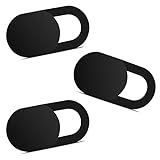
- Note: Not suitable for MacBooks released after 2023 or devices with a protruding front camera; Not applicable to full-screen or notch-style tempered glass screen protectors; Do not use on the rear camera of the phone.
- 💻 Why Do You Need a Webcam Cover Slide? — Safeguard your privacy by covering your webcam with our reliable webcam cover when not in use. Don't let anyone secretly watch you. Stay protected!
- ✅ Thin & Stylish — Enhance your laptop's functionality and aesthetics with our 0.027" ultra-thin webcam covers. Seamlessly close your laptop while adding a touch of sophistication.
- ✅ Fits Most Devices — Compatible with laptops, phones, tablets, desktops! Keep your privacy intact on Ap/ple, Mac/Book, iPh/one, iP/ad, H/P, L/novo, De/ll, Ac/er, As/us, Sa/msung devices.
- ✅ 365 Days Protection — Our upgraded 3.0 adhesive ensures a strong hold that won't damage your equipment. Experience reliable, long-term privacy protection day in and day out.
Continuous operation is not the same as a complete archive
YouTube’s encoder instructions say streams under 12 hours are automatically archived. Do not assume a single longer-running broadcast will be preserved as one complete archive. If retaining a full recording is important, plan shorter sessions or a separate recording method, and verify the resulting archive rather than relying on an uninterrupted live session to serve as your only copy.
Troubleshooting common failures
- No preview in Live Control Room: Check that the encoder is using the current stream URL and matching key, that the channel is eligible to livestream, and that the Pi has an active connection. Keep the key private; if you suspect it has been exposed, replace it in YouTube Studio and update the encoder.
- Stream starts but video is unstable: Lower the output resolution, frame rate, or bitrate and retest. Check that the input is producing the selected format and that the Pi can encode it continuously. This is especially important on Pi 5, where H.264 encoding uses software.
- Dropped frames or interruptions: Check measured upload capacity and network stability against the stream bitrate, including the backup stream if you send one. YouTube recommends 20% upload headroom beyond primary plus backup bitrate. A local process restart will not repair an unreliable connection.
- Picture works but audio is missing or wrong: Check that the intended audio device or source is actually captured and that the encoder sends a supported audio format such as AAC or MP3. Test audio in the YouTube preview before relying on the stream.
- The stream stops after a process error: Inspect the encoder’s local logs and input availability. A service manager can restart a failed process, but confirm whether the restarted encoder reconnects correctly; do not assume automatic YouTube recovery.
- The live broadcast is not archived as expected: Check the stream duration and YouTube’s archive guidance. Its stated automatic archive note applies to streams under 12 hours; use a separate recording plan when a longer complete recording is necessary.
Or let it run in the cloud
If your goal is to keep uploaded videos looping on a YouTube channel rather than stream a live camera feed, StreamNeo is a different option: upload a recording or build a playlist, add your YouTube stream key once, and go live. It runs in the cloud, so nothing has to stay on at home; it streams what you uploaded at any quality up to 4K 60fps for one flat price per slot, automatically recovers if YouTube drops the stream, and the first day is free with no card. The monthly option is $9.99 per month. See StreamNeo for details, or start the free first day.
Quick Recap
Best Value

- Spacious Design: Measuring 21.1" wide and 12" deep, our lap desk comfortably fits most laptops up to 15.6". Extra room for accessories ensures convenience.
- Enhanced Functionality: Packed with handy features, including a 5x9" precision tracking mouse pad and a built-in phone slot for seamless work or video calls. Plus, enjoy laptop support with the integrated device ledge.
- Cool Comfort: Enjoy a stable surface with our lap desk's dual bolster cushion, designed for comfort and airflow, keeping your lap cool during extended use.
- Durable Surface: Work with confidence on our lap desk's solid surface, featuring a blush pink color, ensuring optimal air circulation to prevent your laptop from overheating.
- On-the-Go Convenience: With an integrated handle and lightweight design (2.14 lbs), our lap desk is portable for travel or moving around the house, offering flexibility in any space.
Rank #4

- Anti-Slip Surface - Transform your laptop into a mobile workstation with the AboveTEK portable laptop lap desk. The anti-slip surface provides a strong grip for laptops up to 15.6 inches(Diagonal), while the double rubber strip on the bottom ensures a stable display or typing experience on your lap, couch, or bed.
- Retractable Mouse Pad - Retractable laptop mouse pad extends on both directions for the left/right handed with elevation along the edges for stopping mouse from falling off. The size of laptop tray is 14" X 9.7" and the size of mouse pad is 7.4" X 6.1".
- Effective Heat Shield - The effective heat shield made of sturdy and thick material protects your laptop from overheating. Prioritizes your comfort and safety, an ideal lap pad or board for working anywhere.
- EASY to Carry and Store - With an ergonomic and simplistic design, the lap desk is portable to store in a backpack. Only 15" in size, 2.2 lb of weight and with slim 0.6 inch thickness, it is ready to be easily carried around.
- Widely Applicable - The smooth platform accommodates laptops and tablets up to 15.6 inches(Diagonal), making it a versatile accessory and one of the best gifts for mom, dad, students and professionals. Perfect for use as a laptop bed tray or tablet holder anywhere at home, library, or park.
Product prices and availability are accurate as of the date/time indicated and are subject to change. Any price and availability information displayed on Amazon at the time of purchase will apply.