Quick wins for a faster PC:
Clear out junk files and repair common Windows errorsFree Scan →Scan for outdated or missing drivers - takes under a minuteDriver Scan →Repair Windows errors before they cause bigger problemsFix Now →Verify the historical claim first, then treat any recreation as a new stunt production. A surviving clip can show that an action was filmed, but it may not reveal the rig, rehearsal, camera tricks, editing, injuries, or precautions outside the frame. Build the account from original records, archival context, and independent contemporaneous evidence. Only after that should a qualified stunt coordinator develop a fresh, sequence-specific plan under the rules of the production’s jurisdiction.
Historical evidence answers what the record captures. It does not make an old method safe to repeat. The workflow below keeps those questions separate and provides a defensible handoff from film research to professional safety planning.
What can historical verification actually establish?
Verification is a claim-by-claim exercise, not a search for one dramatic video. Start by deciding exactly what you want to establish: the performer, production, date, location, action, and alleged method. A useful account distinguishes three kinds of statements.
Observable facts
These are details visible in a surviving recording or document: a person leaves a roof, a vehicle overturns, a cut occurs before impact, or a title card identifies a production. Describe only what the surviving element captures. Use wording such as the surviving footage shows rather than asserting what happened outside the frame.
#1 Best Overall
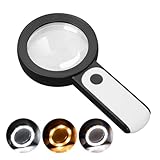
- HIGH POWER MAGNIFICATION: This magnifying glass provide Optical high magnification, allowing users with low vision to read text, no matter the size.
- ULTRA BRIGHT 18 LED WITH 3 MODES: The built-in energy-saving 18 LED lights provides extra luminance to ensure an overall better reading experience even at night or dark places. The stepless dimmable 3 lighting modes (cold, warm and mixed) can be switched based on different light condition, which can reduces visual fatigue, which is very useful for people with macular degeneration or far-sightedness/feyopia.
- EASY TO USE: Comes completely assembled, just requires 3x AAA batteries (not included). Easy to operate with a simple ON / OFF button switch, making it perfect for the elderly or those requiring an intuitive magnification system.
- LARGE LENS(Diameter 3.15"): Magnifies without optical distortion. Optimal to enhance reading and viewing very fine details in books, newspapers, magazines, photographs, maps, electronics, miniatures, jewelry, pill bottles, medications, hobbies, models, and crafts of all kinds.
- PERFECT GIFT FOR THE ELDERLY: Great magnifier for seniors, Most elderly have difficulty reading the small print on coupons, prescription,medical bottle.clear magnifier with light also a great choice for those who have low or impaired vision of most types.
Attributed claims
These are statements made by a named performer, director, producer, technician, production record, interview, or catalog entry. Identify who made the claim, when, and how close that person or record was to the event. A later memoir may be useful, but it is not independent confirmation if it repeats an earlier interview.
Unresolved mechanics
Equipment, harnesses, crash pads, breakaway materials, doubles, camera angles, and medical precautions often cannot be established from a clip alone. Mark those mechanics as unresolved instead of filling gaps with assumptions based on similar stunts.
No institution cited here publishes one universal procedure for proving the mechanics of every historic stunt. The method in this guide is a transparent editorial workflow built around archival context, source criticism, and a strict separation from modern safety decisions.
How do you verify how a historic stunt was done?
1. Write the precise claim before collecting evidence
Create a one-sentence claim that includes the performer, title, production year, location, action, and alleged method. For example, distinguish between the narrow claim that a named performer appears to fall from a balcony in a surviving shot and the much broader claim that the performer completed the fall without a double or protective system. The second claim needs evidence the shot may not contain.
Break the sentence into individual propositions. One proposition might concern who performed; another concerns where the camera was; another concerns whether a cut or optical effect was used. Each proposition can have a different evidentiary status.
2. Locate the best surviving record
Seek the original film element or an authorized digitization, not a re-upload whose generation, edits, and soundtrack are unknown. Record the title used by the holding institution, catalog description, provenance or production context when supplied, date or version information, and any restrictions on access or copying.
The United States National Archives (NARA) provides motion-picture resources on contextual assessment and technical processing. Those resources help a researcher understand what a film element is, how it was handled, and what related records may exist. Catalog metadata is context, not proof that every detail of a stunt is visible.
3. Cross-check with production records and contemporaneous accounts
Look for call sheets, production reports, continuity notes, publicity material created during the production, trade coverage, contracts, technical correspondence, and interviews made near the event. Compare each source’s author, date, proximity, and independence.
Two articles are not two confirmations if both copied one press release. A vivid recollection recorded decades later may preserve valuable detail, but label it as a later account and check whether it cites another source. Give greater weight to an original production record or firsthand account made close to the event, while still checking whether the record was promotional or incomplete.
4. Compare sources on five explicit axes
| Axis | Question to ask | What a stronger source looks like |
|---|---|---|
| Proximity | How close is the record to the filming? | Original footage, production paperwork, or a contemporaneous firsthand account. |
| Independence | Does this account stand on its own? | Separate records that do not simply repeat one earlier story. |
| Context | Do catalog and related records explain the element? | Holding-institution metadata, provenance, version, and technical notes. |
| Specificity | Does the source support the exact detail being claimed? | A record that names the performer, action, equipment, and shot, rather than a general anecdote. |
| Geography and date | Which production rules applied? | A source tied to the actual country, year, labor agreement, and production. |
These are evaluation criteria, not a published scoring system. Their purpose is to prevent a dramatic but nonspecific source from carrying more weight than it deserves.
Rank #2

- High magnification : Feosky magnifying glass can provide a magnification of 10X to enlarge blind spots and provide you with a clear field of view of tiny objects
- Lens Material: Made of lightweight and long-lasting acrylic material, it can ensure the best performance and provide clear images
- Ergonomic handle design: The handle is made of anti-skid material, which is easy to operate, hold and use, and is not easy to damage,it can be used for a long time
- Size: The total length of the magnifying glass is 6.8 inches, and the inner diameter of the lens is 3 inches. The handle is 3.5 inches long and weighs only 2.25 ounces, long term use will not cause sore arms
- Wide range of uses: to help the elderly and people with low vision read books, newspapers, and small font prints, and also suitable for adults to observe fine details in stamps, jewelry, needlework and various handicrafts
Can old stunt footage prove the stunt was real?
It can prove that the surviving record contains an image of an action. It may not prove that the performer completed the apparent action in one uninterrupted take, that no double was used, or that the visible equipment was the only protection.
Separate the frame from the event
Inspect edits before and after the apparent impact. A cut, change in lens, altered background, matte line, speed change, or missing frames can affect what can be inferred. Do not treat the absence of a visible harness or pad as evidence that none existed; the system may be outside the frame, removed in post-production, or obscured by set dressing.
What’s actually slowing this PC down?
Pick the symptom - the matching free tool is one click away.
State what the camera cannot show
- Off-camera rigging, rehearsal, spotters, and medical support.
- Whether the visible performer was the principal actor, a double, or an unidentified stand-in.
- How many takes occurred and whether an earlier take caused an injury or equipment failure.
- Whether editing, optical effects, miniatures, rear projection, or speed manipulation changed the apparent action.
- What weather, surface, landing-zone, or structural checks were made before filming.
Use calibrated language: the shot appears to show, the production account says, or the available record does not establish. A recreation team must not convert an unresolved detail into an instruction.
How can I inspect old film without damaging it?
Old film can be fragile even when it looks clean. NARA cautions that warped or brittle film may be unsafe to run through a viewing device. It also says preservation copies should never be projected. A film that survives one pass can still be damaged by tension, heat, dirt, or a brittle splice.
Use a non-destructive first pass
- Ask the holding institution or an archival professional what element you are viewing and whether it has condition restrictions.
- Do not casually thread an uncertain reel through a projector, telecine, or consumer scanner.
- If the content is uncertain and the archive permits inspection, view individual frames with a magnifying glass, as NARA suggests, while supporting the film and avoiding unnecessary handling.
- Request an access copy or authorized scan when available instead of repeatedly handling an original or preservation element.
- Stop if the film is warped, brittle, sticky, shedding, cracked, or affected by damaged perforations, and refer it to a qualified film-preservation specialist.
Photochemical duplication is specialized work requiring appropriate equipment and expertise. A magnifying glass can help identify what a frame contains; it cannot reveal hidden rigging, authenticate a performer, or establish that a stunt was safe.
How do I keep a claim ledger?
A claim ledger makes every sentence auditable and prevents an attractive anecdote from becoming an unsupported fact. Create one row for each statement you may publish.
| Ledger field | Entry to record |
|---|---|
| Claim | The exact sentence or proposition, narrowly written. |
| Source | Archive, document, footage element, interview, or production record. |
| Date and geography | When and where the source was created, and which production or jurisdiction it concerns. |
| Source type | Firsthand, contemporaneous, archival metadata, technical record, or later interpretation. |
| Scope | What the source directly supports and what it does not address. |
| Independence | Whether the source relies on another account. |
| Uncertainty | Missing frames, unidentified personnel, disputed dates, or mechanics not visible in the record. |
When publishing, carry the qualification with the claim. For example, write that a production account says a named performer made the jump, while the surviving footage does not establish the rigging. Do not place the caveat in a distant note where readers may miss it.
Who should approve a stunt recreation?
A historian, archivist, or documentary researcher can establish what the record supports. They should not approve the physical execution of a new stunt. A qualified stunt coordinator must assess the proposed sequence early enough to change the concept, location, equipment, schedule, or shot design.
Ontario’s stunt-plan guidance says, “This document will aid the Stunt Coordinator to detail and assess the stunt sequence and actions.” The plan is a production control document, not a historical proof. It should be reviewed by the production company and shared with the people who must follow it.
Competent oversight
The UK Health and Safety Executive (HSE) states that a competent coordinator or competent non-participating stunt performer should monitor and supervise activity. The coordinator assesses inherent risks and makes sure controls are identified and implemented. HSE’s film guidance also says risk assessments and controls should be reviewed as work progresses.
Recommended Free Tools
Rank #3

- 2 Pack handheld Rubber reading magnifier ,One orange and one green.
- the handle is comfortable and easy to hold,gives you a clearer experience.
- The rubber design makes the magnifying glass easy to hold.
- This item’s ideal for book reading, and hobbyist observations
- If you have any product quality problems, please get in touch with us
HSE summarizes the principle this way: “Risk assessment is a fundamental part of managing health and safety and helps you identify hazards and control the risk they create for those involved in your production.” These are UK materials; the production must follow the law, labor agreements, and guidance applicable where it will take place.
Production-company review
Ontario guidance calls for reviewing the diagram, sharing the plan as applicable, informing involved people, and holding a step-by-step briefing on hazards, risk reduction, emergencies, and medical facilities. Approval should therefore include production management, the stunt coordinator, relevant department heads, and medical or emergency personnel identified in the plan. A researcher’s historical conclusion is not a substitute for that review.
What belongs in a modern stunt plan?
Ontario’s stunt-plan checklist provides a useful structure, although it is not a universal code. The coordinator should document:
- A description of the planned action, sequence, timing, and parameters.
- Every credible hazard and the control selected for it.
- Safety personnel, stunt performers, other performers, and department responsibilities.
- Communication methods, signals, and who has authority to stop work.
- Contingency procedures for equipment failure, an aborted take, weather changes, or an unexpected movement.
- Emergency arrangements, medical support, access routes, and the nearest appropriate facilities.
- A diagram showing people, equipment, travel paths, landing or impact areas, exclusion zones, and camera positions.
The plan must describe the new production’s actual conditions. Copying a diagram or method from the historic film defeats the purpose of a fresh assessment.
How do location and stunt type change the controls?
Controls depend on the action and location. Ontario’s high-fall guidance is specific to high falls and should not be generalized to vehicle work, fire, water, animals, weapons, or other stunts.
| Ontario high-fall guidance | How to interpret it |
|---|---|
| Two safety spotters for a fall over 15 feet. | A recommendation in Ontario’s Guideline No. 25: High fall, updated April 27, 2022; not a universal rule for every jurisdiction or stunt. |
| Boxes should not be used for falls over 40 feet. | Keep this threshold within the Ontario high-fall context; do not treat it as a worldwide engineering limit. |
| Air bags should not be used for falls over 120 feet. | Again, this is Ontario high-fall guidance, not permission to design a fall elsewhere. |
The same guidance places the coordinator at the center of decisions about equipment, landing area, weather suitability, and medical support. A historical clip cannot tell a modern team whether a particular device, surface, height, wind, temperature, or performer is suitable.
How do I verify a stunt coordinator’s qualifications?
Check experience in the exact specialty and jurisdiction rather than relying on a title. For productions covered by SAG-AFTRA, the union describes a database and inquiry process through which an authorized producer can verify a coordinator’s minimum general standard and work history.
SAG-AFTRA identifies 500 working days under stunt contracts on SAG-AFTRA-covered productions as a minimum general standard. It expressly says that this standard does not verify specialty competency, such as high falls or body burns. Ask for documented experience with the proposed action, applicable training and credentials, references from comparable productions, and familiarity with local requirements.
Free tools Windows power users keep installed
One-click scans. No signup required.
SAG-AFTRA describes the coordinator’s responsibility in these terms: “A stunt coordinator takes any appropriate actions necessary to ensure the safety of performers or others on the set.” That responsibility includes stopping or redesigning work when controls are inadequate; it does not mean a coordinator must reproduce an old method.
Independent reader supportYour contribution helps us test, update, and keep practical guides available for everyone.Which rules apply to an international documentary?
The sources used here cover different systems: Ontario guidance, UK HSE materials, NARA archival practice, SAG-AFTRA-covered United States productions, and Australian screen-safety guidance dated May 2021. They are not one harmonized global code.
Rank #4

- CRYSTAL CLEAR OPTICAL GRADE LENS: Enjoy a distortion-free image with our shatterproof and scratch-resistant 5.2-inch magnifying glass. Perfect for reading books, magazines, maps, and engage in hobbies and crafts.
- MAGNIFYING GLASS WITH 37 LED LIGHTS: Benefit from 37 super bright LED lights with adjustable brightness levels. Ideal for reading in low light conditions or for individuals with low vision or macular degeneration.
- VERSATILE MAGNIFICATION: Get 10X magnification with an additional 20X and 45X inlets for detailed inspection. Note: The 45X lens provides an upright image within 1.2in distance.
- THOUGHTFUL GIFT FOR SENIORS: Elevate their reading experience with our lighted magnifying glass handheld featuring a built-in book light. Perfect gift for Christmas, birthdays, and special occasions.
- EASY TO USE & STURDY: Effortlessly activate the 10x magnifier glass with the ON/OFF button. Powered by 3 AAA batteries (not included) for long-lasting use. Also serves as an emergency light source.
| Situation | Action |
|---|---|
| Researching an American film element | Follow the holding archive’s access and handling rules; use production records where available. |
| Recreating in Ontario | Check current provincial requirements and relevant stunt-plan and high-fall guidance. |
| Recreating in the United Kingdom | Apply current HSE guidance and UK production, employment, and emergency requirements. |
| Using SAG-AFTRA-covered performers | Confirm the applicable agreement and use the union’s coordinator-verification process where available. |
| Working elsewhere | Obtain current local legal, labor, insurance, medical, and specialist requirements instead of importing another jurisdiction’s thresholds. |
Rules and guidance change. Confirm current versions, qualifications, labor agreements, insurance conditions, permits, and archival access terms before filming.
Common verification failures and how to correct them
Relying on one viral clip
Failure: Treating a dramatic upload as complete evidence. Correction: Locate the best available element, record its provenance, and seek independent production documentation.
The Tool Desk
Outbyte Driver Updater FREEScan for outdated or missing drivers - takes under a minuteDriver Scan →Outbyte PC Repair FREEClear out junk files and repair common Windows errorsFree Scan →Confusing visibility with absence
Failure: Concluding that no harness, pad, double, or cut existed because it is not visible. Correction: State that the surviving frame does not establish the off-camera detail.
Repeating a later story as independent confirmation
Failure: Counting several articles that all copy one interview. Correction: Trace each account to its earliest source and record the dependency.
Playing fragile film to inspect it
Failure: Projecting or repeatedly running an old reel that looks intact. Correction: Follow archive advice, use an access copy, or consult a preservation specialist; NARA says preservation copies should never be projected.
Turning historical mechanics into a shot plan
Failure: Reusing the apparent height, equipment, or landing method from the old film. Correction: Give the verified historical account to a qualified coordinator and require a new risk assessment.
Do these 3 things before closing this tab:
1Clear out junk files and repair common Windows errors2Fix the driver behind crashes, sound loss and screen glitches3Repair Windows errors before they cause bigger problemsUsing general eligibility as specialty proof
Failure: Treating 500 days of general stunt work as evidence of high-fall or body-burn competence. Correction: Verify the coordinator’s experience and qualifications for the exact proposed action.
Green-light checklist for a recreation
Before any physical rehearsal or take, confirm all of the following:
- The historical claim is written narrowly and each material sentence has a source and uncertainty note.
- The footage or record has been handled through an archive-approved process.
- Unresolved mechanics are labeled as unresolved rather than presented as facts.
- A qualified stunt coordinator has reviewed the concept, location, performers, schedule, and jurisdiction.
- The written plan identifies hazards, controls, personnel, communications, contingencies, emergency arrangements, and a diagram.
- The coordinator’s experience matches the stunt specialty, and any union or local qualification checks are complete.
- Production management has reviewed the plan, informed the affected crew, and scheduled a step-by-step briefing.
- Weather, surface, equipment, medical cover, and stop-work authority are confirmed for the actual day.
- Any change in height, speed, performer, equipment, camera position, location, or timing triggers a fresh review.
The historical record can make a documentary more accurate and expose myths about how a scene was achieved. It cannot certify a modern stunt. Verification ends with a well-supported account; production safety begins with a new professional assessment.
Quick Recap
Product prices and availability are accurate as of the date/time indicated and are subject to change. Any price and availability information displayed on Amazon at the time of purchase will apply.






Say something about this film