The most reliable approach is a locally adapted package: improve feed and herd performance, manage grazing and manure carefully, reduce avoidable water and energy use, then measure the results across the farm’s full production system. No single label or practice guarantees a lower impact in every region.
What “environmental impact” includes on a cattle farm
Raising cattle affects more than the greenhouse gases released by animals. A useful plan considers the farm’s effects on air, land, soil, water and biodiversity, both on the farm and in the production of purchased or home-grown feed.
- Greenhouse gases: methane from digestion and manure, plus nitrous oxide and carbon dioxide associated with manure, fertilizer, feed production, energy and land-use changes.
- Water: drinking and service water used on the farm, as well as the water associated with producing feed. Irrigated feed can be particularly important where water scarcity is a concern.
- Land and soil: pasture condition, erosion, compaction, soil fertility, feed-crop land and the way grazing pressure is distributed.
- Nutrient pollution: nitrogen and phosphorus losses from manure, yards, storage areas and fields can affect streams, groundwater and coastal waters.
- Biodiversity: habitat quality, vegetation diversity, wetlands, riparian areas and the wider effects of land management.
The Food and Agriculture Organization’s Global Livestock Environmental Assessment Model (GLEAM) uses a life-cycle assessment approach. It can account for direct and indirect emissions, feed, herd management, manure, energy, water and post-farm stages. That wider boundary matters: a change that looks beneficial at the barn or pasture can shift an impact into feed production, transport or manure handling.
Start with a farm-specific baseline
Before changing practices, define what you are measuring and record the conditions that can change the result. A baseline does not need to be a perfect carbon audit. It needs to be consistent enough to show whether a change improved the farm’s outcome without creating a larger problem elsewhere.
Do these 3 things before closing this tab:
1Scan for outdated or missing drivers - takes under a minute2Clear out junk files and repair common Windows errors3Fix the driver behind crashes, sound loss and screen glitches#1 Best Overall

- Multifunctional: This electric fence tester measures tension on multiple wires, ropes and multiple tapes. Tests fence wires, exciters, grounding systems, hookup wires and fence assemblies
- Applications: This electric fence voltage tester can be used on farms, home gardens, sheep, pet, horse and livestock fences
- Neon Indicator: Eight neon lights on the panel indicate the corresponding detected voltage, which is clearly visible and easy to operate
- Lightweight: This electric fence tester is made of ABS material, lightweight and easy to carry
- Practical: This electric fence tester is designed for low resistance and standard fence controllers
Set the assessment boundary
Decide whether the first assessment covers the farm gate only or the whole production chain. A farm-gate inventory may include cattle, feed grown on the holding, purchased feed, manure, fuel and electricity. A life-cycle assessment can also include upstream fertilizer and feed production, transport and post-farm stages. Do not compare two results made with different boundaries as though they were equivalent.
Choose a denominator
Track both total impacts and impact per unit of output when possible. Total farm emissions or nutrient losses matter to the local environment. An impact per kilogram of beef, kilogram of live weight or unit of milk can show how efficiently the herd converts resources into saleable output. Neither denominator answers every question: lower intensity does not automatically mean lower total impact if production expands.
Collect records that explain performance
- Animal numbers by class, age and production stage.
- Births, deaths, culls, disease treatments, growth, fertility and calving or lambing intervals where relevant to the herd system.
- Feed ingredients, forage tests, purchased feed, fertilizer and irrigated acreage.
- Pasture areas, stocking rates, grazing dates, rest periods and signs of overgrazing or underuse.
- Manure quantities, storage method, storage duration, application dates, application rates and receiving fields.
- Electricity, fuel, water pumping and irrigation records.
- Soil tests, stream or drainage observations and any local biodiversity or habitat monitoring.
Keep weather, drought, floods and unusual disease years in the record. A short-term improvement during an unusually favorable season should not be presented as a permanent effect.
Improve feed quality and feed-use efficiency
Feed affects both the animal and the land, water and energy used to produce that feed. FAO identifies balanced diets, feed digestibility and quality as mitigation areas. The practical objective is not to add an ingredient by default; it is to provide a nutritionally appropriate ration that supports health, growth, fertility and output with as little avoidable waste as possible.
Balance the ration for the animals actually being fed
Separate requirements by class and production stage instead of feeding the same ration to the entire herd. Growing animals, dry cows, lactating cows and breeding stock do not have identical needs. Use forage analysis and qualified nutrition advice to check energy, protein, fiber, minerals and the physical form of the ration. A balanced ration can prevent underfeeding, overfeeding and excess nutrient excretion, but its result depends on ingredients, prices, storage and animal response.
Rank #2

- Widely Application: The electric fence tester can only be used to test standard duty, low impedance electric fences. You can use it checking power on the electric fence around the garden, small enough to carry in a pocket. You have to hide it or put something over the top of it like that to see the light because in direct sunlight the neon light will not show up very well.The higher the voltage, the brighter the neon lamp.
- Easy To Use: The electric fence voltage checker can test voltage levels on your fence line and fence controller,finding fence faults. Hook the metal loop on top to the wire, stick the probe in the earth. Just hang it on the fence and stick the probe in the ground under the fence. This product is only suitable for use in environments with temperatures ranging from 0 ℃ to 40 ℃ and relative humidity ≤ 80%; At the same time, the storage conditions of the equipment must meet the requirements of temperature -20 ° C~50 ° C and relative humidity ≤ 85%.
- Neon Lamps, Not LED: The electric fence voltage tester, neon lamps indicates voltage levels from 0.6kv to 7kv (600 volts to 7000 volts). It uses neon bulbs, not LEDs to show voltage, neons are durable and can handle thousands of volts, much easier to read in shade or in evening light.
- Dim Lights And Neon Principle: The electric fence testers have a pulse low voltage wire fence, make sure the wires are not touching anything metal by using plastic insulation to attach wires to your fence posts. The tester does not use batteries, and thus works on the principle of the fence high voltage exciting a neon bulb. As such, the light will never be bright, due to the technology of the bulbs. You CAN use it in sunlight, please kindly use your hand to shade the lights and it did the trick-- they will NOT be bright, but they ARE visible. Keep one on hand for regular fence line .
- Tips Before Use: ALLOSUN fence tester can be matched to any animal control situation, offering both budget and design flexibility. You got to remember not the hits that touch the poly wire before you test. It is recommended to verify the tester's operation by measuring a known electric fence before use. Low voltages may be the issue that not being able to see the lights in bright sunshine.
Improve forage quality before increasing inputs
Harvest or graze forage at a stage that preserves suitable digestibility and nutrient value for the target animals. Protect stored feed from moisture, spoilage and contamination. Reduce feed refusals and spoilage by matching delivery to intake and by keeping bunks, troughs and storage areas clean. These are management choices, not universal prescriptions; the best harvest date and forage mix depend on climate, species, soil and the production goal.
Evaluate purchased feed and irrigated feed separately
Ask where each feed ingredient came from, whether it displaced another land use, how much fertilizer and irrigation it required, and how far it traveled. FAO’s water guidance distinguishes water used directly by animals from water associated with feed production. A feed that lowers one metric can increase another, so record the source and production conditions rather than assigning every kilogram of feed the same water or climate value.
Use the right test for a claimed improvement
Judge a feed change by animal health, growth or milk yield, fertility, feed waste, manure nutrients and the relevant environmental metric. Avoid claiming a fixed methane reduction unless a comparable study provides the geography, year, animal type, diet, measurement method and system boundary. FAO summarizes the direction of the opportunity in this sentence: “Better feeding practices could reduce enteric and manure emissions.”
Protect animal health, fertility and productive lifetime
Health is an environmental issue because disease can cause mortality or culling, slower weight gain or lower milk yield, infertility, abortion and wasted feed and land. Prevention and prompt treatment also serve animal welfare; they should never be replaced by attempts to keep an unhealthy animal in production for efficiency reasons.
Build a prevention program
- Work with a veterinarian on vaccination, parasite control, biosecurity and a treatment protocol appropriate to local diseases.
- Record illness, treatment, recovery, culling and deaths so recurring problems can be identified.
- Check housing, shade, ventilation, water access, footing and handling facilities for stress and injury risks.
- Review body condition, lameness, calving or calving-related problems and young-stock survival at regular herd meetings.
Match breeding to the farm environment
Breeding decisions should consider health, fertility, stress resilience, climate adaptation and the feed resources actually available. Selecting only for maximum output can create animals that require inputs the farm cannot reliably provide. Choose traits that improve a healthy productive lifetime under local heat, disease, pasture and water conditions.
Rank #3
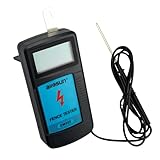
- 【allsun Digital Electric Fence Tester & Fault Finder】 Quickly locate breaks and weak spots with this digital electric fence tester. As a precise electric fence fault finder and reliable fence voltage tester, it saves you hours of troubleshooting. The clear LCD instantly shows readings from 300V to 9.9kV, ensuring your electric fence wire is live and operating at optimal power. Checking voltage on electric fence.Simply drive the probe into the ground or on one of the ground wires and touch the hook over the one you want to test. In just a few seconds, you start to read the actual volts at that point.
- 【Smart Power-Saving Electric Fence Checker】 Experience hassle-free operation. This electric fence checker features Smart Power technology, waking upon detecting a pulse and shutting down after 4 seconds of inactivity. This fence tester not only extends battery life but is always ready for use, making it a superior voltage tester electric fence solution.Pulse Rate: one pulse every 0.5 sec to 2 secs. Saving battery power. Low power consumption about 0.03W, Keep one on hand for regular fence line maintenance.
- 【Rugged Electric Fence Wire & Voltage Tester】 Built for demanding farm conditions. This rugged electric fence wire tester and electrical fence tester features an integrated finger guard and insulated probe for maximum safety. Simply drive the probe into soil, attach the hook, and get a secure reading every time with this dependable fencing tester. It can be matched to any animal control situation, offering both budget and design flexibility. You can use it fixing your electric fence or works well for testing your fence voltage. Auto-power off.
- 【Easy-Read Digital Fence Meter & Tester】 Get clear, unambiguous readings from the user-friendly LCD screen. This digital electric fence tester acts as an accurate electric fence meter, eliminating the guesswork of analog models. It displays in kV (e.g., 6.0 = 6.0kV) for precise assessment of your fence's performance, a core function of any true electric fence tester digital.Battery Not Included: Voltage Tester Electric Fence, please kindly note it, battery NOT included, Comes with a zipper bag so the cord doesn't tangle with the other items in your fence repair bucket.English manual instruction, one fence tester.
- 【Electrical Fence Tester】 Your complete solution for perimeter security. This electrical fence tester is suitable for routine fence voltage testing and diagnosing issues across all electric fencing. An essential fence fault finder for every landowner to protect livestock and pastures.quick easy read electric fence tester can be used in daylight vs led light testers that you can't see light up in daylight. Reads the zap strength as a number and holds the number on the screen making it much easier to read.
Measure the whole herd result
Look at replacement rates, age at first calving, calving interval, mortality, culling reasons, growth and saleable output together. A change that improves one number while increasing disease, infertility or replacement demand is not a clear environmental gain.
Manage grazing and grassland as one system
FAO identifies improved grazing and grassland management, forage quality, paddock rotation and adequate stocking rates as relevant practices. These measures must be adapted to climate, soils, pasture species, topography and the production goal. Rotation alone does not guarantee soil-carbon gains, and there is no stocking rate that fits every farm.
Quick wins for a faster PC:
Fix the driver behind crashes, sound loss and screen glitchesFind Drivers →Clear out junk files and repair common Windows errorsFree Scan →Set a stocking rate the pasture can support
Stocking rate is the number and type of animals assigned to a given area over a defined period. Set it using forage growth, seasonal variability, soil resilience and the need to retain ground cover. Watch for bare soil, repeated grazing of regrowth, declining desirable species, erosion, pugging and animals losing condition. If those signals appear, reduce pressure, move animals, provide a sacrifice area or adjust the herd plan before damage becomes difficult to reverse.
Design paddock moves around recovery
Use paddock rotation to control where and when animals graze, while allowing plants enough recovery for the season and soil conditions. The schedule should respond to forage height or mass, rainfall, growth rate and animal demand rather than a fixed calendar alone. Keep sensitive stream margins, wet areas and steep slopes out of the highest-pressure grazing periods when practical.
Protect soil and water entry points
- Maintain ground cover on slopes and around gateways.
- Place water points and mineral feeders to avoid concentrating traffic in one fragile location.
- Provide stable crossings or alternative routes where animals repeatedly enter streams.
- Inspect riparian vegetation, drains and low-lying paddocks after heavy rain.
- Use temporary fencing or subdivision only where the labor, water access and maintenance plan make it workable.
An electric fence tester can be a practical maintenance tool when a farm uses temporary or permanent fencing for paddock rotation. It does not itself reduce emissions; its value is conditional on helping the operator keep the planned grazing pattern functioning. Check local availability and specifications before purchasing any equipment.
Rank #4

- Wider Application: Electric fence wire tester measurement range is to (200 volts to 15,000 volts) pulse voltage.
- LCD Display Screen: Large screen with back light clearly show voltage, current and current direction. Help you quickly locate fault and maintence fence.
- Multiple Function: Pressing the button and allowing the metal top to make contact quickly and easily locates faults in electric fence lines such as steel wire, aluminum wire, polyethylene wire, rope, tape and braid.
- Humanised Design: The fence tester contains a back buckle, can be easily hung on the waist, easy to carry.
- Replaceable 9V battery included.
Turn manure from a pollution risk into a managed nutrient resource
Manure management should limit emissions and nutrient losses while safely returning nutrients to soil. The appropriate handling, storage, treatment and application method depends on herd size, housing, climate, soil, land area, labor, regulations and available infrastructure.
Windows Errors? Fix Them Before They Spread
Repair common Windows errors and clear accumulated junk for a smoother, more stable PC - no reinstall needed.Free scan · no reinstallOutdated Drivers Are Slowing You Down
One free scan finds every outdated or missing driver and matches the right update for your exact hardware.Free scan · exact hardware matchMap where manure is generated and lost
Identify barns, corrals, milking areas, lanes, feed pads, storage structures, drainage paths and fields receiving manure. Note where clean rainwater mixes with manure, where runoff leaves the site and where leaks or overflow could reach water. This map often reveals low-cost separation, grading or maintenance work before a new treatment system is considered.
Choose storage for the actual material and climate
Storage should prevent uncontrolled runoff and leakage, provide enough capacity for periods when spreading is unsuitable and limit avoidable exposure to rain and wind. Solid and liquid manures have different handling requirements. Follow local rules for liners, setbacks, storage capacity, cover, inspection and emergency planning.
Apply nutrients to crop and pasture demand
Use soil tests, manure nutrient analysis and a nutrient budget to match application rates with crop or forage needs. Consider timing, weather, soil moisture, slope and the risk of runoff. Keep records of field, rate, date and method. Overapplication wastes nutrients and can increase losses even when the manure itself is a valuable fertilizer.
Evaluate treatment technologies as site-specific projects
Composting, anaerobic digestion and other treatments can have useful roles, but none is always the best choice. Compare capital cost, energy demand, labor, maintenance, odor, methane management, digestate or compost use, regulatory requirements and the farm’s ability to keep the system operating. Do not assume a technology delivers a net environmental benefit without accounting for its inputs and outputs.
Recommended Free Tools
Best Value
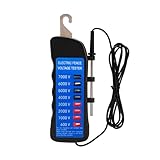
- Wide Application: Can quantify voltage on various metals, polyethylene wires, ropes and polyethylene tapes as well as fence wires, power supplies, grounding systems, connecting wires and fence components. Helps to find fence wire faults
- Measuring Range: The electric fence wire tester measures voltages in the range of 600v -7000v, neon display, and the service life of the ordinary strobe light is up to 20,000 times. No need to add batteries
- 8 Indicator Lights: The fence voltage tester has 8 neon indicator lights corresponding to the detected voltage, which are easy to observe and use to find faults in the fence wire. You can keep 1 for regular fence wire maintenance because it is designed for low impedance and standard working fence controllers
- Simple to Use: Just embed the copper probe into the ground and let the top hook touch the wire or tape. It will display the reading range of the voltage. The reading is different from the LED. The small design allows you to put it in your pants and it will not take up much space
- Humanized Design: The wave pattern on the side is comfortable to hold. The frosted shell is smooth and comfortable and will not hurt your fingers. Matte finish creates no glare. Rugged ABS shell can withstand cold climates but is not waterproof
Reduce water impacts without confusing use and scarcity
Count water in two categories: direct water used by cattle and the farm, and indirect water used to produce feed. These categories answer different management questions. A farm can reduce pumping or trough losses while still relying on water-intensive irrigated feed, or reduce irrigated feed while increasing direct water demand in a hotter season.
Audit direct water use
- Check troughs, pipes, floats, tanks and pumps for leaks.
- Measure or estimate water use by animal group and by cleaning or processing activity.
- Keep drinking points clean and accessible so animals do not crowd, foul or avoid them.
- Protect wells, springs and surface-water access from manure contamination.
- Use efficient pumping and inspect tanks after storms, freezes and power interruptions.
Review the feed-water connection
For each major forage or feed crop, record whether it is irrigated, the source of irrigation water and the local water-scarcity context. FAO LEAP material identifies reducing irrigated feed and animal water consumption as relevant strategies. Water-footprint results are geographic and methodological; a volume of water withdrawn in a water-abundant period is not automatically equivalent to the same volume withdrawn from a stressed basin.
Use energy efficiently and examine the supply chain
Electricity and fuel may be smaller than biological sources in some cattle systems, but they still matter for pumps, cooling, ventilation, feed processing, transport, heating and manure handling. Record energy by activity where feasible, then target avoidable losses: poorly maintained pumps, unnecessary transport, idling equipment, inefficient lighting or feed spoilage that requires replacement production.
Include upstream inputs when comparing options. Fertilizer, purchased feed, fencing materials, construction, fuel and electricity all carry impacts outside the pasture boundary. A local change should be evaluated for whether it shifts emissions, water demand, land pressure or nutrient losses to another stage.
Compare interventions with the same accounting rules
When deciding between two practices or cattle systems, use the same boundary, denominator, time period and data quality for both. GLEAM uses IPCC Tier 2 methods and life-cycle assessment and can compare scenarios using husbandry, herd management, feed, manure, energy, post-farm impacts and water. Its outputs depend on the assumptions and inputs supplied; they are not universal ratings for every farm.
| Comparison axis | Questions to ask |
|---|---|
| Impact measured | Are you comparing greenhouse gases, water scarcity, soil and land, nutrient losses, biodiversity, or a set of indicators? |
| Boundary | Does each result cover the farm only, or the full life cycle including feed, transport and post-farm stages? |
| Denominator | Is the result total farm impact, impact per animal, or impact per unit of meat or milk? |
| Local fit | Do climate, soils, pasture, feed sources, herd type, infrastructure and veterinary access match your farm? |
| Animal outcomes | What happens to health, mortality, fertility, growth, welfare and productive lifetime? |
| Trade-offs | Could the option move pressure from methane to feed land, from water to energy, or from emissions to nutrient pollution? |
| Implementation | What capital, labor, training, maintenance and monitoring are required, and who is responsible? |
A practical sequence for putting the plan into operation
- Define the goal. Choose the priority problem—such as runoff, pasture degradation, water scarcity or emissions intensity—without dropping the other impact categories from the review.
- Record a baseline. Gather herd, feed, grazing, manure, water, energy, soil and output data for a representative period.
- Find the largest avoidable losses. Look for poor animal health, feed spoilage, overstocked paddocks, leaking water systems, manure runoff or inefficient pumping before buying new equipment.
- Select a small set of linked changes. For example, pair a grazing schedule with reliable fencing and water access, or pair a ration change with forage testing and health monitoring.
- Check feasibility and compliance. Confirm labor, cash flow, animal-welfare requirements, nutrient rules, water protections and veterinary oversight.
- Set monitoring measures. Assign a person to record animal outcomes, pasture condition, manure losses, water and energy use, and the chosen environmental indicators.
- Review after a representative production cycle. Compare like with like, account for weather and disease, and investigate unexpected changes before expanding the practice.
- Scale only after checking trade-offs. A practice that works on one paddock or animal group may need different timing, stocking or infrastructure elsewhere.
Common mistakes that undermine otherwise good plans
- Chasing a label instead of measuring outcomes: “Regenerative,” “natural” or “low-carbon” descriptions do not establish performance without a defined boundary and data.
- Assuming one practice works everywhere: Rotation, a lower stocking rate, a feed change or a manure technology can have different results under different soils, climates and production systems.
- Counting only direct farm emissions: Feed, fertilizer, irrigation, transport and post-farm stages may change the result.
- Using intensity alone: An improvement per unit of product can coexist with higher total emissions or greater land and water demand.
- Ignoring animal welfare: Delaying treatment or selecting animals that cannot cope with local conditions is not a defensible environmental strategy.
- Installing infrastructure without a maintenance plan: Broken fences, empty troughs, blocked drains or an overloaded manure store quickly defeat the intended management system.
- Claiming a percentage reduction without comparable evidence: Any numeric claim must identify the original study or official dataset, geography, year, production system, measurement method and system boundary.
When local professional advice is essential
Use local livestock extension, veterinary herd-health and grazing-management expertise when setting stocking rates, changing rations, treating disease, choosing breeding objectives, designing manure storage or interpreting water and soil risks. Local specialists can adapt broad principles to regulations, soils, forage species, climate, infrastructure and the farm’s production target. An environmental assessment is especially useful when comparing major capital projects or making claims about whole-life-cycle emissions.
How to tell whether a result is credible
A credible result states what was measured, for which animals and products, over what period, with which boundary and denominator. It identifies assumptions and reports relevant trade-offs. Be cautious when a source offers a universal ranking, a fixed methane percentage or a “carbon-neutral” promise without comparable methods and local context. GLEAM is an assessment resource, not a guarantee that a particular practice will produce the same result on every holding.
Quick Recap
Product prices and availability are accurate as of the date/time indicated and are subject to change. Any price and availability information displayed on Amazon at the time of purchase will apply.
The Tool Desk
Outbyte Driver Updater FREEFix the driver behind crashes, sound loss and screen glitchesFind Drivers →Outbyte PC Repair FREERepair Windows errors before they cause bigger problemsFix Now →





Say something about this film