Free tools Windows power users keep installed
One-click scans. No signup required.
To record Blackmagic RAW on the PYXIS 6K, choose your resolution and frame rate, select one of the camera’s constant-bitrate or constant-quality BRAW options, and use media whose sustained write speed exceeds the expected data rate. Constant-bitrate settings (3:1, 5:1, 8:1 and 12:1) make storage use predictable. Constant-quality settings (Q0, Q1, Q3 and Q5) let the data rate rise or fall with scene complexity to maintain a quality target.
The most important decision is therefore not simply “which setting is highest quality?” It is whether your production needs a known recording budget or variable bandwidth in exchange for a quality-oriented encode. The correct choice also depends on frame shape, delivery, card capacity, sustained media performance and whether you want simultaneous H.264 proxy files.
What the PYXIS 6K can record
The PYXIS 6K records BRAW at several sensor readout areas and frame shapes. Blackmagic Design’s current technical specifications list these principal options:
- 6048 × 4032, 6K Open Gate 3:2
- 4832 × 4032, anamorphic 6:5
- 6048 × 3408, 6K 16:9
- 6048 × 3200, 6K DCI 17:9
- 6048 × 2520, 6K 2.4:1
- Super 35 4:3 and several lower-resolution formats
The camera supports BRAW constant-bitrate ratios of 3:1, 5:1, 8:1 and 12:1, plus constant-quality Q0, Q1, Q3 and Q5. The exact combinations available can depend on the selected resolution and recording mode, so make the framing and frame-rate choice before settling on compression.
Recommended Free Tools
#1 Best Overall

- For photographers and videographers who need a high-speed performance memory card
- Up to 1750MB/s read and 1300MB/s write
- Shoot more high-quality images and 8K video
- Backwards-compatible with select XQD cameras
- Limited 10-year warranty
BRAW files can carry film, extended-video or video dynamic-range choices and custom 3D LUT metadata. The PYXIS 6K also supports simultaneous 1920 × 1080 H.264 proxy recording alongside BRAW in the listed configurations. That proxy is a companion file for easier editorial handling; it does not replace the camera-original BRAW.
For storage, the camera lists two CFexpress Type B card slots and a USB-C expansion port for external media. Those interfaces give you more than one recording-media route, but every route still has to sustain the write rate generated by your selected format.
How do I record Blackmagic RAW on the PYXIS 6K?
- Choose the delivery frame shape. In the camera’s recording controls, select Open Gate, 16:9, DCI 17:9, 2.4:1, the 6:5 anamorphic mode or another supported format. Open Gate preserves the broad 3:2 sensor frame for reframing; 16:9 fits common widescreen delivery; DCI 17:9 is intended for a cinema-shaped raster; 2.4:1 gives a wider extraction; and 6:5 is the listed anamorphic option.
- Set the frame rate. Storage figures change when frame rate changes. The published reference rates in this guide are for 30 frames per second at 6048 × 4032, so do not apply them unchanged to a different frame rate or raster.
- Select BRAW as the recording codec. Open the PYXIS 6K’s record settings and choose Blackmagic RAW rather than a proxy-only or other recording option.
- Choose a rate-control family. Select 3:1, 5:1, 8:1 or 12:1 when a predictable data rate is more important than keeping a fixed quality target. Select Q0, Q1, Q3 or Q5 when you want the encoder to vary its data rate with image complexity.
- Confirm the selected media. Use a CFexpress Type B card or a supported external medium connected through USB-C whose sustained write performance covers the expected rate. Capacity and sustained performance matter more than a short peak-speed figure printed on packaging.
- Enable a proxy if the edit benefits from one. Turn on the simultaneous 1920 × 1080 H.264 proxy option when you want a smaller, easier-to-handle companion file. Keep the BRAW media as the camera-original source.
- Check the active combination before rolling. Verify resolution, frame rate, BRAW mode and the recording destination on the camera display. A short test at the intended settings is the practical way to confirm that the selected media and workflow behave as expected.
Constant-bitrate BRAW: 3:1, 5:1, 8:1 and 12:1
Constant-bitrate modes are named for the approximate compression ratio relative to the unprocessed file size of a sensor frame. A lower ratio applies less compression and generally produces larger files. A higher ratio reduces the data burden. Blackmagic Design describes these modes as providing predictable and consistent file sizes, which makes them useful when you must plan card capacity, offload time or recording duration in advance.
| Mode | Compression behavior | Planning characteristic |
|---|---|---|
| 3:1 | Least compression in the constant-bitrate group | Highest predictable data burden among these four options |
| 5:1 | Less compression than 8:1 and 12:1 | Predictable rate with more storage than the higher ratios |
| 8:1 | More compression than 3:1 and 5:1 | Balanced storage-oriented starting point when capacity matters |
| 12:1 | Most compression in the constant-bitrate group | Smallest predictable data burden among these four options |
The ratio alone does not establish a universal visual-quality threshold. It tells you how aggressively the source is compressed and how predictable the resulting data rate will be. If a production has a fixed media allocation or a strict maximum recording rate, begin by checking whether 12:1 or 8:1 fits that constraint. If retaining more data and accepting larger files is the priority, evaluate 5:1 or 3:1 instead.
The Tool Desk
Outbyte Driver Updater FREEFix the driver behind crashes, sound loss and screen glitchesFind Drivers →Outbyte PC Repair FREEClear out junk files and repair common Windows errorsFree Scan →Constant-quality BRAW: Q0, Q1, Q3 and Q5
Constant-quality modes make the encoder respond to the picture. Complex frames can receive more data, while simpler frames can require less. As a result, the data rate and file size vary from shot to shot, and you should not promise a fixed recording duration from a Q setting alone.
| Mode | Blackmagic Design’s description | Storage behavior |
|---|---|---|
| Q0 | Minimum quantization and the highest possible quality | Can require substantial bandwidth; rate varies with image content |
| Q1 | Constant-quality option between the published endpoints | Variable; the cited specification gives a range for the reference format |
| Q3 | Constant-quality option between the published endpoints | Variable; the cited specification gives a range for the reference format |
| Q5 | Moderate quantization for more efficient encoding and a smaller file size | Variable; generally the lightest data burden of the Q choices |
Blackmagic’s published wording is: “Blackmagic RAW Q0 has minimum quantization and yields the highest possible quality, while Blackmagic RAW Q5 uses moderate quantization for more efficient encoding and a smaller file size.” Q1 and Q3 occupy the intermediate positions in the menu, but the cited material does not define a universal visual-quality difference between them. Judge those choices with your own subject matter, delivery resolution and post-production tolerance rather than treating the number as a guaranteed quality score.
Constant quality is a good fit when preserving difficult detail matters more than knowing the exact number of megabytes each minute will consume. It is a poor fit for a workflow that cannot absorb sudden increases in write rate or card usage.
Published PYXIS 6K storage rates at 30 fps
Blackmagic Design publishes the following figures for 6048 × 4032 6K Open Gate 3:2 at 30 frames per second. They are manufacturer specifications, not independent benchmarks, and they are not universal rates for every resolution or frame rate.
Rank #2

- Read speeds of up to 1700MB/s and 1400MB/s write speeds** offer low latency during high-speed recording and enhance workflow efficiency far beyond existing SanDisk cards [512GB only; 128GB-256GB = 1700MB/s read / 1200 MB/s write; 64GB = 1500 MB/s read / 800MB/s write] | **Up to 1700MB/s read speed; up to 1400MB/s write speed. Based on internal testing; performance may be lower depending upon host device, usage conditions, and other factors. 1MB=1,000,000 bytes.
- Enables smooth, RAW 4K video(1) | (1)4K video (4069x2160p) support may vary based on host device, file attributes, usage conditions and other factors.
- The Cfexpress CardType B is backwards-compatible with select XQD cameras that adopt firmware enabling Cfexpress(2) | (2)Backwards compatibility with select XQD cameras subject to the availability and installation of a camera firmware update provided by the camera manufacturer enabling CFexpress compatibility.
- RescuePRO Deluxe Recovery Software included(3) (download required) | (3)Registration required; terms and conditions apply
| BRAW option | Published storage rate |
|---|---|
| 3:1 | 370 MB/s |
| 5:1 | 223 MB/s |
| 8:1 | 140 MB/s |
| 12:1 | 94 MB/s |
| Q0 | 278–555 MB/s |
| Q1 | 186–444 MB/s |
| Q3 | 124–318 MB/s |
| Q5 | 75–186 MB/s |
The constant-bitrate figures are single planning values for that particular raster and frame rate. The Q figures are ranges because scene complexity changes the amount of data required. A detailed, noisy or rapidly changing image can approach the upper end; an easier image can be closer to the lower end. Leave capacity and sustained-write headroom instead of designing a card plan around the minimum Q figure.
To estimate media usage for another setup, use the camera’s rate for the exact resolution and frame rate, multiply megabytes per second by the number of seconds you intend to record, and allow additional capacity for filesystem overhead, retakes and separate proxy files. Do not infer a different mode’s rate by copying the 30-fps Open Gate number.
What is the difference between BRAW 8:1 and Q5?
BRAW 8:1 is a constant-bitrate choice. In the published 30-fps Open Gate reference, it is listed at 140 MB/s, so its storage demand is predictable for that format. Q5 is a constant-quality choice. In the same reference, it ranges from 75 to 186 MB/s, with the actual rate depending on the image.
That means the two settings solve different problems. Choose 8:1 when a known data rate, predictable card duration and stable offload planning are important. Choose Q5 when you prefer the encoder to spend more data on complex pictures and less on simple ones, and your media workflow can tolerate the resulting variation. The figures do not prove that one mode always looks better than the other; they describe different rate-control strategies.
Crashes, No Sound, or Screen Glitches?
Random freezes, missing sound and display glitches usually trace back to one bad driver. Find and replace yours safely.Free scan · under a minuteWindows Errors? Fix Them Before They Spread
Repair common Windows errors and clear accumulated junk for a smoother, more stable PC - no reinstall needed.Free scan · no reinstallWhich BRAW setting gives smaller files?
Among the constant-bitrate choices, 12:1 has the smallest published rate in the reference table at 94 MB/s, followed by 8:1 at 140 MB/s, 5:1 at 223 MB/s and 3:1 at 370 MB/s. Among the constant-quality choices, Q5 is described as the more efficient, smaller-file option, but its 75–186 MB/s range means a complex scene can still use more data than an easy scene.
Do not compare a Q-mode minimum directly with a guaranteed constant rate. A Q5 clip may be smaller than an 8:1 clip in one scene and larger in another. If “smallest” means the most predictable maximum for a fixed recording plan, use the constant-bitrate table and select the highest compression that your image-quality requirements permit.
How fast does a CFexpress card need to be?
The card must sustain the expected write rate for the exact PYXIS 6K resolution, frame rate and BRAW option. For the published 30-fps Open Gate example, that means planning for 370 MB/s for 3:1, 223 MB/s for 5:1, 140 MB/s for 8:1 and 94 MB/s for 12:1. Q0 can range up to 555 MB/s in that example; Q1 up to 444 MB/s; Q3 up to 318 MB/s; and Q5 up to 186 MB/s.
Those numbers are planning references, not a blanket certification of any particular card model. Packaging often emphasizes a peak burst speed, while a camera needs sustained performance during a long take. Confirm the media’s sustained-write specification for your intended workflow, account for the upper end of a Q range, and test the complete camera-card combination before an important shoot.
Rank #3

- For photographers and videographers who need a high-speed performance memory card
- Up to 1750MB/s read and 1300MB/s write
- Shoot more high-quality images and 8K video
- Backwards-compatible with select XQD cameras
- Limited 10-year warranty
The PYXIS 6K lists two CFexpress Type B slots. It also lists USB-C expansion for external media, so a production can evaluate internal cards and an external recording path. The same sustained-write principle applies to external storage: an interface’s theoretical maximum does not guarantee continuous real-world recording performance.
Choosing a format by delivery and production priorities
When Open Gate is the right starting point
Open Gate 3:2 preserves the 6048 × 4032 frame. It gives an editor or finishing artist more vertical and horizontal image to reframe for multiple deliverables, provided the lens coverage and post-production plan support that approach. The trade-off is the larger raster and, at equivalent frame rate and compression, the greater data burden shown by the reference rates.
When 16:9 is more efficient
6K 16:9 at 6048 × 3408 matches a conventional widescreen shape. It can reduce the amount of unused image area when the final program is already committed to 16:9, although the exact storage rate must be taken from the camera’s specification for that resolution and frame rate rather than borrowed from the Open Gate table.
When DCI, 2.4:1 or 6:5 makes sense
The 6048 × 3200 DCI 17:9 mode targets a cinema-shaped raster. The 6048 × 2520 2.4:1 mode provides a wider frame when that composition is intentional. The 4832 × 4032 6:5 mode is the listed anamorphic option. Choose these modes because the lensing, monitoring and delivery require their geometry, not because the label alone guarantees a particular aesthetic.
Do these 3 things before closing this tab:
1Fix the driver behind crashes, sound loss and screen glitches2Repair Windows errors before they cause bigger problems3Scan for outdated or missing drivers - takes under a minuteWhen a fixed media budget dominates
Use constant bitrate and calculate the recording plan from the exact published rate. Start by comparing 12:1 and 8:1 if storage is the limiting factor, then move to 5:1 or 3:1 when the production can support more data and less compression. This is a storage and compression decision, not a claim that one ratio meets every project’s image-quality threshold.
When preserving a quality target dominates
Use constant quality when scene-dependent allocation is more valuable than a fixed file size. Q0 is the highest-quality description in Blackmagic’s explanation, while Q5 is the more efficient, smaller-file endpoint. Q1 and Q3 provide intermediate menu choices, but you should validate them with representative footage because no universal visual difference is published for those steps.
Using H.264 proxies with BRAW
The PYXIS 6K can record a simultaneous 1920 × 1080 H.264 proxy with BRAW in the listed configurations. A proxy can make ingest, offline editing and remote review easier because the companion file is smaller and less demanding than the camera original.
- Keep the BRAW files organized as the authoritative camera originals.
- Record proxies when editors need a lighter file during the first cut or when storage and transfer bandwidth are limited.
- Confirm your editing application’s relink and proxy behavior for the particular files you create; the published camera information establishes simultaneous recording but does not specify every post-production configuration.
- Remember that proxy recording adds another file stream and therefore another media-management task, even though it does not change the BRAW compression choice.
Common planning mistakes and how to avoid them
Applying the Open Gate table to every mode
The 94–370 MB/s constant-bitrate figures and the Q ranges are for 6048 × 4032 at 30 fps. A different raster or frame rate changes the data requirement. Recheck the specification for the actual combination selected in the camera.
Quick wins for a faster PC:
Clear out junk files and repair common Windows errorsFree Scan →Scan for outdated or missing drivers - takes under a minuteDriver Scan →Repair Windows errors before they cause bigger problemsFix Now →Rank #4
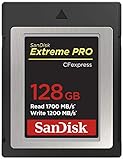
- Read speeds of up to 1700MB/s and 1400MB/s write speeds offer low latency during high-speed recording and enhance workflow efficiency far beyond existing SanDisk cards [512GB only; 128GB-256GB = 1700MB/s read / 1200 MB/s write; 64GB = 1500 MB/s read / 800MB/s write]. Up to 1700MB/s read speed; up to 1400MB/s write speed. Based on internal testing; performance may be lower depending upon host device, usage conditions, and other factors. 1MB=1,000,000 bytes.
- Enables smooth, RAW 4K video(1). (1) 4K video (4069x2160p) support may vary based on host device, file attributes, usage conditions and other factors.
- The Cfexpress CardType B is backwards-compatible with select XQD cameras that adopt firmware enabling Cfexpress(2) | (2)Backwards compatibility with select XQD cameras subject to the availability and installation of a camera firmware update provided by the camera manufacturer enabling CFexpress compatibility.
- RescuePRO Deluxe Recovery Software included(3) (download required) | (3)Registration required; terms and conditions apply
Treating Q modes as fixed-rate recordings
Q0, Q1, Q3 and Q5 vary with image content. Use the published range as a planning estimate, design for the upper end where possible, and leave spare capacity instead of promising a fixed number of minutes.
Choosing media from peak speed alone
A short burst figure on a card package is not proof of sustained camera performance. Match sustained write capability to the expected rate, especially for Q0 and for other settings near the upper end of the published ranges.
Assuming the ratio number is a quality score
3:1, 5:1, 8:1 and 12:1 describe constant-bitrate compression choices. Q0 through Q5 describe constant-quality choices. Their numbers do not form one universal ranking that can be read across both families.
Ignoring the delivery raster
Selecting Open Gate, 16:9, DCI, 2.4:1 or 6:5 affects composition, reframing and storage. Decide the intended delivery and lens coverage before choosing compression.
Skipping a complete workflow test
Blackmagic’s published figures are specifications, not independent card benchmarks. Test the selected camera settings, media, proxy option and offload process together before relying on them for a critical documentary shoot.
A practical decision matrix
| Priority | Starting choice | Reason |
|---|---|---|
| Predictable storage and recording duration | Constant bitrate | The 3:1, 5:1, 8:1 and 12:1 modes are designed around consistent data rates. |
| Lowest constant-bitrate data burden | 12:1 | It has the smallest published constant-bitrate rate in the 30-fps Open Gate reference. |
| More data with less compression | 5:1 or 3:1 | Lower ratios represent less compression and larger files. |
| Scene-responsive quality allocation | Q0–Q5 | Constant-quality encoding can raise the rate for complex frames. |
| Highest stated quality endpoint | Q0 | Blackmagic describes Q0 as using minimum quantization and yielding the highest possible quality. |
| More efficient Q-mode endpoint | Q5 | Blackmagic describes Q5 as using moderate quantization for more efficient encoding and a smaller file size. |
| Lightweight editorial companion | Simultaneous 1920 × 1080 H.264 proxy | The camera can record the proxy alongside BRAW in the listed configurations. |
What the published specifications do—and do not—tell you
The official PYXIS 6K specifications and Blackmagic RAW explanation establish the supported resolutions, rate-control choices, interfaces and reference storage rates. They do not provide independent image-quality tests comparing every ratio, firmware-specific menu screenshots, or a universal compatibility list for third-party cards. They also do not quantify a universal visual difference between Q1 and Q3.
Use the specifications to make a defensible first selection, then verify the complete setup with representative footage. A documentary workflow that records long interviews may value predictable constant-bitrate usage. A short, visually complex scene may benefit from constant quality if the media can absorb its variable rate. The best setting is the one that fits the delivery frame, image-quality requirement and sustained-storage capability at the same time.
Quick Recap
Product prices and availability are accurate as of the date/time indicated and are subject to change. Any price and availability information displayed on Amazon at the time of purchase will apply.






Say something about this film