Quick wins for a faster PC:
Fix the driver behind crashes, sound loss and screen glitchesFind Drivers →Clear out junk files and repair common Windows errorsFree Scan →Scan for outdated or missing drivers - takes under a minuteDriver Scan →Some links on this page are affiliate links: if you buy through them we may earn a commission, at no extra cost to you.
Stop gaining sleeping altitude as soon as altitude-illness symptoms appear. A stable case of mild acute mountain sickness (AMS) can sometimes be watched at the same elevation, but worsening symptoms require descent. Ataxia, confusion, unusual drowsiness, or progressive breathing difficulty indicate possible high-altitude cerebral edema (HACE) or high-altitude pulmonary edema (HAPE): treat these as emergencies, arrange descent, minimize exertion, and use oxygen if it is available. A portable hyperbaric chamber is a temporary bridge when descent is delayed or impossible, never a reason to postpone feasible descent.
The Centers for Disease Control and Prevention (CDC) puts the field rule plainly: “Never ascend to sleep at a higher altitude when experiencing symptoms of altitude illness, no matter how minor the symptoms seem.” (CDC Yellow Book)
Make the first decision: stop ascending
Altitude illness can begin after a rapid ascent, and an impaired climber may underestimate or deny deterioration. The safest immediate action is to stop climbing higher and prevent the person from sleeping at a greater elevation. Keep the symptomatic climber with a responsible companion, protect them from cold and exhaustion, and reassess frequently.
What’s actually slowing this PC down?
Pick the symptom - the matching free tool is one click away.
Do not use a temporary improvement, a familiar explanation such as dehydration, or a single pulse-oximeter number as permission to continue upward. If symptoms worsen, fail to improve while resting at the current altitude, or include neurological or respiratory warning signs, begin descent and activate the expedition’s emergency plan.
Popular on Amazon

- ACCURATE AND RELIABLE - Accurately determines your SpO2 (blood oxygen saturation levels), pulse rate and pulse strength in 10 seconds and displays it conveniently on a large digital LED display.
- FULL SPO2 VALUE - The ONLY LED pulse oximeter that can read and display SpO2 up to 100%.
- SPORTS/HEALTH ENTHUSIASTS - For sports enthusiasts like mountain climbers, skiers, bikers, and anyone needing to monitor their SpO2 and pulse rate. The pulse oximeter LED display faces the user for an easy read.
- ACCOMODATES WIDE RANGE OF FINGER SIZES - Finger chamber with SMART Spring System. Works for ages 12 and above.
- LOADED WITH ACCESSORIES - Includes 2 x AAA BATTERIES, allowing the pulse oximeter to be used right out of the box; a SILICONE COVER to protect from dirt and physical damage; and a LANYARD for convenience. Comes with a 12-month WARRANTY and USA based technical phone support.
When observation at the same altitude is reasonable
Observation is limited to a person with mild, stable AMS: headache after ascent plus one or more systemic symptoms such as nausea, vomiting, unusual fatigue, lassitude, or dizziness, without poor coordination, confusion, altered behavior, or breathing distress. Rest at the present elevation, monitor closely, and arrange medical advice when possible. The person must not ascend to a higher sleeping altitude while symptoms remain.
“Stable” means the symptoms are not progressing and the person can be observed continuously by someone capable of recognizing a change. Record the time of onset, the latest ascent and sleeping altitude, fluid and food intake, temperature exposure, and any treatment already given. Recheck walking, conversation, alertness, breathing, and performance at intervals appropriate to the situation. A climber who cannot be monitored reliably should be moved toward safety rather than left alone at altitude.
When descent is non-negotiable
- Symptoms are getting worse despite stopping the ascent.
- Symptoms are severe, disabling, or not improving with appropriate rest and clinician-planned measures.
- There is ataxia (poor coordination), confusion, marked drowsiness, or another change in mental status.
- There is new chest congestion or cough, breathlessness out of proportion to exertion, a striking loss of exercise capacity, breathlessness at rest, or respiratory distress.
- The team cannot provide reliable observation, warmth, hydration assessment, communication, or a safe evacuation route.
In remote terrain, descent is the key field treatment for serious altitude illness. Organize assisted descent or evacuation rather than sending a neurologically impaired climber down alone. If the route is technical, icy, exposed, or otherwise hazardous, arrange the people and equipment needed to move the patient safely; an unsafe rescue attempt can injure the entire team.
Tell AMS, HACE, and HAPE apart
These are related but distinct syndromes. AMS primarily causes general symptoms, HACE disrupts brain function, and HAPE affects the lungs. They can overlap, and HAPE may occur without preceding AMS.
| Syndrome | Main system affected | Typical warning signs | Field response |
|---|---|---|---|
| Acute mountain sickness (AMS) | General systemic response to ascent | Headache after ascent with nausea, vomiting, fatigue, lassitude, or dizziness; symptoms may feel like a hangover | Stop ascent; observe a stable mild case at the same altitude; descend if symptoms worsen, are severe, or do not improve |
| High-altitude cerebral edema (HACE) | Brain and neurological function | Ataxia, confusion, altered mental status, marked drowsiness, or encephalopathy; the person may not recognize the problem | Emergency descent and evacuation; oxygen and dexamethasone may be used when medically indicated and available; a portable hyperbaric chamber can bridge a delay |
| High-altitude pulmonary edema (HAPE) | Lungs and breathing | New chest congestion or cough, disproportionate breathlessness on exertion, a major drop in performance, then breathlessness at rest or respiratory distress | Urgent descent, minimal exertion, oxygen if available, and emergency support; a portable hyperbaric chamber can bridge an unavoidable delay |
The comparison is practical rather than a substitute for diagnosis. A headache with nausea after ascent points toward AMS, but coordination or mental-status change changes the urgency to possible HACE. A new cough, chest congestion, or disproportionate breathlessness points toward HAPE, even when there is no headache. A person may have more than one syndrome, and another illness may be present at the same time.
How to recognize acute mountain sickness
Under the 2024 Wilderness Medical Society (WMS) guidance, headache is central to the AMS diagnosis. After a recent ascent, the headache is accompanied by at least one of nausea or vomiting, fatigue or lassitude, or dizziness. The pattern commonly resembles a hangover, but a hangover-like feeling alone does not establish AMS.
Mild AMS has no defining neurological signs. A person who is clumsy, confused, unusually sleepy, or behaving abnormally has crossed into a possible HACE emergency rather than a routine headache scenario. Similarly, a climber whose breathing is deteriorating needs assessment for HAPE even if headache is absent.
Crashes, No Sound, or Screen Glitches?
Random freezes, missing sound and display glitches usually trace back to one bad driver. Find and replace yours safely.Free scan · under a minutePC Slower Than It Used to Be?
A free scan shows the junk files, broken settings and background clutter dragging Windows down - then fixes them in one click.Free scan · Windows 10 & 11Can you keep climbing with a headache?
Not if the headache follows ascent and is accompanied by other AMS symptoms, and not if its cause is uncertain in a setting where altitude illness is plausible. Stop gaining sleeping altitude. A stable climber may rest at the same elevation while being watched, but should not resume ascent until symptoms have resolved. A headache that becomes severe, persists, or occurs with coordination or mental-status changes calls for descent and medical evaluation.
Do not let a planned summit day, a fixed itinerary, or pressure from teammates override this rule. Symptoms can be subtle at first, and the affected person may be the least reliable judge of their own condition. A companion should ask the same simple questions repeatedly and compare answers and behavior with the person’s normal baseline.
Recognize HACE before the climber collapses
HACE is a brain emergency. Look for a new inability to walk a straight line or perform a familiar task, poor coordination, confusion, altered mental status, marked drowsiness, or other encephalopathy. Do not wait for coma or a dramatic collapse. The CDC warns that coma may follow within 12–24 hours after the onset of ataxia without treatment or descent.
Also popular on Amazon

- LARGE EASY-TO-READ DISPLAY: Bright screen clearly shows SpO2, pulse rate, and signal strength with large digits. The waveform bar graph provides visual confirmation of pulse strength, making it ideal for adults and users who prefer clear visibility.
- PORTABLE & USER-FRIENDLY: Compact, lightweight design fits easily in your pocket or bag. One-button operation makes it simple for anyone to use—just insert your finger and press the button for instant results. Auto power-off preserves battery life.
- PERFECT FOR EVERYDAY & OUTDOOR USE: Great for checking oxygen and pulse levels at home, during workouts, hiking, skiing, or high-altitude trips. A practical tool for fitness lovers, outdoor enthusiasts, and anyone who wants to keep an eye on their daily wellness.
- COMPLETE PACKAGE INCLUDED: Comes with 1x Pulse Oximeter, 2x AAA Batteries , 1x Lanyard for easy carrying, and 1x Instruction Manual. Ready to use right out of the box—no additional purchases needed.
A practical coordination check
Observe the person walking with a companion on safe, level ground, or performing a simple familiar task. The test is not a substitute for clinical assessment: an obvious deterioration compared with the person’s baseline is enough to act. Do not expose an unstable climber to a dangerous slope merely to test them.
Ask the person to state their name, location, and plan, and listen for unusual answers, slowed responses, or inability to follow a familiar sequence. These observations help a team communicate a change to rescuers; they do not rule out HACE when normal. If the person is drowsy or confused, keep the airway and body position safe, prevent falls, and do not leave them unattended.
What to do
- Stop all ascent and keep the person supervised.
- Call for expedition medical support, rescue, or evacuation while preparing to descend.
- Arrange prompt assisted descent to a lower altitude; do not leave a confused or uncoordinated climber to descend alone.
- Minimize exertion and protect against cold and injury during the move.
- Use supplemental oxygen and clinician-directed dexamethasone when indicated and available. These support descent; they do not replace it.
- If descent is delayed or impossible, use a portable hyperbaric chamber as a temporary bridge where available, while continuing evacuation efforts.
Recognize HAPE from a change in breathing and performance
HAPE can worsen rapidly and may occur without AMS. Early clues are a new cough or chest congestion, breathlessness that is excessive for the effort, and a striking fall in exercise performance compared with teammates or the person’s own baseline. Progression to breathlessness at rest, obvious respiratory distress, or inability to keep up is an emergency.
Ask whether the person can lie down comfortably, speak in full sentences, and walk a short safe distance without an unusual increase in breathlessness. Worsening symptoms, noisy or labored breathing, or inability to perform ordinary camp tasks should prompt urgent action. Do not wait for a precise oxygen-saturation threshold or for the person to become cyanotic.
What to do
- Stop climbing and begin urgent descent to a lower altitude.
- Keep exertion as low as the terrain and evacuation permit; assist or carry the person when necessary.
- Give supplemental oxygen if available and appropriate.
- Request emergency medical support and prepare for evacuation.
- Use a portable hyperbaric chamber only as a bridge when descent is delayed or infeasible; do not let it postpone a feasible descent.
Medicines such as nifedipine have a limited adjunctive role in field care and should be directed by a qualified clinician familiar with the patient and the expedition. Descent and oxygen are more effective field interventions than relying on medication alone.
Free tools Windows power users keep installed
One-click scans. No signup required.
Use treatment measures in the right order
Field treatment depends on severity, available resources, weather, terrain, and the person’s medical history. The following sequence reflects CDC, WMS, and UIAA principles rather than an individualized prescription.
For mild, stable AMS
- Stop ascent and keep the person at the current sleeping altitude.
- Rest and observe closely for progression.
- Use a non-opioid pain reliever for headache or an antiemetic for nausea only when appropriate for that person and consistent with a clinician’s expedition plan.
- Descend if symptoms worsen, remain severe, or fail to improve with appropriate measures.
- Do not ascend until symptoms have resolved.
Symptom relief should never conceal deterioration or allow the climber to continue upward. If vomiting prevents reasonable hydration, if the person cannot eat or drink, or if the team is uncertain whether the illness is mild, seek medical advice and favor descent.
For severe AMS or suspected HACE
Descent is urgent. Oxygen and dexamethasone may be used as medical treatment when indicated and available. A portable hyperbaric chamber can temporarily improve conditions if descent is delayed, but it is not definitive treatment. Neurological impairment makes an unsupported solo descent unsafe; arrange companions, technical assistance, or evacuation.
For suspected HAPE
Descend urgently, minimize exertion, provide oxygen if available, and obtain emergency support. A chamber may bridge an unavoidable delay. A clinician should determine whether any adjunctive medication is suitable; do not improvise prescription treatment or dosing in the field.
Oxygen and chamber use are support measures, not evidence that the person is safe to remain high. Continue planning descent while using them, monitor the response, and communicate the patient’s symptoms and trend to rescuers.
Also popular on Amazon

- ACCURATE AND RELIABLE - Accurately determine your SpO2 (blood oxygen saturation levels), pulse rate and pulse strength in 10 seconds and display it conveniently on a large digital LED display.
- SPORTS/HEALTH ENTHUSIASTS - For sports enthusiasts like mountain climbers, skiers, bikers, and anyone needing to monitor their SpO2 and pulse rate. The pulse oximeter LED display faces the user for an easy read.
- EASY TO USE – Simply insert your finger fully into the chamber, press the power button, and keep your hand still. Movement can affect accuracy. Wait a few seconds for the device to stabilize and display your results.
- ACCOMODATES WIDE RANGE OF FINGER SIZES - Finger chamber with SMART Spring System. Works for ages 12 and above.
- LOADED WITH ACCESSORIES - Include 2X AAA BATTERIES that will allow you to use the pulse oximeter right out of the box for convenience. Comes with 12 months WARRANTY and USA based technical phone support.
Do not mistake another illness for altitude sickness
Headache, nausea, weakness, dizziness, and breathlessness also occur with dehydration, exhaustion, hypoglycemia, hypothermia, hyponatremia, infection, heart disease, and lung disease. HAPE and HACE can coexist with other illness. An unusual presentation, fever, chest pain, trauma, persistent vomiting, or symptoms that do not fit the ascent timeline warrants qualified medical evaluation while the team continues to protect the person from altitude-related deterioration.
Questions to ask during assessment
- When did the person last ascend, and what was the change in sleeping altitude?
- Which symptom appeared first, and is it progressing?
- Can the person walk and perform a familiar task normally?
- Is breathing worse than expected for the effort, and is there cough or chest congestion?
- Could food, fluid, cold exposure, exertion, medication, infection, or an existing medical condition explain the presentation?
Document answers, times, observed changes, treatments, and response. This information helps a clinician or rescue coordinator distinguish altitude illness from other causes and decide how urgently to evacuate.
What a pulse oximeter can—and cannot—tell you
A fingertip pulse oximeter can add context when HAPE is suspected, but one reading cannot diagnose or rule out altitude illness. Oxygen saturation changes with altitude, cold fingers, movement, device quality, and measurement conditions. The CDC notes that people with HAPE often have readings far below those of healthy people at the same altitude, yet there is no universal cutoff that safely replaces clinical judgment.
Do these 3 things before closing this tab:
1Clear out junk files and repair common Windows errors2Fix the driver behind crashes, sound loss and screen glitches3Repair Windows errors before they cause bigger problemsMeasure after the person has been still and the sensor is warm and positioned correctly, and record the trend with symptoms and observed performance. A reassuring number must not justify continued ascent or delay descent when the person is deteriorating. Conversely, an unexpectedly low or falling reading strengthens the case for urgent help but should not be interpreted without the altitude, symptoms, and device conditions.
Prevent altitude illness before the climb
Acclimatization reduces risk but cannot guarantee that illness will not occur. CDC’s summary of WMS ascent advice recommends the following sleeping-altitude limits:
| Situation | Planning limit |
|---|---|
| Initial gain to a high sleeping altitude | Avoid gaining a sleeping altitude of 2,750 m (9,000 ft) or more in one day |
| Above 3,000 m (9,800 ft) | Limit sleeping-altitude gain to 500 m (1,650 ft) per night |
| Additional acclimatization | Add an acclimatization night for each 1,000 m (3,300 ft) of sleeping-altitude gain |
| Day excursions | “Climb high, sleep low” can be incorporated where the route and conditions make it suitable |
These are planning recommendations, not permission to ignore symptoms. Build turnaround points, reserve days, communication checks, evacuation routes, shelter, oxygen or chamber access where relevant, and a clear rule that the sick person never sleeps higher. Acclimatization days should be real recovery opportunities, not an excuse to add an aggressive daytime effort that leaves the team exhausted.
Get medical advice before departure
People with heart or lung disease, preexisting hypoxemia, sleep apnea, sickle cell trait, or other significant conditions should discuss the itinerary with a clinician experienced in high-altitude medicine. Review existing prescriptions, contraindications, emergency contacts, insurance and evacuation arrangements, and the team’s plan for oxygen, descent, and communication. Prescription choices depend on the individual and expedition; a general article cannot safely supply a medication protocol or dose.
Recommended Free Tools
How common is HAPE?
Risk varies sharply with elevation, ascent rate, acclimatization, genetics, prior episodes, and setting. Two CDC estimates illustrate why a single number should not be treated as a personal prediction:
- About 1 in 10,000 skiers in Colorado is an estimate for HAPE incidence in that specific setting.
- At elevations above 4,300 m (14,000 ft), the CDC gives an estimate of no more than 1 in 100 travelers in the relevant setting.
Neither figure generalizes to every climber, route, or expedition. A previous altitude-illness episode, rapid ascent, or medical condition may change an individual’s risk. The practical lesson is to plan for recognition and evacuation even when the statistical risk appears low.
Independent reader supportYour contribution helps us test, update, and keep practical guides available for everyone.Expedition response checklist
- Stop: halt upward progress and prevent a higher sleeping altitude.
- Stay together: assign a responsible companion and protect the person from cold, falls, and unnecessary exertion.
- Classify: check for AMS symptoms, coordination or mental-status changes, and breathing or performance changes.
- Escalate: treat ataxia, confusion, marked drowsiness, respiratory distress, or rapid decline as an emergency.
- Descend: start assisted descent for worsening or severe illness and for suspected HACE or HAPE.
- Support: use oxygen, clinician-directed medication, or a portable hyperbaric chamber when indicated and available, without delaying feasible descent.
- Communicate: contact rescue or medical support and document ascent history, symptoms, treatments, and response.
- Reassess: do not resume ascent until AMS symptoms have resolved and a qualified clinician or expedition medical lead considers further climbing reasonable.
Reliable guidance for field planning
For detailed clinical criteria and prevention advice, consult the CDC Yellow Book chapter on high-altitude travel and altitude illness, the Wilderness Medical Society 2024 Clinical Practice Guidelines for Acute Altitude Illness, CDC’s Travel to High Altitudes page, and the UIAA emergency field-management guidance for ACS, HAPE, and HACE. The CDC Travelers’ Health page was last reviewed August 16, 2022; the Yellow Book chapter and WMS 2024 guideline provide the more detailed current clinical framing.
Also popular on Amazon
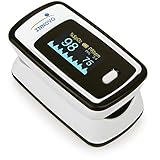
- Accurate and Reliable - The Innovo iP900AP Finger Pulse Oximeter is a premium model with an improved LED and sensor, allowing SpO2 and pulse rate measurement even at low blood perfusion. Consistently beat other pulse oximeters in clinical studies
- Plethymosgraph and Perfusion Index - Ensure accurate SpO2 and Pulse Rate readings. Eliminate doubts about reliability or reading issues.
- Upgraded Hardware and Software - Enhanced performance with internal upgrades. iP900AP model includes auditory alarm, pulse detection beeps, and adjustable display brightness.
- Sports Enthusiasts, Aviation or Home Use - Ideal for climbers, skiers, bikers, aviators, and on-the-go SpO2 and pulse rate tracking. Use pre or post-exercise. Remain still during measurement
- Ready to use out of the box - Include 2x AAA batteries and a lanyard for convenience.
Frequently Asked Questions
How do I know if I have altitude sickness?
After a recent ascent, headache plus nausea or vomiting, unusual fatigue or lassitude, or dizziness suggests acute mountain sickness. Stop gaining sleeping altitude and monitor at the same elevation if the case is mild and stable. Poor coordination, confusion, marked drowsiness, or breathing problems indicate a possible emergency rather than uncomplicated AMS.
The Tool Desk
Outbyte PC Repair FREEClear out junk files and repair common Windows errorsFree Scan →Outbyte Driver Updater FREEFix the driver behind crashes, sound loss and screen glitchesFind Drivers →When should I descend?
Descend for worsening, severe, or non-improving symptoms, and immediately for ataxia, confusion, altered mental status, marked drowsiness, breathlessness at rest, respiratory distress, new chest congestion or cough, or a striking fall in exercise performance. Suspected HACE or HAPE requires urgent assisted descent and medical support.
Can I keep climbing with a headache?
Do not continue to a higher sleeping altitude while a post-ascent headache and associated AMS symptoms remain. Rest and observe a mild, stable case at the same elevation. Resume ascent only after symptoms have resolved and the expedition’s medical lead considers it reasonable.
How can I tell altitude sickness from HAPE or HACE?
AMS is mainly headache with general symptoms such as nausea, fatigue, or dizziness. HACE affects brain function, causing ataxia, confusion, altered behavior, or marked drowsiness. HAPE affects the lungs, causing disproportionate breathlessness, new cough or chest congestion, a major performance decline, and possibly breathlessness at rest. They can overlap, and HAPE may occur without AMS.
Does a pulse oximeter rule out altitude illness?
No. A single saturation reading varies with altitude, cold, movement, device quality, and technique. It can add context, especially when HAPE is suspected, but symptoms, observed deterioration, and clinical judgment determine the response. Never use a reassuring reading to justify ascent or delay descent.
What if descent is temporarily impossible?
Use oxygen if available and appropriate, minimize exertion, call rescue or medical support, and use a portable hyperbaric chamber as a temporary bridge where available. Neither oxygen nor a chamber replaces descent or should delay a feasible descent.
Can medication replace descent?
No. Clinician-directed medicines may support treatment in selected cases, but descent is the definitive field action for serious altitude illness. Prescription choices and contraindications must be planned with a clinician familiar with the person and expedition.
How can I prevent altitude sickness?
Plan gradual sleeping-altitude gains: avoid gaining 2,750 m (9,000 ft) or more in one day; above 3,000 m (9,800 ft), limit sleeping-altitude gain to 500 m (1,650 ft) per night; and add an acclimatization night for each 1,000 m (3,300 ft) gained. Where suitable, climb high and sleep low, and never sleep higher while symptomatic.
The Bottom Line
Stop, stay together, classify, and act early. Mild stable AMS may be observed at the same altitude, but no one should sleep higher while symptomatic. Ataxia, confusion, unusual drowsiness, progressive breathlessness, chest congestion, or a sharp performance drop means urgent descent and emergency support. Oxygen and a portable hyperbaric chamber can bridge delays; they never replace feasible descent.






Say something about this film