What’s actually slowing this PC down?
Pick the symptom - the matching free tool is one click away.
Some links on this page are affiliate links: if you buy through them we may earn a commission, at no extra cost to you.
The safest way to prepare for Everest Base Camp is to protect your acclimatization: ascend conservatively, schedule enough nights at intermediate elevations, and stop climbing whenever symptoms are worsening. Everest Base Camp in Nepal is about 5,400 m (17,700 ft), where thin air combines with cold, dry conditions and intense ultraviolet exposure. Fitness will help you walk for days, but it cannot prevent altitude illness.
Why Everest Base Camp is a high-risk trek
Altitude is the defining medical risk. At approximately 5,400 m (17,700 ft), Everest Base Camp has much lower oxygen pressure than sea level. Your body must increase breathing and circulation and gradually adjust to the reduced oxygen supply. That acute acclimatization process takes place over the first three to five days after ascent, and adjustment takes longer when you continue gaining elevation.
Altitude is not the only stressor. Cold increases the consequences of fatigue and wet clothing; low humidity accelerates fluid loss; and stronger ultraviolet radiation raises the risk of sunburn and eye damage. The combination can make a trekker feel ill even when the walking distance seems manageable.
The Centers for Disease Control and Prevention (CDC) says altitude-illness prevalence on some Nepal trekking routes, particularly Everest Base Camp, can approach 30% at higher elevations even with standard acclimatization schedules. That is a population-level estimate, not a prediction of your personal outcome. Susceptibility varies, and there is no simple screening test that can reliably identify who will become sick.
Popular on Amazon

- ACCURATE AND RELIABLE - Accurately determines your SpO2 (blood oxygen saturation levels), pulse rate and pulse strength in 10 seconds and displays it conveniently on a large digital LED display.
- FULL SPO2 VALUE - The ONLY LED pulse oximeter that can read and display SpO2 up to 100%.
- SPORTS/HEALTH ENTHUSIASTS - For sports enthusiasts like mountain climbers, skiers, bikers, and anyone needing to monitor their SpO2 and pulse rate. The pulse oximeter LED display faces the user for an easy read.
- ACCOMODATES WIDE RANGE OF FINGER SIZES - Finger chamber with SMART Spring System. Works for ages 12 and above.
- LOADED WITH ACCESSORIES - Includes 2 x AAA BATTERIES, allowing the pulse oximeter to be used right out of the box; a SILICONE COVER to protect from dirt and physical damage; and a LANYARD for convenience. Comes with a 12-month WARRANTY and USA based technical phone support.
Nepal Tourism Board describes altitude illness as potentially life-threatening. Treat the possibility as a planning issue rather than an emergency that can be solved after symptoms become severe.
Build an ascent plan around sleeping altitude
The number that matters most for planning is the elevation where you sleep, not only the highest point you visit during the day. A day trip to a higher viewpoint can be compatible with acclimatization if you return to a lower sleeping elevation; gaining several hundred metres of sleeping altitude every night is a much greater stress.
Use the CDC and Wilderness Medical Society limits
The CDC cites Wilderness Medical Society guidance to avoid gaining more than 500 m of sleeping altitude per night once you are above 3,000 m. It also recommends adding one extra acclimatization night for every 1,000 m of additional sleeping-altitude gain.
Quick wins for a faster PC:
Clear out junk files and repair common Windows errorsFree Scan →Fix the driver behind crashes, sound loss and screen glitchesFind Drivers →Repair Windows errors before they cause bigger problemsFix Now →Apply Nepal Tourism Board’s local rule
Nepal Tourism Board advises increasing sleeping altitude by about 300–500 m per day above 2,500 m and taking a rest day after each 1,000 m gained. These are planning guides, not guarantees. Terrain, weather, lodging availability and the exact route can force variations, and people acclimatize at different rates.
Protect the first high-altitude nights
The CDC reports that spending at least two to three nights around 2,450–2,750 m before going higher is markedly protective against acute mountain sickness (AMS). Do not treat those nights as wasted time: they are part of the medical strategy of the trek.
Work through a sample calculation
Suppose an itinerary has you sleeping at 3,200 m. A plan that moves your sleeping elevation to 3,700 m the next night reaches the cited maximum single-night gain. If the itinerary then adds another 1,000 m of sleeping elevation over subsequent stages, it should include an additional acclimatization night rather than compressing that gain into consecutive rapid ascents. This arithmetic is a planning example, not a prescription for a particular Nepal route.
Also popular on Amazon

- ACCURATE AND RELIABLE - Accurately determine your SpO2 (blood oxygen saturation levels), pulse rate and pulse strength in 10 seconds and display it conveniently on a large digital LED display.
- SPORTS/HEALTH ENTHUSIASTS - For sports enthusiasts like mountain climbers, skiers, bikers, and anyone needing to monitor their SpO2 and pulse rate. The pulse oximeter LED display faces the user for an easy read.
- EASY TO USE – Simply insert your finger fully into the chamber, press the power button, and keep your hand still. Movement can affect accuracy. Wait a few seconds for the device to stabilize and display your results.
- ACCOMODATES WIDE RANGE OF FINGER SIZES - Finger chamber with SMART Spring System. Works for ages 12 and above.
- LOADED WITH ACCESSORIES - Include 2X AAA BATTERIES that will allow you to use the pulse oximeter right out of the box for convenience. Comes with 12 months WARRANTY and USA based technical phone support.
Choose extra days over a rushed schedule
CDC Yellow Book authors Peter H. Hackett and David R. Shlim write: “Whenever possible, adding extra days to the trek can make for a more enjoyable and safer trip.” Build buffer days for acclimatization, bad weather and a slow response to symptoms. A schedule that leaves no flexibility encourages people to climb while unwell or to continue upward to avoid missing a flight.
Know who is at higher risk
Your previous altitude experience is useful only when the earlier trip had a similar sleeping altitude and ascent rate. It is not a guarantee that you will respond the same way on a different itinerary.
| Risk factor | How the CDC categorizes it | Planning implication |
|---|---|---|
| Previous high-altitude illness | Risk depends on the type and severity of the earlier illness | Tell your clinician exactly what happened, at what elevation and how quickly you descended. |
| History of high-altitude pulmonary edema (HAPE) or high-altitude cerebral edema (HACE) | High-risk category | Obtain specialist medical advice before committing to the trek; do not rely on ordinary itinerary rules alone. |
| Previous moderate or severe AMS | Medium-risk category | Plan a slower ascent and discuss preventive options with a clinician. |
| Sleeping above 3,400 m on day one | High-risk category in the CDC table | Avoid itineraries that place your first night immediately at that elevation when a lower starting night is possible. |
| Genetic susceptibility | Partly determines risk, with no simple predictive screening test | Assume that a good prior trip or excellent fitness does not eliminate risk. |
Pregnancy, heart or lung disease, sleep-disordered breathing, severe anemia and other conditions can alter travel advice. No universal clearance rule is established for these conditions; discuss your personal medical history with a clinician familiar with high-altitude travel.
Prepare your health before departure
Schedule a travel-health visit
CDC Nepal guidance advises seeing a doctor at least one month before travel. Use the appointment to review your itinerary, planned elevations, previous altitude reactions, chronic conditions, allergies, prescriptions and emergency plans.
Review vaccines and medicines
Check the current CDC Nepal destination guidance for vaccines and medicines relevant to your full trip. The appropriate advice depends on where you travel before or after the trek, not only on the Himalayan portion. Ask specifically whether acetazolamide or another medicine is appropriate for you, how it should be used, and what side effects or contraindications matter. Do not self-prescribe from someone else’s itinerary, and do not use medication as permission to follow an unsafe ascent schedule.
Understand malaria advice by geography
CDC states there is no malaria transmission in Kathmandu, Pokhara or on typical Himalayan treks. Malaria-prevention recommendations apply to specified lower-elevation areas elsewhere in Nepal. If your holiday includes those areas before or after trekking, show the complete route to your clinician; a plan that is safe for the mountains may not cover a lowland extension.
Also popular on Amazon

- LARGE EASY-TO-READ DISPLAY: Bright screen clearly shows SpO2, pulse rate, and signal strength with large digits. The waveform bar graph provides visual confirmation of pulse strength, making it ideal for adults and users who prefer clear visibility.
- PORTABLE & USER-FRIENDLY: Compact, lightweight design fits easily in your pocket or bag. One-button operation makes it simple for anyone to use—just insert your finger and press the button for instant results. Auto power-off preserves battery life.
- PERFECT FOR EVERYDAY & OUTDOOR USE: Great for checking oxygen and pulse levels at home, during workouts, hiking, skiing, or high-altitude trips. A practical tool for fitness lovers, outdoor enthusiasts, and anyone who wants to keep an eye on their daily wellness.
- COMPLETE PACKAGE INCLUDED: Comes with 1x Pulse Oximeter, 2x AAA Batteries , 1x Lanyard for easy carrying, and 1x Instruction Manual. Ready to use right out of the box—no additional purchases needed.
Organize prescriptions and documentation
- Carry medicines in their original labelled containers and bring enough for delays.
- Keep a written list of medicines, doses, allergies and key medical conditions.
- Ask your clinician what to do if vomiting prevents you from keeping oral medicines down.
- Keep emergency contacts and your insurer’s assistance number accessible offline.
Recognize altitude illness early
Nepal Tourism Board advises that if you feel unwell above 2,500 m, consider AMS until proven otherwise. The CDC describes headache as the cardinal symptom. It commonly occurs with one or more of the following:
- Loss of appetite or anorexia
- Nausea, sometimes with vomiting
- Dizziness
- Unusual fatigue, especially with minimal exertion
Symptoms often begin within two to 12 hours after arriving at a high altitude or after climbing higher, frequently during or after the first night. A headache after a long day can have other causes, but recent ascent makes altitude illness an important possibility.
The first response: stop gaining altitude
- Do not ascend while symptoms are present. Do not move to a higher sleeping elevation “to see whether you adjust.”
- Rest at the same elevation, avoid alcohol, and drink fluids normally. Forcing excessive water can create its own problems.
- Tell your guide, trekking partner or lodge staff immediately so you are not monitoring yourself alone.
- Resume ascent only after symptoms have completely resolved, and reconsider whether the schedule is still appropriate.
Know the signs that require descent
Nepal Tourism Board lists severe headache, vomiting, walking as if drunk, altered mental status, severe fatigue and shortness of breath at rest as worsening symptoms. Its practical instruction is emphatic: “Descend! Descend! Descend!” Go down with a companion and seek medical help; do not wait for a planned rest day.
Do these 3 things before closing this tab:
1Repair Windows errors before they cause bigger problems2Fix the driver behind crashes, sound loss and screen glitches3Clear out junk files and repair common Windows errorsImpaired coordination or confusion can indicate HACE. Breathlessness at rest can indicate a serious lung problem, including HAPE. These are emergencies, not conditions to manage by resting in a tent at the same elevation.
Do not use a pulse oximeter as a clearance test
CDC notes that pulse oximetry in AMS is often within the expected range for that altitude or only slightly lower. A normal-looking reading does not rule out illness, and a low reading must be interpreted in context. A pulse oximeter can help you observe trends and communicate information, but it cannot diagnose AMS, certify that you are safe to ascend or replace an examination and descent when symptoms are serious.
CDC reports that travellers with AMS often improve rapidly after descending at least 300 m. That observation supports prompt descent; it does not make descent a substitute for medical care when symptoms are severe or atypical.
Also popular on Amazon
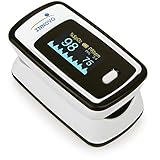
- Accurate and Reliable - The Innovo iP900AP Finger Pulse Oximeter is a premium model with an improved LED and sensor, allowing SpO2 and pulse rate measurement even at low blood perfusion. Consistently beat other pulse oximeters in clinical studies
- Plethymosgraph and Perfusion Index - Ensure accurate SpO2 and Pulse Rate readings. Eliminate doubts about reliability or reading issues.
- Upgraded Hardware and Software - Enhanced performance with internal upgrades. iP900AP model includes auditory alarm, pulse detection beeps, and adjustable display brightness.
- Sports Enthusiasts, Aviation or Home Use - Ideal for climbers, skiers, bikers, aviators, and on-the-go SpO2 and pulse rate tracking. Use pre or post-exercise. Remain still during measurement
- Ready to use out of the box - Include 2x AAA batteries and a lanyard for convenience.
Plan what happens if you must descend
Make a buddy decision before the trek
Agree that either member of a pair can call for a stop or descent without argument. A sick trekker may underestimate symptoms, while a companion who is focused on the itinerary may minimize them. Keep the person with symptoms accompanied, especially at night or on exposed terrain.
Identify medical posts and seasonal limits
Nepal Tourism Board says Himalayan Rescue Association aid posts at Pheriche and Manang are staffed by volunteer doctors during the two main trekking seasons, spring and autumn. It also describes Everest ER at Everest Base Camp. These services are seasonal; verify operating status for your dates rather than assuming a clinic will be open.
Keep an evacuation plan realistic
Ask your guide or operator how a descent is arranged from each section of the route, what communications are available and which delays are common in bad weather. A helicopter may be impossible in cloud, wind or darkness, so the plan must include assisted descent and time at a lower elevation.
Check travel insurance at policy level
Buying travel insurance is not proof that a rescue will be paid. Nepal Tourism Board health guidance recommends cover for medical treatment, and its trekking booklet advises cover for helicopter rescue. Policies differ substantially, so obtain written confirmation from the insurer for your exact trip.
- High-altitude trekking, including the maximum elevation you will reach
- Emergency medical treatment in Nepal
- Helicopter evacuation and other rescue costs
- Whether evacuation is covered for suspected altitude illness, not only an accident
- Trip dates, trekking season and any required licensed guide or operator
- Exclusions for pre-existing conditions, alcohol, unsupported routes or ignoring medical advice
- Advance-payment requirements and the insurer’s 24-hour assistance procedure
Save the policy wording, emergency number and claim instructions offline and give a copy to your travelling companion. Ask what evidence the insurer requires if a doctor recommends descent or evacuation. Never assume that a guide’s ability to call a helicopter means your policy will reimburse it.
Free tools Windows power users keep installed
One-click scans. No signup required.
Prepare for cold, dryness and ultraviolet exposure
Altitude planning comes first, but environmental stress can worsen fatigue and impair judgment. Build a clothing and shelter system that remains usable if weather changes, and protect exposed skin and eyes from stronger ultraviolet radiation. The available medical guidance does not establish a mandatory list of footwear, trekking poles, sleeping bags or clothing brands; select equipment with a qualified outfitter or experienced guide for the season and route.
Also popular on Amazon
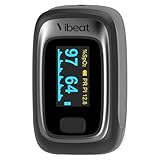
- Notification Function: You can set your own blood oxygen and pulse rate notification thresholds. If your measurement value is not within the preset threshold, the oximeter will beep and the reading will flash on the screen, better monitor your physical signs
- Spot Check Mode: After 30s of stable measurement, the pulse rhythm analysis result will be displayed on the screen, you can observe the current blood oxygen and pulse rate levels. Can be adjusted to continuous mode according to your needs
- Built-in Memory: A total of 12 sets of data can be stored in the record list and can be browsed directly on the device, time saving and efficient
- High Accuracy: Our Finger Oxygen Monitor features the research-grade photoplethysmograph technology that uses infrared light to sense body movement and gather the necessary information to determine high-precision signs, professional and reliable
- Instant to Start: The oximeter features a simple finger clip design that works after wearing without pressing a button. Measures blood oxygen saturation, pulse rate, perfusion index and pulse waveform in few seconds and display it on the OLED screen, convenient for your use
- Keep water accessible and drink regularly without forcing excessive volumes.
- Use sun protection appropriate for intense ultraviolet exposure, including eye protection and coverage for exposed skin.
- Keep essential medicines, documents and an extra warm layer protected from moisture.
- Test footwear and load-carrying comfort before departure rather than on the first trekking day.
- Carry only equipment you can manage while tired; an overloaded pack increases fall risk.
Optional monitoring: what a pulse oximeter can and cannot do
CDC says travellers may want to carry a pulse oximeter to gauge acclimatization progress. If you bring one, use it as a supplementary observation tool: measure under similar conditions, note symptoms and trends, and share the information with your guide or clinician. Readings vary with altitude, cold fingers, movement, device quality and circulation.
Do not set a personal “safe” number that overrides symptoms. AMS can occur with a reading that appears normal for the elevation, and a single low reading can be inaccurate. The decision to stop climbing or descend should be based on the person’s symptoms, recent ascent and clinical assessment, not on the device alone.
Fitness helps with the walk, not acclimatization
Conditioning is worthwhile because the trek requires repeated days of walking while carrying personal gear, often in cold and uneven terrain. Build aerobic endurance, leg strength, balance and the ability to walk on consecutive days. Practice with the footwear and pack you expect to use, and increase training load gradually to avoid an injury before departure.
CDC states that training and physical fitness do not reduce susceptibility to altitude illness. A very fit trekker can develop AMS, while a less athletic person may acclimatize normally. Fitness cannot compensate for rapid ascent, a high first sleeping altitude or a decision to continue while symptoms are worsening.
Use a practical departure checklist
One month or more before travel
- Book a travel-health appointment and review the complete Nepal itinerary.
- Discuss prior AMS, HAPE or HACE, chronic illnesses, prescriptions and possible acetazolamide use.
- Check vaccines and destination-specific advice for every region you will visit.
- Buy insurance only after confirming high-altitude trekking and evacuation terms in writing.
- Choose an itinerary that permits two to three nights around 2,450–2,750 m before going higher where feasible.
Before leaving home
- Write down each planned sleeping elevation and the rest days in the schedule.
- Confirm how the itinerary limits sleeping-altitude gain above 2,500–3,000 m.
- Save medical records, policy documents and emergency contacts offline.
- Test clothing, footwear, pack fit and any pulse oximeter.
- Tell your companion the symptoms that trigger an immediate stop or descent.
Every trekking day
- Assess headache, appetite, nausea, dizziness and unusual fatigue before climbing higher.
- Report symptoms early and keep the group together.
- Do not ascend with symptoms; descend promptly if they worsen or severe signs appear.
- Keep alcohol out of the recovery plan and maintain normal hydration and food intake.
- Recheck weather, communications and the day’s sleeping elevation before departure.
Common mistakes and safer alternatives
| Mistake | Why it is dangerous | Safer alternative |
|---|---|---|
| Choosing the shortest itinerary | It can force sleeping-altitude gains faster than recommended. | Add acclimatization nights and weather buffer days. |
| Assuming fitness prevents AMS | Fitness does not change altitude susceptibility. | Train for walking, then follow ascent limits independently. |
| Climbing with a mild headache or nausea | Early AMS can progress while you are farther from help. | Stop at the current elevation and tell your guide. |
| Waiting for a pulse-oximeter number | Readings can look acceptable in AMS and can be inaccurate. | Use symptoms and recent ascent as the primary decision information. |
| Assuming rescue is covered because insurance was purchased | Altitude, evacuation and pre-existing-condition exclusions are common. | Verify the policy wording and assistance process before departure. |
| Assuming a clinic is open year-round | Himalayan Rescue Association services described by Nepal Tourism Board are seasonal. | Confirm operating dates and maintain a descent plan. |
What a responsible go/no-go decision looks like
Go only when the itinerary allows conservative sleeping-altitude gains, the group has time to stop, and you have a credible medical and evacuation plan. Once trekking, a worsening symptom is a reason to descend, not a test of determination. The defining preparation is not a particular gadget or training benchmark; it is preserving the ability to pause, communicate and lose elevation before a manageable illness becomes an emergency.






Say something about this film