A successful community documentary event follows a deliberate sequence: define the purpose and audience, choose a film, secure the correct screening permission, reserve an accessible venue, test the authorized playback setup, promote the event, and prepare a facilitator with a practical discussion plan. Treat the screening and conversation as one event rather than as separate tasks. Rights, fees, formats, captioning, and fundraising rules vary by film, distributor, territory, and venue, so confirm the current terms with the selected film’s authorized rights holder.
1. Define what the event should accomplish
Start with the outcome, not the equipment. Write a short event brief that answers who the gathering is for, why this documentary is appropriate, and what participants should leave with. A library may want an informed conversation about a local issue; an educator may want reflection connected to a course; a nonprofit may want to introduce a community concern and identify constructive next steps; a film club may simply want a well-moderated exchange of perspectives.
Choose the audience
Describe the intended audience in practical terms: age range, familiarity with the issue, languages, mobility or sensory access needs, and whether people are likely to hold sharply different views. This affects the film choice, room layout, facilitator, publicity language, and whether you need a panel, guest speaker, or small-group format.
Choose the format
- Screening followed by a whole-room discussion: works for a small or medium audience when participants can hear one another easily.
- Screening, small groups, then plenary: gives more people a chance to speak when attendance is large or the subject is sensitive.
- Screening with a guest conversation: useful when a filmmaker, subject, local specialist, or community representative is available and their role is confirmed in advance.
- In-person or online: select the format that the audience can access and that the rights holder permits. A personal streaming subscription or a film available on a public website does not automatically authorize a group screening.
Write the event purpose in one sentence. For example: “Participants will watch the film, compare its perspectives with local experience, and identify resources for continued learning.” That sentence will guide your invitation, opening remarks, questions, and closing.
Quick wins for a faster PC:
Clear out junk files and repair common Windows errorsFree Scan →Fix the driver behind crashes, sound loss and screen glitchesFind Drivers →#1 Best Overall

- 【The Latest WIFI 6 Technology And Bluetooth 5.3】This projector with Wi-Fi and Bluetooth is equipped with the latest Wi-Fi 6 technology, compatible with Wi-Fi 6, 5G and 2.4G, offering faster connection speed and stronger stability, eliminating buffering and disconnection issues, and ensuring smoother online content playback. Additionally, it is fitted with the latest Bluetooth 5.3 chip, allowing for easy connection to Bluetooth speakers, headphones or other Bluetooth audio devices, providing a more efficient and stable transmission channel, and enabling users to enjoy higher audio quality with ease
- 【Built-in Streaming Media APP】Without any additional equipment,The YGSKK Wi-Fi projector supports streaming apps such as Prime Video, YouTube, and Hulu.The built-in applications allow you to easily enjoy a wide variety of movies, popular TV series and millions of other contents. Moreover, it also has an app store where you can download more applications. Whether it's a shared movie night or personal entertainment, this smart projector is very suitable
- 【Native 1080P High Definition,Compatible 4K】The native 1080P resolution presents you with clear and sharp full HD picture quality, with a brightness of up to 300 ANSI lumens, offering you images that are 50% brighter than those of similar projectors on the market. Whether you are watching movies, TV series, playing games or browsing photos, it will bring you astonishing clarity. Moreover, this movie projector is compatible with 4K, allowing you to enjoy the perfect experience of 4K picture quality. Note: Please ensure to connect 4K devices (such as TV sticks or USB drives) via HDMI to play 4K videos
- 【Wirelessly Connect to a Smart Phone, 50-200‘’ Large Screens】This is an amazing projector for iPhone. It is equipped with the "J-Share" setting, which enables wireless connection with smartphones. Both the phone and the projector need to be in the same network environment. Android phones need to download a program to connect, while iPhones do not need to download any applications (connect through the iPhone's screen mirroring function). In addition, this portable projector can project a large screen of 50 to 200 inches. You can adjust the screen size according to your personal preference to better enjoy the perfect experience of a large screen
- 【Strong Compatibility And Built-in Speakers】YGSKK projector for bedroom is equipped with three interfaces: HDMI, USB and audio (with an HDMI cable included). It is compatible with TV sticks, TV boxes, DVD players, laptops, USB flash drives, Switch/PS5, PC and other devices. The projector is built with high-fidelity stereo speakers, providing excellent and clear audio quality for an outstanding audio experience. It is also an excellent mini projector suitable for both indoor and outdoor activities
2. Select the documentary and obtain screening permission
Do not announce a public or group screening until you know which permission covers it. UK government guidance states: “You still need permission whether you sell tickets or not.” That is UK guidance, not a worldwide legal rule; laws and licensing arrangements differ by jurisdiction. Other permissions may also apply to a particular event, venue, music use, recording, or online delivery.
Ask the rights holder the questions that determine eligibility
Contact the film owner, authorized distributor, or screening-rights team and describe the event accurately. Include:
- Country, state or province, and city where the event will occur.
- Date, venue type, and whether the event is in person, online, or hybrid.
- Expected audience size and whether attendance is private, open to the public, or limited to a membership group.
- Whether admission is free, ticketed, pay-what-you-can, or connected to fundraising.
- How the film will be delivered and played, such as a supplied file, disc, or approved platform.
- Whether you need captions, described video, a language version, or permission to add interpretation.
- Whether you intend to record, livestream, photograph, or make clips available afterward.
Ask for the fee, license period, territory, permitted audience, technical specifications, delivery date, cancellation terms, and any reporting requirement in writing. A free event can still require a license, and a license for educational use may not cover a ticketed or fundraising screening.
Understand why film terms differ
The education page for Always in Season, for example, distinguishes an educational or institutional copy with public-performance rights from ticketed or fundraising screenings and directs organizers seeking the latter to ask about non-theatrical screening terms. That distinction illustrates why you should describe the actual event instead of relying on a generic “educational” label.
Recommended Free Tools
For National Film Board of Canada titles, the organization says films for group settings—private or public—must be booked through its team. It usually supplies a downloadable MP4 with public-performance rights, asks organizers to request a film at least three weeks before the screening, and states that paid screenings cannot be organized as fundraisers under its specified conditions. Confirm the current conditions directly with the organization because title availability and terms can change.
Keep a rights record
Save the confirmation email or license document with the exact title, edition, territory, dates, audience limits, payment status, permitted format, and accessibility deliverables. Give the venue operator and facilitator the same approved media and instructions. If the distributor changes the file or sends a replacement, keep the new version and retest it rather than assuming it is interchangeable.
Rank #2
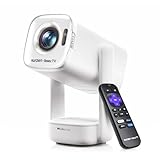
- A Roku account and internet connection are required for activation (Creating an account is free)
- Portable Roku TV Smart Projector: Meet the World's 1st Portable Roku TV Smart Projector with Roku TV built in. Just power on, connect to WiFi, and start streaming-no dongles, no switching inputs, no extra TV stick, and no extra remote needed. Enjoy top apps like Netflix, Prime Video, Hulu, YouTube, Roku Channel, and Apple TV. Enjoy 500+ TV channels with live news and weather, sports coverage, and more-totally free for bedroom viewing, living room movie nights, game day, soccer match nights, and backyard entertainment, home cinema, casual gaming, family gatherings, and party entertainment
- USB-C PD Power for Flexible Indoor and Outdoor Use: This portable projector supports 65W+ USB-C PD power input, so it can work with a compatible wall charger, laptop charger, power bank, or the Aurzen PowerBase Stand sold separately. Move it from the bedroom to the living room, use it as an outdoor projector for backyard movie nights, camping, and road trips, football match nights without being tied to one wall outlet. Note: Requires a 65W+ USB-C PD power source with 20V/3.25A output and a 5A E-Marker USB-C to USB-C cable
- Portable Gimbal Design, No Cable Interference: This small projector is built for real room-to-room use, with a smooth-damping gimbal stand that rotates fluidly and stays steady without sinking. Unlike side- or rear-powered projectors, D1R air uses a bottom power design that keeps cables out of the rotation path, reducing pulling, blocking, and setup hassle, so it's easier to place, adjust, and start watching in the bedroom, or project onto the ceiling or wall. Compact at 5.35 x 4.33 x 10.12 in and weighing only 1.18 kg (2.60 lb), it is easy to carry between rooms or take on the go.
- Independent Base Speakers, Dolby Audio & Useful Ports: Built-in dual 5W speakers are placed in the independent audio base instead of the projector body, creating a larger sound chamber for fuller sound, clearer dialogue, and reduced vibration. With Dolby Audio, dual-band WiFi (2.4G/5G), Bluetooth 5.2, and useful ports including HDMI, USB, Audio Out, and USB-C, this projector with WiFi and Bluetooth connects easily to laptops, game consoles, TV sticks, headphones, soundbars, and USB drives, making it a flexible projector for bedroom viewing, living room movies, sports streaming, and outdoor entertainment. Warm Tip: Fan noise at 1 m ranges from 29-35 dB by mode; steady fan sound is normal.
| Event detail | Why the rights team needs it |
|---|---|
| Free versus paid admission | Some permissions cover free community use but exclude ticket sales or fundraising. |
| Private group versus open public event | The audience definition can change the license category. |
| In-person, online, or hybrid delivery | Streaming and in-room playback may require different rights. |
| Territory and date | Licenses are often limited geographically and temporally. |
| Captions or described video | Accessible versions may be separate files or available only for selected titles. |
| Recording or livestreaming | Permission to show a film does not automatically permit recording or later distribution. |
3. Build a realistic schedule
Work backward from the event date and the selected documentary’s runtime. POV advises starting at least one month before the scheduled event. The National Film Board of Canada asks organizers to request a film at least three weeks before a screening. These are provider-specific recommendations, not universal legal deadlines; allow more time when rights, accessibility services, travel, or a guest panel are complex.
| Planning point | Work to complete |
|---|---|
| Four to eight weeks before | Define the purpose and audience; shortlist films; contact rights holders; set a provisional date and budget. |
| At least one month before | POV’s planning guidance recommends beginning by this point. Confirm the film, venue, facilitator, access plan, and publicity partners. |
| At least three weeks before | For a National Film Board of Canada booking, submit the film request by this point. Confirm delivery and any accessible files. |
| Two weeks before | Publish the invitation, open registration if needed, confirm guests, order or borrow equipment, and collect accommodation requests. |
| Several days before | Test the complete playback chain with the approved file, projector or display, speakers, microphone, cables, and room lighting. |
| Event day | Arrive early for access checks, setup, a brief staff meeting, audience welcome, screening, discussion, and cleanup. |
| Afterward | Thank partners, share promised resources, submit attendance information if required, and review feedback. |
Reserve enough time for setup, the complete film, conversation, and cleanup. One screening guide gives two to three hours as an example around a 70-minute film, but that example is tied to that film and event design. Calculate your own schedule from the documentary’s actual runtime and the number of discussion stages you plan to use.
4. Choose an accessible, discussion-friendly venue
Check the route into and through the building
- Confirm step-free access, door widths, lifts, accessible restrooms, and an unobstructed route from the entrance to seating.
- Ask about public transport, parking, drop-off arrangements, and lighting outside the building.
- Provide a clear contact for access questions and tell registrants how to request accommodations.
Check sightlines, sound, and room layout
Every seat should provide a clear view of the image and subtitles. Avoid pillars, low screens, glare, and severe side angles. Check that sound reaches the back and that dialogue remains intelligible at a comfortable volume. During discussion, participants should be able to see one another; a room arranged only for forward-facing viewing can make conversation harder.
Ask whether the room can be darkened for the film and relit promptly for discussion. Reserve space for mobility devices, interpreters, support people, a registration table, and any breakout groups. If the issue is contested or the audience includes groups with different perspectives, consider whether the venue feels neutral, welcoming, and safe to all of them.
Confirm accessible versions and services
The National Film Board of Canada says open or closed captions and described video are available for many titles. Confirm what the chosen documentary actually offers rather than assuming every film has both. Accessibility also includes the event itself: ask about sign-language interpretation, caption display, quiet spaces, seating, and accessible restrooms. Book interpreters or other providers early and include their position in the room plan so they remain visible without blocking the screen.
5. Prepare playback, sound, and backup equipment
Ask the venue what is installed and what its staff will operate. Confirm the display or projector, screen, playback computer, inputs, cables, speakers, microphone, power outlets, extension leads, adapters, lighting controls, and a person responsible for technical operation. The approved media format supplied by the rights holder takes priority over a convenient but unauthorized copy.
Rank #3

- Note: For the best viewing experience, we recommend a 5.2ft distance for a 80" screen. Please also upgrade to the latest firmware for optimal performance.
- Enhanced Clarity and Brightness: With 200 ANSI and an 2000:1 contrast ratio, this projector provides sufficient brightness for casual movie watching, kids' shows, or gaming. Additionally, the 5W SoundBase Speaker enhances both the visual and auditory experience, giving you rich sound and clear images without the need for external speakers.
- Versatile and Portable Design: This mini proyector offers flexibility with ceiling mounting, table placement, tripod installation, or 180-degree rotation. Weighing only 0.88lb, it easily adapts to any space or occasion.
- Built-in Multiple Apps: This projector with WiFi and Bluetooth offers seamless access to 1,000,000 videos with a single click, eliminating the need for an external TV stick. Dive into endless entertainment with one device, ideal for home theaters or outdoor movie nights, or portable use.
- Intuitive and Precise Control: Our projector comes with an advanced Air Mouse remote that combines a traditional remote and mouse into one, offering seamless navigation and precise pointer control. It supports voice commands for hands-free adjustments.
| Approach | Advantages | Checks before choosing it |
|---|---|---|
| Venue with installed equipment | Less equipment to transport and often faster setup. | Confirm brightness, screen size, audio coverage, input connections, operator support, and compatibility with the authorized file. |
| Portable projector and audio setup | Useful in a hall without suitable projection and gives you control over the placement. | Check room darkness, throw distance, screen or blank wall, brightness, ports, playback format, speaker output, power, and a stable table or mount. |
A community-hall setup may use a laptop connected to a projector and separate speakers. A portable projector is therefore an option, not a requirement. Powered speakers or a connection adapter may be useful only after the venue’s actual equipment and ports are known.
Run a complete test
- Use the exact authorized file and the exact playback device planned for the event.
- Connect the device to the display and speakers, then verify that the image fills the intended screen without cropping subtitles.
- Play several minutes from the beginning, a dialogue-heavy section, a quiet section, and the end credits.
- Check dialogue clarity from the back and sides of the room, not only beside the speakers.
- Test captions, described-video tracks, language selections, menus, and any password or activation requirement.
- Confirm that the laptop will not sleep, update, display notifications, or switch audio output during playback.
- Label and pack every cable, adapter, remote, charger, and backup copy permitted by the rights holder.
- Write a simple recovery plan: who can pause the film, switch inputs, restart playback, adjust sound, or contact the rights team.
Test several days beforehand, as recommended in community screening guidance, and repeat a short power-on check immediately before doors open. Do not substitute a personal streaming account, an unlicensed download, or a different edit because it is easier to play.
6. Promote the event and brief the team
Write a useful invitation
State the documentary title, a factual one- or two-sentence description, date, start and end times, venue, access information, registration method, admission terms, and the discussion format. Explain whether attendees should expect a guest, panel, interpreter, captions, small-group conversation, or resource table. Avoid revealing major narrative turns when a spoiler-free invitation is more welcoming.
Ask relevant community partners, libraries, schools, nonprofits, cultural groups, and issue-focused organizations to share the invitation with their own audiences. Use language that welcomes people who are curious, not only those who already agree with the film’s perspective.
Assign clear roles
- Event lead: owns the schedule, license record, budget, and decisions.
- Venue or access lead: checks entrances, seating, restrooms, interpretation, and accommodation requests.
- Technical operator: runs the tested playback and handles the recovery plan.
- Facilitator: welcomes participants, frames the conversation, manages time, and responds to difficult moments.
- Greeter or registration lead: directs arrivals, answers practical questions, and notices late access needs.
- Guest or panel liaison: confirms arrival, role, introductions, and departure arrangements.
POV recommends a facilitator familiar with the issues who can create a friendly environment for dialogue. The Film Hub Scotland and Take One Action guide includes tone, challenging moments, icebreakers, and energisers among its facilitation topics. Brief the whole team on the event purpose, access commitments, emergency procedures, and who makes each decision.
7. Prepare and lead the discussion
Preview the film as a facilitator
Watch the complete documentary before the event. Note its central claims, emotional intensity, contested evidence, potentially distressing scenes, major voices, and questions it leaves unresolved. Identify moments that may affect participants personally and decide how you will acknowledge that without telling people how they should feel.
Rank #4

- A Roku account and internet connection are required for activation (Creating an account is free). Note: Power Supply: 100-240V AC, 50/60Hz.
- America's #1 TV Streaming Platform, All Top Apps: With Roku as your entertainment guide, exploring popular apps like NetfIix, Prime Video, Hulu, YouTube, Roku Channel—plus free movies, shows, and live TV—is as easy as it is fun. No dongles or extra remotes. Enjoy 500+ TV channels with live news and weather, sports coverage, and more—totally free.
- A Simple and Fast Home Screen: Enjoy a simple projector interface with intuitive navigation, quick search, and personalized recommendations. No-nonsense remote keep it effortless, while the Roku mobile app lets you control with your phone, type easily, or use voice commands.
- 1080P Full HD Resolution: Enjoy your favorite movies and TV shows in stunning high-definition picture quality for enhanced clarity and detail. This projector is perfect for creating a massive 60 to 150-inch screen for your home theater and outdoor movie nights.
- Auto Focus & Keystone Zero-Fuss: Advanced auto focus and auto keystone correction instantly adjust for a sharp, aligned screen-just place, power on, and enjoy a big screen without manual setup.
Open with a clear frame
Welcome the audience, introduce the film and any guests, explain the timing, identify available access features, and describe how the conversation will work. Tell participants whether the event is being recorded; if it is not, say so. Set a few practical agreements: one person speaks at a time, use “I” statements, respond with curiosity, challenge ideas rather than people, and make room for quieter voices. “One person speaks at a time” is a specific recommendation in host-screening guidance.
Use open questions
Begin with an invitation that does not demand expertise. The Thriving Communities host guidance offers two literal starters: “How do you feel after watching?” and “What moment stood out to you, and why?” Adapt them to your audience and film, then move from observation to interpretation and possible action.
Do these 3 things before closing this tab:
1Repair Windows errors before they cause bigger problems2Scan for outdated or missing drivers - takes under a minute3Clear out junk files and repair common Windows errors- What claim or perspective in the film would you like to understand better?
- Whose perspective was most visible, and whose was less visible?
- Which image, interview, or piece of evidence changed or complicated your view?
- How does the issue connect with this community’s experience?
- What information would you want before reaching a conclusion?
- What would you like to learn, discuss, or do next?
Choose a small number of questions rather than trying to cover every theme. Follow the audience’s responses while protecting time for different kinds of participation.
Make participation equitable
For a large audience, invite two or three minutes of individual reflection, then move people into pairs or small groups before taking selected comments in plenary. This reduces the advantage of the fastest speakers. In a full-room discussion, pause after a response, invite someone who has not spoken, and accept written questions when appropriate. Do not require anyone to disclose personal experience to prove that they care about the topic.
Handle disagreement and difficult moments
Return to the agreed purpose and ask participants to explain what they mean. If someone makes a personal attack, interrupt calmly, name the behavior, and restate the expectation of respectful discussion. If a claim needs verification, distinguish what the film presented from what the group knows and avoid improvising a factual answer. If the conversation becomes unsafe or overwhelming, pause, offer a break, and use the venue’s safeguarding or incident procedure.
Close with reflection or a next step
Decide in advance whether the event will end with a short reflection, local resources, a voluntary action, a follow-up meeting, or a final round of one-sentence takeaways. A public discussion can itself be a meaningful first step for people who are new to an issue. Do not turn the close into a compulsory pledge or a sales pitch.
The Tool Desk
Outbyte Driver Updater FREEFix the driver behind crashes, sound loss and screen glitchesFind Drivers →Outbyte PC Repair FREEClear out junk files and repair common Windows errorsFree Scan →Best Value

- 【Your Plug-and-Play Smart Cinema】It starts with the powerful Allwinner H726 chip and pure Android 14 for wireless freedom and direct access to hulu, YouTube and more with no extra sticks. The 135'' giant screen that pulls you into the immersive viewing experience. This is the smart projector that does it all
- 【Big Screen & Tiny Space】Our 0.9:1 ultra-short throw mini projector is made for bedrooms and small living rooms. Sits close to the wall (0.75m-2.65m), throws a huge 35-135” image. Effortlessly resize (80%-100%) without moving it. For the best 80”+ view, we recommend 1.6m
- 【4K Supported & Native 720P for Casual Use】Sharp enough for streaming. Bright enough for a bedroom or a backyard hangout. Simple enough for anyone. This portable projector is an affordable option for creating a basic home cinema experience. HD 720P | 4K Support | Total Freedom
- 【Portable Design & Universal Mounting】In seconds, you can swivel its lens 180° to project onto any surface. This mini proyector offers flexibility with ceiling mounting, table placement, tripod installation. Weighing only 0.77lb, it easily adapts to any space or occasion
- 【Vivid Detail & Built-In Sound】With 200 ANSI lumens brightness and an 8000:1 contrast ratio, this hy300 projector delivers clear, watchable images for movies, kids' shows, and gaming. The integrated 5W SoundBase Speaker provides rich audio, completing your experience—no external speakers needed
8. Use a practical event-day run sheet
| Stage | Actions |
|---|---|
| Before doors open | Unlock the route, check restrooms and seating, position captions or interpretation, power the playback system, test sound and image, and brief staff. |
| Arrival | Greet participants, explain access features, handle registration, direct people to seating, and identify the facilitator and technical operator. |
| Welcome | State the purpose, introduce guests, explain timing and discussion agreements, and give any content or safety notice the film requires. |
| Screening | Start the authorized file, monitor sound and image, and keep the operator available without distracting from the film. |
| Transition | Restore discussion lighting, offer a short break if needed, and remind participants of the conversation format. |
| Discussion | Use the prepared opening question, balance participation, manage time, and record only information that attendees have agreed may be collected. |
| Close | Share resources or next steps, thank guests and partners, explain feedback options, and give practical departure information. |
| After the audience leaves | Secure or delete media according to the license, pack equipment, restore the room, record attendance, and note incidents or improvements while they are fresh. |
9. Follow up responsibly
Send a concise thank-you to attendees, partners, guests, interpreters, venue staff, and volunteers. Share the resources promised during the closing only when you have permission to distribute them. If the rights holder requests attendance or evaluation information, follow its stated process. The National Film Board of Canada says it asks organizers for attendance numbers after screenings, while POV recommends audience evaluations to assess impact.
Review feedback against the original purpose: Did the intended audience attend? Could everyone see, hear, and participate? Did the format support the kind of conversation you wanted? Which question generated useful reflection? Record practical changes for the next event without retaining personal information you do not need.
10. Troubleshoot common failure points
The venue has no suitable picture
First check whether another room, installed display, or compatible screen is available. If you bring a portable projector, verify brightness, throw distance, screen size, power, ports, and room darkness before committing. A projector that looks adequate in a small test room may be unreadable in a larger, brighter hall.
Sound is too quiet or unintelligible
Check the selected audio output, cable, mixer channel, speaker placement, and volume limits. Walk to the back and side seats while dialogue plays. If the room remains unclear, reduce competing noise, reposition speakers, or use compatible powered speakers rather than simply increasing volume until it distorts.
Free tools Windows power users keep installed
One-click scans. No signup required.
Captions or described video are missing
Confirm that the chosen title offers the feature and that you received the correct file or track. Test the accessibility option before doors open. If the rights holder cannot provide it, do not promise it in publicity; discuss alternatives with the audience and rights team.
A guest cancels
Keep the event’s core purpose independent of any guest. The facilitator can use the prepared prompts, invite participant reflection, or move to small groups. Update the audience honestly and avoid presenting an unconfirmed replacement as part of the program.
Discussion is dominated by a few voices
Switch to pairs or small groups, collect written questions, impose a brief speaking limit, and explicitly invite people who have not yet spoken. Reconnect every intervention to the agreed topic and do not reward interruptions with extra time.
The license does not cover the planned event
Pause promotion and contact the rights holder with the corrected details. Do not rely on a personal copy, a public upload, or a free-admission exception. Reschedule, change the format, or choose another title only after the permission is confirmed in writing.
PC Slower Than It Used to Be?
A free scan shows the junk files, broken settings and background clutter dragging Windows down - then fixes them in one click.Free scan · Windows 10 & 11Crashes, No Sound, or Screen Glitches?
Random freezes, missing sound and display glitches usually trace back to one bad driver. Find and replace yours safely.Free scan · under a minuteQuick Recap
Final planning checklist
- Purpose, audience, format, and desired outcome are written down.
- The selected film’s owner or authorized distributor has confirmed the license for the territory, audience, date, admission model, and playback method.
- Fees, delivery, accessible versions, recording restrictions, and reporting requirements are documented.
- The venue has accessible routes and restrooms, suitable seating, clear sightlines, reliable sound, and a discussion layout.
- The complete authorized playback chain has been tested several days before the event.
- Publicity states the film, time, venue, access details, registration method, and discussion format accurately.
- Facilitator, technical operator, access lead, greeter, and guest liaison know their roles.
- Opening agreements, discussion prompts, difficult-moment procedures, and closing resources are prepared.
- Attendance, feedback, media handling, and follow-up responsibilities are assigned.
Product prices and availability are accurate as of the date/time indicated and are subject to change. Any price and availability information displayed on Amazon at the time of purchase will apply.






Say something about this film