PC Slower Than It Used to Be?
A free scan shows the junk files, broken settings and background clutter dragging Windows down - then fixes them in one click.Free scan · Windows 10 & 11Crashes, No Sound, or Screen Glitches?
Random freezes, missing sound and display glitches usually trace back to one bad driver. Find and replace yours safely.Free scan · under a minuteAn accessible community screening starts with the film file, not the headphones. Confirm in writing that the exact copy you will show contains synchronized SDH/descriptive subtitles and an audio-description (AD) track, then test those assets on the venue’s actual playback system. Open captions put text on the main screen for everyone; closed captions send text to individual displays; AD provides spoken narration of essential visual information through personal listening devices. Accessibility also depends on trained staff, a usable route through the venue, clear advance information and a post-event check of what failed or worked.
The runbook below covers the technical, operational and communication steps for a reliable screening, with U.S. legal references identified where they apply. Local law, venue status and the film’s distribution agreement may impose additional duties.
Start by securing the right film assets
A projector, headset or caption display cannot create accessibility content that is absent from the movie. Ask the distributor, rights holder or booking platform about the exact digital file, DCP or other package you will receive. Get the answer in writing and keep it with the event record.
Confirm descriptive subtitles or SDH captions
Look for captions that include more than spoken dialogue. A useful SDH (subtitles for deaf and hard-of-hearing viewers) track identifies speakers when that is not obvious and labels relevant music, sound effects and other non-speech information. Ask whether the captions are timed to the precise edit, language version and runtime you will screen; a different cut can make otherwise correct captions drift out of sync.
#1 Best Overall

- Bass Sound: Enjoy clear sound and superior comfort with the OneOdio Studio Monitor Headphones. Equipped with large 50mm speaker drivers and neodymium magnets, pro-10 deliver powerful bass, clear vocals, and crisp highs for a balanced stereo sound.
- Built for Comfort: The soft, padded ear cushions are designed to provide long-lasting comfort and effective noise isolation. The adjustable, stretchable headband allows you to easily find the perfect fit and angle for your listening pleasure.
- Single-side Monitoring: The 90° swiveling ear cups allow for single-ear monitoring, making it ideal for DJing or mixing. The self-adjusting and flexible headband ensures a fatigue-free listening experience, even during extended sessions, making these headphones perfect for mastering and mixing.
- Compatibility: Pro-10 wired headphones work exclusively in wired mode and are compatible with a wide range of devices, including smartphones, laptops, tablets, desktop computers, audio interfaces, DJ mixers, amplifiers, and any device that features either a 3.5mm or 6.35mm audio jack.
- Share Audio Port: With a shared audio port, easily connect another pair to share music or videos—no splitters or special cables needed.
Confirm an audio-description track
AD is a separate spoken narration of key visual information: locations, actions, characters, facial expressions, costumes, scene changes and necessary on-screen text. It is mixed or supplied as an alternate audio feed that runs in sync with the movie. A headset by itself is only a delivery device; it does not contain the narration.
Check technical compatibility before booking the room
Ask which file, audio channels and subtitle formats are supplied, and whether they work with the venue’s projector, cinema server, media player and sound processor. Confirm how the operator selects the AD channel and how closed-caption data reaches personal displays. If the supplier offers several packages, record the filename, version, checksum or other identifier used by the venue so staff do not load an uncaptioned or non-AD copy by mistake.
Independent Cinema Office guidance advises exhibitors to check whether a copy states that SDH or closed captions are included and points to descriptive-subtitle and AD resources. U.S. Department of Justice (DOJ) rules address movies distributed with these features; they do not require a theater to invent captions or AD for a film that was never produced or distributed with them.
Choose how captions will reach the audience
Decide between open and closed captions in consultation with the people who will attend. Tell audiences the choice in the listing rather than assuming that “accessible” explains it.
Do these 3 things before closing this tab:
1Scan for outdated or missing drivers - takes under a minute2Clear out junk files and repair common Windows errors3Fix the driver behind crashes, sound loss and screen glitchesRank #2

- 【Wired Headphones with Mic】The wired headphones with a built-in mic for clear, hands-free calls, online learning and music listening. Positioned on the cable for clear, high-quality sound, even in noisy environments. Perfect for busy professionals or students who need reliable sound during calls and video meeting. ⚠️Note: MFB Button is only available on phones and tablets. Mic not supported on desktops and certain laptops(Volume control and mute button are not suitable for this item.)
- 【PLEASE NOTE】(1)Volume can only be adjusted on a connected device instead of the headphones. (2)Please make sure your device has a 3.5mm connector, this 3.5mm headphones can't be plugged into USB port and Lightning port. (3)Some devices/conversion adapter don't support the mic, the mic will not work, please check before use.
- 【Wide Compatibility & Superior Sound】Featuring a 3.5mm jack, our plug in headphones are compatible with most devices (for 3.5mm only), including smartphones, tablets, laptops, kindle, MP3/MP4 player, and more. Over-ear design enhances sound quality, providing deep bass and clear sound for an immersive listening experience.
- 【Comfortable & Adjustable Fit】Designed for long listening sessions, over ear headphones wired feature an adjustable headband and 90° rotating ear cups that provide a snug, personalized fit for various head sizes, making wire headphones suitable for adults and kids. Soft memory protein ear cushions and pads ensure comfort throughout the day and can hang around your neck when not in use
- 【Durable Nylon Cable】With a 4.9ft high-quality nylon braided cord, these corded headphones prevent tangling, offering smooth, hassle-free movement. Our headphones feature a 120° curved plug design resistant construction ensures longevity while providing comfort and flexibility
| Approach | What viewers see | Equipment and staffing | Best fit and trade-offs |
|---|---|---|---|
| Open captions | Captions are permanently visible on the main image for everyone. | The screen, projector and playback chain must render the caption track correctly; no individual caption receivers are required. | Practical for a community audience when everyone has advance notice. It preserves no caption-free option during that showing, and poor framing or contrast affects every viewer. |
| Closed captions | Each patron views captions on a personal display positioned at the seat. | Caption receivers or displays must be charged, clean, checked out promptly and supported by a trained person. | Preserves a caption-free picture for people who do not need captions and gives users personal control. It adds loan-device, sightline and troubleshooting work. |
| Audio description | A listener hears a synchronized spoken description of visual elements through a personal headset or another seat-based device. | An AD-enabled file or channel, compatible transmitter or playback output, headsets, spares, charging or batteries, cleaning and staff support. | Supports blind and partially sighted viewers without changing the picture. The narration must be present, correctly routed and synchronized; a headset alone is not sufficient. |
ADA regulations permit alternative technology when it provides communication as effective as that available to other patrons. In practice, do not substitute a different method without checking that it delivers the same usable information for the people who requested access.
Plan the room and the complete visitor journey
Accessibility starts before the opening credits and continues until people leave. Walk the route as a first-time visitor and note where assistance, lighting or a clear explanation is needed.
Booking and arrival
- Make the access information available on the ticket page, event listing, print flyer, social posts and reminder email.
- Give a phone number, email address or other monitored contact for access questions. State when someone will answer it.
- Describe the accessible entrance, step-free route, toilets, seating options and where devices are collected.
- Explain whether reservations for caption or AD equipment are useful, while still offering devices to people who ask on the day when supplies permit.
- Ask the venue about guide-dog access and communicate the policy accurately; do not require a patron to separate from a working dog.
Seating, lighting and sound
Offer seats with a clear view of the screen and, for AD listeners, a comfortable place to use a headset. Keep an unobstructed route to those seats. Check that a caption display does not block the image and that its brightness can be adjusted. Test the room with the house lights at the level used for the show: enough light for safe movement, but not so much that it washes out open captions or the picture.
Confirm the venue’s hearing loop or other assistive-listening system, and tell patrons how to request it. Control competing noise at the device pickup desk and during announcements. Provide a quiet way to ask for help so a person does not have to explain a disability in front of a crowd.
The Tool Desk
Outbyte Driver Updater FREEScan for outdated or missing drivers - takes under a minuteDriver Scan →Outbyte PC Repair FREEClear out junk files and repair common Windows errorsFree Scan →Rank #3

- Neodymium magnets and 40 millimeter drivers for powerful, detailed sound.Specific uses for product : Professional audio system,Home audio system
- Closed ear design provides comfort and outstanding reduction of external noises
- 9.8 foot cord ends in gold plated plug and it is not detachable; 1/4 inch adapter included
- Folds up for storage or travel in provided soft case
- Frequency Response: 10 Hertz to 20 kilohertz
Consult people with lived experience
Invite local Deaf, hard-of-hearing, blind and partially sighted people to review the plan, publicity language and room walk-through. Their feedback can reveal problems that a technical test misses, such as a display that is hard to position, a queue that blocks a route or an announcement that is not visible.
Build an equipment and staffing plan
Make one person responsible for the accessible feature whenever it is running. That person may be a projectionist, access coordinator or trained volunteer, but they must know where equipment is stored, how to activate it and what to do when a patron reports a fault.
| Item | What to verify before doors open |
|---|---|
| Captioned media | Correct file and language; SDH/descriptive-subtitle track present; timing and speaker or sound labels readable. |
| AD media or channel | Track is present, routed to the intended output and synchronized; narration is intelligible over the film soundtrack. |
| Closed-caption displays | Every unit powers on, receives the caption signal, holds a charge, has readable text and can be positioned at a seat without blocking the image. |
| AD headsets and receivers | Every unit is clean, charged or fitted with fresh batteries, paired or tuned to the correct channel and supplied with spare units and compatible cables or earpieces. |
| Hearing loop or assistive listening | System is enabled in the correct seating area and a staff member can explain its use. |
| Spare playback path | If feasible, a tested backup player, cable, storage copy or alternate output is ready without risking the licensed master. |
| Cleaning and records | Use a process suitable for shared earpieces and displays; record which devices and media version were used. |
Use the U.S. device figures as a planning reference
For covered U.S. movie theaters, the DOJ regulation’s table begins at four captioning devices for one digital auditorium. It specifies audio-description devices at a rate of at least one per two digital auditoriums and never fewer than two per theater. A small community venue should treat those figures as a legal planning reference, not a universal rule: confirm whether the venue is covered, which edition of the regulation applies and what local requirements add.
Train the front-of-house team
Brief every volunteer on respectful language, device checkout, seating, guide-dog etiquette, the accessible route and the escalation path. Rehearse a simple explanation: what the device does, how to adjust volume or brightness, where to return it and whom to tell if it stops working. Staff should offer help without touching a person or mobility aid without permission.
Recommended Free Tools
Rank #4

- Studio-Grade Sound – 40mm drivers deliver deep bass, clear mids, and crisp highs for DJing, studio recording, mixing, and monitoring.
- Single-sided Monitoring – The 90° swiveling ear cups allow for single-ear monitoring, making it ideal for DJing or mixing.
- All-Day Comfort – Ultra-soft padded ear muffs and an adjustable headband ensure fatigue-free wear, while the foldable design enhances portability.
- Universal Compatibility – Comes with a 2.2m (7.2ft) audio cable, connecting seamlessly to mixers, amps, PCs, guitars, keyboards, and laptops.
- Built for Pros & Home Use – Durable construction for studio, stage, or home office use—ideal for DJs, musicians, producers, and audiophiles.
Run a full technical rehearsal
A short file check is not enough. Rehearse on the same projector, server or player, audio processor, transmitter and room layout that the audience will use.
- Load and identify the media. Match the recorded filename or identifier to the booking confirmation. Verify the intended subtitle and AD tracks are selectable.
- Play the opening. Check that captions appear when expected, the first AD narration is present and the picture is framed without cropping text.
- Play a dialogue-heavy scene. Confirm speaker labels, punctuation, reading speed and timing. Check that captions do not disappear during rapid exchanges.
- Play a music-heavy or effects-heavy scene. Look for useful labels such as music or significant sound effects, and make sure AD remains intelligible without masking important dialogue.
- Play the end credits. Verify that captions and AD do not stop unexpectedly if the event promises access through the full film.
- Test every loan device. Walk to representative seats, select the correct channel, adjust volume or display position and listen or read for several minutes. Mark failed units out of service.
- Stress the connection. Check radio or Bluetooth stability, dead spots, interference and the effect of doors opening or people moving through the room.
- Test the human handoff. Have a volunteer collect a device, explain it, seat a user and receive it back using the planned cleaning and charging process.
Keep a spare path where feasible, but do not introduce an untested player or cable during the show. The purpose of the rehearsal is to expose failures while there is still time to correct the file, route, settings or staffing.
Advertise the exact access features
Use the feature names people search for and understand. Put the same wording in every channel:
- “Open captions” when text is visible to everyone on the main screen.
- “SDH/descriptive subtitles” when the supplied subtitle track includes dialogue plus relevant speaker and sound information.
- “Audio description via headset” when an AD track is supplied through individual listening equipment.
State whether devices are supplied, where to collect them, whether advance requests or reservations are useful, and whom to contact. For U.S. covered movie theaters, DOJ rules require notices of captioned and audio-described showings in box-office, website, app, newspaper and telephone information when those features are provided. Community-cinema guidance likewise recommends giving access information before attendance, not only at the door.
What’s actually slowing this PC down?
Pick the symptom - the matching free tool is one click away.
Best Value
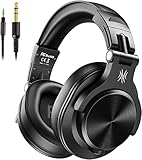
- Hi-Res Sound Quality: Equipped with 40mm drivers, these wired over-ear headphones deliver exceptional sound clarity and depth, making them perfect for studio monitoring, mixing, and DJing. The high-resolution audio ensures every detail and nuance in your music is captured and reproduced with precision.
- Built to Stay Comfortable: The soft padded ear cushions are specifically designed for monitor headphones comfort and noise isolation. The headband is adjustable and stretchable for you to find the desired angle you like to fit in.
- No More Adapter: A long-style 6.6-9.8 ft coiled cord and standard-sized 6.35mm plug and a 3.5mm plug are included. These headphones can be easily connected to a variety of devices including AMPs, computers, keyboards, guitars, and laptops.
- Single-sided Monitoring: 90° swiveling earcups for single-ear monitoring anytime, keep one ear free for conversations with single-sided monitoring.
- Share Audio Port: With a shared audio port, easily connect another pair to share music or videos—no splitters or special cables needed.
Do not promise a feature merely because the venue owns compatible hardware. Publish it only after the exact film copy and the complete signal path have passed rehearsal.
Independent reader supportYour contribution helps us test, update, and keep practical guides available for everyone.Operate the screening without making patrons troubleshoot alone
At the door
- Place a clearly marked, uncluttered access desk near the route to the auditorium.
- Greet people privately and ask what support they want; never assume that a visible disability tells you which feature a person needs.
- Check out the requested caption display or AD headset, explain the controls and offer a test signal before the film starts.
- Record the device number or another short identifier so a replacement can be issued quickly, while protecting personal information.
During the film
- Keep the named access person available rather than assigning them another task.
- Respond to a report of missing captions, silence or interference promptly and discreetly.
- Offer a replacement device or a move to a tested seat; do not ask the patron to prove the problem in public.
- Do not pause or restart the film unless the venue’s incident plan and the audience’s needs make that the least harmful option.
After the credits
Collect equipment without rushing people who need more time. Clean shared contact surfaces, recharge or replace batteries, and note missing or damaged items before the next booking.
Troubleshoot common failures
| Symptom | Likely checks | Immediate response |
|---|---|---|
| No captions on the main screen | Wrong file or subtitle selection; open-caption rendering disabled; projector framing or server setting changed. | Verify the media identifier and track, then use the rehearsed backup path. If the supplied copy lacks captions, do not claim that hardware can create them. |
| Closed-caption display is blank | Unit is off, out of charge, on the wrong channel or outside transmitter range. | Swap in a tested unit, move to a known-good seat and check the signal at the desk. |
| AD headset is silent | Receiver volume is down, wrong channel selected, plug or earpiece faulty, transmitter muted or AD output not routed. | Try a spare headset and receiver, confirm the channel and output, and move the patron to a tested coverage area. |
| AD is out of sync | Wrong edit or audio track loaded; playback speed or track selection changed. | Stop using that asset if the error persists, switch to the verified copy or backup, and record the incident for the distributor and venue. |
| Captions are hard to read | Low contrast, cropped framing, excessive ambient light, display position or reading speed. | Adjust the display or room conditions where possible; for open captions, correct framing and lighting before continuing. |
| Intermittent audio or caption signal | Radio/Bluetooth interference, depleted battery, blocked transmitter or a loose connection. | Replace the battery or unit, test another seat and use the spare path if the fault affects many patrons. |
Understand the legal baseline without overpromising
The DOJ Title III regulation defines audio description as “the spoken narration of a movie’s key visual elements, such as the action, settings, facial expressions, costumes, and scene changes.” It defines closed movie captions as including dialogue and non-speech information such as music, speaker identity and sound effects. These definitions explain what a feature is; they do not make every film available in every format.
The rule’s operational expectations are as important as the device count: equipment must be maintained, available in a timely way and easy to use, and staff must be able to locate, activate and troubleshoot it. Apply the requirements that cover your venue and jurisdiction, and obtain legal advice when the screening is part of a larger public accommodation or funded program. Do not present a U.S. rule as a worldwide standard.
For historical context only, the DOJ estimated in 2015 that approximately 70 percent of U.S. movie-theater auditoriums were equipped to provide closed captioning and audio description as of mid-2015, with significant variation by location and ownership. That estimate is not a current availability rate and should not be used to predict whether a particular film or venue is accessible.
Review the event and improve the next one
Within a day or two, ask attendees and staff focused questions rather than a general “Was it accessible?” Record the media identifier, projector or player, audio channels, transmitter, devices and seating area used.
- Were the published captions or SDH labels accurate for the copy shown?
- Could people read captions comfortably from their seats?
- Was AD synchronized, audible and understandable without overwhelming dialogue?
- Were devices ready, clean, charged and easy to collect and return?
- Could a person find the accessible entrance, toilet and seating without unnecessary assistance?
- Did staff respond respectfully and quickly when something failed?
Keep a short incident log: time, symptom, device or channel, action taken and outcome. Update the checklist, staff briefing and publicity wording before the next screening. The Independent Cinema Office toolkit specifically combines technical AD practice, staff training, marketing and feedback from visually impaired cinema-goers; treating those as one process is more reliable than buying equipment in isolation.
Quick Recap
Product prices and availability are accurate as of the date/time indicated and are subject to change. Any price and availability information displayed on Amazon at the time of purchase will apply.
Free tools Windows power users keep installed
One-click scans. No signup required.






Say something about this film