Quick wins for a faster PC:
Repair Windows errors before they cause bigger problemsFix Now →Scan for outdated or missing drivers - takes under a minuteDriver Scan →Some links on this page are affiliate links: if you buy through them we may earn a commission, at no extra cost to you.
The dependable way to street-drive a classic hot rod is to inspect and correct the entire vehicle before adding performance parts. Tires, wheels, brakes, steering, suspension, fuel, exhaust, cooling, fluids, battery, charging and lighting must work together; a newly installed engine or a recent build does not prove that every older component or modification is safe.
Because “classic hot rod” can mean anything from a mostly original car to a heavily modified chassis, there is no universal reliability kit. Use the vehicle’s actual specifications, document its configuration, repair safety-critical faults first, and have a qualified mechanic familiar with modified classics resolve anything you cannot verify. The process below is an inspection-led route to safer, more predictable street use, not a generic parts list.
What street reliability actually requires
Street reliability is more than starting every time. The car must stop straight, steer without looseness or wandering, keep its tires in contact with the road, control engine temperature, contain fuel and exhaust safely, maintain electrical power, and display the lights other road users rely on. A failure in any one of those systems can turn a short trip into a crash or a roadside fire.
Federal guidance is useful for establishing what to inspect, but it does not replace the service information for a particular chassis, engine, brake system or component. The National Highway Traffic Safety Administration’s Summer Driving & Road Trip Tips covers tires, cooling, fluids, battery and lights. OSHA’s Vehicle Safety Aspects discussion identifies brakes, steering, fuel and exhaust systems and emergency equipment as maintenance concerns. Apply those priorities to the hardware actually fitted to your hot rod.
Popular on Amazon

- Accurate, Dependable Readings: Factory‑calibrated to ±1 PSI, so you can confidently match your vehicle’s recommended PSI (check the door jamb sticker). Ideal for monthly checks and road trips — consistent results every time, cold or warm.
- Bright Backlit Display & Nozzle Light: The illuminated nozzle helps you find the valve stem in the dark, while the backlit LCD makes readings crystal clear in dim garages or at night. No more squinting or holding a flashlight.
- 4 Measurement Units, One Button: Quickly switch among PSI, Bar, Kgf/cm², and KPA with a single press. No complex settings — just press and cycle to your preferred unit. Perfect for drivers who need multiple scales.
- Broad Compatibility for Everyday Vehicles: 0–150 PSI covers cars, SUVs, motorcycles, and spare tires (often 60 PSI). Fits standard Schrader valves; just press on for a reading.
- Auto‑Off to Extend Battery Life: The gauge automatically powers down after 30 seconds of inactivity, so the included batteries last longer. Always ready for your monthly checks without surprise dead batteries.
Start with a complete baseline inspection
Inspect the car while it is safely supported, with the engine cool where heat or pressure could injure you. Record what is installed before changing anything: chassis and body type, engine and fuel system, transmission, brake configuration, steering and suspension parts, wheel and tire sizes, electrical modifications and any symptoms. Photograph routing, adjustment positions and wiring so an incorrect repair can be traced later.
| Area | What to verify | Do not drive until |
|---|---|---|
| Tires and wheels | Correct size and load suitability, cold pressure, date code, damage, irregular wear, wheel security, balance and alignment | A tire or wheel is damaged, aged, loose, rubbing or unsuitable for the car |
| Brakes | Fluid condition and level, leaks, hose and line condition, pad or shoe condition, hardware, pedal operation and compatibility of all installed components | There is a leak, uncertain component compatibility, an unsafe pedal or uneven stopping |
| Steering and suspension | Looseness, worn joints, damaged springs or mounts, alignment, ride height and interference through the full range of movement | The car pulls, wanders, shimmies, has abnormal play or a tire contacts a component |
| Fuel and exhaust | Odor, leaks, hose and line routing, support, heat protection, exhaust leaks and clearance from occupants and ignition sources | Fuel is leaking or exhaust gases can enter the cabin |
| Cooling and fluids | Coolant level and condition when safe, leaks, hoses, belt or drive condition, and applicable brake, transmission/clutch and hydraulic power-steering fluids | Coolant is escaping, the system repeatedly overheats or a hot pressurized system must be opened |
| Electrical and lighting | Battery restraint, charging, grounds, protected wiring, circuit protection, headlights, brake lights, turn signals and hazard lights | A connection heats, wiring is unprotected, charging is abnormal or required lights fail |
Check tires, wheels and alignment before chasing other faults
Tires are the only parts touching the road, and collector cars that spend long periods parked can age tires even when tread looks good. NHTSA’s TireWise page states: “Check the pressure of all tires, including your spare, at least once a month when the tires are "cold," meaning that the car hasn’t been driven for at least three hours.” Use the pressure on the vehicle placard or in its manual; the maximum pressure molded on the tire is not the vehicle’s recommended setting. Keep a reliable pressure gauge in the car.
Record age, fit and condition
Write down each tire’s size, construction, load rating and date code. Look for cuts, bulges, cracks, exposed cords, impact damage and irregular wear. Ask a qualified tire professional to assess nonstandard wheel and tire combinations, including whether the load capacity, rim width, offset and clearances suit the chassis. A tire that clears the fender while parked can contact suspension or bodywork when steering or compressing the suspension.
What’s actually slowing this PC down?
Pick the symptom - the matching free tool is one click away.
Balance and alignment affect vibration, tracking and tire wear. A steering wheel that shakes, a car that drifts or a tread that wears on one edge is a fault to diagnose, not a reason to mask the symptom with a random pressure or ride-height change. NHTSA says proper inflation can extend average tire life by 4,700 miles; that is a broad consumer estimate from the agency, not a promise for a particular hot rod or tire. The same page reports 511 total U.S. motor-vehicle traffic fatalities in tire-related crashes in 2024. That national figure provides context, not a hot-rod-specific risk calculation.
Also popular on Amazon
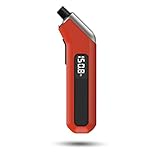
- PROCESS LEVEL ACCURACY: Each ETENWOLF’s digital tire pressure gauge is calibrated manually to ANSI B40.7 Grade 2A(plus-minus 1 PSI).Presta valve adapter not included, if used for bicycles, it must be purchased separately
- ACCURACY IN EXTREME PRESSURE RANGE: Whether tire pressure is below 12 PSI or above 140 PSI, ETENWOLF’s digital tire gauge is accurate as well
- ACCURACY IN EXTREME WEATHER: Built-in AI chip with thermal compensation inside, ETENWOLF’s tire gauge works normally even in extreme cold or hot weather(-4°F-130°F/-20°C-54°C)
- PRESSURE RANGE 3-200 PSI : ETENWOLF’s digital tire pressure gauge can measure pressure of all types of vehicles
- REPLACEABLE AAA BATTERIES: Batteries are easy to replace and helps to extend the tire pressure gauge’s life span, with LED light to illuminate dark areas for easy tire pressure reading
Make the brake system a vehicle-specific project
Inspect the complete hydraulic or mechanical system, not just the visible friction material. Check for fluid leaks at the master cylinder, lines, hoses, fittings and wheel ends; inspect discs, drums, pads, shoes, springs and adjusters; verify that the pedal is firm and returns correctly; and confirm that the parking brake works. Look for fluid on friction surfaces and for hoses that swell, crack or rub.
Do not choose a fluid type, bleeding sequence, conversion or parts kit from a generic recipe. SAE’s J1707 brake-fluid maintenance practice describes general handling and maintenance and says vehicle-specific step-by-step service is outside its scope. Its central instruction is: “Vehicle manufacturer’s recommendations should always be followed.” For a modified car, use the instructions for the actual master cylinder, calipers, wheel cylinders, lines and fluid specification, and have a specialist verify that the components are compatible.
Diagnose steering and suspension symptoms instead of hiding them
With the car safely supported, check steering linkage, column joints, bearings, ball joints, tie-rod ends, bushings, springs, shocks, mounts and fasteners for looseness, damage or binding. Inspect for bent parts and for contact between tires, steering components, exhaust and the chassis. Confirm that alignment is appropriate for the actual ride height and wheel-and-tire package.
Pulling, wandering, shimmy, clunks and abnormal tire wear each warrant a cause-and-effect diagnosis. An arbitrary toe adjustment or stiffer spring can make a symptom less obvious while leaving a worn joint or incompatible geometry in place. SAE’s J2492 considerations for suspension modification treats ride-height changes and wheel/tire changes as distinct subjects and warns that wheel and tire modifications can have potentially serious side effects. Evaluate every change as part of the complete steering, suspension, brake and tire system.
Also popular on Amazon

- PRO ACCURACY - mechanic recommended, performance tested, & calibrated accurate to professional ANSI 2A standards - with dual pressure sensors certified to ±0.50% FS (0.50 PSI), offering reliable readings up to 100 PSI w/ precise readout resolution of 0.10 PSI - so you can now maintain your tires with a shop-grade mechanic trusted tool
- STRONG & RUGGED - feels solid in the hand & built to last from 100% solid brass & steel parts shielded by our shock-resistant gear-style protective guard to protect against drops & impact. Features ultra soft & strong 10" fully rotational, leak-proof HybridFlex air hose w/ 360 swivel angled air chuck that can be swapped out w/ any 1/4" NPT chuck
- ADVANCED ENGINEERING - all readings lock-on to the display until the "ON" button is pressed once to reset to zero. Features built-in air bleeder valve that bleeds pressure in real time without needing to reset the display - ideal for cars, trucks, motorcycles, bikes, RV & trailers, spare tires, and much more
- SMART DISPLAY - features high-resolution digital 2.5 inch LCD display screen w/ battery life indicator & bright LED backlight for high visibility in the dark. Gauge is programmed to auto shut-off after 150 seconds of inactivity to save battery (2x AAA batteries included)
- 100% Lifetime Warranty by JACO - serving the automotive industry for 35+ years. Enjoy longer-lasting tires, improved fuel economy, and superior vehicle performance & handling with properly inflated tires.
Remove fuel, exhaust and fire hazards
Sniff for fuel before starting the engine and inspect the tank, filler, pump, filters, lines, connections and carburetor or injection hardware for wetness, staining or damaged hose. Check that lines are supported, protected from abrasion and routed away from heat and moving parts. Any unexplained fuel odor or leak is a stop-use condition.
Inspect headers, pipes, mufflers, joints, hangers and heat shields for cracks, loose fasteners, poor clearance and leaks. Exhaust gases must not be able to enter the passenger compartment. OSHA includes fuel and exhaust systems in its vehicle-maintenance safety discussion. The available guidance does not establish one universal hose material, fuel pressure, conversion or component specification; those choices depend on the actual fuel system and parts. Follow the component maker’s instructions and have uncertain work corrected before street driving.
Verify cooling and fluid condition safely
Check the cooling system only when it is safe: never remove a cap from a hot, pressurized system. Inspect the radiator, cap, hoses, clamps, water pump area, thermostat housing, fan or electric-fan wiring and overflow arrangement for leaks or deterioration. Check coolant level and condition when cold, test coolant as appropriate and replace old coolant according to the engine or component instructions. NHTSA’s trip-preparation guidance recommends checking for cooling-system leaks, testing coolant and replacing old coolant as needed.
Confirm the fluid levels and condition that apply to the car, including brake, transmission or clutch and hydraulic power-steering fluids. Use the specification and checking procedure for each installed component. Repeated overheating, loss of coolant or unexplained fluid disappearance needs a diagnosis; simply accepting a higher temperature threshold or installing a generic radiator or fan can conceal the cause.
Also popular on Amazon

- Enhanced Visibility in Low Light: Features a green backlit LCD screen and integrated flashlight, allowing for clear reading of tire pressure even in dark or dimly light conditions.
- Durable & Heavy-Duty Design: Constructed from robust stainless steel, specially engineered for RV and truck use. Helps maintain proper tire pressure to reduce wear and extend tire lifespan.
- Nozzle easily forms a seal with the valve stem giving quick and accurate readings in 0.1 increments; 4 settings with longer range: 0-230 PSI / 0-16 Bar / 0-16 Kg/cm² / 0-1585 Kpa
- Wide Pressure Range & Easy Operation: Covers 0-230 PSI / 0-16 Bar / 0-16 Kg/cm² / 0-1585 Kpa. Simply press the “ON/UNIT/OFF” button to turn on, select your unit, and it auto-shuts off after 30-40 seconds to conserve battery.
- User-Friendly & Versatile: Ergonomic non-slip texture ensures a firm grip. Includes batteries and comes with a 1-year warranty. Suitable for cars, trucks, motorcycles, bicycles, and more.
Audit battery, charging and lighting
Make sure the battery is securely restrained, terminals are clean and protected, and cables cannot chafe or contact hot or moving parts. Check the charging system and grounds under the instructions for the alternator, regulator and battery actually installed. On a modified harness, trace every added circuit, confirm that wires are supported and protected, and verify that fuses or breakers match the wiring and loads. There is no evidence-based universal alternator rating, battery size or wire gauge for every hot rod.
Test headlights, tail and brake lights, turn signals, hazard lights, license-plate illumination where required, dashboard warning indicators and any auxiliary lamps. NHTSA lists a battery and charging check and a lighting check in its trip-preparation advice. A light that works on the driveway but fails with vibration, heat or an intermittent ground is not reliable enough for street use.
Use an inspection-led repair order
- Document the baseline. Record component numbers, fluid types, tire dates and pressures, visible leaks, temperatures, noises and the exact conditions that produce each symptom. Photograph wiring and hose routing before disassembly.
- Make the car safe to work on. Park on a stable surface, chock wheels, use properly rated supports and let hot systems cool. Keep ignition sources away from fuel and provide suitable emergency equipment.
- Correct stop-use faults first. Repair fuel leaks, brake defects, steering looseness, unsafe tires, exposed wiring, severe coolant leaks and exhaust leaks before tuning or cosmetic work.
- Restore specifications. Set tire pressures from the placard or manual, use the specified fluids, tighten and secure components according to the relevant service instructions, and correct alignment after suspension or wheel changes.
- Reinspect the work. Look for leaks, hose or tire interference, loose fasteners, pinched wires and altered clearances through steering and suspension travel. Confirm that every removed shield, clamp and retainer is back in place.
- Test under controlled, legal conditions. Begin at low speed in a location where local rules permit testing. Check straight-line braking, steering return, tracking, temperature behavior, charging and lighting before extending the route.
- Log what happens. Note ambient conditions, distance, coolant or gauge readings, smells, vibrations, noises and any change after the repair. Stop if a new warning sign appears and diagnose that system before driving farther.
Choose upgrades only after the baseline is sound
When the inspection identifies a genuine limitation, compare solutions against the whole vehicle rather than selecting the most dramatic part. A brake, suspension, cooling or electrical upgrade can create new compatibility or clearance problems if the surrounding system is not considered.
| Decision factor | Questions to answer |
|---|---|
| Compatibility | Does the part match this chassis, engine, axle, brake arrangement, fuel type, wheel and tire combination and electrical architecture? |
| Street suitability | Will the change preserve predictable braking, steering, visibility, heat control and safe operation in normal traffic? |
| System integration | Will geometry, pedal ratio, fluid specification, wiring protection, cooling airflow or exhaust clearance change? |
| Serviceability | Are replacement parts, consumables, adjustment information and specialist support available where the car is driven? |
| Documentation | Do the manufacturer or component instructions state installation, adjustment, inspection and maintenance requirements? |
| Installation quality | Can the work be mounted, routed, secured and inspected without weakening the chassis or creating interference? |
| Local compliance | Will the modification meet the jurisdiction’s inspection, emissions, lighting, registration and equipment rules? |
Ask for a vehicle-specific recommendation only after supplying the year and chassis, engine, fuel type, brake configuration, tire and wheel setup, modifications and symptoms. Without those facts, a parts list is more likely to be incompatible than helpful.
Also popular on Amazon

- Digital Tire Pressure Gauge 2 Pack, Industrial Tire Gauge 3-200 PSI, Calibrated to ANSI B40.7 Grade 2A(plus-minus 0.5%), Air Pressure Gauge with Replaceable AAA Batteries
- ACCURACY IN EXTREME PRESSURE RANGE: Whether tire pressure is below 12 PSI or above 140 PSI, ETENWOLF’s digital tire gauge is accurate as well
- ACCURACY IN EXTREME WEATHER: Built-in AI chip with thermal compensation inside, ETENWOLF’s tire gauge works normally even in extreme cold or hot weather(-4°F-130°F/-20°C-54°C)
- PRESSURE RANGE 3-200 PSI : ETENWOLF’s digital tire pressure gauge can measure pressure of all types of vehicles
- REPLACEABLE AAA BATTERIES: Batteries are easy to replace and helps to extend the tire pressure gauge’s life span, with LED light to illuminate dark areas for easy tire pressure reading
Use symptoms as diagnostic branches
| Symptom | First systems to inspect | Safe response |
|---|---|---|
| Pulls while braking or cruising | Tire pressures and wear, alignment, brake drag, steering joints and suspension damage | Stop high-speed driving; correct the cause before adjusting alignment or adding parts |
| Steering wheel shimmies | Wheel balance, tire damage, wheel runout, bearings and loose steering or suspension joints | Inspect immediately; do not assume a stiffer damper will cure it |
| Pedal feels soft or changes during a drive | Leaks, air, fluid condition, hose expansion, adjustment and component compatibility | Do not continue on public roads until the brake system is verified |
| Temperature climbs in traffic | Coolant level and leaks, airflow, fan operation, belt drive, radiator condition and temperature-sender accuracy | Stop safely before overheating; never open a hot pressurized system |
| Fuel smell or visible wetness | Tank, lines, fittings, pump, carburetor or injection hardware and heat exposure | Shut down, remove ignition sources and repair before restarting |
| Lights flicker or battery discharges | Grounds, terminals, belt or alternator drive, charging output, circuit protection and harness damage | Limit driving to a safe recovery; diagnose charging and wiring rather than fitting a larger battery blindly |
| Exhaust odor in the cabin | Manifolds, headers, joints, floor openings, seals and tailpipe routing | Stop using the car until leaks and entry paths are repaired |
Build a maintenance and symptom record
Keep one log with dates, mileage, tire pressures and dates, fluid changes, repairs, component numbers, recurring leaks, temperature observations, charging behavior and symptoms. Record whether a pressure was measured cold, whether a noise occurred during braking or turning, and what changed after each repair. This prevents repeated parts swapping and gives a mechanic usable evidence.
Set inspection intervals from the vehicle, engine, brake, tire and component manufacturers. Check tires at least monthly when cold as NHTSA advises, and inspect them before every outing if the car has been stored or driven on unfamiliar roads. Recheck any system after it has been disturbed, including wheel fasteners, hose routing, electrical connections, fluid levels and clearances. A maintenance log is not a substitute for the correct service manual; it is a record that the required work was actually performed.
Plan a controlled first road test
Choose a dry, legal route with low traffic, good visibility and places to stop. Carry a pressure gauge and the basic emergency equipment appropriate to the vehicle, and tell another person where you are going. Before moving, perform a walk-around for leaks, loose parts, tire damage and functioning lights.
Recommended Free Tools
At low speed, test gentle braking and steering response. Listen for rubbing, clunks, belt noise or exhaust contact. Watch temperature and charging indications as the car warms. Stop and inspect after the first short loop, then again after the vehicle cools. Increase distance and speed only when the preceding check is uneventful. A test drive is for confirming repaired behavior under controlled conditions, not for proving that an unknown fault will clear itself.
Meet the rules where the car is driven
Inspection, emissions, lighting, registration, equipment and modification rules vary by jurisdiction. NHTSA and OSHA are U.S. federal sources; they do not establish the law for every state or country. The UK Department for Transport’s Highway Code Annex 6 provides comparable maintenance checks for the United Kingdom, but it should not be presented as U.S. law. Check the local authority’s requirements before changing ride height, wheels, lights, exhaust, fuel equipment or emissions-related hardware.
For safety-critical uncertainty, use a qualified mechanic who understands modified classics and can inspect the complete installation. Ask that the technician explain which specification was used, what was found, what was repaired and what should be monitored next.
Common mistakes that undermine reliability
- Buying a generic reliability package first. Parts cannot compensate for aged tires, loose steering, leaking fuel or incorrect wiring.
- Using tire sidewall maximum pressure as the setup pressure. The vehicle placard or manual controls the recommendation.
- Ignoring age because tread remains. Stored collector-car tires can deteriorate without accumulating many miles.
- Changing ride height or wheels without checking geometry. Clearance, alignment, steering and brake behavior can all change.
- Opening a hot cooling system. Allow it to cool and follow the proper checking procedure.
- Assuming a recent build is fully sorted. Every legacy component, connection and modification still needs inspection.
- Continuing after a new symptom appears. Stop, record the conditions and diagnose the affected system.
- Skipping documentation. Without component and symptom records, the next repair can repeat the same error.
The practical standard for a dependable street hot rod
A hot rod is ready for regular street use when its actual tires, wheels, brakes, steering, suspension, fuel, exhaust, cooling, fluids, battery, charging and lights have been inspected as a connected system; known faults have been repaired with compatible parts and documented procedures; the car complies with local requirements; and a controlled road test produces no unresolved symptom. Reliability then comes from repeating that inspection and record-keeping discipline, not from assuming one upgrade will fix every vehicle.
Do these 3 things before closing this tab:
1Scan for outdated or missing drivers - takes under a minute2Repair Windows errors before they cause bigger problems3Fix the driver behind crashes, sound loss and screen glitches





Say something about this film