What’s actually slowing this PC down?
Pick the symptom - the matching free tool is one click away.
For most Ubuntu 24.04 users, install Kodi from Flatpak and Flathub. Kodi’s official Linux page currently recommends Flathub and lists Kodi 21.3 “Omega,” while Ubuntu’s Noble repository currently offers Kodi 20.5. The Ubuntu package remains a sound choice when native integration matters more than the newest upstream release. The old Team Kodi PPA is retired and should not be added.
This guide covers both supported installation routes, media-library permissions, first-run setup, updates, migration, and playback troubleshooting.
Choose an installation method
| Method | Best for | Main advantage | Main drawback |
|---|---|---|---|
| Flatpak/Flathub | Most users wanting current Kodi | Upstream-recommended route; Flathub lists Kodi 21.3 | Sandboxing can complicate access to drives, shares, scripts, and external programs |
Ubuntu apt |
Users who prefer native packages | Simple Ubuntu integration and conventional updates | Noble currently provides Kodi 20.5, not the current upstream major release |
| Build from source | Developers and advanced users | Maximum control | Complex to build and maintain |
| LibreELEC or OSMC | Dedicated appliance-style media centers | Kodi-focused operating system | Changes the operating-system setup instead of adding Kodi to Ubuntu |
Kodi’s current Linux guidance points users to Flathub or a source build. Ubuntu’s package is not defective because it is older; distribution packages are versioned and built under Ubuntu and Debian packaging policies.
Before you start
Confirm Ubuntu and your CPU architecture
Run:
. /etc/os-release && echo "$PRETTY_NAME"
dpkg --print-architecture
The first command should identify Ubuntu 24.04.x LTS, or a derivative based on Noble. The second reports an architecture such as amd64 or arm64. Flathub currently lists Kodi for x86_64 and aarch64; Ubuntu’s package page lists additional architectures.
#1 Best Overall
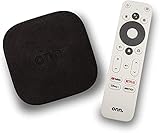
- 4K Ultra HD Resolution: Enjoy your TV in stunning resolution Ultra HD ers four times the resolution of Full HD for greater clarity and detail
- Android TV: With the Android TV operating system you will have access to the best content, download the infinity of applications available through the Google Play Store!
- Voice remote control: Just press the Google Assistant button and ask it to find, play and control content
- Chromecast Built-in: Easily cast movies, shows, and photos from your Android or iOS device to your Android TV
- Easy Setup: Access your Google account and configure the device, language and Wi-Fi network
Check the practical requirements
- A working internet connection for package and application downloads.
sudoadministrator access.- Storage for Kodi, artwork, databases, caches, and add-ons. Flathub currently shows an approximately 284 MiB download; your media library requires additional space.
- A graphics driver capable of the video formats you intend to play. Hardware decoding is important, and demanding formats can require substantially more CPU power without suitable GPU/VPU support.
- For a television setup, HDMI or DisplayPort, configured audio, and a keyboard, gamepad, or remote.
If Kodi is already installed, close it and back up its profile before changing package formats:
mkdir -p "$HOME/kodi-backup"
cp -a "$HOME/.kodi" "$HOME/kodi-backup/"
Native and Flatpak installations can store data in different locations, so a backup is safer than assuming a direct migration.
Method 1: install the current Kodi release with Flatpak
1. Install Flatpak
sudo apt update
sudo apt install flatpak
On standard Ubuntu GNOME, the optional Software Center integration is:
sudo apt install gnome-software-plugin-flatpakThis plugin is specific to GNOME; Kubuntu, Xubuntu, Ubuntu MATE, and other flavors may use different graphical software tools.
2. Add Flathub
flatpak remote-add --if-not-exists flathub https://dl.flathub.org/repo/flathub.flatpakrepo
flatpak remotes
Confirm that the output includes a remote named flathub. Kodi’s official Linux download page directs Linux users to this source.
3. Install Kodi
flatpak install flathub tv.kodi.KodiAccept the prompts. The application ID is tv.kodi.Kodi; Flathub identifies Team Kodi as the publisher and currently shows version 21.3-Omega.
4. Launch and verify
Open your application launcher, search for Kodi, and select it. From a terminal, use:
flatpak run tv.kodi.KodiTo inspect the installed Flatpak:
flatpak info tv.kodi.KodiIf the launcher entry is not visible immediately, log out and back in or restart the desktop shell.
The Tool Desk
Outbyte Driver Updater FREEScan for outdated or missing drivers - takes under a minuteDriver Scan →Outbyte PC Repair FREEClear out junk files and repair common Windows errorsFree Scan →Give Flatpak Kodi access to media
Flatpak sandboxing means Kodi may not automatically see every host folder. First test a media directory inside your home folder. If that works but a disk mounted under /media, /mnt, or another location does not, investigate permissions before changing Kodi settings.
- Check that the drive is mounted and readable by your Ubuntu user.
- Add the folder through Kodi’s own file browser.
- Use a permission-management tool such as Flatseal if you prefer a graphical interface.
- Grant the narrowest directory access that meets your need rather than exposing the entire host filesystem.
Exact access depends on the current Flathub manifest, mount location, desktop environment, and user permissions. The Flathub listing links to the manifest; review it before applying a manual override. Broad permissions can also affect external-player binaries, helper applications, scripts, removable drives, and auto-start integrations.
Method 2: install Ubuntu’s Kodi package with APT
Install and launch
sudo apt update
sudo apt install kodi
kodi
Ubuntu’s Noble package page currently lists version 2:20.5+dfsg-1build2 in the universe component. Check what is installed with:
kodi --version
apt policy kodi
Thus, apt may install Kodi 20.5 even though Kodi’s upstream Linux page and Flathub list 21.3 Omega.
Quick wins for a faster PC:
Clear out junk files and repair common Windows errorsFree Scan →Scan for outdated or missing drivers - takes under a minuteDriver Scan →Repair Windows errors before they cause bigger problemsFix Now →If APT cannot find Kodi
On a minimal installation, install the repository-management utility first:
sudo apt install software-properties-common
sudo add-apt-repository universe
sudo apt update
sudo apt install kodi
“Unable to locate package” can also mean stale package lists, a non-Noble derivative, or disabled repositories. Confirm the operating system with the version command above before changing sources.
Do not add the retired Team Kodi PPA
Outdated guides may suggest:
sudo add-apt-repository ppa:team-xbmc/ppaTeam Kodi officially retired this PPA on March 28, 2024, and the current Kodi Linux guide says it is not maintained. Use Flathub, Ubuntu’s repository, or a source build instead.
To look for old entries:
grep -R "team-xbmc|xbmc" /etc/apt/sources.list /etc/apt/sources.list.d 2>/dev/nullRemove or disable a discovered entry through Software & Updates → Other Software, or remove the PPA only when it is actually present:
Do these 3 things before closing this tab:
1Repair Windows errors before they cause bigger problems2Fix the driver behind crashes, sound loss and screen glitches3Clear out junk files and repair common Windows errorsRank #2

- 4K Ultra HD with Cinematic Visuals & Sound: Supports 4K resolution (3840 x 2160) at 60FPS, Dolby Vision, and HDR10+ for enhanced contrast, brightness, and color accuracy. Delivers immersive audio via Dolby Audio and DTS:X surround sound
- High-Performance Hardware: Equipped with a Quad-Core CPU (up to 2.5GHz) and ARM G310 V2 GPU for seamless navigation and multitasking. Includes 2GB RAM and 32GB internal storage (ROM) for ample app and content space
- Google TV Smart Platform: Runs the latest Google TV OS, offering personalized content recommendations, access to thousands of streaming apps (Netflix, YouTube, Disney+, etc.), and voice control via Google Assistant
- Advanced Connectivity & Decoding: Features dual-band Wi-Fi (2.4GHz/5GHz), Bluetooth 5.2, HDMI 2.1, and USB 2.0 ports. Supports decoding of 4K 60FPS video formats and Google Cast for screen mirroring
- Complete Setup Included: Comes with Xiaomi TV Box S (3rd Gen), voice remote control, power adapter, HDMI cable, and user manual. Compact design (95.25 x 95.25 x 16.7 mm) for discreet placement
sudo add-apt-repository --remove ppa:team-xbmc/ppa
sudo apt update
Do not automatically purge Kodi when changing formats. Native and Flatpak profiles can be separate, and removing an application is different from deleting its user data.
Independent reader supportYour contribution helps us test, update, and keep practical guides available for everyone.Set up Kodi after installation
- Start Kodi and choose language or regional settings if prompted.
- Open the relevant Videos, Music, Pictures, or Files section and choose Add source.
- Select a local folder, mounted drive, or network location.
- Set the correct content type, such as Movies or TV Shows.
- Choose a metadata scraper when Kodi asks.
- Let Kodi scan the source, then test artwork and playback.
Kodi is a media-center application for local storage, network storage, and internet media, with a television-friendly “10-foot” interface. Official add-ons are installed through Kodi’s add-on system. Streaming availability depends on the provider, region, authentication, subscriptions, and the add-on; Kodi itself is not a catalog of unauthorized commercial content.
Network shares
When a share is missing, verify the network first:
ip addr- Confirm Ubuntu and the media server are on the same reachable network.
- Have the server hostname or IP address, share name, and valid credentials.
- Check share permissions and the server’s firewall.
- Test the share in Ubuntu’s file manager, then add it through Kodi’s file browser.
- With Flatpak, distinguish authentication or server errors from sandbox access restrictions.
SMB/NFS behavior depends on the server and network configuration; no single protocol version or mount option is universally required.
Which package should you keep?
Choose Flatpak when you want Kodi’s current upstream release and can accommodate application permissions. Choose APT when Kodi 20.5 is sufficient and native access to system files, scripts, or external players is more important. These are packaging trade-offs, not a claim that one format is universally better.
If the computer is intended to be a single-purpose appliance, LibreELEC or OSMC may be a better operating-system choice than a general Ubuntu desktop. They replace or reshape the system rather than installing Kodi inside Ubuntu.
Updates, removal, and switching formats
Flatpak
flatpak update tv.kodi.Kodi
flatpak update
flatpak uninstall tv.kodi.Kodi
flatpak uninstall --unused
The last command removes unused runtimes, not just Kodi. Application removal and deletion of user data are separate actions.
APT
sudo apt update
sudo apt upgrade
sudo apt install --only-upgrade kodi
sudo apt remove kodi
Use sudo apt purge kodi only when you deliberately want package-managed configuration removed; it is not a routine troubleshooting step.
Before migrating
Close Kodi before backing up. The native profile is commonly under $HOME/.kodi. Flatpak uses an application-specific directory; inspect your actual installation rather than assuming a fixed path:
find "$HOME/.var/app/tv.kodi.Kodi" -maxdepth 4 -type d 2>/dev/nullCopying a profile between formats may require re-adding sources or add-ons because paths, permissions, databases, and version changes can differ.
Troubleshoot playback and display problems
Inspect the graphics hardware and drivers
lspci | grep -E "VGA|3D|Display"
sudo ubuntu-drivers devices
Do not install a proprietary driver blindly. The appropriate driver depends on the GPU vendor, Ubuntu kernel, desktop session, and available packages.
- Black screen or crash: test the other installation format, check the graphics stack, and launch from a terminal for diagnostic output.
- Stuttering or tearing: check hardware decoding, display refresh settings, CPU load, and whether the file is local or network-based.
- Audio but no video: investigate codec decoding and GPU support.
- No HDMI audio: verify Ubuntu’s selected output device and Kodi’s audio-output settings.
- HDR or refresh-rate problems: check the display connection, desktop session, driver support, and Kodi display settings.
Kodi’s Linux documentation stresses hardware decoding; installation alone cannot guarantee smooth playback for every codec, resolution, frame rate, or network condition.
Common installation failures
Kodi is not in the application menu
Run flatpak run tv.kodi.Kodi. If it launches, log out and back in or restart the desktop shell to refresh application entries.
Outdated Drivers Are Slowing You Down
One free scan finds every outdated or missing driver and matches the right update for your exact hardware.Free scan · exact hardware matchPC Slower Than It Used to Be?
A free scan shows the junk files, broken settings and background clutter dragging Windows down - then fixes them in one click.Free scan · Windows 10 & 11Kodi cannot see a media folder
Test a folder under your home directory, confirm the disk is mounted, inspect Flatpak permissions, and add the source through Kodi. Avoid full-host access unless a specific integration genuinely requires it.
A network share works in the file manager but not Kodi
Check credentials, share permissions, server firewall rules, and connectivity separately from Flatpak access. A file-manager connection does not prove that the sandbox can access the same path.
Old PPA instructions fail
The Team Kodi PPA was retired in March 2024. Remove the obsolete source and use Flathub or Ubuntu’s repository instead.
Quick Recap
Product prices and availability are accurate as of the date/time indicated and are subject to change. Any price and availability information displayed on Amazon at the time of purchase will apply.