A low-budget forest documentary succeeds when the story, route, safety plan, sound strategy and equipment all fit what one or two people can carry. Scout the access and subjects first, confirm the land manager’s rules, then build a compact and redundant kit that can survive rain, cold, moisture and a delayed evacuation.
The goal is not to recreate a large film set in the wilderness. It is to gather truthful interviews, observational sequences and natural sound while leaving the place and the people you film undisturbed.
Start with a story you can physically reach
Write one sentence that states the question your film will answer. For example: “How is a seasonal trail crew adapting its work to longer fire seasons?” The sentence should identify a person, process or ecological change that can be observed in the forest, not a subject that exists only in a distant office or inaccessible valley.
Test the idea against the route before buying equipment. Can you reach the subject without off-trail travel, vehicles, generators or construction? Can an interviewee arrive safely and leave before weather or daylight changes? If the answer is no, narrow the story or move it to a forest with better access.
#1 Best Overall
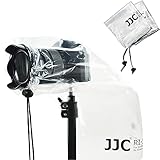
- Professional camera rain cover protector for DSLR with a lens up to 11" (28cm).
- 2 PACK of Completely See-Through Polyethylene Rain Covers with Drawstring Closures.
- Protect your camera and lens from rain, snow, salt spray, dust, sand and any other unexpected weather conditions.
- Be attached on a camera easily. Just pull the lens sleeve drawstring properly, and it will fit the lens closely.
- Can be reused , Compact and easy to store when folded up,and easy to carry.
Build a short, achievable shot list
- An establishing view of the canopy, terrain and weather.
- The subject performing the work or activity that drives the story.
- Close observational details: hands, tools, bark, water, tracks or evidence of change.
- An interview recorded in a quiet, controllable position.
- Natural sound recorded without dialogue.
- An exit, consequence or end-of-day scene that shows what has changed.
This list gives a two-person crew a complete narrative without requiring a large lighting package or multiple vehicles. Leave room for unscripted moments, but do not depend on them to explain the film.
Confirm permission before you plan the shoot
Find the exact land manager and boundary for every proposed scene. A forest can include national park land, designated wilderness, national forest, state property, Indigenous territory, municipal land and private parcels, each with different rules. Ask the film-permit coordinator about commercial, educational, documentary and casual visitor filming rather than assuming that “documentary” is automatically fee-free.
What the 2025 NPS low-impact framework covers
National Park Service guidance says filming, still photography or audio recording involving eight or fewer people is usually exempt from permits and fees when all of the following conditions are met:
- The activity occurs in public areas.
- Equipment is hand-carried.
- The crew does not require exclusive use of a location.
- The activity does not adversely affect resources or visitors.
- The activity is unlikely to create additional administrative costs.
Eight people is a threshold in this framework, not a universal exemption. It does not override park-specific rules, commercial requirements, resource protections or wilderness restrictions. Even when a permit is not required, NPS says participants remain subject to all other laws and regulations that apply to visitors.
Quick wins for a faster PC:
Repair Windows errors before they cause bigger problemsFix Now →Scan for outdated or missing drivers - takes under a minuteDriver Scan →Wilderness needs a separate check
Designated wilderness generally receives additional review and usually requires a special-use permit, except for casual visitor filming. Wilderness policies can restrict structures, motorized equipment, mechanical transport, aircraft, artificial lighting and other impacts. A camera that is acceptable on a developed trail does not automatically make a generator, vehicle, large light or constructed set acceptable in wilderness.
The National Park Service describes more than 67 million acres of NPS-managed wilderness as agency context; that figure is not a production allowance. Check the specific unit, because restrictions and application procedures differ.
Allow time for Canadian park applications
Parks Canada’s current Banff guidance asks applicants to submit a commercial film application at least 20 business days before intended filming. BC Parks advises producers to consult an area supervisor before submitting a commercial film application. These timelines are planning minimums, not guarantees of approval, so contact the relevant office before booking travel or subjects.
Rank #2

- WATERPROOF NYLON BUILT FOR ACTIVE SHOOTING: While most camera rain covers are thin disposable PE plastic sleeves, the Altura Photo rain cover is constructed from durable waterproof nylon that holds its shape around your camera and lens during active use. It delivers maximum protection from rain, snow, salt spray, dust, and sand without collapsing, crinkling, or interfering with your shot. Built for photographers who shoot in real weather, not just emergency backup coverage.
- HAND SLEEVES AND FULL-LENGTH DOUBLE ZIPPER FOR COMPLETE CAMERA ACCESS: Two adjustable hand sleeves let you reach your camera controls, zoom ring, and shutter from both sides without removing the cover. The full-length double zipper runs the entire length of the cover, providing complete access whether you are hand-holding or tripod-mounting your camera. An ultra-clear back window panel keeps your LCD screen and viewfinder fully visible throughout your shoot.
- EXTERIOR HOOK-AND-LOOP STRAP AND INTERIOR ANTI-SLIP RUBBER FOR A WOBBLE-FREE FIT: A newly integrated exterior hook-and-loop strap combined with interior anti-slip rubber grips your lens or lens hood securely, preventing rotation, slipping, or wind-catch during movement. Easy to install and remove in seconds; compatible with most camera and lens configurations supporting lenses up to 8 inches. For best fit and weather performance, use with a dedicated lens hood.
- FITS MOST DSLR AND MIRRORLESS CAMERAS WITH LENSES UP TO 8 INCHES: Compatible with Canon EOS Rebel T6s with EF-S 18-135mm STM, Canon 80D with EF 50mm F/1.8 STM, Canon 7D Mark II with EF 70-300mm, Canon 5D Mark III with EF 24-105mm L, Canon 5D with 70-200mm F/2.8, Nikon D800 with 24-70mm F/2.8, Nikon D4, D750, D500 with AF-S 24-120mm F/4, Nikon D7200, D5500, D3300, D5100, and similar sized cameras and lenses from Sony, Pentax, Sigma, and Tamron. Verify your lens length before ordering; not recommended for smaller cameras with pancake lenses.
- FOLDS FLAT IN YOUR BAG AND SETS UP IN SECONDS: The Altura Photo rain cover packs down completely flat so it takes up virtually no space in your camera bag, making it an effortless addition to any kit for travel, sports, wildlife, and event photographers. Setup is fast enough to respond to sudden weather changes without missing a shot. Compatible with tripod mounting so you can keep shooting hands-free in any conditions, and works with a lens hood attached for added fit and weather protection performance.
Ask about insurance and special conditions
Insurance requirements are location-specific. A Hawaiʻi Volcanoes National Park permit page states a $1 million liability insurance minimum for that park’s permit context; do not treat that amount as a universal requirement for every forest. Ask whether the authority requires a certificate of insurance, named additional insureds, a location fee, a monitor, a safety plan, proof of worker coverage or limits on drones and artificial lighting.
Compare locations by the risks that affect a small crew
A dramatic viewpoint is a poor low-budget location if reaching it requires a pack animal, a long technical approach or equipment you cannot safely carry. Score each candidate before committing:
| Decision area | Questions to answer |
|---|---|
| Story access | Can the subject and crew reach the scene without off-trail travel, vehicles or construction? |
| Permission burden | Who owns or manages the land, which designation applies, and is a permit, insurance or consultation required? |
| Load and crew | Can one or two people carry the camera, sound, support, food, water and safety equipment? |
| Weather and closures | What seasonal closures, fire restrictions, snow, heat, rain or flood conditions could stop filming? |
| Sound | Are roads, aircraft, streams, wind or visitor noise likely to overwhelm speech? |
| Evacuation and communications | Where is the nearest trailhead, road, ranger station or evacuation point, and what works when cellular coverage fails? |
| Wildlife and cultural sensitivity | Are there nesting, denning, mating, wintering, sacred or fragile areas that require distance or avoidance? |
| Total cost | What will transport, lodging, permits, insurance, rentals, food and replacement equipment cost? |
The National Interagency Fire Center’s producer guidance treats feasibility, realistic backcountry access, permissions, factuality and safety as core proposal tests. Apply the same tests to a one-day personal production.
Make a safety and evacuation plan before departure
Remote filming is a field operation first and a camera operation second. Write down the route, check-in time, weather limits, communication method and nearest evacuation point. Give that information to a responsible person who is not on the shoot. Include names, vehicle details, the expected return time and the point at which they should contact emergency services.
Carry for changing conditions
- Topographic map and compass, with a navigation device if appropriate.
- First-aid kit suited to the terrain and group size.
- Enough water and food for the planned day plus an unplanned delay.
- Warm and waterproof layers for rapid weather changes.
- Headlamps, even when the schedule is designed to finish in daylight.
- A communication method that works where cellular coverage is uncertain.
- Fire-safety information and any required protective equipment during fire season.
Set a hard turnaround time. If the route, weather or subject timing pushes the team past that limit, leave with the footage already captured. The National Interagency Fire Center expects producers to demonstrate a tangible safety commitment and realistic schedules for difficult backcountry access.
Recommended Free Tools
Coordinate with incident authorities
If filming occurs near an active wildfire or other incident, follow the authority of the incident-management team. The National Interagency Fire Center states that the Incident Commander has final authority for approving documentary and news filming on that fire. A production plan never supersedes an evacuation order, closure or operational safety direction.
Build a compact kit with redundancy where failure matters
Choose equipment for reliability, weight and weather protection rather than for the largest specification sheet. Wilderness guidance recommends adapting equipment to climate and lists a camera among general backcountry equipment. Every item should justify its carrying weight and its effect on wildlife, visitors and the ground.
Rank #3

- Professional camera rain cover protector for the (cameras + lens ) less than 13.38" , such as canon 70-200mm and nikon 24-200mm.
- Cover Size: 20.8×15.4inch, Protect your camera and lens from rain, snow, salt spray, dust, sand and any other unexpected weather conditions.
- The interior tight cuff design and non-slip straps allows you to adjust the lens sleeve to fit your camera lens.
- With an ultra-clear viewing window that can easy to see the display screen and viewfinder and also can touch the screen to use.
- Rain cover with dual adjustable sleeves and double waterproof zipper make you to easily control the camera whether holding or tripod.
Core recording package
- Camera with a wide-to-normal lens for landscapes, interviews and close observation.
- Rain cover or protective camera bag that still allows recording controls to be operated.
- Small tripod or other lightweight support.
- Shotgun or lavalier microphone, recorder if needed, headphones and spare cables.
- Spare batteries kept warm and dry.
- Duplicate memory cards and waterproof storage pouches.
- USB power bank or another approved charging method appropriate to the camera.
- Cloth for lenses, cable ties and simple repair supplies.
Field and safety package
- Map, compass and navigation device.
- First-aid kit, headlamp, food, water and treatment method.
- Weather layers, gloves and sun or rain protection suited to the season.
- Emergency communication equipment appropriate to coverage.
Large lights, generators, vehicles and grip packages add weight, noise, impact and permit complexity. In designated wilderness, motorized equipment and artificial lighting may be restricted. If a scene appears to require them, redesign the scene or obtain written approval before travel.
Protect the camera, power and footage
Cold reduces battery performance, while rain and condensation can stop a camera or damage media. The BBC Academy’s extreme-environment guidance recommends camera bags or covers that protect from cold and water while still allowing filming, and advises planning replacement equipment so a camera failure does not end production.
Do these 3 things before closing this tab:
1Scan for outdated or missing drivers - takes under a minute2Clear out junk files and repair common Windows errors3Fix the driver behind crashes, sound loss and screen glitches- Pack the camera in a protective cover before rain reaches the location, not after the first drops.
- Keep spare batteries in a dry inner pocket so body heat helps preserve their charge.
- Use waterproof pouches for unused cards and isolate full cards from blank ones.
- Record a short test clip at the start of each sequence; check exposure, focus, audio and card space with headphones.
- When moving between cold and warm environments, allow equipment to acclimate in a sealed bag to reduce condensation.
- Back up cards to two separate storage locations whenever practical. If no laptop or drive is available, label full cards, isolate them from blank cards and never reuse them in the field.
Carry a replacement for any single point of failure that would end the day: at minimum, extra batteries, cards, cables and a way to keep the primary camera dry. A second complete camera is useful only if its weight does not compromise safety, food, water or communications.
Record forest sound deliberately
Forest ambience is documentary material, but wind, clothing, insects, water and handling noise can overwhelm speech. Sound problems are harder to repair than a slightly imperfect image, so monitor continuously.
Interviews
- Place the microphone as close to the speaker as the scene allows while keeping it out of frame.
- Use a wind protection system appropriate to the conditions.
- Monitor with headphones instead of trusting camera meters alone.
- Ask the subject to pause if a loud aircraft, vehicle or gust masks an answer.
- Record a short silence after each answer so editing has clean transitions.
Ambient recordings
At each location, record several minutes of forest sound without conversation. Note the place, time, weather and take in a voice memo or slate. Capture water, insects, birds, footsteps and work sounds from a respectful distance rather than manufacturing them for the microphone.
Keep voices and playback quiet. Leave No Trace guidance says to let nature’s sounds prevail and minimize loud voices and equipment noise. This is both an ethical practice and a way to preserve the soundscape that makes the location distinctive.
Outdated Drivers Are Slowing You Down
One free scan finds every outdated or missing driver and matches the right update for your exact hardware.Free scan · exact hardware matchWindows Errors? Fix Them Before They Spread
Repair common Windows errors and clear accumulated junk for a smoother, more stable PC - no reinstall needed.Free scan · no reinstallFilm wildlife without changing its behavior
Wildlife sequences should show observation, not pursuit. Use a longer lens instead of approaching. Do not feed, bait, call, touch, chase or corner animals, and avoid nesting, mating, denning and winter-sensitive periods. Park rules and federal Leave No Trace guidance explicitly require distance and prohibit harassment and feeding.
Rank #4

- Professional Camera Cover: K&F CONCEPT camera rain cover protector is designed for DSLR Cameras and lens, to protect your camera and lens from rain, snow and any other unexpected weather when shooting outdoors.
- Anti-Fog Window: High-definition TPU window offers exceptional clarity, scratch/oil resistance, anti-static coating, and a built-in dual-layer anti-fog barrier to keep your view unobstructed, even in humid conditions.
- Waterproof Material: The smooth surface help shed moisture effortlessly, its waterproof zipper giving you easy access to your camera controls—whether you're shooting handheld or mounted on a tripod.
- Secure & Non-Slip Hold: Customizable hook-and-loop straps, elastic bands and textured grip leather design to securely hold your lens, which effectively prevent slipping.
- Convenient Carry Loop: Integrated webbing loop on the back lets you instantly sling your gear over your shoulder, keeping your hands free.
Stop filming if an animal changes its route, posture or behavior because of the crew. Never block a trail, separate young animals from adults or reveal a sensitive location that could attract visitors. If a ranger or land manager sets a distance or route, follow it even when a closer shot would be more dramatic.
Leave the forest as you found it
Travel and camp on durable surfaces such as established trails, rock, gravel or existing campsites. Avoid trampling plants to create a camera position. Carry out every piece of waste, including tape, food scraps, cable ties and damaged batteries. Secure food and trash from wildlife, and inspect the site before leaving for flattened vegetation, dropped equipment or residue.
Do not introduce non-native species. Clean footwear, tripods and other gear when moving between locations if seeds or mud could be transported. Leave natural objects where they are. These practices follow federal Leave No Trace guidance reproduced by the U.S. Fish and Wildlife Service and the National Park Service.
Use a field workflow that protects continuity
Before leaving the trailhead
- Confirm the day’s weather, fire restrictions, closures and permit conditions.
- Tell the off-site contact the route, subjects, return time and evacuation plan.
- Check camera time, card space, battery charge, microphone connections and protective covers.
- Pack food, water, first aid, navigation and communication before adding optional accessories.
At each setup
- Choose a durable surface and keep the crew’s footprint small.
- Listen for wind, water, aircraft, roads and visitor activity before positioning the subject.
- Record a test clip and monitor it with headphones.
- Capture the interview or action, then record clean ambience and observational details.
- Make a voice note identifying location, time, weather, subject and any continuity issue.
At wrap
- Check that every card, battery, cable, tripod part and piece of waste is accounted for.
- Inspect the ground for disturbance, food scraps and equipment debris.
- Leave before the hard turnaround time, even if a planned shot is missing.
- At a secure location, isolate full cards, dry equipment and begin two-location backups when possible.
Design a realistic one- or two-person schedule
Remote schedules fail when they count only camera time and ignore walking, setup, weather pauses, meals, battery changes and evacuation margin. Plan fewer locations and longer stays at each one. A useful day might include a slow approach and sound check, one interview, an observational sequence, dedicated ambience recording, a weather buffer and an early exit.
Do not promise a subject a precise finish time until you have included the return route. If the story depends on a process that may not repeat, arrange a backup interview date or a second accessible subject. Replacement planning applies to people and locations as well as cameras: one canceled access road or storm can otherwise erase the production.
Common failure modes and practical fixes
The permit assumption is wrong
Symptom: A ranger or land manager says the activity requires review even though the crew is small. Fix: Provide the exact location, crew size, equipment, dates, intended use and whether the activity is commercial. Ask for the applicable permit, insurance and drone rules in writing. Do not argue from a different park’s policy.
Rain or cold ends recording
Symptom: The camera will not operate, batteries die quickly or media becomes damp. Fix: Use a cover that permits operation, keep spare batteries warm and dry, seal equipment during temperature changes and carry a replacement plan. If conditions exceed the cover’s limits, stop filming and protect the equipment.
What’s actually slowing this PC down?
Pick the symptom - the matching free tool is one click away.
Best Value

- Compatibility: The camera rain cover is designed for DSLR camera with a lens up to 18" long & 7" wide for Canon Nikon Fujifilm Sony Tamron Sigma ,etc
- Protection: To protect the camera from rain, dust and mud effectively
- Convenience: Made of PE material and is totally see-through, giving you complete access to your DSLR's controls and viewfinder
- Easy Installation: Be attached on a camera easily. Just pull the lens sleeve drawstring properly, and it will fit the lens closely
- Flexibility: It allows you to mount the camera on a tripod and use a lens hood. Also lightweight & easy to carry
Dialogue is unusable
Symptom: Wind, stream noise or clothing overwhelms the voice. Fix: Move the interview a few steps to a quieter durable surface, bring the microphone closer, improve wind protection and monitor with headphones. Capture a second take rather than hoping post-production will remove the problem.
The crew is too heavy
Symptom: Walking pace, safety margin or subject time deteriorates under the load. Fix: Remove duplicate accessories before removing food, water, navigation, first aid or communications. Replace large lights and support with a smaller setup or redesign the scene.
Wildlife or visitors are affected
Symptom: An animal changes behavior or a visitor cannot pass because of the camera. Fix: Increase distance, stop playback and conversation, relocate to a durable surface or end the shot. Obtain consent from people who are intentionally included and respect those who do not wish to be filmed.
What “low budget” should mean in this setting
Low budget is not the same as minimal preparation. Spend first on access, safety, sound, weather protection, power and data integrity. A cheaper camera cannot compensate for an unapproved location, a lost card, an injured crew member or an interview ruined by wind.
Free tools Windows power users keep installed
One-click scans. No signup required.
Keep a contingency reserve for transport changes, replacement media, a second access day or a short-term equipment rental. The exact amount depends on the jurisdiction, season, distance and crew, and no universal price or insurance quote applies. Confirm current fees, inventory and requirements with the land manager and rental provider before committing funds.
A final go/no-go checklist
- The story question and reachable subjects are clear.
- The exact land manager, boundary and wilderness designation are confirmed.
- Permit, insurance, consultation, closure, fire and drone requirements are documented.
- The route, weather limits, check-in time and evacuation point are shared off-site.
- The crew can carry the complete kit, food, water and safety equipment.
- Camera covers, spare batteries, duplicate cards and a replacement plan are ready.
- Microphones, wind protection and headphones have been tested.
- Wildlife distance, cultural sensitivity and Leave No Trace practices are part of the call sheet.
- A backup subject, date or accessible location exists if conditions change.
- The schedule includes setup, sound, meals, weather pauses and an early exit.
When every answer is yes, the forest becomes a workable production environment rather than an obstacle course. The strongest low-budget films are built around what the crew can safely reach, hear, protect and carry out.
Quick Recap
Product prices and availability are accurate as of the date/time indicated and are subject to change. Any price and availability information displayed on Amazon at the time of purchase will apply.






Say something about this film