The best choice starts with a simple check: does the series actually center customers or other directly affected people, or is it a broader documentary about crime, business, or public events? Read the official description and episode listings for the people followed, the perspectives included, the documentary approach, the subject and tone, and current availability in your country. Then choose the title whose evidence, scope, and emotional intensity match what you want to watch.
“Real customer stories” is not a consistently defined documentary category. It may mean consumer testimonials, business customers describing an experience, or a participant-led series in which victims, witnesses, families, officials, or other affected people tell what happened. Use the framework below to separate those meanings instead of assuming that every “true story” or “true crime” listing is a customer documentary.
First, define what you mean by a customer story
Before comparing titles, write one sentence describing the people and experience you want to see. For example: “I want customers explaining how a service changed their lives,” “I want people affected by a company’s actions,” or “I want a documentary in which victims and witnesses reconstruct an event.” Those are different briefs, and a series can satisfy one while missing another.
Consumer or company customer testimonials
A testimonial-style series normally identifies customers, clients, users, patients, members, or communities and explains their relationship with a product, service, institution, or company. Look for explicit wording such as “customers,” “clients,” “users,” or “people who used the service.” If the listing only says “real people” or “true stories,” do not infer a customer relationship that is not stated.
Recommended Free Tools
#1 Best Overall

- Full-View Window & Protection Lid:The extra-wide PVC window lets you identify every disc instantly—no need to open the box. Combined with a tight-seal lid that blocks dust and resists accidental spills, your collection stays clean and dry in humid rooms or busy spaces.
- Expanded 27+ DVD Capacity:Generous 15.75"x8.1"x6.3" interior holds 27+ standard cases—15% roomier than similar boxes, ideal for bulky game discs. Fits neatly on shelves or in cabinets for space-saving storage.
- Reinforced Structure:The bottom and handle of this box are made of non-woven fabric thickened by 40%, this box withstands heavy loads without sagging. The reinforced base prevents collapse even when fully stacked.
- Fold & Label System:Folds flat when empty and features a dedicated label slot for quick categorization. Reorganize your collection in seconds, saving 50% storage space compared to rigid bins.
- Multi-room organizer: Ideal for media racks, multi-purpose areas, and beyond. Easily stores DVDs, video games, books, or craft supplies.Lightweight and portable: Weighing only 417 grams and featuring ergonomic handles for easy moving.
Participant-centered documentaries
Many documentary series follow people whose lives are affected by a crime, disappearance, fraud, policy, or institution. They may feel personal and authentic without being customer testimonials. The official Disney+ description for The Con, for example, says it features victims and eyewitnesses and that some episodes also include law enforcement and perpetrators. That makes it a useful example for checking whose experiences and perspectives appear; it does not, by itself, make the series a customer-story program.
What “documentary series” means
Peacock defines a docuseries as “a multi-episode television or digital series that dives into real-life events or topics using a documentary-style format.” It defines a documentary as “a non-fiction film about real life people, places, events, or eras. It tells a story about reality based on historical facts.” These definitions establish a nonfiction, multi-episode format, not a guarantee that every account is balanced, independently verified, or focused on customers.
A seven-step selection method
- Name the people you want centered. Decide whether you need customers, victims, employees, families, witnesses, experts, or a mixture. Prefer a listing that identifies those people directly.
- Map the perspectives. Note whether the series includes interviews with participants, relatives, witnesses, officials, investigators, representatives of an institution, or alleged perpetrators. More categories indicate a wider reported viewpoint, but do not prove fairness.
- Identify the documentary approach. Determine whether the series is primarily biographical, ethnographical, observational, or participatory. The approach changes how much context and filmmaker involvement you should expect.
- Check the subject and emotional tone. Fraud, missing-person cases, violence, and other crimes can be distressing. Read episode summaries and any content information before starting.
- Test the scope. Ask whether episodes examine a person’s experience within a social or institutional setting or stay with one individual account. A narrow case study and a systemic investigation serve different viewing goals.
- Read every available episode description. A season synopsis can hide major differences between episodes. Look for changes in subjects, evidence, locations, and interviewees.
- Verify access in your territory. Open the service’s current official title page, confirm that the series appears in your country, and check the episodes and plan required. Catalogs and subscriptions change.
How to judge who gets to tell the story
The people named in a listing are your first screening tool. A series centered on customers should give those customers enough presence to explain events in their own words, rather than using them only as short testimonials around a presenter’s argument. For participant-led true-crime or lived-experience series, ask whose testimony drives each episode and whose interpretation frames it.
| Listing signal | What it may indicate | What it cannot establish |
|---|---|---|
| Customers, clients, or users are named | The series may directly address a customer relationship. | It does not show how much screen time or editorial control those people receive. |
| Victims and eyewitnesses are identified | First-person experience is likely to be part of the narrative. | It does not prove that all relevant victims are represented. |
| Family members or community members appear | The account may include personal and social consequences. | It does not guarantee agreement among relatives or community members. |
| Officials, investigators, or records are mentioned | The program may add institutional or documentary evidence. | It does not independently verify every claim. |
| Perpetrators or accused parties are interviewed | The series may present a response or competing account. | An interview is not proof that the response is accurate. |
| Archival footage, documents, or records are listed | The filmmakers use material beyond contemporary interviews. | The listing does not tell you how complete, authentic, or selectively edited that material is. |
Treat these as clues for choosing, not as a substitute for evaluating the finished program. An official platform description is promotional catalog copy; it is not independent proof of balance or accuracy.
Recognize the documentary approach
Documentary forms describe how a series organizes real-life material and relates to its subjects. They are not a ladder from “best” to “worst.” The same topic can work in several modes, and a single season can combine them.
Rank #2
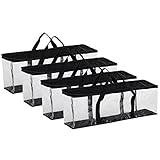
- Large Capacity: Pack of 4, Bags measure 22" X 8 3/8" X 6 ¼", holds approx. 40 movies each for a total of 160 movies, perfect storage cases to stack on a shelf or in a closet, or slide under a bed for easy, out-of-the-way movie collection organization
- High Quality Material: Each DVD storage bags is crafted with clear PVC and durable polyester fabric material that makes it easier to finding the movie you want to watch quickly
- Convenient Handle: A handy solution for storing and transporting your entertainment library. The DVD holders also have reinforced double-stitched handles so that you can carry them around without worrying that your precious DVDs will fall and break
- Unique Zipper Design: The zippered top and horizontal design makes it simple to open and access your DVD collection without making a mess. It can be placed anywhere you want like the living room, bedroom, office, kitchen etc
- Protect Your Collection: By keeping your movies in our storage bag, you can protect them from scratches, dirt, and moisture for long-term care
| Approach | Typical focus | Best fit when you want | Questions to ask |
|---|---|---|---|
| Biographical | A person’s life, development, decisions, and relationships. | A character-driven account with a clear individual arc. | Whose biography is prioritized? Are customers shown beyond the one transaction or incident? |
| Ethnographical | A group, community, workplace, or culture in its social setting. | Context about how people live and relate to an institution or market. | Does the series explain local history, power, and community differences? |
| Observational | Filmmakers watch events or routines with limited direct intervention. | Natural interactions and an experience that unfolds over time. | How much access did cameras have, and what remains outside the frame? |
| Participatory | The filmmaker is visibly involved through interviews, questions, or on-screen presence. | A guided investigation in which the interviewer’s role is clear. | How might the filmmaker’s questions and editing shape the answers? |
If you want customers explaining a long-term relationship with a service, a biographical or observational series may offer more lived detail. If you want to understand how an institution affects a community, an ethnographical approach may be more useful. If you prefer a clearly guided investigation, a participatory series makes the interviewer’s role easier to see.
Use context to distinguish a personal account from a larger explanation
A compelling individual story can still leave important causes and consequences unexplained. Read whether the synopsis promises background on an industry, company, law, community, or institution. Then look for the kinds of material used to supply that context: records, archival footage, expert interviews, public documents, or testimony from people with different roles.
When a narrow account is the right choice
Choose a tightly focused series when you want emotional immediacy, a detailed timeline, or one person’s perspective. A narrow scope can make complex events easier to follow and can preserve details that a broad survey would omit.
Free tools Windows power users keep installed
One-click scans. No signup required.
When you need systemic context
Choose a wider series when your question is “How could this happen?” rather than only “What happened to this person?” Look for references to policies, business practices, oversight, historical conditions, or effects on multiple communities. A listing that names only one participant may still contain broader analysis, but you should not assume it does.
Separate perspective from proof
Multiple interview categories and archival material can improve your ability to compare accounts. They do not automatically settle disputes. Keep a distinction between what a participant says, what a record shows, and what the program’s narration concludes.
Rank #3

- Large Capacity Storage: This 6-piece DVD storage box set has individual dimensions of 15.7"(40 cm) x 7.9"(20 cm) x 6.3"(16 cm) and can hold up to 25 standard DVD cases. The entire set can accommodate 150 DVDs. These boxes can be stacked on shelves or cabinets, making it easy to organize your DVD collection.
- Premium Material: Thickened, tear-resistant non-woven fabric and reinforced 2.0 mm thick cardboard ensure long-lasting and protection for your DVD collection
- Stackable Design: These DVD storage boxes come with lids to ensure your DVDs are kept safe, making them perfect for stacking and maximizing your storage space. Say goodbye to cluttered areas
- Portable Handles: Reinforced side handles make it easy to carry and transport your DVD storage box without worrying about breakage or spills
- Versatile: Our storage boxes can also be used to store books, photos, clothes, blankets, and more. You can place them anywhere in your home, such as the living room, bedroom, or media room
Match the subject and tone before you press play
Documentary catalogs often group fraud, disappearances, and crimes under the same broad documentary or true-crime labels. Genre tags are too general to predict your experience. Read the episode-level descriptions for references to violence, abuse, death, exploitation, financial loss, or traumatic testimony.
Make a practical sensitivity check
- Check whether the service provides content warnings or advisories.
- Read the summary for each episode, not only the season description.
- Decide whether you prefer investigative tension, reflective personal testimony, or observational day-to-day material.
- Check the runtime and episode count if you want a single case or a longer commitment.
- Stop or switch titles if the subject matter is causing distress; choosing a different tone is a valid selection criterion.
A serious subject does not make a series more truthful, and a calm tone does not make it less rigorous. Choose the emotional register you can engage with thoughtfully.
Read platform listings as a verification step
Official catalogs are the most reliable place to confirm a title’s current service, episode list, and regional access. Netflix, Disney+, Peacock, and Paramount+ each maintain documentary listings or examples, but the same title can appear, disappear, or change territory without notice.
- Search the service by the exact series title, not only by a genre page.
- Open the title’s full details and confirm the number and names of episodes.
- Check whether the page is for your country or account region.
- Read the current plan or subscription requirement before assuming access.
- Compare the official synopsis with a reputable description of the people and subject you want; do not rely on a stale search result.
- Record the date you checked if you are planning a group watch, because catalog availability is changeable.
Do not treat a platform’s description as independent reporting. Use it to establish what the service says it offers, then keep the program’s claims in their proper context as edited nonfiction.
Build a personal scorecard instead of chasing a genre label
When several titles look similar, score each one from 1 to 5 on the criteria that matter to you. The numbers are a decision aid, not a quality rating.
Rank #4

- Instant Access Full-View Clear Window & Dustproof Protection for Your DVD Collection The extra-wide PVC clear window of this dvd storage box lets you identify every disc instantly, no need to open boxes one by one to find your favorite movie. Combined with a premium zipper closure and tight-seal lid, this dvd case fully blocks dust, moisture, and accidental spills, keeping your precious collection clean and dry even in humid basements, garages, or busy living spaces.
- Expanded 27+ Large Capacity, 15% Roomier Than Standard DVD Storage Cases With generous 15.75" x 8.1" x 6.3" interior, this dvd organizer holds 27+ standard DVD cases, perfectly accommodating bulky Blu-ray boxes and video game cases. Its slim profile fits neatly on shelves, in cabinets, or under beds, the ideal space-saving media storage solution for movie lovers and game collectors.
- 40% Thickened Reinforced Structure, No Sagging Even Fully Loaded & Stacked Our dvd storage boxes are made of 40% thickened heavy-duty non-woven fabric, with reinforced stitching on handles and a sturdy anti-collapse base. This upgraded structure withstands heavy loads without sagging or tearing, and prevents box collapse even when fully stacked, ensuring long-term durable use for your valuable media collection.
- Collapsible Design with Dedicated Label Slot, Effortless Organization & Space Saving This foldable dvd case organizer can be folded flat in seconds when empty, saving 50% more storage space than rigid plastic bins. The built-in dedicated label slot allows you to quickly categorize and locate your movies, games, or media, making collection reorganization effortless, perfect for compact apartments, dorm rooms, and home theaters.
- Versatile Multi-Scene Organizer with Ergonomic Portable Handles Beyond being a professional dvd storage box for DVDs, Blu-rays, and video games, this multifunctional media organizer is also ideal for storing books, magazines, toys, craft supplies, and office accessories. The lightweight design and reinforced ergonomic handles make it easy to move between rooms, home theaters, offices, and RVs, fitting seamlessly into any minimalist home decor.
| Criterion | What to record | Your score (1–5) |
|---|---|---|
| Customer relevance | Are customers or directly affected people clearly central? | |
| Perspective range | Are participants, families, witnesses, officials, records, or opposing accounts included? | |
| Context | Does the series explain the wider social or institutional setting? | |
| Approach | Does the biographical, ethnographical, observational, or participatory style suit you? | |
| Tone and sensitivity | Can you comfortably engage with the subject and intensity? | |
| Access | Is the title currently available to you on a service you can use? |
Weight only the criteria that answer your actual viewing question. Someone seeking a customer’s detailed experience might give customer relevance and observational access the highest priority. Someone investigating institutional failure might prioritize perspective range and context.
Outdated Drivers Are Slowing You Down
One free scan finds every outdated or missing driver and matches the right update for your exact hardware.Free scan · exact hardware matchPC Slower Than It Used to Be?
A free scan shows the junk files, broken settings and background clutter dragging Windows down - then fixes them in one click.Free scan · Windows 10 & 11Common selection mistakes and how to correct them
Mistaking “true story” for “customer story”
Problem: A listing promises real events but never identifies customers or users. Correction: Reclassify it as a participant-centered documentary unless the official description establishes a customer relationship.
Assuming several interviewees guarantee balance
Problem: A title lists victims, officials, and experts, so you assume every side receives equal treatment. Correction: Treat the list as a signal of intended scope, then evaluate the program’s framing and evidence while watching.
Choosing by platform category alone
Problem: “Documentary” or “true crime” tells you little about tone, method, or perspective. Correction: Read episode summaries and content information.
Ignoring the filmmaker’s role
Problem: You expect unobtrusive observation but get a host-led investigation, or vice versa. Correction: Look for participatory or observational cues and choose the relationship that fits your preference.
Best Value

- DVD
- Box set, Black & White, Color
- English (Original Language)
- 5
- 1920
Relying on an old availability claim
Problem: A review or search result names a service that no longer carries the series in your region. Correction: Confirm the current official title page immediately before watching.
Using an emotionally intense series for a casual viewing night
Problem: A fraud, disappearance, or crime series is selected without checking its content. Correction: Scan every episode summary and agree on the tone with your co-viewers first.
Three example decisions
You want direct customer testimony
Choose a title whose official description explicitly identifies customers, clients, or users and explains what they experienced. Favor episodes that name the people involved rather than a generic promise of “unbelievable true stories.” Verify that the customer relationship is central, not a brief anecdote supporting a presenter’s thesis.
You want to understand harm caused by an institution
Look for affected people plus officials, records, family members, or community voices. An ethnographical or participatory approach may provide more institutional context than a single-person biography. Read for references to policies, oversight, or historical conditions before choosing.
What’s actually slowing this PC down?
Pick the symptom - the matching free tool is one click away.
You want a carefully reconstructed crime or fraud case
A series such as The Con illustrates the screening question: its Disney+ listing names victims and eyewitnesses and notes that some episodes include law enforcement and perpetrators. If that range of participants suits you, confirm the current episode list and regional availability, then check the content information for fraud or other distressing material.
A final pre-watch checklist
- The people you want to hear are explicitly named in the official description.
- You know whether the title is a customer testimonial series or a broader participant-centered documentary.
- You have noted which perspectives and source materials are mentioned.
- The documentary approach matches your preferred level of filmmaker involvement.
- The subject, warnings, and episode tone are appropriate for you and your co-viewers.
- You understand whether the series offers a single account or wider institutional context.
- The official service page confirms the title, episodes, region, and current access requirement.
- You are treating the catalog description as a guide to the program, not independent proof that every claim is balanced or accurate.
Following those checks turns a vague search for “real customer stories” into a defensible choice: select the series whose people, perspectives, method, subject, and access line up with the experience you actually want.
Quick Recap
Product prices and availability are accurate as of the date/time indicated and are subject to change. Any price and availability information displayed on Amazon at the time of purchase will apply.






Say something about this film