Quick wins for a faster PC:
Clear out junk files and repair common Windows errorsFree Scan →Scan for outdated or missing drivers - takes under a minuteDriver Scan →Repair Windows errors before they cause bigger problemsFix Now →Richard Hammond crashed the Rimac Concept_One on June 10, 2017, during a hill-climb demonstration at Hemberg, Switzerland. He entered the final corner too quickly, the car’s changing grip and torque-vectoring intervention helped produce oversteer, and the hypercar left the road at more than 210 km/h. It rolled down the hillside and caught fire, but Hammond escaped before the fire intensified and survived with a serious leg injury.
What happened when Richard Hammond crashed the Rimac?
Richard Hammond crashed a Rimac Concept_One on June 10, 2017, while filming The Grand Tour in Switzerland. After completing the timed section of a hill-climb demonstration at Hemberg, he approached the final corner too quickly. The car left the asphalt at more than 210 km/h, traveled over 110 metres down a steep hillside, rolled several times, and caught fire.
Hammond was conscious and escaped from the wreck before the fire intensified. He was airlifted to hospital with a serious leg injury. The later explanation was not that the Rimac simply “turned itself off” or that a proven battery defect caused the crash. The available reconstruction points instead to Hammond carrying too much speed into the corner, combined with the way the car’s four-motor torque-vectoring system helped rotate it once the available grip was changing.
The crash in brief
| Detail | What is known |
|---|---|
| Car | Rimac Concept_One production electric hypercar |
| Date | June 10, 2017 |
| Location | Hemberg, Switzerland |
| Production | Season two of The Grand Tour |
| Speed reported during the run | More than 210 km/h |
| Distance after leaving the course | More than 110 metres, according to Rimac |
| Immediate outcome | The car rolled down the hillside and caught fire; Hammond escaped and was taken to hospital |
The event is sometimes described as a race, but “hill-climb demonstration” or “show-run” is more precise. The course activity included timed runs and training, but it was not a conventional wheel-to-wheel race.
What’s actually slowing this PC down?
Pick the symptom - the matching free tool is one click away.
#1 Best Overall
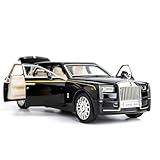
- Product size: 6.69*2.36*1.97 inches Weight: 0.7 pounds Outer packaging: exquisite color translucent packaging box
- Material: Die-cast car model, made of zinc alloy, with plastic parts, rubber tires, detailed interior and exterior decoration.
- Function: Press the two wheels of the front car to trigger the sound of the engine and the lights, with upright car logos,the angel logo is stored in the hood. The details of the body interior are realistic. Place the car on a flat ground, press the body and pull it back, the car will drive forward. (With pull back function)
- This Rolls-Royce Phantom 1/32 car model pull back car is very suitable for children to play with. The paint is exquisite and feels good, and it is heavy to hold. It is also very suitable for car model enthusiasts as a decoration.
- Accessories and collections: This product is very suitable for static accessories and can be used as an accessory next to a computer. For those who are passionate about collecting model car models, this is a great art collection.
Where and when did Hammond crash the Concept_One?
Filming for the second season of The Grand Tour had been taking place in Switzerland since June 5, 2017. The production brought Hammond, Jeremy Clarkson and James May together for a comparison built around three ideas: the Lamborghini Aventador S represented the past, the Honda NSX the present, and the Croatian-built Rimac Concept_One the future.
The final part of the Swiss sequence took place at Hemberg. Hammond drove the Concept_One through the course and completed the timed portion. The important detail is what happened next: reaching the finish did not mean the car had immediately come to a halt. There was still a fast final corner and road ahead. Hammond continued at high speed, lost the intended line, and ran out of usable road.
The crash later became the major dramatic event in season two, episode one, “Past, Present or Future,” released on December 8, 2017. Viewers saw the spectacular wreck and its aftermath, but the footage alone does not establish the precise sequence of steering, throttle, tire grip and torque-vectoring intervention. That interpretation came later, when Hammond and Rimac founder Mate Rimac reviewed footage, vehicle data and images from the crash.
What was the Rimac Concept_One?
The Concept_One was not merely a converted sports car with a large battery. It was a very limited-production electric hypercar designed around four independently controlled electric motors—one for each wheel.
| Rimac Concept_One specification | Rimac’s stated figure |
|---|---|
| Motor layout | Four permanent-magnet electric motors |
| Drive system | All-wheel drive with Rimac All Wheel Torque Vectoring |
| Battery | 82 kWh |
| Power | 1,088 PS / 800 kW |
| Torque | 1,600 Nm |
| Claimed 0–100 km/h | 2.6 seconds |
| Claimed top speed | 355 km/h |
| Planned production | Eight examples |
Those figures explain both the appeal and the difficulty of the car. Electric motors can deliver torque immediately, while four-motor control gives the software many more ways to influence the car’s attitude than a conventional drivetrain. The system can vary torque at individual wheels to use available tire grip and help the car turn. In normal driving, that can improve agility and stability. At the limit, however, a rapid change in the balance of grip can make the car’s response feel abrupt to a driver.
How did Hammond lose control?
1. He approached the final corner too fast
Mate Rimac’s explanation was that Hammond entered the final corner at excessive speed. This is the starting point of the reconstruction. The car was already traveling far too quickly for the amount of road available if the intended line could not be maintained.
Hammond later acknowledged the central responsibility himself. In a 2023 DriveTribe video, while driving the newer Rimac Nevera, he said he had never tried to avoid blame for the 2017 crash. He described the car as extraordinarily fast and easy to exploit, but accepted that he had continued beyond the finish and allowed the situation to develop beyond the point where the road could contain the mistake.
2. The car’s balance changed as the corner developed
Hammond said that the car had felt as though it was understeering during earlier attempts. Understeer means the front tires are not following the steering angle closely enough, so the car tends to run wide. That earlier sensation helped make the final change in behavior surprising: instead of simply continuing toward the outside of the corner, the car began to rotate.
Rank #2

- ICONIC MODEL: Hot Wheels Ferrari SF90 Stradale die-cast car captures the sleek design of the real-life Ferrari supercar
- BOLD COLORWAY: Striking black and red finish gives this collectible a sharp, eye-catching look on any display shelf
- 1:64 SCALE: Precisely crafted at 1:64 scale, delivering authentic proportions in a compact, easy-to-handle size
- COLLECTIBLE SERIES: Numbered 41 out of 250 in the series, making it a must-have addition for Hot Wheels enthusiasts
- DIE-CAST CONSTRUCTION: Made with die-cast metal for a sturdy, detailed build that holds up to both play and display
According to the later Hammond–Rimac review, the torque-vectoring system tried to help the car turn. By independently adjusting drive torque at the wheels, it increased the car’s rotation and initiated oversteer. Oversteer occurs when the rear of the car moves outward relative to the intended path. If the tires still have sufficient grip and there is enough road, a driver may be able to catch and manage that movement. Here, the car was already at very high speed and the rear tires eventually ran out of usable asphalt and grip.
3. There was not enough road left to recover
Once the Concept_One departed the course, the problem was no longer simply whether Hammond could correct the steering. The car left the road and went down a steep hillside, traveling more than 110 metres before coming to rest upside down. It became airborne or downhill-bound over uneven ground, rolled, and then caught fire.
The most accurate summary is therefore a combination of factors:
- Hammond carried too much speed into the final corner.
- The car’s cornering balance changed as the available grip was used up.
- The torque-vectoring system’s attempt to rotate the car contributed to the oversteer described in the later reconstruction.
- Once the rear tires lost usable road, the remaining distance and terrain made recovery impossible.
This is a technical interpretation from the people who reviewed the car’s data and footage, not the finding of a publicly documented independent accident investigation. Early statements from Amazon and The Grand Tour said that the cause was initially unknown and under investigation. Those early reports provide the immediate context, while the later Hammond–Rimac review supplies the more detailed explanation.
Crashes, No Sound, or Screen Glitches?
Random freezes, missing sound and display glitches usually trace back to one bad driver. Find and replace yours safely.Free scan · under a minuteWindows Errors? Fix Them Before They Spread
Repair common Windows errors and clear accumulated junk for a smoother, more stable PC - no reinstall needed.Free scan · no reinstallDid the Rimac’s software fail?
There is no basis in the supplied contemporary accounts for saying that Rimac admitted a software failure, manufacturing defect or malfunction. The torque-vectoring system was doing what it was designed to do—control torque at individual wheels to influence the car’s path—but the interaction between that intervention, Hammond’s inputs, the corner and the remaining tire grip produced an unrecoverable outcome.
That does not mean the system was irrelevant. It was central to the discussion because a four-motor electric car can actively shape its behavior in ways unfamiliar to a driver accustomed to a conventional rear-wheel-drive or all-wheel-drive car. But “the software crashed the car” is much broader and more certain than the evidence supports.
Nor did Hammond crash at the Concept_One’s published maximum speed. Rimac’s account says the car exceeded 210 km/h during the run; that is not the same as reaching its claimed 355 km/h top speed.
What caused the fire?
The loss of control and the fire should be treated as two related but separate parts of the event.
Rank #3

- MATCHBOX COLLECTIBLE: Part of the 1997 Matchbox Exotic Series, this McLaren F1 GT is numbered 32 out of 125.
- DIE CAST CONSTRUCTION: Crafted from durable die cast metal for an authentic, detailed replica of the iconic McLaren F1 GT.
- 1:64 SCALE: True-to-life 1:64 scale model accurately captures the sleek design and proportions of the real McLaren F1 GT.
- VIBRANT GREEN FINISH: Features a bold green paint finish that makes this collectible model visually striking on any display shelf.
- GREAT FOR COLLECTORS AND KIDS: A fantastic addition to any die cast car collection, and a fun toy car for children who love exotic vehicles.
The car first left the course, fell down the hillside and rolled. It then caught fire after coming to rest upside down. Rimac acknowledged the fire in its post-crash account and said it wanted to prevent similar events in the future. However, the available sources do not establish whether a particular battery cell, impact point, wiring component or thermal-runaway mechanism started the fire.
It would therefore be inaccurate to say that the battery was proven to be the sole cause. The defensible description is simply that the severely damaged electric hypercar caught fire after the crash. Hammond had already escaped, which was crucial to the outcome.
How badly was Richard Hammond hurt?
Hammond was conscious after the crash and climbed out of the wreck himself before it burned more intensely. He was then taken to hospital by air ambulance. Contemporary reporting described a fracture around the knee; later accounts often shorten this to a broken leg. “Serious leg injury” is the safest general description when the exact wording of a source matters.
The passenger compartment remained sufficiently intact for Hammond to get out. Rimac highlighted the structural integrity of the car and described his injuries as limited relative to the severity of the impact. That is a manufacturer’s assessment, not evidence that the Concept_One was crash-proof or independently certified to protect occupants in every comparable accident.
His survival depended on several specific circumstances: the occupant cell remained survivable, he was able to evacuate before the fire intensified, and emergency medical help was available. The fact that the car looked almost destroyed does not make the injury insignificant; Hammond did sustain a substantial leg injury.
Independent reader supportYour contribution helps us test, update, and keep practical guides available for everyone.How was the crash shown on The Grand Tour?
The wreck formed the cliffhanger-like conclusion of the first episode of season two. The episode’s Switzerland segment compared the Aventador S, NSX and Concept_One as versions of automotive “past, present and future.” Hammond’s electric hypercar run began as a performance demonstration and ended with one of the most memorable accidents associated with the series.
The program shows the event as television, with editing, commentary and dramatic pacing. The later technical explanation should not be confused with what can be established from the broadcast images alone. For viewers who want to revisit the sequence, watch The Grand Tour season 2, including “Past, Present or Future,” subject to regional catalog availability.
Why did Hammond drive a Rimac again?
In 2023, six years after the crash, Hammond drove the newer Rimac Nevera for a DriveTribe video. He used the opportunity to discuss the earlier accident and explicitly accepted responsibility for it. He described the 2017 car as hugely powerful, addictive and easy to exploit, while also recognizing that physics and gravity ultimately set the limits.
The Tool Desk
Outbyte PC Repair FREEClear out junk files and repair common Windows errorsFree Scan →Outbyte Driver Updater FREEFix the driver behind crashes, sound loss and screen glitchesFind Drivers →Rank #4
- Doors Open
- Pullback Action
- Die Cast Metal Body
- PULL BACK ACTION WITH FREE ROLLING WHEELS
The later Nevera drive does not prove that the Concept_One was safe, that the two cars behave identically, or that the original crash was trivial. Its significance is narrower: Hammond was willing to return to the manufacturer’s electric hypercars and publicly frame the crash as his mistake rather than maintain that Rimac alone was to blame.
The clearest explanation of the Rimac crash
Richard Hammond crashed because he entered the final corner of a Swiss hill-climb run too quickly in an exceptionally powerful electric hypercar. As the car reached the limit of its available grip, its four-motor torque-vectoring system helped rotate it, producing oversteer rather than the understeer Hammond had felt earlier. The rear tires ran out of usable road, the Concept_One left the course and rolled down the hillside, and the wreck later caught fire.
The evidence does not support reducing the incident to a proven software defect or a battery-only failure. It was a high-speed cornering error amplified by the car’s unusual and highly responsive drivetrain, followed by a severe impact and fire. Hammond escaped, suffered a serious leg injury, and later accepted responsibility for the decision that put the car beyond the limits of the road.
Frequently Asked Questions
Why did Richard Hammond crash the Rimac Concept_One?
He approached the final corner at more than 210 km/h, carried too much speed, and lost the intended line as the car’s torque-vectoring system helped rotate it. The rear tires ran out of usable road, sending the Concept_One down the hillside.
Recommended Free Tools
Was the Rimac Concept_One fire caused by its battery?
The available accounts confirm that the wreck caught fire, but they do not establish a specific battery-cell failure, thermal-runaway mechanism or other definitive technical cause.
Did Hammond crash the Rimac at its top speed?
No. Rimac reported that the car exceeded 210 km/h during the run, while its published top-speed figure was 355 km/h. Hammond did not crash at the car’s maximum claimed speed.
What injuries did Richard Hammond suffer?
Hammond escaped the wreck conscious and was airlifted to hospital. He suffered a serious leg injury, described in contemporary reporting as a fracture around the knee.
Did Richard Hammond accept responsibility for the crash?
Yes. During a 2023 DriveTribe video about the Rimac Nevera, Hammond said he had never tried to avoid blame and accepted responsibility for the 2017 mistake.
Do these 3 things before closing this tab:
1Repair Windows errors before they cause bigger problems2Fix the driver behind crashes, sound loss and screen glitches3Clear out junk files and repair common Windows errorsThe Bottom Line
Bottom line: Hammond’s crash was primarily a high-speed cornering mistake, not a documented Rimac software failure. The Concept_One’s torque-vectoring system became part of the chain of events by helping rotate the car as grip disappeared, but the car left the road because the approach speed and available recovery space were insufficient. The subsequent fire was real, but its precise technical cause was not established by the sources reviewed.
Quick Recap
Product prices and availability are accurate as of the date/time indicated and are subject to change. Any price and availability information displayed on Amazon at the time of purchase will apply.