Beauty filters took over social media when several technologies and incentives converged: front-facing smartphone cameras, real-time face tracking, one-tap editing, creator tools, recommendation systems, influencer culture, and engagement metrics. The result was a shift from playful digital masks to subtle or AI-assisted alterations that can change skin, eyes, lips, jawlines, facial proportions, and apparent makeup in real time.
Filters did not single-handedly cause a mental-health crisis. They made an older appearance economy more immediate and personal by turning an idealized face into a continuously available, measurable, and socially rewarded version of the self.
The technology became invisible
Beauty filters are now part of the camera itself. A user can open an app, see a smoother face or altered facial proportions in real time, record a video, publish it, and receive feedback without ever opening dedicated editing software. That frictionless process is the real turning point: beauty enhancement stopped looking like post-production and became an ordinary way to appear on camera.
The shift did not come from one app or one invention. Front-facing smartphone cameras, real-time face tracking, creator tools, recommendation systems, influencer culture, and engagement metrics reinforced one another. Early effects announced themselves with animal ears, masks, and cartoon distortions. Newer effects can smooth skin, enlarge eyes, reshape the jaw, alter lips and facial proportions, and simulate makeup while remaining relatively stable as the subject moves. The more convincing the effect became, the harder it was to tell an edited face from an ordinary camera image.
Windows Errors? Fix Them Before They Spread
Repair common Windows errors and clear accumulated junk for a smoother, more stable PC - no reinstall needed.Free scan · no reinstallCrashes, No Sound, or Screen Glitches?
Random freezes, missing sound and display glitches usually trace back to one bad driver. Find and replace yours safely.Free scan · under a minute#1 Best Overall

- 【Shoot Like DSLR】This clip-on CPL filter kit from K&F CONCEPT includes a K&F CONCEPT Nano-K series CPL filter and a clip for phone, it is fit for travel shots, street photography, outdoor landscape, and time-lapse photography, Instagram, weddings, vacations, and other fun shooting, etc. For reflection reduction, keep the lens at 30–40° to the surface. For sky enhancement, shoot sideways (90°) to the sun. Adjust as needed. NOTE:Not compatible with iPhone 18 Pro & 18 Pro Max.
- 【K&F CONCEPT 52mm Nano-K Series CPL Filter 】Made by Japanese imported AGC glass, no effect on the image color, and restores the natural color. Adopt 18-layer MRC coating, which reduces reflection, and glare and improves color saturation and contrast. It only reduces glare, making reflections look clearer or darker, but not disappear. To fully remove them, change your angle or physically remove the reflective object.
- 【Enhance Color & Contrast】CPL filter can enhance the color and contrast, and remove non-metallic reflections such as water, and glass to show the true color, especially used in white cloud and blue sky photography. It only reduces reflections from non-metallic surfaces like glass or water. It has little effect on metal or mirrors. Please set realistic expectations.
- 【Widely Compatibility】The clip can be clamped on most smartphones to take pictures like a professional SLR camera. The 52mm CPL filter can also work with the DSLR cameras with ø 52mm lens thread. Please check the product images for compatible phone models.
- 【Quick Install & Easy Operation】Simply screw the filter on the phone clip, then clamp it on your phone, during a photo shoot, easily rotate the filter and adjust shoot angle to get the best polarizing effect. Please check whether it is compatible with your mobile phone.
That does not prove that filters single-handedly caused a mental-health crisis. The better-supported conclusion is more specific: filters intensified an existing appearance economy by making idealized self-presentation fast, habitual, measurable, and socially rewarded. Research links filter use and related social-media practices with body-image concerns and appearance-related outcomes, but causality, individual vulnerability, culture, and the effects of playful or identity-expansive effects remain important questions.
From Snapchat novelty to everyday infrastructure
The modern beauty-filter era began with technology that was initially designed to be playful. Snapchat’s Lenses became mainstream after the company acquired face-modification technology from Looksery in 2015. The early results were deliberately theatrical: animated masks, animal features, face swaps, and exaggerated expressions. But the underlying ability to map a digital effect onto a moving face could also smooth skin, enlarge eyes, alter contours, and apply makeup-like changes. [c001][c007]
Instagram brought a similar format to Stories in May 2017. Its face filters combined novelty effects with beautifying changes, including smoothing and makeup-style enhancements. This mattered because Instagram already had a large photo-sharing and creator culture; the technology moved from a distinctive Snapchat feature into a mainstream social-media habit. [c008][c009]
The next phase was the democratization of effect creation. Platforms gave creators, advertisers, and brands tools to build camera effects of their own. Filters were no longer just features supplied by an app. They became part of the creator economy, a branding language, and a way to make promotional content instantly recognizable.
Do these 3 things before closing this tab:
1Fix the driver behind crashes, sound loss and screen glitches2Clear out junk files and repair common Windows errors3Scan for outdated or missing drivers - takes under a minuteMeta’s decision to end third-party Meta Spark effects on January 14, 2025, illustrates how that ecosystem has changed. The shutdown removed a major class of externally created effects from Instagram and Facebook, but it did not end facial alteration on Meta platforms: Meta-created effects remained available. It was a change in who could make and distribute effects, not the disappearance of the underlying beauty-filter culture. [c010][c011]
TikTok accelerated the movement from playful augmented reality toward highly convincing beautification. The 2023 Bold Glamour effect became a prominent example because it could maintain a polished appearance while the user moved. Contemporary reporting described an influencer-style transformation involving skin, lips, jawline, and facial contours. Its importance was not simply that it made people look different; it made the alteration look close to an improved version of the person already in front of the camera. [c002][c003]
| Period | What changed | Why it mattered |
|---|---|---|
| 2015 | Snapchat’s Lenses made real-time face tracking familiar to mass audiences. | Facial alteration became immediate, interactive, and playful. |
| May 2017 | Instagram added face filters to Stories. | Beautifying effects entered a larger established photo and creator ecosystem. |
| Late 2010s | Platforms opened effect creation to creators, advertisers, and brands. | Filters became part of marketing, identity, and creator production. |
| 2023 | TikTok’s Bold Glamour demonstrated more convincing facial beautification. | The edited face became harder to distinguish from an ordinary camera image. |
| November 2024 onward | TikTok announced restrictions on some appearance-altering effects for users under 18. | Platforms began treating beautification as a youth-safety and policy issue. |
| January 14, 2025 | Meta ended third-party Meta Spark effects while retaining Meta-created effects. | The creator-effect ecosystem was reorganized, not eliminated. |
What a beauty filter actually changes
The words filter, retouching, effect, and AI edit are used inconsistently. A filter may be live or applied after capture. It may place a graphic over a face, modify pixels, or reconstruct part of the image. Identifying the platform, effect name, date, and editing method is essential before making a claim about what it does.
Rank #2

- 【Reduces Glare & Enhances Color】: This 67mm CPL filter is a must - have for photography enthusiasts. Using advanced optical glass, rotate the filter to adjust it for optimal results, can accurately filter the polarized components of light, effectively get rid of harsh reflections on water, glass, plant leaves and other non-metallic surfaces. Enhances the purity and saturation of colors in your landscape photos, giving them a strong visual impact and helping you capture the true beauty of nature.
- 【Pro-Photography Excellence】: This CPL filter for iPhone at the beach, it makes the sea look blue and clear, and you can even see the sand and rocks under the water. It also makes the colors of the leaves in the forest look richer. In the city, it can make your photos of glass buildings look better by reducing reflections. This filter helps make colors in photos more vivid and the details more noticeable, whether you are a beginner or a professional photographer.
- 【CNC Metal Frame & 28-Layer Nano Coating】: This CPL filter has a precision - machined CNC aluminum alloy frame. It's durable and won't loosen. The frame is sandblasted and anodized for a fine texture and resistance to scratches and corrosion. Both sides of the CPL filter have an 28 layer nano coating, which offers excellent water, dust, fingerprint, and scratch resistance, it can maintain stable optical performance in various harsh environments. Ditch cheap plastic filters, embrace true quality.
- 【2-IN-1, CPL Filter for Phone & 58mm/67mm Camera】: Widely compatible, this clip on 67mm circular polarizer filter kit is designed for all smartphones and any DSLR cameras with a 58mm/67mm filter thread. The newly upgraded universal cell phone clamp is compatible with iPhone 17 16 15 14 13 12 11 Samsung Galaxy S25 S24 S22 Ultra and other models. Essential photography accessories for professional content creators and must-have gear for influencers. (Includes 58mm-67mm threaded adapter ring)
- 【Lightweight & Packing List】: The package includes 67mm CPL Filter X 1, Metal Threaded Phone Clip X 1, Storage Case X 1, Cleaning Cloth X 1 and 58mm-67mm Adapter Ring X 1. Weighing in at only 150g, the package comes with a high-quality storage bag that makes it easy to keep your filters and all your accessories together. Whether you're heading to remote mountainous areas for nature photography or traveling through city streets to capture humanistic moments, keep your gear organized.
| Category | Common changes |
|---|---|
| Surface correction | Smoothing pores, removing blemishes, reducing texture, brightening or whitening the complexion, and adding simulated makeup. |
| Feature enhancement | Enlarging or defining the eyes, filling the lips, lengthening lashes, narrowing the nose, sharpening cheekbones, or changing the jaw and chin. |
| Face and body geometry | Slimming the face, reshaping the waist or body, changing apparent height, or enhancing muscularity. |
| Lighting and colour | Brighter eyes, contour-like shadows, complexion changes, colour grading, and virtual cosmetics. |
| Identity and fantasy | Masks, animal features, age transformations, gendered transformations, animated appearances, and fictional identities. |
| Generative or AI-assisted alteration | Reconstructing or synthesizing facial regions rather than placing a fixed graphic over the original image. |
This range explains why the debate is often confused. A playful mask, a mild skin-smoothing setting, a face-slimming effect, and a generative transformation do not necessarily produce the same social or psychological experience. Treating them as one uniform technology hides the differences that research still needs to measure.
Why filters spread so quickly
They remove the editing step
Traditional retouching required a separate application, some technical skill, and a decision to edit after taking a photograph. A beauty filter appears at the point of capture. Users can switch between versions, choose the most flattering one, and publish within seconds. Beautification becomes a camera default rather than an exceptional intervention.
They turn appearance into performance data
Likes, comments, views, follower growth, and creator imitation make self-presentation measurable. A filtered image is not only a portrait; it can become a test of which version of the self attracts attention. Users may compare versions, notice which receives a stronger response, and repeat the style that appears to work.
This is a reasonable inference from platform mechanics and research on appearance comparison and self-objectification, not a finding that every user consciously optimizes their face or that a particular filter directly causes a particular outcome. [c004][c012]
They create an edited baseline
Repeated exposure to poreless skin, enlarged eyes, fuller lips, sharper cheekbones, and altered facial or body proportions can make the edited image feel ordinary. The comparison is not only between one person and another. It can be between a person’s unfiltered face and the filtered version of their own face.
Free tools Windows power users keep installed
One-click scans. No signup required.
That second comparison is sometimes described as social self-comparison: the idealized self becomes a salient target against which the ordinary self is judged. A 2025 study of slimming beauty filters proposed this mechanism while examining body image, desire for weight loss, self-objectification, and anti-fat attitudes. [c005]
They personalize older beauty standards
Filters did not invent narrow beauty ideals. Advertising, magazines, cinema, television, celebrity culture, cosmetics, and cosmetic procedures had already made appearance a commercial and social currency. Filters digitized and personalized those standards. A retouched magazine image once showed an ideal at a distance; a beauty effect places the ideal directly on the user’s face and makes it available for repeated self-surveillance.
Rank #3

- Apply slow shutter speed under strong sunlight exposure.
- Filters are great for removing unwanted reflections from non-metallic surfaces and increase contrast and color saturation.
- Neutral density filter, used to filter light.
- Control the amount of light in the 1 to 9 stepless adjustment.
- The outer ring can adjust the gray level arbitrarily, and can be transferred from ND2 to 400.
The surrounding commercial ecosystem includes cosmetics, skincare, editing apps, creator sponsorships, aesthetic procedures, and platform advertising. Studies have reported relationships between social-media practices, photo editing, and interest in cosmetic surgery. That does not establish that filters directly cause people to seek surgery; dissatisfaction may lead people toward both filtering and procedures, and other factors may be involved. [c013][c014]
What research actually shows
The strongest evidence supports concern without supporting a simple universal claim that every filter harms every person. Studies differ in their samples, definitions, filter types, and methods. Many are cross-sectional or rely on self-report, which makes it difficult to determine what came first: dissatisfaction, heavy filter use, anxiety about evaluation, or some combination.
Associations with appearance-related distress
A 2024 national survey published in Frontiers in Public Health examined social-media use, body-dysmorphic symptoms, and attitudes toward cosmetic surgery. It treated Snapchat and Instagram filters as part of wider exposure to unrealistic appearance standards and reported associations between social-media practices and appearance-related outcomes. Because it was a survey, it cannot show that using a filter caused body dysmorphic disorder or caused interest in surgery. [c013]
A 2024 study of Canadian adolescents and young adults found that photo-filter use was associated with muscle-dysmorphia symptomatology. This is significant because public discussion often centres on girls, thinness, and facial appearance. Appearance-altering media can also intensify muscularity concerns among boys and young men. The result is an association, not proof of a single causal pathway. [c006]
A 2025 study of AI beauty-filter apps reported relationships among ideal-self motivation, filter use, negative body-image states, fear of negative appearance evaluation, and low appearance self-esteem. The authors called for platform and developer practices that support more authentic and inclusive digital representation. [c016]
Research from outside North America and Europe points in the same direction without justifying universal conclusions. A 2025 study of Egyptian medical students found an association between exposure to unattainable social-media beauty standards and body-dysmorphic symptoms. Its population and cross-sectional design limit how far the result can be generalized. [c017]
Recommended Free Tools
Effects vary between users
A 2024 experiment compared beautifying and uglifying augmented-reality face filters among young female participants and considered body satisfaction, self-esteem, and self-identification as possible moderators. Its small proof-of-concept design suggests that people do not respond uniformly. The same altered image can be playful for one user, uncomfortable for another, and reinforcing of an existing appearance concern for someone else. [c015]
Rank #4

- 【1-10 Stop ND2-400 Filter】: The 67mm ND2 - 400 filter for iphone/DSLR camera is a master of light control, adjustable light reduction from 1 - 10 stops by rotating. Its 28 - layer nano - coating effectively reduces glare and enhances image quality. It supports slow shutter speeds and wide apertures, perfect for dynamic blur effects and precise depth - of - field control. Whether you're capturing landscapes, cityscapes, astrophotography, or video, this filter delivers professional - quality results.
- 【Fantastic Photography Effects】: In landscape photography, it can create a dreamy effect for flowing water and enhance sky colors. For urban settings, it can produce light trails from traffic while maintaining architectural details. It also reduces light pollution for astrophotography and offers consistent exposure in changing light conditions for stable video footage. Whether you're a beginner or a professional, this filter helps achieve creative results and elevate your visual projects.
- 【CNC Metal Frame & 28-Layer Nano Coating】: This ND2-400 filter has a precision - machined CNC aluminum alloy frame. It's durable and won't loosen. The frame is sandblasted and anodized for a fine texture and resistance to scratches and corrosion. Both sides of the filter have an 28 layer nano coating, which offers excellent water, dust, fingerprint, and scratch resistance, it can maintain stable optical performance in various harsh environments. Ditch cheap plastic filters, embrace true quality.
- 【2-IN-1, ND2-400 Filter for Phone & 58mm/67mm Camera】: Widely compatible, this clip on 67mm adapter neutral density filter kit is designed for all smartphones and any DSLR cameras with a 58mm/67mm filter thread. The newly upgraded universal cell phone clamp is compatible with iPhone 17 16 15 14 13 12 11 Samsung Galaxy S25 S24 S22 Ultra and other models. Essential photography accessories for professional content creators and must-have gear for influencers. (Includes 58mm-67mm threaded adapter ring)
- 【Lightweight & Packing List】: The package includes 67mm ND2-400 Filter X 1, Metal Threaded Phone Clip X 1, Storage Case X 1, Cleaning Cloth X 1 and 58mm-67mm Adapter Ring X 1. Weighing in at only 150g, the package comes with a high-quality storage bag that makes it easy to keep your filters and all your accessories together. Whether you're heading to remote mountainous areas for nature photography or traveling through city streets to capture humanistic moments, keep your gear organized.
This distinction matters. Body dissatisfaction, appearance self-esteem, self-objectification, interest in cosmetic surgery, body-dysmorphic symptoms, and diagnosed body dysmorphic disorder are different concepts. They should not be collapsed into one diagnosis. The phrase Snapchat dysmorphia is a media expression for appearance concerns associated with filtered images, not a recognized clinical diagnosis.
Filters can affect how other people judge faces
The consequences are not limited to how users see themselves. In a 2024 large-scale study, 2,748 participants evaluated images of 462 people in original and beautified conditions. The study examined whether beautification changed attractiveness ratings and the wider attractiveness halo—the tendency for perceived physical attractiveness to influence judgments about other qualities. [c018]
The careful conclusion is that filters can alter social perception. It is not that filtered people are always judged more favourably. Effects may differ according to gender, culture, filter type, image quality, and the trait being judged. A beautified image may receive a higher attractiveness rating while also seeming less authentic, or it may affect judgments differently in different settings. [c018]
Quick wins for a faster PC:
Repair Windows errors before they cause bigger problemsFix Now →Scan for outdated or missing drivers - takes under a minuteDriver Scan →Why young people are a particular policy concern
Adolescents are developing identities while navigating peer approval, appearance norms, and rapidly changing platforms. The U.S. Surgeon General’s 2023 advisory reported that 46% of surveyed 13- to 17-year-olds said social media made them feel worse about their body image. The advisory also said that young people spending more than three hours per day on social media faced approximately twice the risk of some mental-health problems. Those figures concern social media broadly, not beauty filters alone, and they do not show that a specific filter caused a specific outcome. [c019]
The advisory called for independent safety assessment, greater data sharing with researchers, digital and media literacy, and age-appropriate protections. It also emphasized that the available evidence does not allow adults to conclude that social media is sufficiently safe for children and adolescents. [c019]
In November 2024, TikTok announced restrictions on some appearance-altering effects for users under 18, including effects that smooth skin or change facial features, while allowing many playful effects to remain. The policy direction was described as global and informed partly by research and discussions with teenagers. Age assurance and enforcement remain important limitations: a restriction is only as effective as the platform’s ability to identify age and prevent circumvention. [c020][c021]
Independent reader supportYour contribution helps us test, update, and keep practical guides available for everyone.Why labels and restrictions are not the whole solution
Platforms have responded with effect names and labels, AI-content disclosures, youth settings, restrictions on some appearance-altering effects, and changes to who can create effects. TikTok has said that AI-powered effects should be identified explicitly in effect names and labels. Meta’s Meta Spark shutdown removed a large class of externally created effects from Instagram and Facebook. [c010][c022]
Best Value
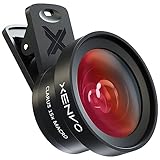
- ✔ COMPATIBLE WITH ALL SMARTPHONES, TABLETS, and LAPTOPS including ALL iPhone models, Samsung Galaxy and Note, Google Pixel, Huawei and more. CONTENTS INCLUDE: TruView 0.45x Wide Angle Lens, Clarus 15x Macro Lens, TruGrip Lens Clip, GlowClip Mini Rechargeable LED Light + Charging Cable, Quick-Release Lanyard, DuraCase, EasyClip, and Cleaning Cloth.
- ✔ TRUVIEW 0.45x WIDE ANGLE LENS - CAPTURE 45% MORE PICTURE WITH EVERY SNAP: Shoot stunning photos of people, pets, travel scenery, landscapes, architecture, selfies and more. NO DARK CORNERS (vignetting) like cheaper lenses. Crafted from aircraft-grade aluminum and premium optical glass for durability and clarity. Multi-element, coated glass lenses minimize ghosting, reflections, lens flare, and other artifacts. Xenvo cell phone lens attachment is ideal for hobbyists and photography pros alike.
- ✔ CLARUS 15x MACRO LENS - MARVEL YOUR SENSES. MAGNIFY NEARBY SUBJECTS FOR BREATHTAKING, SUPER CLOSE-UP PHOTOS: Capture all the intricacies and details with precision-focus for razor crisp macro photos every time. (For best results, position macro lens approximately 1/2 inch from subject. Not designed for zooming in on distant subjects.) THE TRUGRIP LENS CLIP offers SUPERIOR GRIPPING POWER to fasten your lenses to your cell phone when you're in action mode, framing your next perfect shot.
- ✔ GLOWCLIP RECHARGEABLE LED FILL LIGHT - The GlowClip LED light clips ANYWHERE on your phone to instantly illuminate your subject and surroundings with warm continuous light. The warm and natural LED light is superior to your smartphone's built in flash—which can be blinding and unnatural—especially in darker settings and venues. FEATURES 3 BRIGHTNESS SETTINGS: Low, Medium and High. Say goodbye to frustrating photo "retakes" and hello to brilliant photos the first time.
- ✔ QUICK-RELEASE LANYARD AND TRAVEL CASE - TRANSPORT AND PROTECT YOUR LENS KIT: Perfect for taking your Xenvo lenses with you on the fly. The travel case stores and protects all lens kit components snugly and safely while the quick-release lanyard is the perfect way to carry your lenses on your next outing. Just drape the lanyard and lens around your neck. The quick-release lanyard head makes it a cinch to access your Xenvo lenses in a flash so you never miss another photo moment.
These measures address transparency and access, but they do not remove appearance pressure. First-party beautification, ordinary photo editing, makeup tutorials, influencer conventions, cosmetic-procedure marketing, and recommendation systems can reproduce similar ideals without relying on one labelled effect.
A label may also tell viewers that an image was altered without telling them what changed. It may not travel with a downloaded or reposted video. And a warning does not necessarily counteract the social reward attached to the image. Effective policy therefore has to consider not just disclosure, but default settings, age assurance, recommendation systems, privacy, creator incentives, and whether effects work fairly across different faces and skin tones. [c022]
What remains uncertain
- Filter type: Smoothing, face reshaping, body modification, playful overlays, and generative effects may have different short- and long-term consequences.
- Individual differences: Effects may vary by age, gender, race, disability, sexuality, self-esteem, and previous experience with appearance stigma.
- Cultural context: Beauty ideals and the meaning of a filtered image differ across countries and communities.
- Positive or playful effects: Some effects may support humour, creativity, experimentation, or identity exploration rather than dissatisfaction.
- Algorithmic amplification: More research is needed on whether recommendation systems distribute filtered images differently from ordinary images and how that changes norms.
- Disclosure: Labels may change behaviour, increase scepticism, or simply become part of the visual environment users ignore.
- Generative AI: Reconstructing a face may create a different psychological experience from smoothing or overlaying a captured image.
- Unintended consequences: Restrictions for minors could reduce exposure, or they could push some users toward less visible third-party apps and tools.
How to look at a filtered image more critically
Media literacy does not require treating every filter as harmful or demanding that everyone post without editing. It means understanding what an image is doing before treating it as evidence of what a person naturally looks like.
- Identify the intervention. Ask whether the effect is a live overlay, skin retouch, facial reshaping, body modification, makeup simulation, or generative alteration.
- Separate appearance from authenticity. A disclosure can help, but it does not reveal every feature that changed or guarantee that the image is representative.
- Notice the comparison target. If a filtered version of your own face becomes the standard you use to judge your unfiltered face, the comparison is no longer neutral.
- Read the incentive. Consider whether the image is being used to entertain, sell a product, attract engagement, build a personal brand, or promote an appearance service.
- Discuss effects without policing faces. With young people, focus on how platforms construct images and rewards rather than criticising someone’s decision to use makeup or a filter.
- Seek support when distress persists. Persistent preoccupation, avoidance, compulsive checking, or serious distress about perceived flaws deserves a conversation with a qualified mental-health professional.
A classroom or family demonstration can compare clearly labelled examples made with neutral subjects or platform-provided demos rather than asking students to modify their own faces. The goal should be to reveal how quickly an image can change—not to create a new ideal against which participants judge themselves.
Further reading and practical resources
For historical context, The Beauty Myth by Naomi Wolf is a useful reading companion on mediated beauty standards and the social pressure surrounding appearance. It predates social-media filters and is not a study of current apps, but it can help place digital beautification within a longer history rather than treating it as an entirely new invention.
Parents, educators, and older teens looking for structured exercises about comparison and unrealistic media images may also consider The Body Image Workbook for Teens. It is an educational resource, not a diagnosis or substitute for professional care, and its usefulness depends on the reader’s age, circumstances, and support network.
Frequently Asked Questions
Why did beauty filters become so popular?
Beauty filters became dominant through the convergence of front-facing smartphone cameras, real-time face tracking, frictionless editing, creator tools, recommendation systems, influencer culture, and engagement metrics. They moved beautification from a separate editing task into the camera itself, making an altered appearance quick, repeatable, and socially rewarded.
Are beauty filters harmful?
Research supports associations between filter use or related social-media practices and appearance concerns, body-image distress, self-objectification, and some appearance-related symptoms. It does not show that every filter harms every user or that filters alone cause diagnosed body dysmorphic disorder, cosmetic surgery, or a mental-health crisis.
The Tool Desk
Outbyte PC Repair FREEClear out junk files and repair common Windows errorsFree Scan →Outbyte Driver Updater FREEFix the driver behind crashes, sound loss and screen glitchesFind Drivers →Is Snapchat dysmorphia a medical diagnosis?
No. “Snapchat dysmorphia” is a media phrase for appearance concerns linked to filtered images, not a recognized clinical diagnosis. Persistent preoccupation, compulsive checking, avoidance, or serious distress about perceived flaws should be discussed with a qualified mental-health professional.
Do filter labels solve the problem?
Not necessarily. A label may disclose that an effect or AI tool was used, but it may not explain which facial or body features changed. Labels can also disappear when content is downloaded or reposted. First-party beautification, ordinary photo editing, influencer conventions, and cosmetic-procedure marketing can create similar pressures without one labelled effect.
What are platforms doing to protect young people?
The U.S. Surgeon General’s 2023 advisory reported that 46% of surveyed U.S. adolescents aged 13 to 17 said social media made them feel worse about their body image. That statistic concerns social media generally, not beauty filters alone. TikTok announced restrictions in November 2024 on some appearance-altering effects for users under 18, but age assurance and enforcement remain limitations.
The Bottom Line
Beauty filters took over social media because they transformed beauty from an occasional, externally produced image into an interactive and continuously available version of the self. The evidence supports concern about appearance comparison, self-objectification, and body-image outcomes, especially for some young and vulnerable users—but it does not support blaming one filter or claiming the same effect for everyone. The central challenge is broader than banning an effect: it is making the systems that create, reward, and circulate edited faces more transparent, inclusive, and accountable.
What’s actually slowing this PC down?
Pick the symptom - the matching free tool is one click away.
Quick Recap
Product prices and availability are accurate as of the date/time indicated and are subject to change. Any price and availability information displayed on Amazon at the time of purchase will apply.