Free tools Windows power users keep installed
One-click scans. No signup required.
Poet Arjun Rajendran brings Tintin, Snowy—and a beetroot—into poems that unsettle familiar ways of speaking. In The Cosmonaut in Hergé’s Rocket, popular culture is not simply celebrated: it is set beside family memory, history, science and the language of everyday institutions, where unexpected connections can expose what ordinary phrases conceal.
What connects Tintin and a beetroot?
Both appear in The Cosmonaut in Hergé’s Rocket, Rajendran’s second poetry collection, published by Paperwall Media and Publications in March 2017. The collection’s range includes memory, history, science, the occult and popular culture. Its poems do not treat these as sealed-off subjects; they bring different kinds of reference into contact and let the friction produce meaning. In a 2017 Scroll.in interview with Rohini Kejriwal, Rajendran described his interest in making “new and protean conduits with language.”
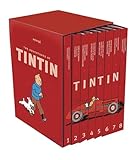


Why bring Tintin into the poems?
Rajendran said the Tintin references were not intended as a tribute to the comics. He wanted references to connect with places and periods grounded in lived experience, literature and family histories. That distinction matters: Tintin becomes material for a poem’s web of associations, rather than its subject in the sense of an homage.
In the title poem, the familiar world is altered in telling ways: Snowy is renamed “Sorry,” while associations with Indian astronaut Rakesh Sharma, spaceflight and patriotic language pull the reference into other contexts. The effect comes from the collision between a widely recognised fictional world and histories and vocabularies that give it a different resonance. It is an example of intertextual writing—meaning made through relationships among texts and experiences—rather than a straightforward celebration of a childhood favourite.
#1 Best Overall
How does “Interviewing a Beetroot” turn absurdity into satire?
The poem’s premise is an interview with a beetroot, an absurd setup that lets Rajendran make ordinary interview conventions look strange. In a 2023 interview with Bound India, he said the poem responded to “chicanery” in interview processes and to the euphemisms he encountered in meeting rooms. The beetroot is not merely a comic prop: the premise gives the poem room to mock the evasions and formulaic language that can accompany professional interviews.
That is one route to the poem’s sharpness. Rather than make an abstract argument about workplace speech, it stages an interview in an impossible form and lets the mismatch do satirical work. The result makes familiar language newly visible: the reader can hear how polished conventions may disguise what is actually happening.
Rank #2
Why does form matter to the joke?
Rajendran has said the structure of “Interviewing a Beetroot” reflects its playful, mocking character. He also described a broader process in which structure often emerges during drafting, rather than being fixed in advance. That approach connects a poem’s shape to what it is trying to do: a comic, irreverent premise calls for a form that can sustain its play and mockery.
The same responsiveness helps explain the variety of material in the collection. Memories, historical references, scientific ideas and popular culture need not be forced into one uniform poetic frame. The poem can discover a structure suited to the particular associations it brings together.
PC Slower Than It Used to Be?
A free scan shows the junk files, broken settings and background clutter dragging Windows down - then fixes them in one click.Free scan · Windows 10 & 11Outdated Drivers Are Slowing You Down
One free scan finds every outdated or missing driver and matches the right update for your exact hardware.Free scan · exact hardware matchRank #3
Where does Rajendran’s poetry fit?
The Cosmonaut in Hergé’s Rocket followed Rajendran’s 2014 debut collection, Snake Wine, published by Les Editions du Zaporogue, according to Scroll.in. Rajendran later served as poetry editor at The Bombay Literary Magazine from 2017 to 2020, as recorded in the magazine’s People & Principles page.
These details place the poems in a continuing literary practice, but the most useful guide to their method is Rajendran’s own account: references are chosen for the connections they can make, and form can develop as the writing proceeds. Tintin and beetroot may seem like unlikely neighbours. In his poems, that very distance becomes an opportunity to test how memory, popular culture and institutional language can change one another.
Quick Recap
Best Value

- New 4/94 edition from LIttle, Brown with different cover art than shown on lthe master listing on Amazon.
Product prices and availability are accurate as of the date/time indicated and are subject to change. Any price and availability information displayed on Amazon at the time of purchase will apply.




