What’s actually slowing this PC down?
Pick the symptom - the matching free tool is one click away.
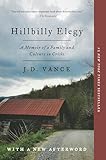
Hillbilly Elegy: A Memoir of a Family and Culture in Crisis is J. D. Vance’s 2016 memoir. It tells the story of his childhood in Middletown, Ohio, with family roots in Kentucky and Appalachia, and then follows his path through the Marines, Ohio State, and Yale Law School. Vance also uses that personal history to make claims about working-class culture, family instability, and upward mobility. Those broader claims, rather than the family story itself, are what has made the book controversial.
What the memoir covers
The book moves between two registers. The first is a family history: Vance’s mother’s addiction, a turbulent household, and the stabilizing role of his maternal grandparents. The second is a set of reflections on what that history says about the people around him. Publishers Weekly’s 2016 review, dated July 18, 2016, called the book “a compelling hybrid of memoir and sociological analysis.” The reviewer is not named in the catalog excerpt, so that phrase should be attributed to the publication rather than to a single critic.


The family story
Vance grows up in Middletown, a suburban Ohio setting, while much of his family’s history is rooted in the hills of Jackson, Kentucky. The memoir presents his childhood as shaped by moves, instability at home, and the presence of grandparents who provided structure. Readers should treat these episodes as Vance’s account of his own life. The book does not claim to be a survey of the region’s families.
The Marines and college
The second half of the narrative follows Vance into the Marine Corps and then to Ohio State and Yale Law School. This is where the memoir’s theme of upward mobility is most explicit: a young man from a struggling background reaching elite institutions, and the cultural tensions that come with that move.
#1 Best Overall
Key facts about the book
| Item | Detail |
|---|---|
| Title | Hillbilly Elegy: A Memoir of a Family and Culture in Crisis |
| Author | J. D. Vance |
| Publication year | 2016 |
| Publisher | HarperCollins |
| Genre as described by the publisher and catalog | Memoir combining family history with reflection on culture and upward mobility |
| Reported initial print run | 10,000 copies, according to TIME’s 2020 reporting. This is a historical figure from the publisher’s launch, not a current sales total. |
Book and film compared
The 2020 film, directed by Ron Howard and released on Netflix according to TIME’s 2020 reporting, starred Glenn Close as Mamaw and Amy Adams as Bev, Vance’s mother. TIME’s comparison describes the film as keeping a narrower focus on personal episodes, while the first-person book draws more connections to wider social, economic, and political change. Streaming availability changes over time, so check the platform directly before watching.
| Aspect | Book (2016) | Film (2020) |
|---|---|---|
| Scope | Personal family story plus broader claims about working-class and regional culture | Mostly the personal family story |
| Narration | First-person reflection by Vance | Dramatized scenes |
| Emphasis | Family instability and formative experiences, with added structural and political context | Family drama and personal episodes |
| Reception | Reviews and critiques discussed below | Not assessed here; no current consensus on audience response is established in the sources reviewed |
Why the book is debated
The controversy is not mainly about whether particular events happened. It concerns the step from Vance’s own life to statements about Appalachia as a whole. Critics argue that this step can reinforce stereotypes about poor white Americans and can place too much weight on individual choices while playing down structural causes such as economic decline, labor markets, and public policy.
Rank #2
Individual experience and regional claims
The memoir presents Vance’s family as a lens on wider culture. That is a common move in personal writing, but it carries a risk: a single family’s experience may be read as representative when it is not. Commentators who engage with the book have focused on this inference rather than on the family history alone.
Scholarly and journalistic responses
- UC Davis commentary: a scholarly piece that argues the book gets important things wrong about Appalachia.
- Columbia Journalism Review: commentary questioning the way a personal story is presented as a larger account of Appalachian culture.
- Appalachian Reckoning: an anthology of regional responses assessing the memoir’s accuracy, its social impact, and the political setting around it.
These are critical perspectives from named sources, not a single verdict on behalf of Appalachians. Vance’s supporters and readers who found the book resonant also exist, and the sources here do not measure how widespread either view is.
How to read the book
- Read the family chapters as Vance’s account of his own experiences.
- Mark the places where he moves from “my family” to “people like us” and ask what evidence supports the wider claim.
- Compare his explanations of poverty and instability with the structural arguments in the critical responses.
- Consider the film separately: it is a narrower, dramatized treatment of the family story, not a stand-in for the book’s argument.
Further reading
Appalachian Reckoning: A Region Responds to Hillbilly Elegy, edited by Anthony Harkins and Meredith McCarroll, is the most direct companion. It is an anthology of responses and critiques rather than a neutral summary, so read it as one set of regional voices alongside Vance’s text. For broader context on how the region has been portrayed in film and media, books on Appalachian history and media representation, including Movie-Made Appalachia, cover related ground.
Independent reader supportYour contribution helps us test, update, and keep practical guides available for everyone.The Bottom Line
Read Hillbilly Elegy as a personal memoir with a broader argument attached. Its family story is the part most readers find affecting, and its generalizations about Appalachia are the part that has drawn sustained criticism.
Quick Recap
Best Value
Rank #4
Product prices and availability are accurate as of the date/time indicated and are subject to change. Any price and availability information displayed on Amazon at the time of purchase will apply.




