Do these 3 things before closing this tab:
1Clear out junk files and repair common Windows errors2Fix the driver behind crashes, sound loss and screen glitches3Repair Windows errors before they cause bigger problemsSome links on this page are affiliate links: if you buy through them we may earn a commission, at no extra cost to you.
High-definition television (HDTV) displays more picture detail than standard-definition (SD) television. In everyday use, HD usually means 720p or 1080p; 1080i is also an HD broadcast format. Full HD generally means 1920×1080, while 4K/UHD means 3840×2160. HDR is different: it concerns brightness, contrast and color, not resolution.
The resolution on the TV is only one part of the picture. The program, service, connection and source device must also deliver HD or 4K for the screen to show that level of detail.
What does “high definition” mean?
HD describes picture detail: how many pixels make up an image. It is not another name for digital television. Digital describes how a signal is encoded or transmitted, and a digital signal can still carry standard-definition video. An HD television can display SD material, but it cannot recreate all the detail absent from the original source.
The label is not used identically everywhere. Consumer products often call both 720p and 1080p HD, while ENERGY STAR defines an HD display as 1920×1080. Check a television’s native pixel dimensions rather than relying only on labels such as “HD-ready” or “HD TV.” Roku’s picture-quality guide describes HD as 720p or 1080p; ENERGY STAR’s specification uses 1920×1080.
#1 Best Overall

- 4k Ultra HD (2160p resolution): Enjoy breathtaking HDR10 4K movies and TV shows at 4 times the resolution of Full HD, and upscale your current content to Ultra HD-level picture quality.
- High Dynamic Range: Provides a wide range of color details and sharper contrast, from the brightest whites to the deepest blacks.
- All-in-one: Get right to your good stuff. With Fire TV, you can enjoy a world of entertainment from apps like Prime Video, Netflix, Disney+, Hulu, and HBO Max. Plus, stream for free with Fire TV Channels, Pluto TV, Tubi, and more. Access over 1.8 million movies and TV episodes. Subscriptions may be required. Feature and content availability may vary.
- Smart Home: Your smart home hub. Pair Fire TV with compatible smart home devices to see live camera feeds, use AirPlay, control your lighting and thermostat, and more.
- Free Content: Stream for free. Access over 1 million free movies and TV episodes from popular ad-supported streaming apps like Fire TV Channels, Tubi, and Pluto TV. Subscriptions may be required. Feature and content availability may vary.
How to read TV resolution labels
| Label | Typical dimensions | What it means |
|---|---|---|
| SD | Around 480 lines in U.S. television | Standard-definition picture; the precise format can vary. |
| 720p | 1280×720 | HD with progressive scanning; about 0.92 million pixels. |
| 1080i | 1920×1080 signal | HD delivered in interlaced fields; this signal format does not by itself tell you the panel’s native resolution. |
| 1080p / Full HD | 1920×1080 | Full HD, usually progressive; about 2.07 million pixels. |
| 4K / UHD | 3840×2160 | Ultra-high definition; about 8.29 million pixels, roughly four times the pixel count of 1080p. |
| 8K / UHD | 7680×4320 | A higher-resolution UHD format; its practical value depends on content and viewing conditions. |
Dimensions and pixel counts are listed in Fairfax County’s television guide and ENERGY STAR’s specification. Four times the pixels does not mean four times the overall picture quality.
What the “p” and “i” mean
The number refers to vertical resolution. “P” means progressive scan: the picture is drawn in sequence from top to bottom. “I” means interlaced: alternating lines are sent or displayed in separate fields. A modern TV may process, or deinterlace, a 1080i signal before showing it. The quality of that processing can affect motion and clarity.
HD, Full HD and 4K: what changes on screen?
A 4K television can display HD content by scaling it to fit the panel. Upscaling can make lower-resolution material fit cleanly and may improve its apparent presentation, but it cannot restore fine detail that was never in the source. A 1080p TV likewise cannot show the full native detail of a 4K source.
How noticeable 4K is depends on screen size, viewing distance, source quality and eyesight. A large screen viewed nearby makes resolution differences easier to see than a small screen viewed farther away. A low-bitrate SD stream on a 4K television can still look soft or blocky; the panel’s pixel count does not make a poor source good.
Rank #2

- HI-QLED COLOR: Experience a visual treat with Hi-QLED Color. Every frame is rich, vibrant, and true-to-life, ensuring that every shade, from soft pastels to bold and striking tones, stands out in stunning clarity
- TOTAL HDR SOLUTION: See every basket and goal in all its glory. Total HDR Solution distinguishes between the colors you perceive on screen. That means ink-black blacks, not muddled tones and brighter, more vibrant colors with every HDR format, including Dolby Vision, HDR 10+Adaptive, HDR 10 and HLG
- DOLBY VISION AND DOLBY ATMOS: The fusion of Dolby Vision HDR imaging and Dolby Atmos sound transforms your TV into an entertainment powerhouse. These image and sound technologies from the cinema, now brought together for the home, provide amazing realism that you’ll see, hear, and feel like never before
- FIRE TV: Fire TV seamlessly integrates your favorite live channels and apps on the home screen, or you can browse the Channel Guide in Live
- PRESS & ASK | ALEXA: Just press and ask Alexa to find, launch, and control your content. Go beyond streaming to check sports scores, set timers, reminders, and more
As of August 2026, 4K/UHD is the mainstream TV resolution, while 1080p sets are generally positioned as lower-cost or discounted options. ENERGY STAR’s television guidance discusses current display features and buying considerations.
HD is not HDR
HDR means High Dynamic Range. It concerns how a picture handles brightness, contrast and color range, not how many pixels it has. HDR formats include HDR10, Dolby Vision and HDR10+. A 1080p television can support HDR, and a 4K television may or may not support a given HDR format.
For the intended HDR presentation, the television, source device and program all need to support a compatible HDR format. An HDR menu setting cannot turn ordinary HD content into genuine HDR. Results also depend on the display’s brightness and tone mapping, the room and the format used by the source. ENERGY STAR lists HDR formats, and Roku explains the distinction between resolution and HDR.
Quick wins for a faster PC:
Fix the driver behind crashes, sound loss and screen glitchesFind Drivers →Clear out junk files and repair common Windows errorsFree Scan →Other TV specifications that affect the picture
Panel and backlight technology
- LED-LCD: An LCD panel illuminated by LED backlighting. Models span a wide range of brightness, contrast and price.
- Local dimming: Divides an LED backlight into zones that can dim separately, improving perceived blacks and contrast. Results depend on the panel and implementation.
- Mini-LED: An LED-LCD backlight made with many smaller LEDs. The label alone does not guarantee a particular picture quality.
- OLED: Each pixel emits its own light and can switch off individually, enabling very dark blacks and strong contrast. OLED can cost more and may not be as bright as some LED-LCD televisions. Room brightness, budget and how often static images remain on screen matter when choosing.
These are different ways of producing or controlling light; none changes the definition of HD. ENERGY STAR’s TV guidance describes OLED’s pixel-level lighting and its trade-offs.
Rank #3
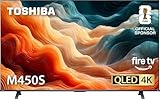
- REGZA Engine ZR: The new REGZA AI Engine ZRi Gen3 is more than just a revolutionary AI engine. It's carefully fine-tuned and optimized by our picture experts. Bringing humans and machine together to ensure the REGZA AI Engine is always delivering images and sound that are true to how we see and hear in the real world.
- REGZA QLED Color: Experience rich, lifelike color with QLED technology that brings every scene to life. From subtle tones to bold highlights, enjoy stunning realism in every frame.
- REGZA Power Audio: REGZA Power Audio enables you to hear sound as if you are right there in the scene. Sound comes from the dual ‘clear direct speakers’, letting you hear more realism for truly well-balanced sound experience.
- No More Endless Scrolling: Fire TV knows what you’re looking for, with smart recommendations, watchlists and it know how to pick up where you left off. Use your voice to ask Alexa what to watch next.
- Press & Ask: Just press and ask Alexa to find, launch, and control your content. Discover new shows, adjust volume, change channels, or control your compatible smart home devices. Go beyond streaming to check sports scores, settimers, reminders, and more.
Refresh rate and motion
Refresh rate, measured in hertz (Hz), is how often the panel refreshes. A 60 Hz panel refreshes 60 times per second; 120 Hz can improve motion handling for sports and some gaming. It is not a requirement for everyone. Check whether a quoted number is the native panel refresh rate: manufacturer terms such as “effective,” “motion” or “clear motion” may describe processing rather than the panel’s actual rate.
Motion interpolation can make sports look smoother, but it can also create a “soap opera” effect that makes films look unnatural. Gamers should check input lag, variable refresh rate and supported HDMI capabilities, not just motion marketing. ENERGY STAR recommends considering 120 Hz as buying guidance, not as a universal need: ENERGY STAR televisions.
Why an HD television may not be showing HD
The picture depends on the whole path from content to screen:
What’s actually slowing this PC down?
Pick the symptom - the matching free tool is one click away.
Program → broadcaster or streaming service → channel or subscription tier → antenna, cable or internet → source device → tuner or HDMI connection → TV processing → panel
Rank #4

- A treat for the eyes: Sharp 4K brings out rich detail on our 43" flat screen TV, while colors pop off in lifelike clarity with HDR10. Roku Smart Picture cleans up incoming TV signals, optimizes them, and chooses the right picture mode.
- Seamless streaming: With fast Wi-Fi and apps that launch in a snap, Roku Select Series TVs get you to your entertainment quickly. You get excellent picture quality, clear sound, automatic updates, and more. It’s simple to use. Hard to outgrow.
- TV, simplified: With setup that only takes minutes, a simple-to-navigate Home Screen, and an uncluttered remote control that does all you need—Roku makes it easier to watch the TV you love.
- A world of free entertainment: Enjoy a huge selection of free live TV, news, sports, movies, shows, and much more—all just a click away.
- More streaming, less searching: With personalized picks right on your Home Screen, quick access to the sports and entertainment you watch most, and fast and easy search in one place—the days of endless scrolling are over.
If any link supplies only SD, the TV cannot display native HD detail. The same applies to 4K: a 4K set needs a 4K program, a service and plan that provide it, a compatible app or device, and a connection capable of carrying the signal. Network congestion, compression, reception and device settings can also affect the result. Cable providers may offer some programming only in SD or put HD programming in a separate tier, as Fairfax County’s guide notes.
A 720p television reduces a 1080 source to fit its lower native resolution. A 4K television scales HD material to its panel, but that is not the same as receiving native 4K. An HD set can show SD material, though it may look soft or blocky.
Broadcast TV, antennas and tuner standards
A screen’s resolution and its broadcast tuner are separate specifications. In the United States, ATSC 1.0 is the established digital terrestrial television system associated with the transition to digital broadcasting and broadcast HDTV. ATSC 3.0, also called NextGen TV, is a newer IP-based broadcast system designed to support capabilities such as higher video and audio quality, improved compression, emergency alerting and interactive features.
The Tool Desk
Outbyte PC Repair FREERepair Windows errors before they cause bigger problemsFix Now →Outbyte Driver Updater FREEFix the driver behind crashes, sound loss and screen glitchesFind Drivers →ATSC approved its current A/300 system specification on April 14, 2026. ATSC 3.0 is largely incompatible with predecessor systems, and availability varies by market and station. An ATSC 3.0 tuner does not guarantee local 4K broadcasts; some signals or features may require compatible equipment or software, and encryption can affect access. Check local station availability before paying extra for a NextGen TV tuner. See ATSC’s A/300 system specification, ATSC’s NextGen TV overview and ATSC’s 1.0 standards information.
Best Value

- MINI LED PROCESSOR 4K: Our advanced processor delivers brighter highlights and deeper blacks,* bringing every detail to life with stunning clarity
- PURE COLOR SPECTRUM: delivers one billion true-to-life colors, powered by advanced color technology and MiniLED precision. Enjoy rich reds, deep blues, and vibrant greens, making every scene leap off the screen with breathtaking realism.
- MINI LED HDR: Experience HDR picture quality with brighter highlights and deeper blacks than traditional HDR TVs.* Enjoy vibrant colors and lifelike details as this technology enhances brightness and contrast, making every image stand out with remarkable depth and realism.
- ENDLESS FREE CONTENT: Watch 2,700+ free streaming options, including 750+ subscription-free channels on Samsung TV Plus. Enjoy news, sports, movies, kids' shows and reality TV — all without a subscription. Discover endless entertainment with new content added regularly, tailored to your mood and interests.*
- SUPREME MINI LED DIMMING: delivers deep contrast and bright highlights for a truly superb picture.*
Connecting devices and checking picture settings
- HDMI: Carries digital video and audio from devices such as cable boxes, streaming players, game consoles and Blu-ray players.
- ARC/eARC: Returns audio from the TV to a soundbar or receiver over HDMI. eARC supports more advanced audio formats than optical connections.
- Optical audio: Can connect some older sound systems, but is more limited than eARC for advanced audio formats.
- RF/coaxial: Connects an antenna or, in some setups, a cable feed to the TV’s tuner.
- USB: May support media playback or power, depending on the model.
- Ethernet or Wi-Fi: Connects a smart TV or streaming device to the internet.
- Connect each source device to a TV HDMI input. Connect an antenna to the RF/coaxial input if you use over-the-air reception.
- Turn on the TV and select the input that matches the connected device.
- Set the source device to its highest output resolution that the TV can accept, then confirm the program or app actually provides HD or 4K.
- For antenna reception, run the TV’s channel scan.
- If using a soundbar, connect it to the TV’s ARC/eARC HDMI port and enable ARC and HDMI-CEC on both devices, if required.
- If the image is cropped, set picture size to the TV’s fit-to-screen or native option and disable zoom; check the source device’s aspect ratio too.
There is no universal HDMI cable requirement for every 4K setup. The signal’s resolution, frame rate, HDR format and bandwidth must be supported by the source, TV and any receiver, switch or soundbar in between; the cable must also carry that signal reliably. Check the devices’ specifications and the current HDMI specification overview rather than buying on the basis of a blanket “HDMI 2.0 cable” rule.
Count inputs before buying: a console, cable box and soundbar can already occupy three HDMI connections. ENERGY STAR’s guidance also recommends checking HDMI input count.
Smart TV, streaming and resolution are separate
A TV can be HD without being a smart TV, and a smart TV can show SD despite having a 4K panel. App availability can depend on country, device and platform; resolution can depend on the title, subscription tier, network and source device. Some content requires a paid subscription or other payment, and apps vary by country, as Roku notes. App availability and software support are platform considerations, not measures of screen resolution.
Outdated Drivers Are Slowing You Down
One free scan finds every outdated or missing driver and matches the right update for your exact hardware.Free scan · exact hardware matchPC Slower Than It Used to Be?
A free scan shows the junk files, broken settings and background clutter dragging Windows down - then fixes them in one click.Free scan · Windows 10 & 11Choose 1080p HD or 4K?
| Situation | Practical direction | What to check |
|---|---|---|
| Small or secondary screen; mostly broadcast HD, DVDs, older consoles or ordinary streaming; lowest cost is the priority | A 1080p HD set may be sufficient. | Native resolution, tuner and the HDMI inputs needed for your devices. |
| Medium or large screen; 4K streaming, current console gaming or UHD discs; TV will be kept for several years | Consider 4K/UHD, particularly if the price difference from a comparable 1080p set is modest. | HDR support and brightness, refresh rate, local dimming or OLED contrast, and HDMI capabilities for your sources. |
| Dark-room viewing with black levels and viewing angles as priorities | OLED may suit the use case. | Price, room brightness and how often static content stays on screen. |
| Bright room, frequent static news tickers or computer use, or a need for a larger set at lower cost | Compare LED-LCD or mini-LED models. | Brightness, contrast and backlight performance; implementations vary. |
| Antenna viewing and interest in NextGen TV | Verify local ATSC 3.0 station availability before choosing a compatible tuner. | Local broadcasts, signal compatibility and any equipment or software requirements. |
Resolution alone cannot predict overall picture quality. Also consider viewing distance, brightness, contrast, refresh rate, input count, sound connections and whether the TV’s apps suit your needs.
Troubleshooting common picture problems
“My HD TV looks blurry.”
- Check whether the channel or video is SD and whether the streaming plan includes HD.
- Check the source device’s output resolution and the TV input it is using.
- For streaming, consider buffering or network congestion that may cause the service to lower video quality.
- Try another source to determine whether the issue is with one program or the whole display. Excessive noise reduction or sharpness settings can also affect appearance.
- Remember that enlarging a low-quality source does not add the missing original detail.
“My 4K TV does not show 4K.”
- Confirm the title, service plan, app and streaming device support 4K.
- Check that the HDMI port and the cable path—including any receiver, switch or soundbar—support the required signal.
- Check whether the TV requires an enhanced or high-bandwidth mode for that HDMI input.
- Do not assume changing the TV’s resolution setting alone can fix a source or connection that does not support 4K.
“The image is cut off.”
- Choose the TV’s fit-to-screen setting, which may be called “Just Scan,” “Screen Fit,” “1:1” or “Native.”
- Turn off zoom or cinema-zoom modes.
- Check the source device’s aspect-ratio setting.
- Test another HDMI input or source to isolate the cause.
Menu labels vary by brand and software version. Cropping is commonly caused by overscan, zoom or a mismatch between TV and source aspect-ratio settings.
“HDR is on, but the picture looks dull.”
Check whether the program and source are actually HDR, whether an intervening device is passing HDR metadata, and whether the TV is using an appropriate picture mode. Display brightness, room conditions, HDR format and tone mapping can all affect the result; the HDR label alone is not a guarantee of a better-looking picture.
“My antenna finds channels, but not the ones I expect.”
Reception can be affected by antenna placement, obstructions and station coverage. Also check whether the station uses a broadcast standard your tuner supports and whether ATSC 3.0 is available locally. A NextGen tuner does not make every station available or guarantee 4K. ATSC’s system information describes the differences and compatibility considerations.
Recommended Free Tools
Quick Recap
Product prices and availability are accurate as of the date/time indicated and are subject to change. Any price and availability information displayed on Amazon at the time of purchase will apply.

