High-altitude cerebral edema (HACE) and high-altitude pulmonary edema (HAPE) are life-threatening responses to low oxygen at altitude. HACE affects the brain, causing confusion and loss of coordination; HAPE fills the lungs with fluid, causing rapidly worsening breathlessness. They can occur together, and HAPE can occur without another altitude-illness syndrome. Suspected cases require immediate descent, oxygen when available, and urgent medical evacuation. Medication can support those measures, but it must not delay them.
Why altitude can cause edema
As altitude rises, atmospheric pressure falls. The percentage of oxygen in air remains about the same, but the partial pressure driving oxygen into the lungs and bloodstream is lower. At approximately 3,050 metres (10,000 feet), inspired oxygen partial pressure is about 69% of the sea-level value. An unacclimatized person exposed acutely at that height may have an arterial oxygen saturation of only 88–91%.
The body normally adapts over several days. Breathing becomes deeper and faster, circulation adjusts, and oxygenation improves. HACE and HAPE develop when hypoxia overwhelms these adaptations, often during a rapid ascent or before acclimatization is complete. A person can become ill even if they are young, fit, or experienced at sea-level exercise.
HACE is described by the Centers for Disease Control and Prevention (CDC) as severe altitude illness—an encephalopathy or end-stage form of acute mountain sickness. HAPE is altitude-associated pulmonary edema: fluid moves into the air spaces and surrounding tissue of the lungs, impairing oxygen exchange. HAPE may occur by itself or alongside acute mountain sickness and HACE. Severe hypoxemia from HAPE can itself contribute to the neurological deterioration seen in HACE, so the two syndromes may overlap.
Quick wins for a faster PC:
Clear out junk files and repair common Windows errorsFree Scan →Fix the driver behind crashes, sound loss and screen glitchesFind Drivers →#1 Best Overall

- TRAVEL AND FAMILY FRIENDLY. Whether you’re hiking Machu Picchu, skiing, or snowboarding with your family, Altitude RX helps by accelerating altitude acclimation with 60 Servings per bottle
- COMMITTED TO NUTRITION. Made with natural ingredients, Altitude RX helps boosts oxygen and maximizes your endurance, so you feel as energized and healthy at high altitude as you do near sea level.
- ALTITUDE RX OXYBOOST. Be free to enjoy every moment in the mountains as you reduce worries about altitude and vertigo. It has alpha lipoic acid and ginkgo biloba to maximize energy, and prevent fatigue from exercise at altitude.
- BORN IN THE USA. Based in Southern California, we use the latest technology and production capabilities available. Our production facility allows us to have uncompromising high standards and only use the highest quality ingredients.
HACE and HAPE: the differences that guide action
| Feature | HACE | HAPE |
|---|---|---|
| Primary system | Brain and mental status | Lungs and breathing |
| Typical early signs | Ataxia (poor coordination), confusion, altered behavior, unusual drowsiness | Cough, chest congestion, disproportionate breathlessness with exertion, falling exercise performance |
| Dangerous progression | Worsening confusion, inability to walk safely, then coma | Breathlessness at rest, respiratory distress and sometimes bloody sputum |
| Core field response | Immediate descent; oxygen and dexamethasone if available | Urgent descent, minimal exertion and oxygen if available |
| If descent cannot happen immediately | Oxygen or a portable hyperbaric device plus dexamethasone may be lifesaving | Oxygen or a portable hyperbaric chamber is critical; medicines are adjuncts |
Do not wait for a perfect distinction. New neurological impairment after ascent is an emergency, as is rapidly worsening breathing. HAPE can become fatal more quickly than HACE, and either condition can deteriorate while a group is trying to decide what it is.
How HACE develops
Hypoxia can disrupt the brain’s normal function and is associated with swelling and altered mental status. The practical definition is neurological: a person who has recently gained altitude develops confusion, abnormal behavior, marked drowsiness or an inability to walk normally. HACE often represents severe altitude illness rather than an isolated, predictable single mechanism, so a diagnosis should not depend on proving brain swelling with a scan in the field.
Early neurological warning signs
- Unsteady walking or inability to perform a straight-line heel-to-toe walk (ataxia).
- Confusion, poor judgment, unusual behavior or difficulty answering simple questions.
- Drowsiness that is out of proportion to fatigue, especially when it is new or worsening.
Once ataxia begins, coma may follow within 12–24 hours if treatment or descent does not occur. A person with these signs should not be allowed to “sleep it off” at the same altitude or continue climbing.
How HAPE develops
HAPE is pulmonary edema triggered by altitude exposure. Hypoxia causes abnormal constriction in the pulmonary circulation; pressure and blood-flow changes can force fluid into lung tissue and air spaces. The response is uneven within the lungs, and the resulting fluid interferes with oxygen transfer. The CDC emphasizes that HAPE can occur alone, with acute mountain sickness, or with HACE.
Rank #2

- Altitude Sickness Medicine: Conquer the mountains without the misery! Whether you’re hiking Machu Picchu, snowboarding with family, or climbing new heights, this helps your body adjust fast—relieving headaches, nausea, and shortness of breath naturally
- Boost Energy, Oxygen, and Endurance: Elevate your performance wherever you go! This altitude sickness prevention tablets enhances oxygen utilization, combat fatigue, and allow you to maintain the same energy and endurance at high altitudes as at sea level
- Natural & Safe Formula: Packed with Vitamin C, Alpha Lipoic Acid, and Ginkgo Biloba, this high altitude sickness prevention tablets naturally boosts energy and fights altitude fatigue—without caffeine, harsh chemicals, or unwanted side effects
- Convenient & Travel-Ready: These small, convenient altitude sickness prevention pills are ideal for trips to Machu Picchu, Colorado, or the Alps. Take two capsules daily during your trip and before departure to help you stay energized and easily cope with high-altitude environments
Typical course
Early illness may look like poor fitness at altitude: a new cough, a feeling of chest congestion, breathlessness that is excessive for the effort, or a clear decline in walking speed and performance compared with companions. Over one to two days, breathing can become difficult at rest. Respiratory distress and pink or bloody sputum are late, ominous signs.
Oxygen saturation readings of 50–70% are common among HAPE victims in the CDC description and are at least 10 percentage points lower than those of healthy people at the same altitude. A number is not required for action: cold fingers, motion, altitude and device limitations can make a reading unreliable, while a seriously ill person may worsen before a low value is recorded.
What to do when HACE or HAPE is suspected
- Stop the ascent immediately. Do not move a symptomatic person to a higher sleeping altitude, even if symptoms seem mild.
- Arrange descent and evacuation. Descent is the central treatment. Use the safest available route, carry or support the patient, and contact emergency or mountain-rescue services.
- Give supplemental oxygen if available. Oxygen can improve oxygenation while the team prepares to descend, but it does not replace descent or medical assessment.
- Minimize exertion. This is especially important with suspected HAPE. Keep the patient warm, seated or resting, and avoid making them walk unnecessarily.
- Use syndrome-specific medication only as directed by a clinician or established expedition protocol. Medication is an adjunct and must not delay evacuation.
- Reassess continuously. Worsening confusion, inability to stand, breathlessness at rest, bluish discoloration, exhaustion or reduced responsiveness means the emergency is progressing.
If a patient becomes unconscious, protect the airway, monitor breathing, and follow emergency first-aid and evacuation procedures. A pulse oximeter can provide trend information, but it cannot rule out HACE or HAPE and should never postpone descent.
Treatment for suspected HACE
Descent is the priority
In a remote setting, initiate descent for anyone suspected of HACE. The patient may need assistance or a litter because ataxia makes walking dangerous. Descend to a lower elevation where symptoms improve and medical care is available; do not allow a temporary improvement on oxygen to become a reason to remain high.
Rank #3

- Effective Prevention Of Altitude Sickness: Whether you are hiking, skiing, or climbing, the altitude sickness prevention patch ensures that you feel comfortable throughout your extreme sports..Effectively relieve headache, nausea and shortness of breath caused by high altitude sickness.
- Natural Active Ingredients:Selected natural plant extracts such as ginger, lemon and peppermint. These ingredients have a refreshing aroma,Safe and harmless.100% Natural Herb Treatment,Avoid the physical harm caused by drugs.
- Long-Lasting: Efficacy up to 72 hours.The patches slowly release these ingredients over 72 hours to ensure your body absorbs an even amount throughout your time at altitude.
- Increase Oxygen Intake: The patches contain ginseng and peppermint, which help to enhance tissue respiration, and improve the cardiovascular system's ability to tolerate oxygen deprivation. Each patch improves oxygen absorption efficiency, promotes blood flow, prevents nausea and more!
- Compact And Portable: Small and light enough to fit in your pocket or bag , it's perfect to take anywhere.Waterproof and sweatproof, easy to use and carry.Ideal for extreme sports enthusiasts.
Oxygen and dexamethasone
Give oxygen when available. Dexamethasone is the principal emergency medication described by the CDC for HACE and may rapidly reduce neurological symptoms. In a populated area with medical care, oxygen and dexamethasone are used while arranging definitive evaluation. Medication selection, contraindications and dosing require clinician-directed guidance.
When descent is temporarily impossible
Oxygen or a portable hyperbaric device together with dexamethasone can be lifesaving when weather, terrain or logistics prevent immediate descent. These measures buy time; they are not a permanent solution. Evacuation should continue as soon as it is safe.
Treatment for suspected HAPE
Urgent descent and oxygen
The CDC states that, in most circumstances, descent for HAPE is “urgent and mandatory.” Give oxygen if available and keep exertion to a minimum. A patient who is struggling to breathe should not be required to hike downhill unaided.
Portable hyperbaric treatment
If immediate descent cannot occur, supplemental oxygen or a portable hyperbaric chamber is critical. These interventions can improve oxygenation and temporarily reverse the altitude stress while evacuation is organized.
Crashes, No Sound, or Screen Glitches?
Random freezes, missing sound and display glitches usually trace back to one bad driver. Find and replace yours safely.Free scan · under a minutePC Slower Than It Used to Be?
A free scan shows the junk files, broken settings and background clutter dragging Windows down - then fixes them in one click.Free scan · Windows 10 & 11Rank #4

- Fast Dissolving Altitude Acclimation Tablets for Altitude Sickness Prevention: Designed to help prevent altitude sickness and elevation sickness before symptoms begin. These altitude acclimation tablets support early adjustment at high altitude for skiing, climbing, and mountain travel - helping you stay strong from day one.
- Hydration Support for High Altitude Relief & Performance: This altitude sickness supplement delivers balanced electrolytes to support hydration, altitude relief, and normal oxygen utilization at elevation. Ideal for high altitude hiking, skiing, and travel where fluid loss and fatigue accelerate.
- Clean Alternative to Altitude Sickness Medication & Altitude Pills: A stimulant-free altitude supplement designed to support performance at elevation without caffeine, harsh drugs, or side effects. These altitude tablets use an altitude adjustment all natural approach to help you stay clear-headed and steady at high altitude.
- Supports Oxygen Utilization & Reduces Altitude Fatigue: Formulated to boost oxygen efficiency and fight altitude-related fatigue during ascent. Ideal for oxygen for high altitude hiking, mountain climbing oxygen demands, and long travel days where energy drops fast at elevation.
- Built for Skiing, Climbing & High Altitude Sports: This high altitude supplement is designed for real mountain conditions, from ski trips to summit days. Works as a complete altitude sickness remedy or alongside altitude sickness patches for layered elevation support during travel, hiking, and high altitude sports.
Medication as an adjunct
In field settings, nifedipine may be used as an adjunct to descent, oxygen or portable hyperbaric therapy. A selective phosphodiesterase inhibitor is an alternative when nifedipine is unavailable, under appropriate medical direction. Do not combine multiple pulmonary vasodilators. The CDC emphasizes that descent and oxygen are substantially more effective than medication alone.
Selected mild cases under supervision
Some mild HAPE cases may be managed at the current altitude only when reliable oxygen, bed rest and medical supervision are available. The CDC describes oxygen for two to four days in this setting. Any deterioration requires immediate descent; this approach is not appropriate for remote self-treatment or for a person with severe breathlessness, neurological changes or respiratory distress.
Medication context and safety
The CDC Yellow Book 2026 table lists dexamethasone for HACE treatment and nifedipine for HAPE treatment. It also lists sildenafil and tadalafil among options for HAPE prevention. These uses may be off-label. A traveler should discuss prevention and emergency plans with a clinician before ascent, including interactions, blood-pressure effects and what to do if symptoms appear. No drug makes it safe to keep ascending while ill.
Independent reader supportYour contribution helps us test, update, and keep practical guides available for everyone.Preventing severe altitude illness
Ascend slowly enough to acclimatize
The CDC relays Wilderness Medical Society guidance for sleeping altitude:
Best Value
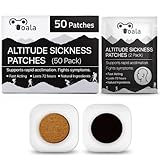
- 🏔️ FEEL GREAT AT ALTITUDE: Just apply two patches before your ascent and feel great for up to 72 hours. Whether you are hiking, skiing, or climbing our top recommended altitude sickness medicine will make sure you feel great throughout your entire trip!
- 🏔️ BOOST OXYGEN INTAKE: Trying to find an oxygen supplement that will ensure you don’t feel sick at high altitude? Cloves and peppermint are two highly used natural solutions, and both ingredients are included in every patch. The patches slowly release these ingredients over 72 hours to ensure your body absorbs an even amount throughout your time at altitude.
- 🏔️ IMPROVE ENERGY LEVELS: Altitude sickness can cause nausea and vomiting, which negatively impacts your energy levels. Garlic and peppermint help to enhance blood flow and make breathing easier, which helps to increase your oxygen intake at altitude and prevent these symptoms from setting in.
- 🏔️ PREVENT NAUSEA & HEADACHES: If you do end up with high altitude sickness ginger, lemon, and cinnamon are three of the best natural alternatives to intense nausea medicine. If high altitude sickness does set in, these will immediately begin to provide rapid high altitude relief.
- 🏔️ NATURAL, LONG-LASTING INGREDIENTS: Our blend of powerful, natural ingredients includes all of the top natural altitude medication available. Each slow-absorbing patch works to increase oxygen efficiency, enhance blood flow, prevent nausea, and so much more! Don’t head out on your ski trip without them.
- Avoid going from low altitude to a sleeping altitude of 2,750 metres (9,000 feet) in a single day.
- Above 3,000 metres (9,800 feet), limit the increase in sleeping altitude to about 500 metres (1,650 feet) per night.
- Add an extra acclimatization night for each 1,000 metres (3,300 feet) of sleeping-altitude gain.
These are practical targets, not guarantees. Individual susceptibility varies, and a schedule that was comfortable on a previous trip may not be safe when the altitude or ascent rate is different.
Know the three rules that prevent escalation
- Learn the early symptoms before you travel and make sure companions can recognize them.
- Never ascend to sleep higher while experiencing altitude-illness symptoms, however mild.
- Descend if symptoms worsen despite rest or treatment at the same elevation.
Consider preventive medication with a clinician
When gradual or staged acclimatization is not feasible, ask a clinician whether acetazolamide or another preventive plan is appropriate. The choice depends on medical history, itinerary, altitude profile and contraindications. Preventive medication does not remove the need for gradual ascent or the rule to descend when symptoms worsen.
Who is at risk?
Any unacclimatized traveler sleeping at 2,450 metres (8,000 feet) or higher—and sometimes at lower elevations—may be at risk. The most important predictors are the altitude at which a person enters high terrain and how quickly the sleeping altitude rises. Prior experience is useful only when the altitude and ascent rate are comparable; it does not guarantee protection on a new trip. Physical fitness does not prevent altitude illness.
| Published estimate | Context and qualification |
|---|---|
| About 1 in 10,000 skiers | CDC estimate of HAPE incidence in Colorado |
| Up to 1 in 100 travelers | CDC estimate of HAPE incidence above 4,300 metres |
| About 25% of visitors | Example of acute mountain sickness prevalence among people sleeping above 2,450 metres in Colorado |
| Rare, especially below 4,300 metres | CDC characterization of HACE frequency |
These figures are location- and altitude-specific examples from the CDC Yellow Book 2026 chapter, not universal rates for every mountain range or traveler group.
The Tool Desk
Outbyte Driver Updater FREEFix the driver behind crashes, sound loss and screen glitchesFind Drivers →Outbyte PC Repair FREEClear out junk files and repair common Windows errorsFree Scan →Using a pulse oximeter without false reassurance
A finger pulse oximeter is optional equipment that some travelers use to follow acclimatization trends. It can be affected by cold, poor circulation, movement, nail products and device quality. More importantly, a single saturation value cannot diagnose or exclude HACE or HAPE. New confusion, ataxia, worsening cough or breathlessness takes priority over the display. Treat the person and the trend, not just the number.
When to seek medical help
Suspected HACE or HAPE is an emergency even if the person is still talking or can walk with help. Contact local rescue or emergency services, begin descent, provide oxygen when available, and arrange evaluation at a facility capable of treating respiratory and neurological emergencies. Symptoms that improve at a lower altitude still warrant medical assessment because relapse can occur if the person returns to altitude too soon.
This explainer is based on the CDC Yellow Book 2026 chapter “High-Altitude Travel and Altitude Illness,” by Peter H. Hackett and David R. Shlim, dated April 23, 2025. It is general information, not a substitute for emergency care or individualized medical advice.
Quick Recap
Product prices and availability are accurate as of the date/time indicated and are subject to change. Any price and availability information displayed on Amazon at the time of purchase will apply.






Say something about this film