Yes—Stem Piano is a real, documented open-source hybrid-piano project, but it is not a finished Raspberry Pi piano kit. Greg Zweigle’s design combines a real piano action with custom sensors, a Teensy 4.1 real-time controller, MIDI and networking, and a separate computer or sound engine. A Raspberry Pi can plausibly fill the host, audio, interface or analysis role; the available project record does not establish it as an interchangeable replacement for the Teensy in the current official architecture.
What Stem Piano is
A hybrid piano keeps the physical mechanism of an acoustic instrument—keys, hammers, dampers and pedals—but replaces or supplements strings and acoustic sound production with sensors, electronics and digital audio. That differs from a conventional digital piano, which normally starts with a manufactured keyboard action, and from a silent-piano conversion, which adds electronics to an existing acoustic instrument while preserving its mechanism.
Stem Piano is an open-source architecture for building such an instrument around a separate piano action. The project description says the builder supplies that action and the associated mechanical structure; the published work covers the electronic and software system. Zweigle’s Hackaday project identifies Greg Zweigle as the creator and links to the project’s repositories and demonstrations.
The practical distinction is important: “open source” describes the design files and code, not a boxed product with a warranty, factory-regulated action or guaranteed compatibility with every piano.
Windows Errors? Fix Them Before They Spread
Repair common Windows errors and clear accumulated junk for a smoother, more stable PC - no reinstall needed.Free scan · no reinstallCrashes, No Sound, or Screen Glitches?
Random freezes, missing sound and display glitches usually trace back to one bad driver. Find and replace yours safely.Free scan · under a minute#1 Best Overall

- Pre-Soldered Header Pins
- ARM Cortex-M7 at 600 MHz
- 4X Larger Flash Memory
- Provides Greater I/O Capability
- Includes Ethernet PHY, SD Card Socket, and USB Host Port
What has actually been built
The public project record shows a progression from a single-note experiment to a complete 88-key implementation, rather than a purely conceptual proposal.
| Date | Milestone |
|---|---|
| June 11, 2021 | First working one-note data path |
| July 24, 2021 | More than one working piano key |
| January 15, 2023 | First working three-pedal implementation |
| March 16, 2023 | First complete 88-key piano, including pedals |
| November 10, 2023 | “Stem Piano G” full 88-key architecture |
| November 26, 2023 | Design files pushed to GitHub |
| November 29, 2024 | First independent build from the published artifacts |
| May 2, 2025 | Conversion to a newer sensor design |
| June 1, 2025 | Milestone reporting 88 hammer and 88 damper sensors completed |
These milestones, recorded in the project’s dated log, demonstrate a functioning system while also showing that the design is still evolving. A 2025 sensor milestone should not be treated as proof that no later revision exists.
How the electronics are divided
The documented architecture is best understood as several layers rather than a single “piano computer.”
Piano action
  ↓
Key, hammer, damper and pedal sensors
  ↓
Sensor boards and analog electronics
  ↓
Teensy 4.1 real-time controller
  ↓
MIDI, USB or Ethernet
  ↓
Raspberry Pi, desktop computer or external sound engine
  ↓
Audio interface → amplifier → speakers or headphones
This is an explanatory signal chain, not a claim that every build uses exactly these connections. Its central idea is to keep time-critical acquisition close to the sensors and leave sound generation and user-interface work to a general-purpose host.
Rank #2

- Designed to bring all general purpose I/O pins to breadboard friendly pads on the outside edges
- Ethernet Option
- Version 4.1
- NXP iMXRT1062 chip, the fastest microcontroller available today
- Pins not included
Why the Teensy 4.1 matters
The Teensy 4.1 is a microcontroller board built around a 600-MHz Arm Cortex-M7-class processor. It offers extensive digital and analog I/O, USB host capability, removable-storage support and optional Ethernet hardware. Those characteristics suit an instrument that must sample many sensors predictably, detect rapid strikes and releases, and emit MIDI without a desktop operating system interrupting the timing.
In Stem Piano’s context, the Teensy is associated with reading sensor values, processing movement, calculating performance data, generating MIDI events and, where configured, transporting raw measurements over a network for analysis or debugging. It is not a complete piano: it still needs sensor boards, wiring, power, firmware, mechanical fixtures, calibration and an audio path.
What a Raspberry Pi can do
A Raspberry Pi is a Linux computer, so it is useful for a software piano or sampler, MIDI routing, configuration screens, recording, sensor-data analysis and network services. The Raspberry Pi 5 uses a quad-core 2.4-GHz Cortex-A76 processor; Raspberry Pi lists 1GB, 2GB, 4GB, 8GB and 16GB versions and recommends a 5V/5A USB-C supply plus active cooling for sustained workloads (official specifications).
That flexibility comes with operating-system scheduling, audio-buffer and power-management considerations. The available Stem Piano material clearly documents Teensy-centered sensing; it does not show that a Pi can simply replace the Teensy’s direct real-time sensor role. Treat “Raspberry Pi powered” as a description of a particular host arrangement unless a specific repository revision proves otherwise.
What’s actually slowing this PC down?
Pick the symptom - the matching free tool is one click away.
Rank #3
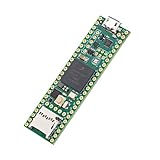
- Designed to bring all general purpose I/O pins to breadboard friendly pads on the outside edges
- This board DOES NOT feature the Ethernet option
- Can be programmed using the Arduino IDE with Teensyduino add-on
- NXP iMXRT1062 chip, the fastest microcontroller available today
- Pins not included
Sensors, velocity and expression
The project history records hammer and damper sensing, and the 2025 milestone reports 88 of each. Depending on the hardware revision, a build may also sense key position and pedals. Optical approaches are discussed in Stem Piano-related community builds, while Hall-effect designs appear in separate DIY projects; those alternatives should not be presented as Zweigle’s official hardware without repository-level confirmation.
Why add hammer and damper measurements?
Two key contacts can estimate velocity from the interval between them, but an acoustic action exposes more physical events. Hammer position can describe the strike and rebound, damper state helps identify release and sustain-pedal behavior, and key movement supplies additional context for repetition and aftertouch-like analysis. More information can support expressive mapping, but it also means more channels, fixtures, wires, calibration points and failure modes. No cited source establishes that Stem Piano automatically matches the feel or response of a premium commercial hybrid instrument.
How the signal becomes MIDI
- A sensor produces an analog or digital value as a key, hammer or damper moves.
- Firmware samples that value over time and identifies strike, release and pedal events.
- Timing and movement are mapped to MIDI note-on velocity and note-off behavior.
- Per-key calibration compensates for differences in geometry, sensor response and action regulation.
Community documentation describes curve fitting and runtime calibration in Stem Piano-related firmware (discussion of calibration and firmware). Values such as velocity_scale, strike_threshold and release_threshold are build- and firmware-specific; they are not universal defaults.
The piano action is an engineering component
Electronics cannot fully correct an unstable mechanism. The action must be aligned, rigidly mounted and reasonably regulated, with consistent key travel and limited mechanical slop. Worn bushings, loose hammer shanks, bent sensor rails, damper misadjustment, frame vibration and changing hammer geometry can all alter readings or create false triggers. Related builder discussions emphasize regulation, noise, frame behavior and firmware tuning (community discussion).
Rank #4
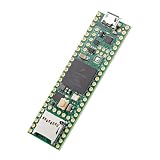
- Designed to bring all general purpose I/O pins to breadboard friendly pads on the outside edges
- This board DOES NOT feature the Ethernet option, the ethernet chip has been removed from this board.
- Can be programmed using the Arduino IDE with Teensyduino add-on
- NXP iMXRT1062 chip, the fastest microcontroller available today
- Lockable for secure development
This makes the choice of action consequential. A grand action, upright action, salvaged piano or purpose-built keybed has different hammer geometry, damper layout, pedal mechanics, mounting space and restoration needs. A cheap salvaged piano may save on acquisition while adding transport, rebuilding and professional regulation costs.
What is open source—and what you still provide
The project states that the materials needed to build a functional system are available through GitHub, while explicitly requiring a separate piano action. In practice, the open portion can include:
- Firmware and signal-processing code
- Sensor-board and controller-board designs
- Documentation, build history and calibration guidance
- Reference layouts and mechanical recommendations
- Issue tracking and community discussion
The builder still has to source or fabricate the physical system:
- Piano action, keybed or frame
- Sensors, custom PCBs, connectors and wiring
- Teensy 4.1 and power supplies
- Mounting rails, brackets, enclosure or cabinetry
- Raspberry Pi or another host, if desired
- Audio interface, amplifier, speakers or headphones
- Tools, calibration time and possibly piano-technician labor
Check the license in each repository before redistributing hardware, firmware or documentation. Open-source design files do not imply that third-party libraries, sensor parts or manufactured boards share one license, nor that support or replacement parts are guaranteed.
Do these 3 things before closing this tab:
1Scan for outdated or missing drivers - takes under a minute2Clear out junk files and repair common Windows errors3Fix the driver behind crashes, sound loss and screen glitchesBest Value

- Teensy 4.1
- It features an ARM Cortex-M7 processor at 600MHz, with a NXP iMXRT1062 chip, the fastest microcontroller available today.
- 1024K RAM (512K is tightly coupled) 8 Mbyte Flash (64K reserved for recovery & EEPROM emulation)
- 55 Total I/O Pins 3 CAN Bus (1 with CAN FD) 2 I2S Digital Audio 1 S/PDIF Digital Audio 1 SDIO (4 bit) native SD 3 SPI, all with 16 word FIFO 7 Bottom SMT Pad Signals 3 SPI, all with 16 word FIFO
- 7 Bottom SMT Pad Signals 8 Serial ports 32 general purpose DMA channels 35 PWM pins 42 Breadboard Friendly I/O 18 analog inputs Cryptographic Acceleration Random Number Generator RTC for date/time Programmable FlexIO Pixel Processing Pipeline Peripheral cross triggering 10 / 100 Mbit DP83825 PHY (6 pins) microSD Card Socket Power On/Off management
A realistic build path
- Assess the action. Count keys, inspect hammer and damper geometry, check pedal arrangement and determine whether the frame can hold repeatable sensor fixtures.
- Freeze a compatible revision. Choose the documented Stem Piano G or a later sensor-board design, then match its firmware, PCB files, wiring diagrams and calibration instructions. Do not mix parts from historical architectures casually.
- Prototype a small section. Bring up one key, a few adjacent keys, one pedal and one sensor board. Confirm expected readings, acceptable noise, reliable event detection and MIDI output.
- Build the mechanical fixtures. Control sensor spacing, cable routing, grounding, shielding, connector strain relief and access for future adjustment across all 88 keys.
- Add the host and audio engine. Once sensing is reliable, connect a Raspberry Pi, desktop computer or external sound module. Separating mechanical, firmware, MIDI and audio debugging saves time.
- Regulate and recalibrate. Treat calibration as ongoing maintenance; wear, temperature, sensor replacement and action adjustments can change the response.
Difficulty, cost and trade-offs
This is an advanced maker project spanning piano mechanics, electronics assembly, PCB fabrication, embedded C/C++, analog measurement, MIDI, networking and Linux audio. A published independent build shows that the repository artifacts can be used by someone other than the original author; it does not make the project beginner-friendly or turnkey.
| Choice | Benefit | Trade-off |
|---|---|---|
| Teensy 4.1 sensing | Deterministic timing, direct I/O and low operating-system overhead | Requires custom electronics and embedded firmware |
| Raspberry Pi host | Flexible software, storage, networking, interface and sample libraries | Linux audio setup, buffering, power and cooling |
| Real acoustic action | Authentic geometry and mechanical response | Heavy, space-consuming and potentially expensive to regulate |
| Separate hammer and damper sensors | More physical information for expressive processing | More wiring, channels, alignment and calibration |
| Open design | Inspectable, modifiable and repairable | No turnkey warranty or guaranteed compatibility |
| Commercial digital or hybrid piano | Immediate playability, finished cabinetry and support | Less customization and architectural freedom |
As price signals, SparkFun listed a Teensy 4.1 at $31.50, or $35.95 with headers, when checked; stock and prices change (listing). Raspberry Pi announced a 1GB Pi 5 at $45, with higher-memory models priced above that in its published tables (pricing announcement). Those boards are only a fraction of a complete instrument’s cost once the action, sensors, PCBs, mechanics, audio hardware and labor are included.
Common failure points
- Mechanical: flexible rails, worn bushings, loose hammer parts, inconsistent travel or incorrect damper and pedal geometry.
- Sensor: spacing drift, crosstalk, analog noise, saturated readings, broken wires, ambient-light interference in optical systems or magnetic interference in Hall-effect systems.
- Firmware: false or double triggers, missed strikes, weak low-velocity response, incorrect release detection, uneven velocity curves or calibration data applied incorrectly.
- Host and audio: wrong MIDI routing, excessive buffers, underruns, inadequate Pi power, thermal throttling, unsupported interfaces, sample-library errors or ground loops.
- Project management: ordering boards before confirming the revision, following old forum settings, underestimating cabinetry or assuming an issue tracker means the product is finished.
Who should build it?
Stem Piano fits an experienced maker who wants to learn and modify an instrument, a pianist with access to a sound mechanical action, or a piano technician comfortable collaborating on electronics. It is a poor match for someone who simply needs a reliable instrument this weekend. Commercial Yamaha and Kawai hybrid pianos provide integrated actions, finished audio systems, warranty and support; a conventional MIDI controller is cheaper and easier still, but does not reproduce an acoustic action.
Verdict
Stem Piano is real, open in the project-design sense, and technically credible as a Teensy-centered hybrid-piano architecture. Its documented achievements include complete 88-key and pedal implementations, independent reproduction from published files and continuing sensor revisions. The Raspberry Pi belongs primarily in the optional host and sound-computing layer unless a particular Stem Piano build documents a different arrangement. The deciding question is therefore not whether a board can run a piano sound, but whether you are prepared to source, mount, regulate, wire and calibrate an entire acoustic action around evolving open hardware.
Quick wins for a faster PC:
Scan for outdated or missing drivers - takes under a minuteDriver Scan →Clear out junk files and repair common Windows errorsFree Scan →Frequently Asked Questions
Is Stem Piano a ready-to-buy digital piano?
No. It is an open-source reference project. You must supply a piano action and substantial mechanical, electronic, power and audio hardware.
Can a Raspberry Pi replace the Teensy 4.1?
The available project record does not establish that substitution. The Teensy is documented for real-time sensing; a Raspberry Pi is better described as an optional host, sound engine or interface computer.
Is Stem Piano suitable for a beginner?
Not realistically. The build combines piano regulation, mechanical fabrication, electronics, embedded firmware, calibration, MIDI and audio engineering.
Quick Recap
Product prices and availability are accurate as of the date/time indicated and are subject to change. Any price and availability information displayed on Amazon at the time of purchase will apply.